
Beauty Unlocked
How to Care for Mystery Snails: 13 Steps
Jul
Mystery snails are the aquarium hobby’s tiny janitors with big personalities. They clean up leftovers, cruise the glass like a slow-motion Roomba, and occasionally perform a dramatic “parasnail” (yes, that’s a real thing) where they let go and glide down like a little aquatic skydiver.[1] But they’re not “set-it-and-forget-it” algae machines. If you want a mystery snail with a smooth, healthy shell and that curious, always-busy vibe, you need to give it the right setup, stable water, and a diet that isn’t just “whatever the fish didn’t finish.”
This guide breaks mystery snail care into 13 practical stepssimple enough for beginners, detailed enough to actually work. No fluff, no panic, and zero requirement to become a part-time chemist (though you’ll feel like one when you start testing water and saying things like “my GH is fine” with a straight face).
Before You Begin: The 60-Second Mystery Snail Snapshot
- Best tank size: A 5-gallon tank can house 1–2 mystery snails, but bigger is easier to keep stable.[1]
- Water must be cycled: Ammonia and nitrite should be 0, and nitrates kept low with maintenance.
- They need minerals: Mystery snails do best in harder, more alkaline water to protect their shells.[1]
- They breathe air too: They have gills and a lung-like system and may visit the surface to breathe.[1]
- They lay eggs above water: Egg clutches are placed above the waterlinenot underwater.[1]
- Watch out for copper and heavy salt use: Many invertebrates (including snails) are sensitive to copper-based medications, and high salt can be harmful.[1][3]
Step 1: Make Sure You Actually Have a “Mystery Snail”
In pet stores and online listings, “mystery snail” typically refers to a small apple snail in the Pomacea group (commonly sold as Pomacea diffusa / Pomacea bridgesii). The important part: these are generally plant-safe compared to some larger apple snail species that can demolish aquascapes like a tiny wrecking ball crew.[1]
What to look for
- A hard shell with a tight spiral and no “melting” edges
- An operculum (a trapdoor-like plate) that closes the shell opening when the snail retreats[6]
- Normal activity: exploring glass, substrate, decor, and occasionally surfacing
If the snail’s shell is already deeply pitted, cracked, or flaking, it may still recover with proper conditionsbut you’ll need to be extra consistent from day one.
Step 2: Start With a Cycled Aquarium (Not a “Brand New Tank Adventure”)
Mystery snails are hardy in the sense that they tolerate normal community tank lifebut they’re not immune to poor water quality. Like most aquatic invertebrates, they do badly in “new tank syndrome,” where beneficial bacteria aren’t established yet and toxic nitrogen waste spikes.
What “cycled” means in real life
- Ammonia: 0 ppm
- Nitrite: 0 ppm
- Nitrate: kept low with partial water changes and not overfeeding
If you’re setting up fresh, cycle the aquarium first. If you’re adding a snail to an existing tank, test before the snail goes in (because snails can’t read your optimistic thoughts about “it’ll probably be fine”).
Step 3: Pick the Right Tank Size and Use a Tight Lid
Mystery snails are strong, curious climbers. If there’s a gap near your filter, airline tubing, or lid corner, your snail may treat it like a VIP exit. A tight-fitting lid is strongly recommended, because they can crawl out of the tank.[1][3]
A common starting point is a 5-gallon aquarium for one to two snails, but more water volume gives you a bigger “buffer” against swings in temperature and water chemistry.[1]
Quick example
If you have a 10-gallon tank with a betta and want a mystery snail, your odds of success go up if you add the snail after the tank is stable, keep the lid snug, and feed the snail directly so it isn’t living on scraps.
Step 4: Dial In Snail-Friendly Water Parameters (Shell Health Lives Here)
Mystery snails do best in water that’s not too acidic and not too soft. If the water lacks minerals or the pH runs low for long periods, shells can pit, thin, or erode over time. A commonly recommended baseline is pH at least ~7.2 and GH above ~150 ppm (harder water), with temperatures typically in the 70–78°F neighborhood for steady, comfortable living.[1]
You’ll see ranges online that run wider (and sometimes contradict each other). The truth is: stability matters as much as the exact number. A snail in steady parameters will often outperform a snail riding a weekly roller coaster of “perfect on paper.”
Practical targets (snail-friendly and beginner-friendly)
- Temperature: stable mid-70s°F is a great goal (avoid sudden swings)
- pH: keep it above neutral; avoid chronically acidic water[1]
- Hardness (GH/KH): lean harder rather than softer to support shell growth[1][2]
Step 5: Provide Filtration, Gentle Flow, and Easy Surface Access
Mystery snails produce waste (they’re adorable, but they’re not weightless). Filtration helps keep the water clean and oxygenated. At the same time, avoid blasting them with a strong current that turns feeding time into “hold onto your hat, Gary!”
These snails have both gills and a lung-like system and may extend a breathing siphon and visit the surface for air, even in a healthy tank.[1] Make sure the snail can comfortably reach the surfaceno fully sealed tops where the snail can’t access air space.
Step 6: Choose Snail-Safe Substrate and Decor (No Shell-Shredders Allowed)
Mystery snails will crawl over everything. That’s great… unless “everything” includes sharp plastic plants, jagged rocks, or rough decor edges. Smooth stones, real plants, and sand or rounded gravel are usually easier on delicate bodies and shells.
Plant note
Mystery snails are widely considered plant-safe in well-fed tanks, though they may uproot new plants simply by bulldozing through loose substrate like a tiny, unbothered construction crew.[1]
Step 7: Acclimate Slowly (Snails Hate Surprise Plot Twists)
Most mystery snail problems start with stressand stress often starts with a fast transfer into different water chemistry. Even if the store water looks “fine,” it may not match your tank.
Simple acclimation method
- Float the bag/container to match temperature.
- Add small amounts of tank water into the container over 20–40 minutes.
- Gently move the snail into the tank (avoid dumping store water into your aquarium).
If your tank’s pH and hardness are very different from the store’s, go slower.
Step 8: Feed a Balanced Diet (Algae Alone Is Not a Retirement Plan)
Mystery snails are scavengers. They’ll eat detritus, leftover fish food, and biofilmand yes, they’ll graze algae. But a healthy snail usually needs a more intentional menu than “whatever’s stuck to the glass.”
Staple foods that work well
- Sinking pellets or wafers: algae wafers and bottom-feeder foods are common go-tos[2][6]
- Blanched veggies: zucchini, cucumber, leafy greens (offer small portions and remove leftovers)[2]
- Occasional protein: some sinking community foods (in moderation)
A realistic feeding schedule
In algae-rich tanks, you may only need to supplement a few times per week. If your tank is very clean or heavily maintained, you may need to feed more regularly. One Petco care guide suggests supplementing algae-free aquariums about twice per week.[3]
The biggest rule: don’t let food rot. Overfeeding is a fast track to water-quality troublewhich snails experience as “why is the world spicy today?”
Step 9: Prioritize Calcium and Minerals (Because Shells Don’t Build Themselves)
Shell health is where mystery snail care becomes slightly more “science fair,” but it’s worth it. Mystery snails need access to calcium and minerals in both the water and diet to maintain a strong shell. Some care guidance recommends weekly calcium supplementation when needed.[3]
Easy calcium strategies
- Mineral-rich foods: quality snail/bottom-feeder foods plus veggies
- Calcium sources in the tank: cuttlebone or snail-safe mineral blocks (used carefully)
- Adjusting hardness: if your water is very soft, consider safe remineralization approaches
Watch for shell pitting, thin growth, or rough new shell edges. These are often signs your snail needs better minerals, a more stable pH, or both.[1]
Step 10: Keep Up With Maintenance (Small, Boring Steps = Big, Healthy Snails)
Mystery snails do best when the tank stays stable. That usually means regular testing, partial water changes, and not letting waste build up. A Petco freshwater snail care sheet recommends checking water quality weekly and changing about 10–25% of the water every 2–4 weeks (or as needed).[3] Petco’s general freshwater snail guidance also emphasizes regular testing and partial water changes, with frequency adjusted to your setup.[4]
Maintenance rhythm that works for most community tanks
- Daily: quick equipment check (filter running, temperature stable)[3]
- Weekly: test water, wipe algae if needed, remove decaying plant leaves
- Every 1–2 weeks (typical): partial water change and light substrate cleaning
If you keep multiple snails or feed heavily, you may need more frequent water changes. The snail will not file a formal complaintits shell will.
Step 11: Choose Compatible Tank Mates (Avoid the “Snail Buffet” Crowd)
Mystery snails are peaceful. Their idea of conflict resolution is “close the trapdoor and wait it out.” That means they need tank mates that won’t nip antennae, harass them, or crush them.
Generally safer companions
- Many small community fish that aren’t fin/nipper types
- Shrimp in appropriately stable setups (watch feeding competition)
Common risky companions
- Aggressive fish or known snail-eaters
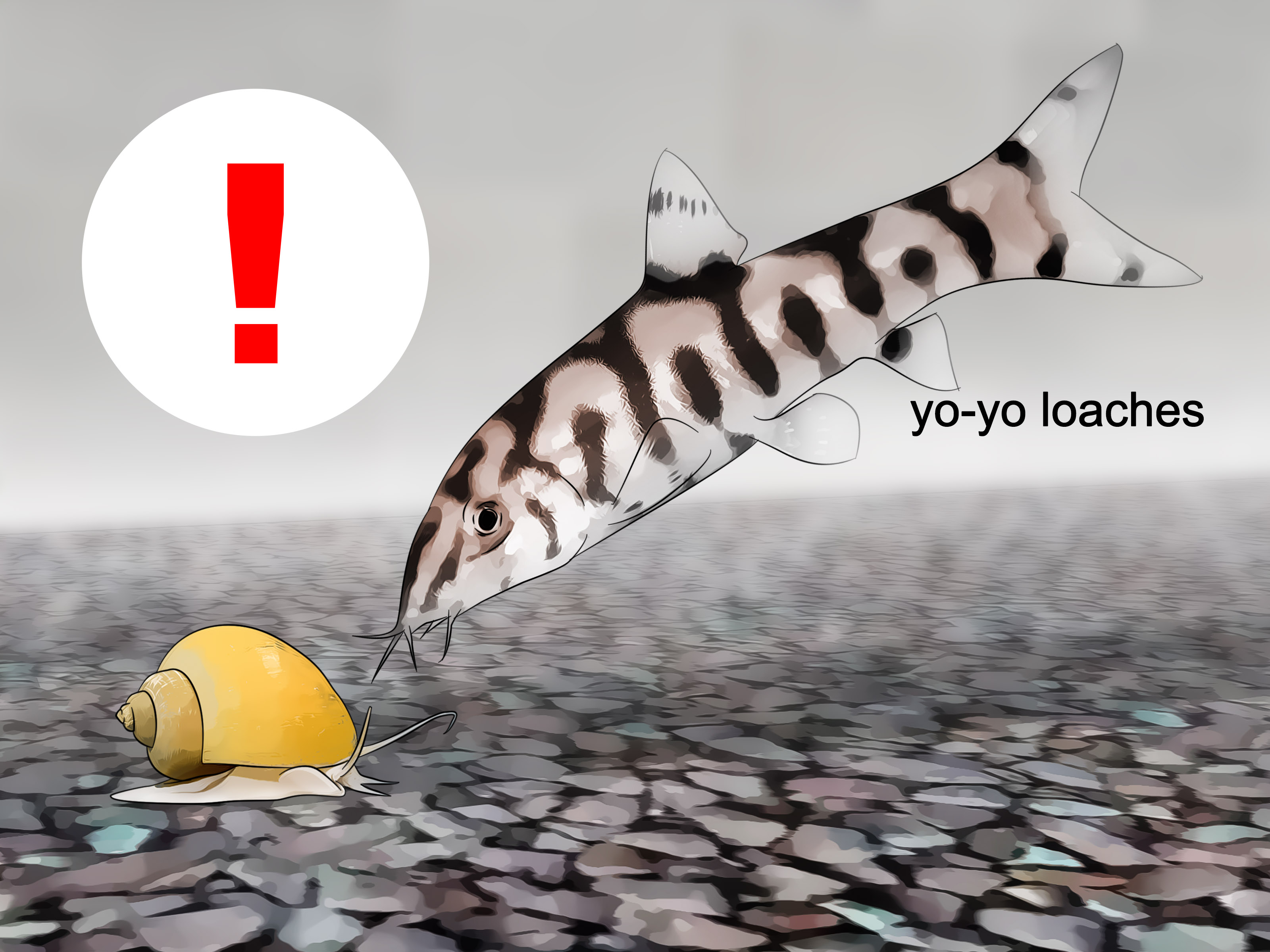
- Large loaches and other species that can crack shells
Broad snail care guidance notes snails are compatible with many freshwater fish but should not be housed with aggressive fish that may try to eat them.[3]
Step 12: Avoid Copper, Be Careful With Salt, and Treat Illness Snail-Safely
If there’s one “read the label” moment in mystery snail care, it’s this: many invertebrates are sensitive to copper-based medications, and copper-based treatments can be toxic to snails.[3][4] Some guidance for mystery snails also warns to avoid copper in products added to the tank.[2]
Salt is another common issue. High levels of freshwater salt can be harmful to snails, and some snails are sensitive to salt exposure during treatment plans.[3][1] If you need to treat fish with medications or salt-based protocols, consider moving the snail to a separate, cycled hospital tank when appropriate.
Common “is this normal?” behaviors
- Floating: can happen when they trap air; they can release it and sink later[1]
- Long naps: snails can rest for hours
- Surface breathing: normal for these snails, even in good water[1]
Red flags worth acting on
- Not moving for a long time and staying tightly sealed repeatedly
- Shell rapidly worsening (new pits, cracks, soft edges)
- Falling often, struggling to attach, or repeatedly staying limp
Step 13: Understand Breeding and Egg Clutches (Or How to Not Become a Snail Grandparent)
Mystery snails are not hermaphrodites, and they don’t reproduce underwater the way some pest snails do. A key fact: they lay egg clutches above the waterline, usually on glass or the underside of a lid.[1] If you see a pinkish/tan “bumpy” clutch above the water, congratulationsyou have a mystery snail egg clutch.
If you want to prevent breeding
- Keep only one snail (or snails of the same sex, if known)
- Remove egg clutches you find above the waterline before they develop
- Maintain a lid but avoid providing tons of exposed, humid egg-laying space if you’re trying to reduce clutches
If you want to hatch eggs (responsibly)
Egg clutches are laid above the water for a reason: they shouldn’t be fully submerged.[2] Keepers often aim for warm, humid conditions so the clutch doesn’t dry out, while preventing it from dropping into the water early. Once babies hatch, they’ll need safe conditions and protection from fish that might eat them.
Breeding sounds fun until you realize babies are tiny, hungry, and surprisingly numerous. Have a plan for housing or rehoming before you encourage hatching.
Troubleshooting Cheat Sheet (Because Snails Don’t Come With a Manual)
“My snail is eating my plants!”
In many cases it’s actually eating dying leaves, soft plant tissue, or fragile floating plantsand hunger makes this more likely. Try feeding sinking foods more consistently and remove decaying plant matter. Also expect occasional plant “uprooting” just from snail traffic.[1]
“My snail’s shell looks rough or pitted.”
Think minerals + pH + stability. Improve diet, provide calcium/mineral support, and avoid long-term low pH. Shell improvements take time, but new growth can look better when conditions are corrected.[1]
“My snail climbed out once. Will it do it again?”
Yes. It absolutely will. Secure your lid and block escape gaps near filters and tubing. Snails can climb out of the tank, and a tight-fitting lid is recommended.[3]
“Do I need to worry about hygiene?”
Like many pets (especially aquatic ones), basic hygiene matters. Wash hands after handling the tank or equipment, especially for kids and households with higher-risk individuals.[3]
Keepers’ Experiences: 10 Lessons People Learn After Owning Mystery Snails (About )
If you ask a room full of aquarium keepers about mystery snails, you’ll hear the same stories repeated with different character nameskind of like a sitcom where the star is a snail and the plot twist is always, “Wait… how did you get up there?” A very common first “experience” is the escape attempt: the snail explores the glass, finds a tiny lid gap by the filter, and makes a break for it. The keeper then becomes an overnight engineer, inventing a custom lid solution using sponge, mesh, or whatever is nearby. The lesson is simple: if a snail can fit, a snail will commit.
Another widely shared moment is the first time a mystery snail uses its breathing siphon or zooms to the surface. New keepers sometimes panic and assume the tank is low on oxygen or “bad,” but mystery snails can breathe air and may surface even in a healthy aquarium. Once you learn that, the behavior turns from alarming to entertaininglike watching a tiny submarine extend a snorkel.
Feeding experiences are a close second. Many people buy a mystery snail expecting it to live on algae alone. What usually happens is: the snail cleans a bit, then starts hovering around wherever food hits the bottom, because it wants the good stuff. When keepers begin offering sinking pellets or blanched zucchini, they often describe the snail’s sense of smell like it’s got a GPS. The snail is on one side of the tank, you drop in food on the other side, and suddenly it’s racing across the substrate like it has somewhere important to be. The lesson: plan to feed it intentionally, and remove leftovers so your water doesn’t suffer.
Shell health is where “experience” becomes wisdom. Many hobbyists don’t think about GH, KH, or pH until they notice pitting or rough shell areas. The common fix isn’t a magic productit’s consistency: harder, mineral-rich water, steady pH above neutral, and a diet that includes calcium-rich options. The funniest part is how quickly people go from “I just wanted a cute snail” to “I am now monitoring hardness like a professional.”
Breeding stories are their own genre. The first egg clutch is often met with shock (“Why is there a pink bumpy thing above my waterline?”). Then comes the decision tree: remove it, or try hatching it. The experienced keepers tend to say the same thing: only hatch if you truly want a lot of baby snails and you have a plan for them. It’s not that breeding is impossibleit’s that success can create a population boom you didn’t ask for. In the end, the best “experienced keeper” advice is calm and practical: keep the water stable, feed well but not too much, avoid copper-based treatments, secure the lid, and enjoy the snail’s weird little stunts. Mystery snails are simple… once you stop underestimating them.

