
Skincare
Griffin Single Compartment Scullery Sink
Jul
A sink rarely earns the right to be called a workhorse. Most spend their days rinsing coffee mugs and quietly judging the person who leaves oatmeal bowls “to soak” until tomorrow. The Griffin Single Compartment Scullery Sink, however, belongs to a much more muscular category of plumbing fixture.
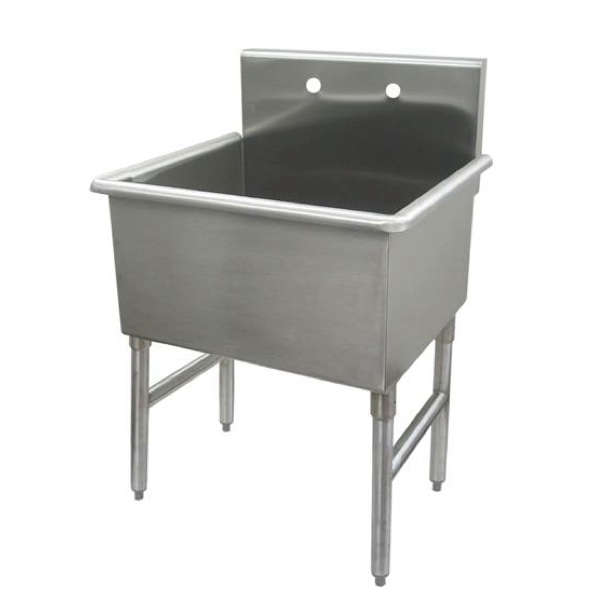
Archived product information identifies the Griffin T60-144 as a freestanding, single-bowl scullery sink constructed from 16-gauge Type 304 stainless steel. Its commercial-style design includes a backsplash with faucet holes on 8-inch centers, stainless steel legs, adjustable bullet feet, square bowl corners, and a one-piece or “uni-body” bowl configuration. A related Griffin Terrell-series model is currently marketed as a 27-by-27.5-inch freestanding sink with a large-capacity basin, although buyers should compare model numbers carefully because dimensions, included faucets, and accessory packages may differ.
This is not a dainty decorative basin pretending it enjoys hard work. It is intended for laundry rooms, garages, workshops, utility spaces, potting rooms, and other locations where a normal kitchen sink may respond to the daily workload by filing a formal complaint.
What Is a Scullery Sink?
A scullery sink is a deep, generously proportioned sink designed for demanding washing and cleanup tasks. Historically, a scullery was a secondary room where dishes, cookware, vegetables, and household equipment were washed away from the primary kitchen. In a modern American home, the same idea may appear as a utility room, prep kitchen, laundry room, mudroom, or back kitchen.
The defining feature is not simply depth. A good scullery sink provides enough width, water capacity, faucet clearance, and structural strength to handle awkward objects. Think stockpots, paint trays, muddy garden tools, pet bowls, mop buckets, oven racks, and laundry items that should not visit the kitchen sink under any circumstances.
Single-bowl sinks are especially useful when the main task involves large objects. Dividers in a double-bowl sink may help with simultaneous washing and rinsing, but they also turn a large roasting pan into a geometry problem. A spacious single compartment allows the entire basin to be used as one uninterrupted work area. General sink-design guidance similarly notes that single basins maximize usable space, while double basins are better suited to divided workflows.
Key Griffin Single Compartment Scullery Sink Features
16-Gauge Type 304 Stainless Steel
The Griffin T60-144 has been described as using 16-gauge Type 304 stainless steel. In stainless-steel measurements, a lower gauge number indicates thicker sheet metal, so 16 gauge is heavier than the 18-gauge material commonly found in many residential utility sinks.
That extra substance matters in a large freestanding basin. Thicker steel generally feels more rigid, is less prone to flexing under a heavy bucket, and can provide a more substantial commercial character. It does not make the surface immune to scratches or dents, but it helps the fixture feel like equipment rather than an oversized mixing bowl on stilts.
Type 304 is widely used in kitchens and food-contact environments because it offers a practical combination of formability, durability, cleanability, and corrosion resistance. Stainless steel develops a thin chromium-rich protective film that helps it resist ordinary exposure to water. Nickel-containing stainless steels are also valued in food-service applications because they tolerate frequent cleaning and remain hygienic when properly maintained.
Large Single-Compartment Bowl
The Griffin design favors one large compartment instead of dividing the working area into smaller sections. This configuration is well suited to soaking bulky laundry, rinsing oversized cookware, cleaning barbecue accessories, filling watering cans, or washing tools after a weekend project became “slightly more involved” than expected.
A related Terrell-series listing describes a basin capacity of approximately 30 gallons. That figure should not automatically be applied to every Griffin model or vintage, but it illustrates the scale of this sink family. Before ordering replacement parts or planning cabinetry, confirm the exact model number and measure the actual unit rather than trusting a decade-old retail description.
Freestanding Stainless Steel Legs
Stainless steel legs give the Griffin sink a commercial, open-frame appearance. The exposed base makes plumbing accessible and eliminates the need for a supporting vanity cabinet. That can reduce installation complexity in garages, basements, utility rooms, and workshops where practical access matters more than hiding every pipe behind a fashionable door.
The tradeoff is equally obvious: the plumbing remains visible, and the open area beneath the bowl must be cleaned. Dust, pet hair, detergent drips, and the occasional runaway sock will discover this space with astonishing efficiency.
Adjustable Bullet Feet
Adjustable bullet feet help stabilize the sink on floors that are not perfectly level. This is particularly helpful in basements and garages, where concrete floors may slope toward a drain. Proper leveling improves comfort, reduces rocking, and helps water move toward the sink outlet instead of resting in one corner like a tiny indoor pond.
The feet are intended for fine adjustment, not for correcting a dramatically uneven slab. If one leg requires a stack of improvised shims worthy of modern sculpture, the floor or installation plan needs additional attention.
Integrated Backsplash and 8-Inch Faucet Centers
Archived specifications place the faucet openings on 8-inch centers in the backsplash. This spacing is common among commercial-style wall- and backsplash-mounted faucets, giving buyers access to swing-spout, service-sink, and workboard-faucet configurations. Commercial faucet manufacturers offer numerous 8-inch-center models, including versions with long swivel spouts that can reach across a wide basin.
A high-arc or long swing-spout faucet is usually more practical than a short residential spout. A pull-down sprayer or pre-rinse-style assembly can make it easier to reach the corners and rinse tall objects, although the faucet must be compatible with the sink’s hole spacing, backsplash thickness, available wall clearance, and water-supply layout.
Square-Corner Styling
The square bowl gives the sink a crisp, industrial appearance and maximizes usable space near the edges. Large rectangular items can sit flatter than they might in a strongly rounded basin.
However, square corners demand more cleaning attention. Rounded commercial sink corners are often promoted for easier sanitation because a sponge can move through them without stopping to negotiate a sharp turn. On the Griffin sink, a small nylon brush or narrow nonabrasive cleaning pad is useful for removing residue along the seams and corners.
Where the Griffin Scullery Sink Works Best
Laundry Rooms
A deep stainless steel utility sink can handle hand-washing, stain treatment, soaking, bucket filling, and cleaning jobs that do not belong near food preparation. Laundry-room planning guidance often recommends a 10- to 12-inch-deep stainless basin, easy-to-clean corners, and a versatile faucet with a high neck or pullout spray. The Griffin design takes that practical concept and gives it a distinctly commercial personality.
Garages and Workshops
In a garage, the sink can become a cleanup station for paintbrushes, gardening equipment, reusable filters, shop towels, and grimy hands. Use common sense with solvents, fuels, adhesives, concrete residue, and hazardous chemicals. A drain is not a magical portal that makes disposal regulations disappear.
A stainless backsplash is helpful where splashing is expected, but nearby drywall may still need protection. Washable wall panels, tile, or an extended stainless splash panel can prevent water damage around the fixture.
Potting Rooms and Garden Areas
The broad bowl can hold plant containers, soil-covered tools, harvested vegetables, and watering cans. A removable basket strainer helps catch leaves, potting mix, and stones before they enter the plumbing. Letting a handful of gravel travel into the drain is an excellent way to meet a plumber sooner than planned.
Back Kitchens and Prep Spaces
The Griffin sink can serve as a secondary washing station in a spacious home, event kitchen, or hobby food-preparation area. Its industrial appearance pairs naturally with stainless tables, open shelving, subway tile, and durable flooring.
For regulated commercial food service, however, a single-compartment sink may not satisfy manual warewashing requirements. The FDA Food Code generally calls for at least three compartments for washing, rinsing, and sanitizing utensils, unless an approved alternative applies. Drainboards or equivalent holding areas may also be required. Local health and plumbing authorities determine what is acceptable in a specific jurisdiction.
Is the Griffin Sink NSF Certified?
Stainless construction and commercial styling do not automatically establish that a sink is NSF certified. NSF/ANSI 2 covers sanitation-related requirements for the materials, design, fabrication, construction, and performance of food equipment, including sinks. Certification should be confirmed using the exact manufacturer and model number in the current NSF listings or through documentation supplied by the seller.
This distinction may be unimportant for a residential laundry room, but it can be decisive in a restaurant, licensed bakery, school kitchen, or other inspected operation. Before purchasing for commercial use, ask the local authority whether the sink needs NSF certification, how many compartments are required, and whether drainboards, indirect waste connections, or specific faucet features are necessary.
Installation Considerations
Measure the Entire Space
Measure width, depth, height, doorways, appliance clearances, and the working space in front of the sink. Do not consider the bowl dimensions alone. The faucet, backsplash, supply valves, trap, drain line, and elbow room all require space.
For one Griffin T60-144 installation question, a manufacturer response placed the drain center approximately 12 inches forward from the vertical backsplash. Another response indicated that the faucet-hole center was about 42 inches above the finished floor. Treat these figures as planning references rather than universal specifications, because model revisions and leg adjustments can change final positions.
Plan the Drain and Vent Correctly
Utility-sink installation is not just a matter of connecting a flexible hose and hoping the plumbing inspector enjoys improvisational comedy. The drain must connect to an appropriately sized, trapped, and vented system that complies with local code. Installing a utility sink often involves extending the existing drain and vent lines or adding an approved pump when gravity drainage is not available.
Secure the Sink
Although the unit is freestanding, it should not be allowed to shift when someone leans against it or maneuvers a heavy container. Follow the manufacturer’s instructions for wall clips, brackets, bracing, or other anchoring methods. Confirm that the legs are fully seated and that every foot bears weight evenly.
Choose the Faucet for the Job
A long swivel spout is useful for filling buckets and reaching different parts of the basin. A pull-down spray head improves rinsing flexibility, while a commercial pre-rinse assembly offers excellent reach but may be visually bulky in a small residential room.
Check handle clearance, spout reach, flow rate, hose connections, supply-line compatibility, and whether a vacuum breaker is necessary for the intended use. A faucet designed for an 8-inch center configuration is the logical starting point, but the mounting style must also match the backsplash.
Protect the Surrounding Room
Use water-resistant flooring and seal wall penetrations properly. Consider a drain pan, floor drain, or leak alarm where water damage would be expensive. A utility sink is built to contain messy work, but it cannot prevent every loose hose, failed connection, or bucket-placement mishap.
Advantages and Drawbacks
Advantages
- Large uninterrupted bowl for bulky objects
- Heavy 16-gauge stainless steel construction
- Corrosion-resistant Type 304 material
- Freestanding installation with accessible plumbing
- Adjustable feet for minor floor irregularities
- Integrated backsplash with standard 8-inch faucet spacing
- Industrial appearance suited to hardworking rooms
- No cabinet required for structural support
Potential Drawbacks
- Square corners require more detailed cleaning
- Exposed pipes and legs may look too industrial for a finished kitchen
- Open space beneath the bowl collects dust and clutter
- Large dimensions can overwhelm a compact laundry room
- Stainless steel develops visible scratches and water spots
- Single-compartment construction may not meet commercial warewashing rules
- Faucet packages and model names vary among listings
- Older models or replacement parts may have limited availability
How to Clean and Maintain the Stainless Steel
Routine care is refreshingly uncomplicated. Wash the surface with mild dish detergent and a soft sponge or cloth, rinse thoroughly, and dry it to reduce mineral deposits. When the steel has a visible brushed grain, wipe in the direction of that grain rather than scrubbing across it.
Avoid steel wool, wire brushes, and aggressive abrasive pads. They can scratch the finish and leave behind iron particles that later create orange surface stains. Do not leave wet cast-iron tools, steel cans, or metal fasteners sitting in the basin for long periods. Marks that look like rust may be transferred deposits rather than corrosion of the sink itself.
Rinse away salt, acidic residue, concentrated cleaners, and chloride-containing chemicals promptly. Even durable stainless steel appreciates not being used as overnight storage for mysterious workshop liquids.
Clean the drain basket regularly, inspect the faucet and supply connections for slow leaks, and check that the bullet feet remain tight. If the sink begins to rock, correct the leveling before movement stresses the drain connection.
Who Should Buy a Griffin Single Compartment Scullery Sink?
This style of sink is a strong match for homeowners who value capacity, durability, and accessible plumbing more than concealed storage. It is particularly appropriate for a spacious laundry room, workshop, basement, mudroom, garden room, studio, or garage.
It may be less suitable for a tiny room where every inch is needed for cabinets, or for a highly polished kitchen where exposed legs and plumbing conflict with the design. A cabinet-mounted laundry sink may provide better storage and a more integrated appearance, while a three-compartment commercial sink may be legally necessary for food-service warewashing.
Because older Griffin information appears under the T60-144 name while newer retail pages may use Terrell-series model numbers, buyers should request the current specification sheet before purchase. Confirm bowl dimensions, overall height, drain location, faucet inclusion, mounting hardware, warranty terms, certification status, and replacement-part availability.
Experience Notes: What Living With a Griffin-Style Scullery Sink Is Like
The following section synthesizes common owner observations, retailer reviews, installation discussions, and practical lessons from comparable freestanding utility sinks. It is not presented as a claim of personal ownership.
The Size Feels Luxurious Until the Room Feels Small
The first real-world lesson is that a large scullery sink feels wonderfully capable once installed. A bucket can sit beneath the faucet without being tilted. A stockpot can be rinsed without repeatedly rotating it. A muddy planter can be cleaned while the surrounding floor remains reasonably civilized.
Then the owner steps back and realizes that a roughly 27-inch freestanding fixture has a larger visual presence than the tape outline suggested. This is especially noticeable beside compact washers, shallow cabinetry, or a narrow walkway. Marking the entire footprint on the floor is useful, but marking the faucet height and backsplash on the wall provides a more accurate sense of volume.
Laundry-room design discussions repeatedly show that homeowners underestimate appliance doors, walking space, cabinet projections, and the area required to stand comfortably at the sink. A fixture can technically fit and still make the room annoying to use.
The Deep Bowl Changes Daily Habits
Owners of large utility sinks often discover new uses after installation. The sink becomes the place for soaking sports uniforms, washing pet accessories, rinsing recycling bins, cleaning humidifier parts, and containing plants while they drain. Messy jobs migrate away from the kitchen, which is arguably the sink’s greatest contribution to domestic peace.
The depth also reduces splashing when a bucket is filled or a large object is sprayed. However, reaching the bottom may be uncomfortable for shorter users, especially if the faucet holes sit high above the finished floor. Before finalizing the installation, stand at a counter or temporary platform of comparable height and simulate scrubbing the basin floor. Ergonomics are easier to fix before the plumbing is glued together.
Open Legs Are Convenient but Visually Honest
Open plumbing makes leaks easier to spot and repairs easier to perform. There is no cabinet floor to absorb water quietly while everyone wonders why the room smells unusual. Shutoff valves, the trap, and supply connections remain accessible.
On the other hand, exposed plumbing is not decorative camouflage. Owners who want a softer residential appearance may add a removable curtain, coordinating wall finish, neatly arranged storage shelf, or custom enclosure. Any enclosure should preserve ventilation and plumbing access.
The floor beneath the bowl also needs routine cleaning. Community discussions about freestanding laundry sinks frequently mention the inconvenience of sweeping and mopping around multiple legs. Keeping detergents in wall cabinets rather than piling bottles beneath the basin makes the area much easier to maintain.
Scratches Become Part of the Finish
A new stainless sink arrives looking crisp and reflective. The first scratch can therefore feel like a minor tragedy. After months of actual utility work, the scattered marks develop into a more uniform working patina.
A bottom rack or removable rubber mat can reduce direct contact from cast-iron pans, metal buckets, and tools. The mat should be removed regularly so trapped grit and moisture do not create stains. For a genuine work sink, expecting a permanently flawless finish is unrealistic. The more practical goal is a clean, sanitary, well-maintained surface.
The Faucet Determines Much of the Experience
A large bowl paired with a short faucet is an awkward combination. Users may struggle to rinse the far corners, and tall buckets may not fit beneath the spout. A properly sized swing spout or pull-down sprayer transforms the sink from merely large to genuinely useful.
Long spouts also increase leverage on the faucet body, so secure mounting is important. Commercial-style faucets should be selected according to actual reach rather than appearance alone. The ideal outlet position is usually near the center of the bowl, where water can fill containers without striking the rear wall or splashing directly onto the drain.
The Best Experience Begins With Careful Planning
Positive ownership experiences usually share the same unglamorous foundation: accurate measurements, professional-quality plumbing, proper wall anchoring, a compatible faucet, and an easy-to-clean room. Poor experiences often begin with assumptions about model dimensions, drain locations, or included parts.
The Griffin Single Compartment Scullery Sink is most satisfying when it is treated as working equipment rather than a decorative accessory. Give it sufficient space, connect it correctly, and allow it to look like a sink that performs actual labor. In return, it can absorb years of laundry mishaps, workshop cleanup, muddy gardening projects, and oversized cookware without demanding applause.
Final Verdict
The Griffin Single Compartment Scullery Sink combines a large single bowl, heavy Type 304 stainless steel, adjustable freestanding legs, an integrated backsplash, and commercial-style faucet spacing. Its strengths are capacity, durability, and versatility. Its weaknesses are an industrial appearance, visible plumbing, square corners, and the need to verify model-specific details carefully.
For a hardworking residential utility room, garage, studio, or workshop, it can be an excellent alternative to a lightweight molded laundry tub. For regulated food-service use, purchasers must confirm certification and local warewashing requirements before assuming that one large compartment is sufficient.
Note: Product names, included accessories, specifications, certifications, warranty coverage, and availability can change. Confirm the exact Griffin model number and obtain a current manufacturer specification sheet before purchasing or preparing plumbing connections.

