
Skincare
Famous Navigators
Aug
Before GPS, satellite maps, flight trackers, and that soothing robot voice telling us to “turn left in 500 feet,” navigation was a serious act of courage. Famous navigators did not simply follow blue dots on a screen. They studied stars, winds, currents, coastlines, birds, clouds, mathematics, and sometimes the extremely unreliable advice of people who were also lost.
The history of navigation is the history of human curiosity with a compass in one hand and a questionable meal plan in the other. From Polynesian wayfinders crossing the Pacific without modern instruments to European sea captains mapping trade routes, from Norse sailors reaching North America to scientific explorers charting the oceans, great navigators changed how people understood the planet.
But this story is not only about glory. Famous navigators helped connect cultures, expand knowledge, and improve cartography, but many voyages also led to conquest, colonization, disease, exploitation, and conflict. A good look at famous navigators should admire their skill without pretending history was one long cheerful boat parade.
What Makes a Navigator Famous?
A famous navigator is not always the person who first sees land. Sometimes it is the person who plans the route, keeps the ship alive, reads the sea correctly, or turns a terrifying ocean crossing into a repeatable path. Navigation combines science, memory, observation, leadership, and a calm face when everyone else is asking whether the ship is supposed to make that noise.
Historically, navigators used tools such as the compass, astrolabe, sextant, marine chronometer, maps, sounding lines, and later radio and satellite systems. Long before those tools became common, many cultures used natural navigation. Polynesian navigators, for example, read stars, wave patterns, bird behavior, winds, and cloud formations to cross enormous distances in the Pacific.
Great navigation also required decision-making. A captain could have the finest map in Europe and still make a terrible choice if he ignored storms, crew morale, food supplies, or local knowledge. The best navigators were not just map readers. They were risk managers, diplomats, astronomers, sailors, and occasionally stubborn geniuses with salt in their eyebrows.
Leif Erikson: The Norse Navigator Who Reached North America
Leif Erikson is one of the most famous navigators connected with early European contact with North America. Around the year 1000, Norse sailors traveled from Greenland toward lands west of the Atlantic. The settlement at L’Anse aux Meadows in Newfoundland is widely associated with Norse exploration and shows that Europeans reached North America centuries before Christopher Columbus.
Leif’s achievement was remarkable because Viking navigation relied on practical seamanship, oral tradition, landmarks, ocean knowledge, and experience in harsh northern waters. These voyages were not leisurely cruises with souvenir mugs. They involved cold seas, unpredictable weather, wooden ships, and the constant possibility of discovering that “adventure” is just discomfort with better storytelling.
Leif Erikson’s legacy matters because it reminds us that exploration was not a single European event that began in 1492. The Atlantic had earlier chapters, and the Norse were among the boldest sailors of the medieval world.
Zheng He: Admiral of the Treasure Fleets
Zheng He, the great Chinese admiral of the Ming dynasty, commanded some of the most impressive maritime expeditions in world history. Between 1405 and 1433, his fleets traveled through Southeast Asia, South Asia, the Indian Ocean, the Arabian Peninsula, and the eastern coast of Africa.
Unlike many later European voyages focused heavily on conquest and permanent colonization, Zheng He’s expeditions were largely diplomatic, commercial, and symbolic displays of Ming power. His fleets carried goods, envoys, interpreters, soldiers, sailors, and specialists. They exchanged gifts, built relationships, and showed that China had enormous naval capacity long before Europe dominated global sea routes.
Zheng He deserves a place among famous navigators because his voyages were massive in scale and sophisticated in organization. Managing a fleet across such distances required detailed planning, strong leadership, knowledge of monsoon winds, and skilled navigation across busy and dangerous waters.
Prince Henry the Navigator: The Man Who Sponsored the Mapmakers
Prince Henry of Portugal is known as “Henry the Navigator,” although he was not famous for personally sailing across unknown oceans. His importance came from patronage. In the 15th century, Henry supported Portuguese maritime exploration along the west coast of Africa and helped encourage advances in ship design, cartography, and navigational knowledge.
That may sound less exciting than wrestling a storm at sea, but funding exploration is a powerful role. Ships need money. Sailors need wages. Mapmakers need information. Someone has to pay for ropes, sails, food, repairs, and all the other glamorous parts of maritime history that rarely get statues.
Henry’s support helped Portugal become a major maritime power. His era contributed to the development of routes that eventually connected Europe, Africa, and Asia by sea. His legacy is complicated by the expansion of slave trading and empire, but his influence on navigation and exploration is undeniable.
Christopher Columbus: Skill, Controversy, and a Changed World
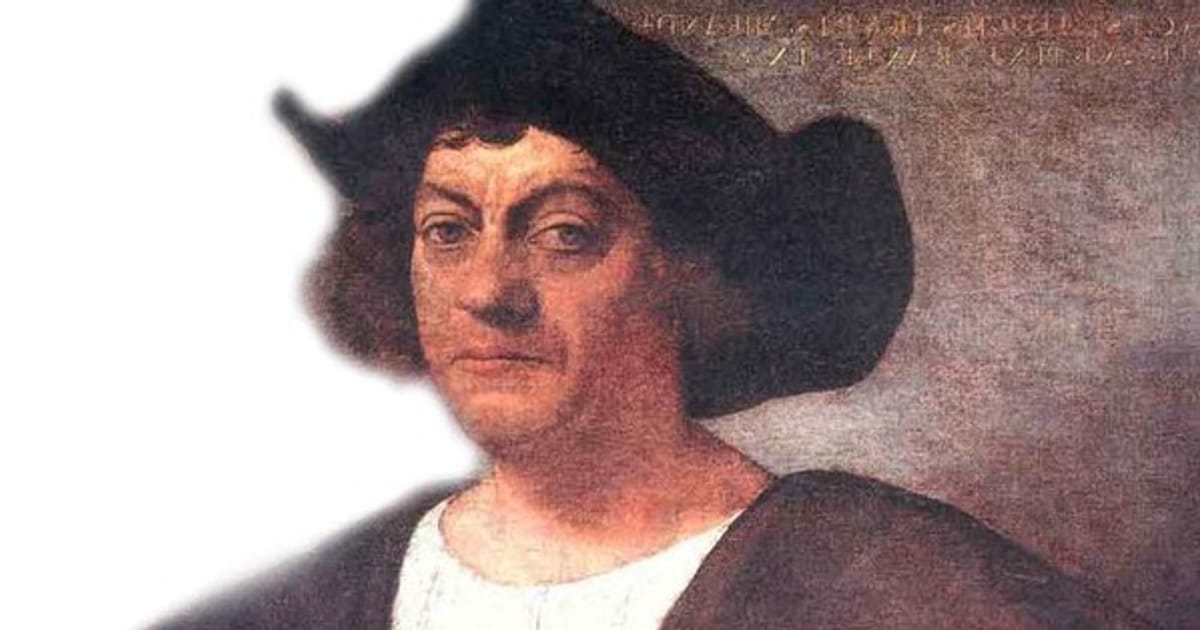
Christopher Columbus remains one of the most famous navigators in history, and also one of the most debated. In 1492, sailing under the Spanish crown, he crossed the Atlantic and reached the Caribbean while attempting to find a westward route to Asia. His voyages opened the door to sustained contact between Europe and the Americas.
Columbus was a skilled mariner who understood Atlantic winds well enough to make a historic crossing. However, he also badly underestimated the size of the Earth and believed he had reached regions near Asia. In other words, he made one of history’s most consequential wrong turns.
His legacy cannot be separated from the suffering that followed European expansion in the Americas. Colonization brought violence, forced labor, disease, cultural disruption, and exploitation to Indigenous peoples. A responsible article about famous navigators should recognize Columbus’s navigational importance while avoiding the old habit of treating him as a flawless hero in a fancy hat.
Vasco da Gama: Opening the Sea Route to India
Vasco da Gama was the Portuguese navigator whose 1497–1499 voyage connected Europe to India by sailing around the southern tip of Africa. His route around the Cape of Good Hope helped reshape global trade by linking European markets directly with the Indian Ocean world.
Da Gama’s voyage was a navigational breakthrough for Portugal. It proved that a sea route from Europe to Asia was possible without relying only on overland trade networks. Spices, textiles, and other valuable goods became central to Portuguese imperial ambitions.
Like many famous navigators, da Gama’s legacy includes both achievement and violence. His voyages helped expand geographical knowledge and maritime trade, but they also contributed to aggressive European competition in the Indian Ocean. History, inconveniently, refuses to fit inside a postcard.
Ferdinand Magellan and Juan Sebastián Elcano: Around the World the Hard Way
Ferdinand Magellan led the Spanish expedition that became the first known voyage to circumnavigate the globe, although Magellan himself did not survive the journey. He was killed in the Philippines in 1521. Juan Sebastián Elcano later took command and completed the circumnavigation in 1522.
This expedition proved the vastness of the Pacific Ocean and transformed European understanding of the world’s scale. It also demonstrated the brutal difficulty of long-distance ocean travel. Hunger, disease, conflict, storms, and uncertainty battered the crew. Circumnavigation sounds elegant now, but at the time it was closer to a floating endurance contest with terrible catering.
Magellan and Elcano belong together in the story of famous navigators. Magellan planned and led the early stages of the expedition, while Elcano completed the voyage that confirmed the Earth could be sailed around in a continuous route.
James Cook: The Navigator as Scientist and Cartographer
Captain James Cook was one of the greatest navigators and cartographers of the 18th century. His Pacific voyages produced detailed charts of New Zealand, Australia’s eastern coast, and many Pacific islands. Cook’s work combined seamanship with scientific observation, making him a major figure in the history of exploration.
Cook’s voyages carried astronomers, artists, botanists, and other specialists. That made his expeditions more than treasure hunts or flag-planting exercises. They were floating research projects, though still tied to imperial expansion. Cook’s charts were admired for their accuracy, and his use of improved instruments helped raise the standard of navigation.
His legacy is complex, especially in places where European arrival disrupted Indigenous societies. Still, as a navigator, Cook’s technical skill was extraordinary. He helped turn exploration into a more scientific enterprise, even if the politics of empire were always on deck.
Polynesian Wayfinders: Masters of the Living Ocean
No discussion of famous navigators is complete without Polynesian wayfinders. For centuries, Pacific Islanders crossed vast ocean distances without modern instruments. They navigated by stars, swells, winds, clouds, birds, and deep knowledge passed through generations.
Polynesian navigation is one of humanity’s most impressive intellectual traditions. A trained wayfinder could understand how waves changed near islands, how birds behaved at different distances from land, and how star paths shifted through the night. The ocean was not empty space. It was a readable landscape.
Modern revivals, including voyages of traditional double-hulled canoes, have shown how powerful this knowledge remains. Polynesian wayfinding challenges the mistaken idea that advanced navigation must always mean metal instruments and written charts. Sometimes the best navigation system is a human mind trained to notice everything.
Matthew Flinders: Mapping Australia
Matthew Flinders was a British navigator and cartographer best known for circumnavigating Australia and helping establish the name “Australia” for the continent. His early 19th-century voyages added important detail to European maps and helped clarify the shape of the Australian coastline.
Flinders was part of a later age of exploration, when navigation increasingly depended on more precise instruments and scientific surveying. His charts were valuable because accuracy mattered. A coastline drawn badly could wreck ships, ruin trade, and turn a captain’s confidence into driftwood.
His work shows how famous navigators did not only discover routes. They improved the reliability of travel for everyone who followed.
Henry Hudson: Searching for a Passage That Wasn’t There
Henry Hudson, an English navigator, made several voyages in search of northern routes to Asia. He explored parts of the Arctic, Hudson River, Hudson Strait, and Hudson Bay. Like many explorers of his time, Hudson was chasing the dream of a Northwest Passage that could connect Europe to Asian trade by a shorter route.
Hudson never found the passage he wanted, but his voyages contributed to European mapping of North America’s waterways. His story also ended grimly: after conflict with his crew, Hudson was set adrift in 1611 and disappeared.
Hudson’s life proves that navigation history is full of ambition, uncertainty, and human tension. The map may look clean now, but it was often drawn through confusion, danger, and arguments over food.
Why Famous Navigators Still Matter Today
Today, navigation feels effortless. Phones tell us where to go. Ships use satellite systems. Aircraft cross oceans with astonishing precision. Yet modern navigation stands on centuries of accumulated knowledge from sailors, mathematicians, astronomers, cartographers, Indigenous experts, and scientific explorers.
Famous navigators matter because they changed the mental map of humanity. They connected distant regions, revealed ocean systems, improved charts, and proved that the world was larger, stranger, and more connected than many people imagined.
Their stories also teach caution. Exploration can inspire discovery, but it can also become conquest when curiosity is tied to greed and power. The best modern reading of famous navigators is balanced: admire the courage and intelligence, but do not ignore the consequences.
Lessons We Can Learn From Famous Navigators
1. Observation Is a Superpower
Great navigators noticed details others missed. A bird flying in a certain direction, a change in swell, a star rising at a specific point, or a coastline shaped differently than expected could mean survival. In daily life, observation still matters. Whether you are building a business, studying history, planning travel, or fixing a leaky sink, the person who notices patterns usually wins.
2. Good Maps Still Need Good Judgment
A map is helpful, but it is not wisdom. Famous navigators had to interpret imperfect information. The same is true today. Data, apps, analytics, and advice are useful, but judgment decides how to use them. Even the best GPS cannot stop someone from driving into a lake if they refuse to look out the windshield.
3. Courage and Humility Should Travel Together
Exploration requires courage, but history shows that courage without humility can become arrogance. Navigators who respected local knowledge, weather, crew limits, and cultural realities often made better decisions. The ocean has never been impressed by ego.
Personal Experiences and Reflections Related to Famous Navigators
Reading about famous navigators can change the way you think about ordinary travel. After learning how sailors crossed oceans with stars and handwritten charts, even a delayed flight feels a little less dramatic. Yes, waiting at the airport is annoying, but at least nobody is asking you to calculate latitude while chewing salted meat in a storm.
One of the most useful experiences related to this topic is trying simple navigation without depending entirely on a phone. Walk through a new neighborhood and pay attention to landmarks, the position of the sun, street patterns, sounds, and building shapes. You quickly realize how lazy modern navigation can make us. A famous navigator would notice the wind, the slope of the land, and the direction of shadows. Many of us notice only that our battery is at 7% and panic like a medieval sailor seeing a sea monster.
Another powerful experience is visiting a maritime museum or historic ship. Standing near old navigation tools makes the past feel real. A sextant, compass, chart, or ship model shows how much skill was required to cross open water. These were not decorative objects. They were survival tools. They helped people make decisions when the nearest help might be weeks away.
Reading voyage journals is also eye-opening. Many famous navigators were not writing glamorous adventure novels. They recorded weather, distances, supplies, illnesses, coastlines, and crew problems. Their notes remind us that exploration was often repetitive, uncomfortable, and stressful. The heroic painting usually skips the part where everyone is wet, hungry, and arguing about barrels.
For writers, students, travelers, and history lovers, the lives of famous navigators offer a practical lesson: progress often begins with imperfect information. Leif Erikson, Zheng He, Columbus, da Gama, Magellan, Cook, Hudson, and Polynesian wayfinders all moved through uncertainty. Some made brilliant decisions. Some made disastrous ones. Some expanded knowledge while also serving empires that caused harm. Their stories are useful because they are not simple.
A modern person can apply the navigator’s mindset by asking three questions: Where am I? What signs can I trust? What happens if I am wrong? Those questions work at sea, in school, in business, in relationships, and in life planning. Navigation is not only about ships. It is about making choices when the destination is clear but the route is not.
Perhaps the most inspiring part of navigation history is that humans kept looking beyond the horizon. Sometimes they were motivated by trade, politics, science, faith, survival, or ambition. Sometimes they were wrong. Sometimes they were lucky. But they kept learning. Famous navigators remind us that the world became known one risky mile at a time.
Conclusion: Famous Navigators and the Human Desire to Know What Lies Beyond
Famous navigators shaped world history by crossing oceans, connecting continents, improving maps, and expanding human knowledge. Their achievements were built on courage, skill, science, memory, and observation. From Polynesian wayfinders and Norse sailors to Zheng He, da Gama, Magellan, Elcano, Cook, Hudson, and others, these navigators helped transform isolated regional worlds into a more connected global one.
Yet their legacies are not all smooth sailing. Navigation opened routes for exchange and discovery, but also for conquest and exploitation. That is why the best way to understand famous navigators is with both admiration and honesty. They were brilliant, bold, flawed, and deeply human.
In the end, the greatest navigators were not just people who found new places. They changed how people imagined the Earth. They turned blank spaces into coastlines, rumors into routes, and fear into movement. Not bad for people who never once heard a GPS say, “recalculating.”

