
Hair Care
FabricKeyboard Is Piano, Theremin And More
May
Some musical instruments politely sit on a stand and wait to be played. FabricKeyboard does not. It stretches, folds, senses pressure, notices your hand hovering above it, and turns those gestures into sound. In other words, it behaves less like a traditional keyboard and more like a piece of musical fabric that went to engineering school, joined a synth band, and decided ordinary keys were too boring.
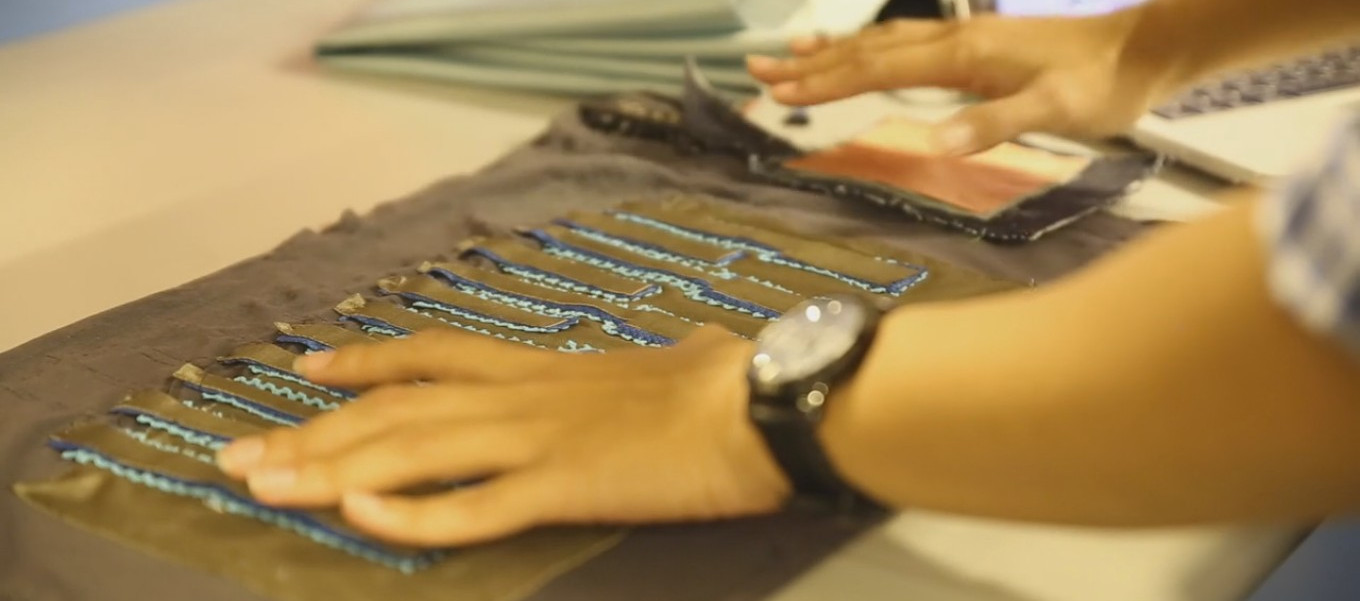
FabricKeyboard is an experimental musical interface developed through the MIT Media Lab’s Responsive Environments research world by Irmandy Wicaksono and Joseph A. Paradiso. At first glance, it looks like a soft fabric piano with a familiar row of keys. But under that friendly textile surface is a layered sensing system that can detect touch, pressure, proximity, stretch, position, and electric-field interaction. That combination allows the instrument to work as a small keyboard, a theremin-like controller, a ribbon controller, a trackpad, and a flexible performance surface all at once.
The result is not just a “soft piano.” It is a musical controller that challenges the idea that instruments need to be rigid, heavy, and shaped like furniture. FabricKeyboard suggests that the next generation of electronic instruments may be wearable, foldable, washable, expressive, and weird in the best possible way.
What Is FabricKeyboard?
FabricKeyboard is a fabric-based musical controller made from multiple layers of smart and ordinary textiles. The design uses conductive fabric, pressure-sensitive material, stretch sensors, and conductive thread to create a responsive surface that can be played in several ways. Instead of treating a key as a simple on/off switch, FabricKeyboard treats the entire textile body as part of the performance.
That is a big shift. A normal electronic keyboard usually detects which key you press, how hard you press it, and sometimes aftertouch or modulation through extra controls. FabricKeyboard goes further by allowing the player to press, pull, squeeze, twist, stretch, hover, slide, and wave near the surface. The keyboard shape makes it approachable, but the fabric behavior makes it unpredictable in a delightful way.
Think of it as a bridge between a digital piano, a synthesizer controller, a theremin, a ribbon controller, and a smart textile prototype. It can trigger notes like a keyboard, shape sound like a continuous controller, and respond to non-contact gestures like an electronic instrument from a science-fiction soundtrack.
How FabricKeyboard Works
The heart of FabricKeyboard is its multimodal sensing system. “Multimodal” simply means it can sense more than one kind of interaction. In this case, the instrument is designed to detect several physical and near-field gestures at the same time.
Touch and Key Presses
The most familiar function is keyboard-style touch. The player can press fabric keys to trigger musical notes, much like pressing keys on a piano or MIDI keyboard. This makes the interface immediately understandable, even for someone who has never seen an experimental textile instrument before.
Pressure Sensitivity
Below the surface, pressure-sensitive layers allow the instrument to respond to how firmly a player presses. That matters because pressure can become musical expression. A light press might produce a soft tone, while a stronger press could increase volume, add filter movement, change brightness, or trigger an effect.
Stretch and Pull Gestures
Because FabricKeyboard is made from flexible material, stretching is not a design flaw; it is part of the instrument. Pulling the fabric while playing can alter sound parameters. For example, stretching might bend pitch, open a filter, add vibrato, or create a wah-like effect. On a rigid keyboard, pulling the instrument would be a bad idea. On FabricKeyboard, it is basically a feature.
Proximity and Electric-Field Sensing
FabricKeyboard can also respond to a hand hovering near the surface. That is where the theremin comparison becomes useful. A traditional theremin is played without touch: the musician moves their hands near antennas to control pitch and volume. FabricKeyboard borrows that spirit by making distance and electric-field changes part of the performance. A hand moving closer or farther from the textile can shape the sound continuously.
Why It Feels Like A Piano And A Theremin At The Same Time
The title “FabricKeyboard Is Piano, Theremin And More” captures the central magic of the project. The piano part comes from the recognizable key layout. The theremin part comes from non-contact interaction. The “and more” comes from everything else the textile can do when you stop treating it like a normal keyboard.
As a piano-style interface, FabricKeyboard gives performers discrete notes. That means you can tap a key and get a specific pitch. This is important because musicians need structure. If every sound is a wild floating ghost tone, performance becomes less like music and more like chasing a mosquito with a microphone.
As a theremin-like controller, it provides continuous expression. A player can move a hand above the fabric and change sound without pressing anything. That opens the door to glides, swells, trembles, eerie pitch movement, and expressive filter changes. The difference is that FabricKeyboard combines this floating control with actual keys, so the player does not have to choose between precision and gesture.
Then come the additional controls: a fabric ribbon controller, a trackpad-like surface, stretching, twisting, and pulling. These interactions make the instrument feel less like a machine and more like a musical object with personality. It is part controller, part textile sculpture, and part performance experiment.
The Role Of MIDI In FabricKeyboard
FabricKeyboard becomes especially powerful when connected to music software through MIDI. MIDI does not carry audio by itself; it carries performance information such as note events, velocity, and controller changes. That means FabricKeyboard can be mapped to synthesizers, samplers, effects, or digital audio workstations.
This is where the instrument’s flexibility becomes practical. A press on a fabric key could trigger a piano sample. A stretch gesture could bend a synthesizer note. A hovering hand could control reverb depth. A slide across the ribbon controller could sweep a filter. The same piece of fabric could become a bass machine, ambient drone controller, percussion pad, or cinematic sound-design surface depending on how the software is mapped.
For electronic musicians, that is exciting because the instrument separates physical gesture from final sound. FabricKeyboard does not have to sound like a piano. It can sound like a piano, a theremin, a cello, a robot bird, a thunderstorm trapped inside a synthesizer, or whatever the performer and software decide.
Why Fabric Matters
Fabric is not just a cute design choice. It changes the way the musician relates to the instrument. Traditional controllers are usually plastic, metal, wood, or glass. They are durable and precise, but they do not invite squeezing, folding, or stretching. Fabric does.
A textile interface feels familiar because people already interact with fabric constantly. We wear it, fold it, carry it, pull it, and wash it. By turning fabric into a musical surface, FabricKeyboard brings digital performance closer to everyday physical experience. Instead of making the performer adapt completely to the machine, the machine borrows behaviors from clothing, bags, scarves, and soft objects.
There is also a portability advantage. A fabric keyboard can be rolled up or folded more easily than a rigid keyboard. For traveling musicians, producers, educators, and sound artists, that idea is immediately attractive. A controller that fits in a bag like clothing could make mobile music creation more natural.
FabricKeyboard And The Future Of Smart Textiles
FabricKeyboard belongs to a larger movement in smart textiles and electronic fabric. Researchers and designers have been exploring conductive thread, pressure-sensitive fabric, knitted sensors, embroidered circuits, and wearable interfaces for decades. What makes FabricKeyboard memorable is how clearly it connects those technologies to musical expression.
Many smart textile projects focus on health monitoring, fashion, sports, or human-computer interaction. FabricKeyboard shows that fabric sensors can also support creativity. It demonstrates how textile interfaces can be expressive, playful, and emotionally engaging. That matters because music is one of the fastest ways to reveal whether an interface feels alive or awkward. If a controller responds naturally to gesture, the musician notices immediately. If it feels clumsy, the musician notices even faster.
The project also points toward future instruments that could be knitted, woven, embroidered, or sewn directly into performance clothing, furniture, stage props, or studio surfaces. Imagine a jacket sleeve that controls a synthesizer, a tablecloth that triggers samples, or a dance costume that generates music from movement. FabricKeyboard makes those ideas feel less like fantasy and more like the next logical experiment.
What Makes FabricKeyboard Different From A Regular MIDI Controller?
A regular MIDI controller is usually built around fixed inputs: keys, knobs, pads, sliders, wheels, and buttons. These are useful, reliable, and familiar. FabricKeyboard does not replace them entirely, but it asks a different question: what if the controller itself could bend with the performance?
With a traditional keyboard, expression often comes from fingers pressing keys and hands moving to separate controls. With FabricKeyboard, the performance can involve the whole object. The player can hold a note while stretching the fabric, slide across a textile surface while pressing a key, or hover over the instrument to shape the tone. The gesture and the material become part of the same musical sentence.
This difference matters for sound design. Many electronic sounds are highly flexible, but controllers can make them feel trapped. A synthesizer may be capable of smooth pitch movement, evolving textures, and complex modulation, yet the performer may only have a few knobs to control it in real time. FabricKeyboard offers more bodily ways to access that sonic depth.
Possible Uses For FabricKeyboard
Live Performance
On stage, FabricKeyboard could give performers a more visual and physical way to control electronic music. Audiences can see stretching, twisting, hovering, and pressing. That makes the performance easier to understand than watching someone stare intensely at a laptop screen, which is musically valid but visually similar to checking email with dramatic lighting.
Studio Production
In the studio, FabricKeyboard could become a sound-design tool. Producers could map different gestures to effects and record expressive automation in real time. A simple drone could become animated by pressure, stretch, and hand movement.
Music Education
For students, FabricKeyboard could make electronic music concepts more tangible. Instead of explaining modulation as an abstract parameter, a teacher could let students stretch fabric and hear the sound change. That turns theory into a physical experience.
Accessible And Adaptive Instruments
Soft interfaces may also inspire new approaches to adaptive instruments. Because fabric can be shaped, mounted, folded, or worn in different ways, future versions of textile controllers could be customized for different bodies, movement styles, and performance needs.
Limitations And Challenges
FabricKeyboard is impressive, but experimental textile instruments come with real challenges. Sensors must be reliable. Fabric changes shape. Materials wear out. Conductive thread can behave differently under stress. Washability is helpful, but electronics and laundry have never been best friends. Anyone who has accidentally washed earbuds understands the tension.
There is also the challenge of musical mapping. More sensors do not automatically mean better music. If every movement controls too many parameters, the instrument can become confusing. Good design requires thoughtful mapping: pressure should control something meaningful, stretch should feel predictable, and proximity should add expression rather than chaos.
Finally, manufacturing matters. A handmade prototype can prove an idea, but producing a durable, affordable, consistent fabric instrument at scale is much harder. Smart textiles require collaboration between electronics, material science, industrial design, music technology, and manufacturing. FabricKeyboard is exciting partly because it sits exactly at that intersection.
Why FabricKeyboard Still Feels Fresh
Even years after its introduction, FabricKeyboard still feels futuristic because it solves a very old problem in a new way. Musicians have always wanted instruments that respond to subtle human expression. Acoustic instruments naturally capture tiny variations in touch, breath, pressure, and motion. Electronic instruments can create vast sound worlds, but they often need better physical interfaces to make those sounds feel alive.
FabricKeyboard brings softness back into electronic music. It suggests that expressiveness does not have to come only from more knobs or more menu pages. Sometimes it can come from a material that bends under your hands.
Experience: What It Feels Like To Imagine Playing FabricKeyboard
Imagine sitting down with FabricKeyboard for the first time. Your brain sees the piano-like layout and immediately relaxes. “I know this,” it says. Then your fingers press the soft keys and everything becomes slightly strange. The surface gives way more than a plastic keyboard. It feels closer to touching a jacket, a cushion, or a flexible art object than playing a standard synthesizer.
The first instinct would be to play it like a small piano. Tap a few notes. Try a simple melody. Maybe play a chord and see whether the fabric responds evenly. Then curiosity takes over. What happens if you press harder? What happens if you drag a finger sideways? What happens if you pull the corner while holding a note? That is where the instrument becomes fun. It invites experimentation without needing a manual the size of a refrigerator.
The theremin-like behavior would probably be the most magical part for beginners. Moving a hand above an instrument and hearing sound change feels instantly theatrical. It has the drama of a magician revealing a trick, except the trick is capacitance, sensors, and clever engineering. A small hand movement could make a tone wobble, swell, or bend. The player becomes aware of empty space as part of the instrument.
For an electronic musician, the best experience might be mapping gestures to different sound parameters. Pressure could control volume, stretch could control filter cutoff, proximity could add vibrato, and the ribbon controller could handle pitch bend. Suddenly, one sustained note could become a living texture. Instead of clicking automation lanes with a mouse, the performer could shape the sound physically.
For a pianist, FabricKeyboard might feel both familiar and rebellious. It has keys, but those keys do not insist on traditional piano behavior. A classical piano rewards precision, posture, and controlled force. FabricKeyboard rewards curiosity. It says, “Yes, press the key, but also pull me a little. Hover over me. Twist the edge. See what happens.” That playful attitude could be liberating for musicians used to strict technique.
For a designer, the experience would be about material language. FabricKeyboard proves that interface design does not have to look like a dashboard. It can look soft, warm, portable, and approachable. A person who feels intimidated by synthesizers might be more willing to touch a fabric surface than a panel covered in cryptic knobs. The piano pattern provides visual comfort, while the textile sensors provide hidden depth.
For educators, the experience could be even more valuable. Students often understand sound better when they can connect it to movement. FabricKeyboard turns invisible musical parameters into physical actions. Stretching becomes pitch movement. Pressure becomes dynamics. Hovering becomes modulation. The lesson is no longer trapped in terminology; it becomes something students can feel.
There is also a charming imperfection to the idea. A fabric instrument will not behave like a concert grand piano, and it should not try to. Its value is in being different. It belongs to the family of instruments that make musicians ask new questions. What does a chord sound like when the keyboard itself stretches? Can a melody be shaped by air? Can a soft object control a hard digital synthesizer? FabricKeyboard answers with a cheerful yes, then probably asks you to fold it up and put it in your bag.
That is why FabricKeyboard remains such an appealing concept. It is not only a technical prototype; it is a reminder that musical interfaces can still surprise us. In a world full of screens and identical black rectangles, a flexible fabric piano-theremin hybrid feels refreshingly human. It turns touch, motion, and curiosity into music, which is exactly what a great experimental instrument should do.
Conclusion
FabricKeyboard is more than a clever research prototype. It is a glimpse into a softer, more expressive future for electronic music. By combining piano-style keys, theremin-like proximity control, pressure sensing, stretch interaction, MIDI mapping, and textile design, it expands what a musical controller can be. It proves that an instrument does not have to be rigid to be precise, and it does not have to be traditional to be playable.
For musicians, FabricKeyboard offers a new language of performance. For designers, it shows how smart textiles can become emotional, creative interfaces. For technology lovers, it is a beautiful example of engineering hiding inside something as familiar as fabric. And for everyone else, it is simply delightful: a keyboard you can press, pull, hover over, fold up, and maybe someday pack next to your socks.

