
Body Care
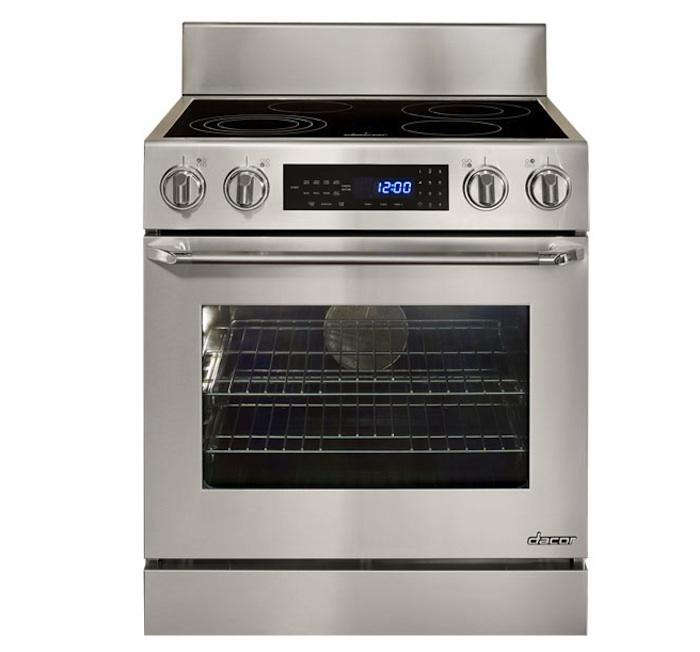
Dacor Distinctive DR30ES Freestanding Electric Range
Aug
The Dacor Distinctive DR30ES is the sort of electric range that walks into a kitchen wearing a stainless-steel suit and immediately asks where the good cookware is kept. Developed as a premium 30-inch freestanding range, it combines a black ceramic-glass cooking surface, flexible radiant elements, a 4.8-cubic-foot convection oven, professional-style controls, and a distinctly upscale appearance.
Although the DR30ES has been discontinued, it still appears in remodeled homes, luxury-appliance clearance inventories, replacement-part catalogs, and used-appliance listings. That makes it an interesting choice for homeowners who already own one, shoppers considering a secondhand unit, or anyone researching an older Dacor range before committing to repairs.
This detailed Dacor DR30ES review examines its specifications, cooking performance, installation requirements, maintenance needs, advantages, limitations, and realistic day-to-day ownership experience.
Dacor DR30ES Specifications at a Glance
- Appliance type: Freestanding electric range
- Width: 29 15/16 inches
- Adjustable height: Approximately 35 to 37 inches
- Oven capacity: 4.8 cubic feet
- Cooktop: Black ceramic-glass radiant smoothtop
- Cooking zones: Four, including dual- and triple-circuit elements
- Oven modes: Bake, Broil, Pure Convection, Convection Bake, Convection Roast, and Convection Broil
- Electrical requirement: 240 volts, 50 amps
- Connected load: Approximately 11.94 kilowatts
- Special features: Temperature probe, self-cleaning cycle, delay cooking, safety lockout, Sabbath mode, hot-surface indicator, and illuminated controls
- Standard configuration: Full-depth side panels, external Epicure-style handle, and six-inch backguard
- Status: Discontinued
Official planning documents identify the DR30ES as the freestanding version with full-size side panels and an externally mounted handle. Its cabinet is approximately 23 3/8 inches deep to the rear of the front panel, while the overall projection to the controls or handle is greater. With the oven door open, the appliance requires roughly 46 inches of floor clearance. It also weighs about 341 pounds, so “just scoot it over a little” is not a realistic installation strategy.
Design: Professional Style Without a Gas Connection
The DR30ES was created for kitchens that wanted the substantial appearance of a professional range without installing a gas line. Stainless-steel surfaces surround a glossy black cooktop, while the thick external handle, heavy knobs, and angled control panel give the appliance more visual authority than an ordinary electric stove.
Dacor fitted the range with die-cast stainless-steel knobs and dedicated blue Illumina indicator lights. These lights show when the cooking elements or oven are operating, providing both a practical warning and a bit of theatrical flair. Apparently, even a casserole deserves mood lighting.
Freestanding Construction
Full-depth stainless-steel side panels allow the DR30ES to stand at the end of a cabinet run without exposing unfinished metal. The included six-inch backguard protects the wall and reinforces the range’s freestanding appearance.
This model should not be confused with the DR30EIS slide-in version. According to Dacor’s planning guide, the trim used on the DR30ES is not compatible with a downdraft ventilation system. Kitchens designed around downdraft ventilation therefore need a different range configuration or a conventional overhead hood.
Angled Electronic Control Panel
The oven is operated through an angled electronic panel with a clock, two timers, touch controls, and a numerical keypad. The cooktop retains traditional knobs, creating a useful division: tactile controls for immediate heat adjustments and electronic controls for more complicated oven functions.
There is no Wi-Fi connection, recipe app, voice assistant, or animated touchscreen. For some cooks, that now feels dated. For others, it is wonderfully peaceful. The range will never send a notification because the refrigerator hurt its feelings.
Cooktop Performance and Element Configuration
The Dacor DR30ES uses radiant electric heating beneath a smooth ceramic-glass surface. It is not an induction range. The glass itself becomes hot, and the elements continue releasing residual heat after they are switched off.
Its four cooking zones include several selectable element sizes:
- A five-inch, 1,200-watt single element
- A six-inch, 1,500-watt single element
- A five- or nine-inch dual element rated at approximately 1,100 or 2,500 watts
- A five-, seven-, or nine-inch triple element rated at approximately 900, 1,800, or 2,500 watts
The dual- and triple-circuit zones are especially helpful because they allow the heated area to match different pan diameters. A small saucepan does not need to sit over a glowing circle the size of a satellite dish, while a larger skillet can use the full 2,500-watt output.
What the Cooktop Does Well
The two 2,500-watt maximum-output zones provide respectable power for boiling pasta water, browning meat, or heating a large sauté pan. The completely flat surface is also easier to wipe than exposed electric coils and does not contain gas grates with seventeen tiny corners dedicated to collecting tomato sauce.
Temperature limiters help protect the ceramic surface from excessive heat, and a hot-surface indicator remains an important warning after cooking. Electric smoothtops are generally valued for straightforward cleaning and solid heating performance, although they lack the immediate response of induction or gas.
Where Radiant Heat Shows Its Age
The main drawback is thermal inertia. Turning a radiant element down does not instantly reduce the heat stored in the glass and cookware. Sauces can continue bubbling, and a pan may need to be moved to a cooler zone when precise temperature control matters.
Flat-bottomed cookware provides the best contact and heat transfer. Pans that are warped, badly oversized, or much smaller than the selected ring can produce slower or less even results. Heavy cookware should be lifted rather than dragged across the surface to reduce the chance of scratching the glass.
A 4.8-Cubic-Foot Convection Oven
The oven is arguably the strongest reason to consider the Dacor Distinctive DR30ES. Its 4.8-cubic-foot cavity is generous for a 30-inch range and can accommodate a large roast, multiple baking sheets, or several side dishes during holiday cooking.
Dacor offered six cooking modes: standard Bake and Broil, plus Pure Convection, Convection Bake, Convection Roast, and Convection Broil. The system combines a fan, heating element, baffle, and removable filter to circulate heated air throughout the cavity.
Pure Convection and Multi-Rack Cooking
True convection uses an additional heating element around or near the fan rather than relying only on the upper and lower elements. Circulating air can promote more consistent browning, improve crispness, and reduce the need to rotate pans. It is particularly useful for roasted vegetables, cookies, meats, and multi-rack cooking.
Convection is not magic, however. Delicate cakes, custards, and recipes that depend on a calm oven environment may perform better in conventional Bake mode. When converting a traditional recipe, cooks commonly begin by reducing the specified temperature or checking the food earlier.
Hidden Bake Element and Powerful Broiler
The hidden bake element is rated at approximately 2,500 watts. Placing it below the oven floor produces a cleaner interior without an exposed heating coil trapping drips and crumbs. The upper broil element is rated at about 3,100 watts, providing concentrated heat for browning, melting, and finishing food.
Archived specifications describe two oven racks and highlight Dacor’s easy-pull GlideRack system. Seven rack positions provide flexibility for tall cookware, roasting pans, baking stones, and multiple trays. Exact rack combinations may vary with the production date or surviving accessories on a used unit, so buyers should check what is actually included rather than trusting a decade-old listing photo.
Digital Temperature Probe and Cooking Controls
The included temperature-probe system is more valuable than it may initially sound. After the probe is inserted into meat and connected inside the oven, the controls track the internal temperature. The range can switch to a holding function when the selected temperature is reached, reducing the risk of turning an expensive roast into artisanal shoe leather.
The DR30ES also includes delayed timed cooking, a digital temperature display, two timers, an interior halogen light, a large tempered-glass window, safety lockout, and Sabbath mode. These features made the range competitive in the premium electric category during its original sales period.
Installation Requirements
The DR30ES is not a plug-it-in-where-the-toaster-was appliance. Dacor specified a dedicated 240-volt, four-wire, 50-amp electrical circuit. Some versions carrying the “-C” suffix were supplied with a factory-installed NEMA 14-50P cord, while other configurations required the electrical connection to be completed during installation.
A licensed electrician should verify the receptacle, circuit capacity, grounding arrangement, and local code requirements. The data plate on the individual appliance takes priority over archived online specifications.
Cabinet and Clearance Planning
The range is nearly 30 inches wide and was designed for a cabinet opening of approximately 30 1/16 inches. The adjustable legs provide a height range of roughly 35 to 37 inches, helping align the cooktop with common countertop heights.
The electrical box must be positioned where it will not interfere with the back of the range. Service access also matters: technicians need to pull the unit forward while maintaining a safe connection. An overhead range hood is strongly recommended, particularly because the DR30ES does not support downdraft ventilation.
Do Not Skip the Anti-Tip Bracket
The range should be secured with its anti-tip bracket. This is not decorative hardware left over after installation. Freestanding ranges can tip when excessive weight is placed on an open oven door, potentially spilling hot cookware or trapping someone beneath the appliance. The U.S. Consumer Product Safety Commission has documented fatalities and injuries associated with range tip-over incidents.
Cleaning and Maintenance
The ceramic-glass cooktop rewards prompt cleaning and punishes procrastination. Once the surface is cool and the hot-surface light has gone out, ordinary splashes can usually be removed with a soft cloth and a cleaner formulated for ceramic cooktops.
Burned-on residue may require a manufacturer-approved scraper held at the recommended angle, along with ceramic cleaning cream. Steel wool, coarse abrasive pads, and harsh household cleaners can scratch, discolor, or otherwise damage the surface. Sugary spills deserve immediate attention after safe cooling because they can bond aggressively to hot glass.
The self-cleaning oven reduces manual scrubbing by heating the cavity to a very high temperature. Before starting the cycle, remove loose debris and verify which racks or accessories the applicable manual says should be taken out. Because self-cleaning places significant thermal stress on an appliance, owners of an older range may prefer to use it selectively rather than treating every cheese drip as a five-alarm emergency.
Advantages of the Dacor DR30ES
- Premium exterior: Stainless steel, substantial controls, and an external handle create an upscale appearance.
- Flexible cooktop: Dual- and triple-circuit elements accommodate several cookware sizes.
- Capable oven: The 4.8-cubic-foot cavity and six cooking modes support baking, roasting, and broiling.
- True convection: A dedicated convection element and fan improve air circulation and multi-rack performance.
- Temperature probe: Internal-temperature monitoring makes roasting less dependent on guesswork.
- Useful safety features: Hot-surface indication, temperature limiters, safety lockout, and an anti-tip system address common range hazards.
- Repair documentation: Exploded parts diagrams and model-specific component numbers remain available through Dacor parts resources.
Potential Drawbacks
- Discontinued product: New retail inventory has largely disappeared, and future parts availability cannot be assumed.
- No induction: The radiant cooktop is slower to respond and leaves the glass hot after use.
- Four cooking zones: Flexible rings help, but busy cooks may prefer five-element modern layouts.
- Demanding installation: The range requires a 240-volt, 50-amp circuit and professional handling.
- Very heavy: At roughly 341 pounds, delivery and service require planning.
- No downdraft compatibility: The DR30ES needs an overhead or otherwise separate ventilation solution.
- Older electronics: A replacement display module, relay board, sensor, or membrane panel may be costly if it fails.
- Glass-top vulnerability: Scratches, impact damage, and baked-on residue can permanently affect its appearance.
Archived dealers now identify the DR30ES as discontinued or no longer available. Historical listings placed it at approximately $3,399 to $3,799 when new, positioning it well above mainstream electric ranges.
Should You Buy a Used Dacor DR30ES?
A secondhand DR30ES can make sense when it is replacing the same model, fitting an existing premium kitchen, or being offered at a price that leaves room for repairs. It is less attractive when the seller expects near-original retail money simply because the word “luxury” appears in the brochure.
Inspect These Items Before Purchasing
- Test every element at each selectable ring size.
- Confirm that the hot-surface and blue indicator lights work.
- Run Bake, Broil, and at least one convection mode.
- Check whether the oven reaches and maintains the selected temperature.
- Inspect the ceramic glass for cracks, deep scratches, cloudy patches, and edge damage.
- Test the display, keypad, timers, door lock, oven light, and temperature-probe connection.
- Check the door hinges, gasket, handle, rack supports, and GlideRack movement.
- Listen for abnormal fan grinding or rattling.
- Verify that the serial plate, power cord, backguard, anti-tip hardware, racks, and probe are present.
- Ask a local appliance technician whether service and essential parts are available in your area.
Genuine-parts catalogs still show diagrams for the cooktop, control panel, door, oven cell, cooling system, base, racks, meat probe, and other components. That is encouraging, but a diagram is not a promise that every part will remain in stock forever.
Practical Ownership Experience: What Living With the DR30ES Is Likely to Feel Like
The following ownership analysis is based on the DR30ES design, controls, specifications, maintenance documentation, and common behavior of premium radiant-electric ranges. It is not presented as a claim of personal laboratory testing.
A Normal Weeknight
For a basic dinner, the experience should be pleasantly familiar. Turn a substantial metal knob, choose the correct ring size, and the blue indicator confirms that the element is active. The 2,500-watt zones have enough power for a stockpot or large skillet, while the smaller elements handle vegetables and sauces without wasting the entire cooktop.
The learning curve involves anticipating residual heat. When rice reaches a simmer, the cook may need to reduce the setting earlier than expected. When a sauce threatens rebellion, moving the pan to a cool zone works faster than waiting for the glass to calm down. After a few meals, this becomes instinctive rather than annoying.
Baking and Roasting
The oven is where the DR30ES begins to justify its premium ambitions. For cookies on two racks, convection circulation should help reduce the hot-and-cold geography found in simpler ovens. Roasted potatoes benefit from moving air and dry heat, developing browned edges without requiring constant tray rotation.
A roast chicken or beef roast makes good use of the temperature probe. Instead of opening the door repeatedly and stabbing dinner with an instant-read thermometer, the probe communicates with the oven controls. Once the target temperature is reached, the automatic hold function adds a layer of protection against overcooking.
The easy-pull rack design is especially useful with heavy roasting pans. A rack that glides forward smoothly makes basting or checking food less awkward, although the user should still support heavy cookware and avoid leaning on the open door.
Cooking for Guests
During a larger meal, the 4.8-cubic-foot cavity offers practical flexibility. A main dish can roast while side dishes occupy another rack, and the two timers help track foods with different schedules. Convection modes are useful when the oven is crowded, provided pans are spaced well enough for air to circulate.
The four-zone cooktop may become the bottleneck before the oven does. A holiday menu involving gravy, mashed potatoes, vegetables, and a simmering sauce fills every available zone. The selectable element diameters help cookware fit, but they cannot create a mysterious fifth burner when an enthusiastic relative arrives with another saucepan.
Cleanup After Dinner
Daily cleaning is easy when spills are handled promptly. Once the hot-surface light goes out, a soft cloth and ceramic cleaner can restore the glossy appearance. Neglect produces a different experience: rings of starch, grease, and boiled-over sugar gradually transform the cooktop into an archaeological site.
The hidden bake element makes the oven floor easier to wipe, while self-cleaning handles accumulated residue. Stainless-steel panels will show fingerprints, but that is less an appliance defect than stainless steel’s lifelong commitment to documenting every person who enters the kitchen.
Long-Term Ownership
The controls strike a useful balance between mechanical and electronic operation. Knobs make cooktop adjustments intuitive, while the display manages timers, temperatures, and cooking modes. Compared with a modern connected range, the DR30ES feels simpler and more appliance-like.
Age is the unavoidable concern. Heating elements and mechanical parts can often be replaced, but electronic boards, display modules, and specialized trim pieces may become harder or more expensive to source. A well-maintained unit with clean glass, accurate temperature control, smooth fans, and documented service history is much more attractive than a neglected bargain with several “minor quirks.” In appliance listings, “minor quirk” occasionally means “the oven communicates only through smoke signals.”
Final Verdict
The Dacor Distinctive DR30ES remains an appealing example of a premium pre-smart-appliance electric range. Its strongest attributes are the spacious true-convection oven, flexible radiant elements, temperature probe, sturdy exterior, easy-pull rack design, and professional appearance.
It is not the best answer for shoppers who want induction speed, app connectivity, five cooking zones, low installation costs, or guaranteed long-term parts support. It is also a poor match for a kitchen that depends on downdraft ventilation.
For an existing owner, careful maintenance and timely repairs may keep the DR30ES useful for years. For a used buyer, condition, serviceability, included accessories, and price matter more than its original luxury status. A clean, fully tested example can still be a capable cooking appliance. An untested example should be priced like a project, not like a museum exhibit.

