
Hair Care
Black Hole News – How Aliens Could Use Black Holes to Make Energy
Jun
Black holes have a branding problem. Their name suggests a cosmic garbage disposal: matter goes in, the lights go out, and nobody gets a refund. Yet modern physics tells a more interesting story. A spinning black hole can store an almost absurd amount of rotational energy, and some of that energy can, in principle, be extracted from the space just outside its event horizon.
That possibility inspires a serious question in science-fiction clothing: could an advanced civilization turn a black hole into a power plant? Researchers have studied the Penrose process, rotational superradiance, magnetic extraction, accretion disks, and even tiny black holes used as batteries. None proves that aliens are doing this, but laboratories have reproduced key energy-transfer effects with sound waves, water vortices, and rotating conductors.
Why a Black Hole Can Be an Energy Source
A black hole does not create energy from nothing; the cosmic accounting department remains strict. A civilization would harvest energy stored in rotation, infalling matter, or nearby radiation.
The best target would be a rotating, or Kerr, black hole. As it spins, it drags surrounding spacetime with itan effect called frame dragging that becomes extreme near the event horizon.
The Ergosphere: Where “Standing Still” Is Not an Option
Outside the event horizon of a rotating black hole lies a region called the ergosphere. Inside it, spacetime is twisted so strongly that an object cannot remain stationary relative to a distant observer. It must move in the direction of the black hole’s rotation.
The ergosphere matters because particles and waves can interact with the black hole’s spin there. Under the right conditions, something sent into this region can return with more energy than it had on arrival. The extra energy is not a physics coupon; it comes from slowing the black hole’s rotation by a tiny amount.
The Penrose Process: The Original Black Hole Power Scheme
In 1969, physicist Roger Penrose described a way to extract rotational energy from a Kerr black hole. In the classic version, an object enters the ergosphere and splits into two pieces. One fragment falls through the event horizon on an orbit that has negative energy when measured from far away. The other fragment escapes with more energy than the original object carried.
That sounds like getting two checks from one paycheck, but the black hole pays the difference. Its mass and angular momentum decrease slightly. For an idealized particle-splitting event, the energy gain can exceed 20 percent of the incoming energy. More broadly, as much as about 29 percent of a maximally rotating black hole’s total mass-energy is theoretically associated with rotation and could be removed before the hole becomes nonrotating.
The real problem is placing machinery near the ergosphere without turning it into plasma confetti. A practical version would likely use electromagnetic fields or controlled particle streams, not a crewed ship dropping cargo near the horizon.
Rotational Superradiance: Waves That Come Back Stronger
A related idea is rotational superradiance. When a wave carrying angular momentum interacts with a sufficiently fast rotating object, the reflected or transmitted wave can emerge amplified. It gains energy by taking a little rotational energy from the object.
Yakov Zel’dovich showed that waves scattered by a rotating absorber could display the same basic effect. Researchers later used analog systems to test it. In one experiment, twisted sound waves passed through a rotating absorbing disk and were amplified by about 30 percent under suitable conditions. Related amplification has also appeared in water vortices and rotating electromagnetic setups.
No laboratory made a real black holemercifully, the safety form remains hypothetical. The experiments showed the key principle: rotation can feed energy into a wave.
Could Aliens Build a “Black Hole Bomb”?
William Press and Saul Teukolsky proposed surrounding a rotating black hole with a reflective boundary so an amplified wave could return repeatedly and grow. An advanced civilization would want controlled resonance, not an explosion: a generator cavity that releases power while preventing unstable modes from becoming the universe’s loudest amplifier squeal.
Four Ways an Advanced Civilization Might Harvest Black Hole Energy
1. Extract Spin With Magnetic Fields
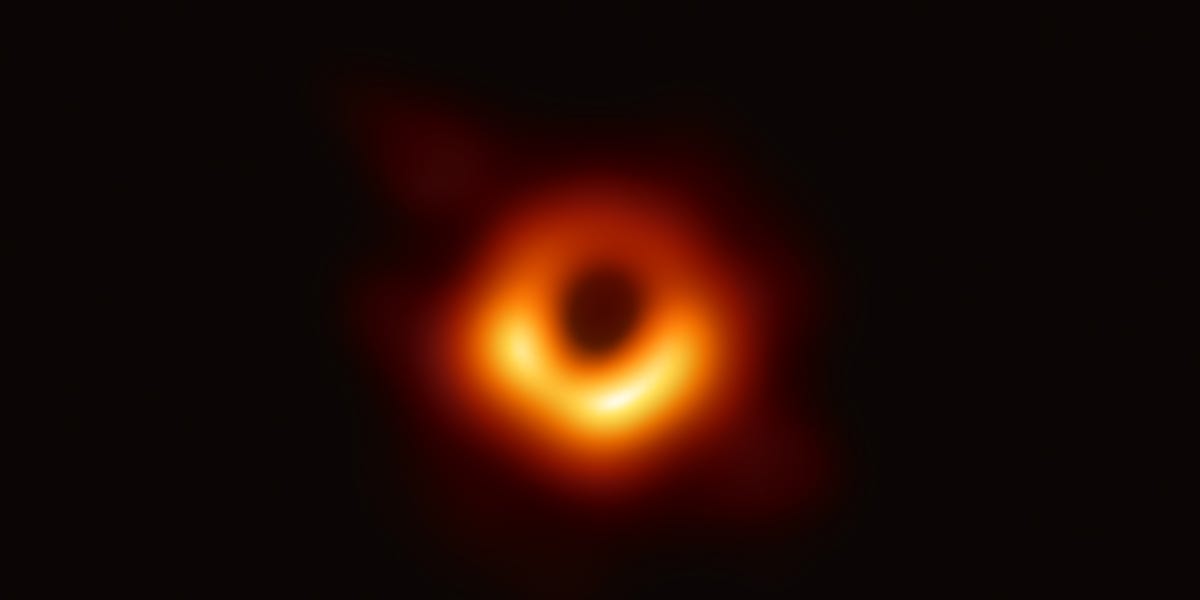
The most realistic route may resemble the Blandford-Znajek mechanism. A rotating black hole threaded by strong magnetic fields can transfer spin energy into plasma and help launch jets. Observations of M87 reveal organized fields close to the event horizon. Aliens might shape that environment with current loops or plasma rings, regulating a process nature already performs.
2. Build a Dyson Swarm Around the Accretion Disk
A bright accretion disk may be easier to exploit than the hole itself. Infalling gas heats intensely and radiates from visible light through X-rays. A Dyson swarm of independent collectors could intercept some of that output, beam power to habitats, and shed waste heat in infrared. Calling it “solar power” would be wrong but emotionally understandable.
3. Capture Energy From Relativistic Jets
Relativistic jets can travel thousands of light-years and carry extraordinary power. Magnetic collectors placed along a jet might operate far from the strongest gravity, but the beam is no gentle extension cord. It demands heavy shielding, remote control, and a stern interstellar safety manual.
4. Use a Tiny Black Hole as a Battery or Reactor
Theoretical studies also consider charged or microscopic black holes as batteries, reactors, or Hawking-radiation sources. This is the most speculative route: creating, feeding, charging, containing, and moving such an object lies far beyond human technology. “Maintenance issue” would acquire a terrifying new meaning.
How Much Energy Are We Talking About?
Einstein’s equation, E = mc2, explains why black hole engineering is so tempting. Even a small amount of mass corresponds to enormous energy. Hydrogen fusion converts about 0.7 percent of the original mass into energy. A thin accretion disk around a nonrotating black hole can theoretically radiate roughly 6 percent of infalling mass-energy, while idealized disks around rapidly spinning black holes can reach much higher efficiencies.
Rotational extraction offers another reservoir. If a civilization could gradually tap even a tiny fraction of a stellar-mass black hole’s spin, it could obtain energy on a scale that makes planetary power grids look like decorative string lights. A supermassive black hole would contain vastly more, although its size would demand correspondingly grand infrastructure.
There is no free lunch, even when lunch is orbiting a singularity. Feeding a black hole changes its mass and spin. Extracting energy changes its rotation. Collectors absorb heat and must dispose of waste energy. A black hole power system is best understood as a conversion machine, not an infinite generator.
The Engineering Problems Are Almost Comically Severe
A black hole project would turn theoretical physics into a maintenance schedule.
- Radiation: Accretion disks and jets produce lethal X-rays, gamma rays, and high-energy particles.
- Tidal forces: Small black holes can produce extreme gravitational gradients near the horizon, stretching objects across short distances.
- Orbital control: Collector swarms would need continuous coordination in warped spacetime filled with plasma and magnetic turbulence.
- Heat rejection: Every real power system creates waste heat, which must be radiated into space.
- Energy transmission: Power would need to be moved by lasers, microwaves, particle beams, or physical carriers without destroying the receivers.
- Failure containment: A mistimed wave-amplification cycle or unstable plasma configuration could turn valuable infrastructure into a brief astronomy event.
Habitats would likely remain far away while autonomous, replaceable machines handled the dangerous inner region.
Could We Detect an Alien Black Hole Power Plant?
This idea becomes scientific when it produces testable technosignaturespatterns suggesting technology may be altering an astronomical environment. Astronomers would search for effects that natural models struggle to explain.
Possible Technosignatures
- Unusual infrared waste heat surrounding an otherwise dim black hole.
- Regular or narrow-band modulation in radio, optical, X-ray, or gamma-ray emissions.
- An accretion disk with unexplained gaps, shadows, or energy distributions consistent with large orbiting collectors.
- A black hole spinning down at a rate inconsistent with the observed natural environment.
- Jet behavior that appears repeatedly redirected, gated, or converted with improbable precision.
- Artificial-looking energy beams aimed between a black hole system and nearby habitats or industrial sites.
Each clue would require caution because black holes are naturally variable, magnetic, and violent. Pulsars once inspired “little green men” jokes because their pulses were so regular; nature won that round. No credible evidence currently shows extraterrestrials operating a black hole. The hypothesis matters because it suggests measurable targets beyond a deliberate radio greeting.
A Physically Informed Experience: One Shift at a Black Hole Power Station
The following is a thought experiment, not a claim of firsthand experience. Imagine working as a systems engineer for a civilization that has built a collector swarm around a rotating black hole.
Your shift begins several light-hours from the event horizon, inside a shielded control habitat where gravity is comfortable and the radiation alarms are merely nervous instead of hysterical. The black hole itself is invisible, but the accretion flow paints its surroundings with a distorted ring of light. Stars behind it appear bent into arcs. Nothing in the view behaves the way your childhood geometry teacher promised.
The station does not have one giant shell. A rigid structure would be too fragile and difficult to stabilize. Instead, it uses millions of autonomous collectors distributed across carefully selected orbits. Some absorb radiation from the accretion disk. Others maintain current loops that help shape magnetic fields. Farther out, relay platforms convert incoming power into tightly aimed microwave and laser beams.
Your first task is to review the overnight balance sheetnot money, but angular momentum. The station has extracted a measurable amount of rotational energy, so the black hole’s spin has decreased by an almost laughably tiny fraction. Tiny does not mean unimportant. At this scale, a rounding error could equal centuries of planetary energy consumption.
A warning appears from Collector Cluster 41. Its orbit has shifted because a dense knot of plasma passed through the inner disk and changed local drag conditions. The cluster’s onboard intelligence has already separated the units and moved them into safe trajectories. Your role is mostly to confirm that the machines have not become overconfident. Advanced automation, like a talented cat, is impressive but should not be trusted near expensive objects without supervision.
Later, the superradiance team schedules a controlled amplification cycle. A low-frequency electromagnetic mode is injected into a resonant structure coupled to the rotating environment. Sensors watch the phase, amplitude, and energy flow. The returning wave is stronger. The gain is modest per pass, but the system repeats the process while continuously bleeding energy into storage rings. The operation resembles tuning a musical instrument, except the instrument weighs several suns and a wrong note may vaporize a maintenance fleet.
The most surprising part of the experience is not the drama. It is the routine. Engineers argue about maintenance windows. Operators complain about inefficient beam routing. Administrators request quarterly reports. A machine built around the darkest object in the universe still generates meetings.
At the end of the shift, you look at the infrared map. The civilization cannot hide thermodynamics: every collector and habitat emits waste heat. From a distant star system, that glow might look slightly unnaturaltoo structured, too steady, or distributed in the wrong places. Somewhere, an astronomer with a sensitive telescope might notice. The power station is not intentionally broadcasting a message, but its engineering leaves a fingerprint.
The lesson is that black hole power would not depend on one magical trick. It would require orbital mechanics, plasma control, heat management, automation, and risk discipline sustained for centuries. The black hole supplies the reservoir; civilization supplies everything that keeps it from becoming a catastrophe.

