
Hair Care
A TikToker Recreated Kevin McAllister’s Grocery Runthe Total Bill in 2025 Is Wild
Sep
There are plenty of unbelievable moments in Home Alone. An eight-year-old successfully defending a giant suburban house from two adult burglars? Sure. A paint can to the face causing temporary discomfort instead of a lengthy hospital stay? Cinema magic. But in 2025, perhaps the most unrealistic scene in the entire movie is Kevin McAllister walking out of a grocery store with ten items for $19.83.
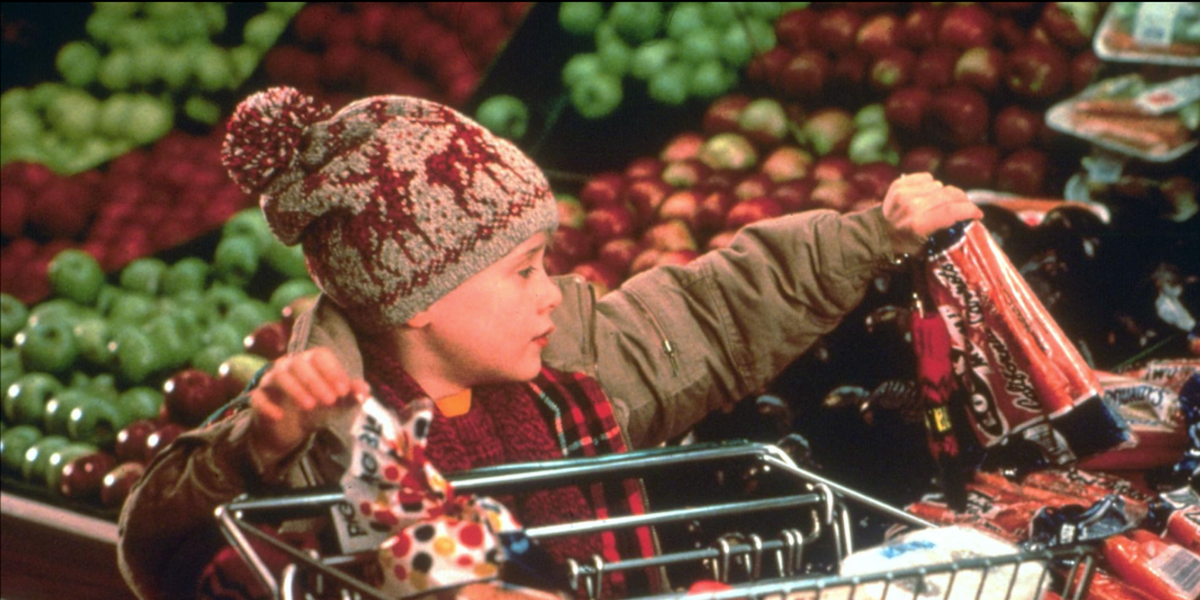
That famous shopping trip from the 1990 Christmas classic has become an accidental economic time capsule. TikTok creator @mistressmelt recreated Kevin McAllister’s grocery run in 2025, hunting down modern versions of the products in his basket. Her total came to $60.24.
Yes, $60.24. Kevin’s original $19.83 bill has effectively tripled.
The experiment is funny at first because anything involving Home Alone, tiny green army men, and a bottle of Tide is naturally funny. Then you look at your own grocery receipt and suddenly the joke becomes personal.
What Did Kevin McAllister Buy in Home Alone?
Kevin was not exactly preparing a gourmet Christmas dinner. His cart was a wonderfully practical mix of kid food, household supplies, and one extremely important military acquisition.
- Half gallon of milk
- Half gallon of orange juice
- Loaf of bread
- Frozen macaroni and cheese
- Frozen turkey dinner
- Tide laundry detergent
- Plastic food wrap
- Dryer sheets
- Toilet paper
- Toy soldiers
After using a $1 coupon, Kevin paid $19.83.
That shopping scene works because it shows Kevin beginning to behave like a surprisingly capable little adult. He chooses necessities, speaks confidently to the cashier, uses a coupon, pays cash, and carries everything home himself.
Thirty-five years later, using the coupon might still be realistic. Paying less than $20 certainly is not.
The 2025 TikTok Recreation Cost $60.24
For her 2025 recreation, @mistressmelt tried to duplicate the original basket with comparable modern products, substituting items when the exact 1990 version was unavailable.
Some prices seemed fairly ordinary by modern standards. A half gallon of whole milk was $2.99. Orange juice was $4.99. A replacement loaf of bread cost $3.29. The turkey dinner was $3.79, while macaroni and cheese came to $3.29.
Then Kevin entered the household-products department, where wallets go to experience character development.
A bottle of Tide detergent cost $15.99. In other words, one detergent purchase in the recreation cost almost as much as Kevin’s entire movie shopping trip.
The little green toy soldiers also proved difficult to reproduce exactly. A package of chocolate penguins became the stand-in, costing $4.29.
When everything was totaled, the receipt reached $60.24approximately 204% more than the movie’s $19.83 bill.
Why Other 2025 Kevin McAllister Grocery Totals Are Different
Search for the cost of Kevin McAllister’s groceries in 2025 and you will encounter several totals. That does not necessarily mean somebody failed grocery-store mathematics.
Different recreations use different stores, package sizes, brands, promotions, and substitutions.
One USA Today comparison using prices from a supermarket near the Chicago-area setting calculated approximately $53.95 before tax, or $52.95 after applying Kevin’s famous $1 coupon. Another local-TV recreation produced a total of roughly $50.62 after accounting for toy soldiers. Other comparisons have put the basket above $60, and some calculations have approached $70.
That variation is actually part of the story.
Location matters
A gallon of milk does not cost exactly the same amount in Illinois, California, Mississippi, or New York. Grocery chains also negotiate differently with suppliers and operate with different transportation, labor, rent, and distribution expenses.
Package sizes have changed
Comparing products across 35 years is harder than simply finding the same logo. Containers get smaller, formulas change, product lines disappear, and manufacturers introduce concentrated versions.
A modern package may therefore have the same brand name as its 1990 ancestor while containing a different quantity.
Kevin liked name brands
The boy was apparently not operating under a strict private-label strategy. Tide, recognizable bread, branded frozen meals, and familiar household products can cost significantly more than store-brand alternatives.
Kevin knew how to construct a burglar trap involving a blowtorch, but apparently nobody taught him unit pricing.
The Most Interesting Part Is Not the Food
The phrase “grocery inflation” makes people picture milk, bread, meat, eggs, and produce. Yet Kevin’s experiment highlights another important part of the household budget: products purchased at the grocery store that you cannot eat.
Laundry detergent, dryer sheets, toilet paper, and plastic wrap take up a substantial portion of the recreated bill.
That helps explain why a seemingly tiny shopping cart can produce a surprisingly large checkout total.
You might substitute cheaper pasta or skip a snack. You are less likely to announce, “Good news, family. We are fighting inflation by permanently retiring toilet paper.”
Household essentials also tend to be purchased irregularly. A large bottle of detergent might last weeks, meaning shoppers sometimes underestimate its effect on the grocery budget until three expensive household items happen to run out simultaneously. That is how a perfectly innocent Tuesday turns into a $97 receipt.
Inflation Has Slowed, but Prices Did Not Go Back to 2019
This is where grocery inflation becomes confusing.
When economists say inflation has slowed, they generally mean prices are increasing more slowly. They do not mean the price level has returned to where it was several years ago.
Federal data released after the end of 2025 showed that food-at-home prices were still rising during the year. The Bureau of Labor Statistics reported a 2.4% increase in grocery prices from December 2024 to December 2025. USDA’s annual-average measurement put the increase at about 2.3% for 2025.
Those increases were relatively moderate compared with the extraordinary surge earlier in the decade. USDA data show food-at-home prices jumped 11.4% in 2022 alone, following pandemic-era supply disruptions and broader inflationary pressures.
So even when annual inflation moderates, today’s shopper begins from a much higher price level.
Think of it this way: if something jumps from $3 to $4 and then increases only a few cents the following year, inflation has slowed dramatically. Unfortunately, nobody at the register hands you the missing dollar back.
Why $60.24 Tells a Different Story Than a Basic Inflation Calculator
A broad Consumer Price Index comparison suggests that $19.83 in 1990 would have purchasing power somewhere around the high-$40 range in 2025. Yet the specific recreation reached $60.24.
There is no contradiction.
The CPI measures price changes across a giant representative basket of goods and services. Kevin’s basket is anything but representative. It contains a weirdly concentrated collection of detergent, paper products, frozen meals, beverages, plastic wrap, and toy soldiers.
Individual products can rise much fasteror much slowerthan overall inflation.
This is why personal experiences with inflation often differ from headline statistics. Someone buying items that experienced large increases can feel substantially more pressure than the national average suggests.
An AP-NORC survey published in 2025 found that 53% of U.S. adults described grocery expenses as a major source of stress, with another 33% describing them as a minor source of stress. In other words, Kevin’s viral receipt lands because millions of shoppers already know the feeling.
The Store-Brand Version of Kevin Could Save Serious Money
There is a useful lesson hiding underneath all the nostalgia: the $60.24 receipt is not necessarily the minimum possible cost of the basket.
Modern shoppers have more comparison tools than Kevin did. Grocery websites, retailer apps, warehouse clubs, digital coupons, loyalty programs, pickup services, and online price searches can reveal major differences before anyone enters the store.
Private-label products are particularly important. Consumer research company Numerator reported in 2025 that shoppers were paying, on average, more than $2 extra for nationally branded products compared with private-label alternatives.
Across ten products, even a few strategic substitutions can dramatically change the final receipt.
Previous recreations have demonstrated this effect. Budget-oriented comparisons using discount retailers and store-brand products have produced totals far below the viral name-brand estimates.
So Kevin’s modern strategy could look something like this:
- Buy store-brand bread and frozen meals.
- Compare detergent prices by load rather than bottle.
- Purchase paper goods during promotions.
- Use retailer loyalty coupons.
- Check multiple nearby stores before shopping.
- Buy nonperishables in bulk when the unit price is actually lower.
Would Kevin enjoy doing all that? Probably not. He has burglars arriving at 9 p.m.
Why the Home Alone Grocery Scene Keeps Going Viral
The scene succeeds on social media because it turns an abstract economic concept into something instantly understandable.
Tell somebody that the Consumer Price Index changed by a certain percentage and you may receive a polite nod.
Show them an eight-year-old purchasing milk, dinner, detergent, toilet paper, and toys for $19.83 and you get thousands of comments screaming, “TAKE ME BACK.”
Pop culture is powerful that way. Movies preserve ordinary details nobody realized would become historically interesting.
The cars parked outside the house, kitchen appliances, airline procedures, clothing, telephones, grocery packaging, and cash-register prices all become little snapshots of everyday life.
Home Alone was released in 1990. Nobody filming Kevin’s checkout scene needed to explain that $19.83 was cheap. It was simply believable.
That is exactly why the scene looks so astonishing now.
Would Kevin Even Go Grocery Shopping in 2025?
If Home Alone happened today, the plot would encounter problems long before Kevin got to the supermarket.
His parents would probably notice his absence through family group chats, location sharing, video doorbells, smart-home notifications, or approximately 46 unanswered FaceTime calls.
Assuming he somehow remained forgotten, modern Kevin could open a grocery-delivery app, fill a virtual cart, stare at the delivery fee, stare at the service fee, stare at the tip recommendation, and immediately decide that eating leftover cheese pizza for another day was financially responsible.
On the other hand, online shopping would let him compare prices without walking through multiple supermarkets. He could choose generic brands, search digital coupons, and potentially reduce that $60.24 bill.
He might even avoid the famous moment when his grocery bags split open on the sidewalk.
The Wet Bandits would still have problems, obviously. Technology has advanced, but Kevin McAllister with access to YouTube tutorials and smart-home automation is frankly terrifying.
What Recreating Kevin’s Grocery Run Feels Like in 2025: A Shopper Experience
The most revealing way to understand the viral experiment is to imagine actually entering a supermarket with Kevin’s list instead of merely comparing two totals on a screen.
At first, the assignment feels easy. There are only ten items. This is not a Thanksgiving dinner for 14 people. There is no brisket, no premium seafood, no organic saffron harvested by monks under a full moon. It is milk, orange juice, bread, frozen food, cleaning products, paper goods, and a toy.
The cart remains almost comically empty.
The first few food purchases do not seem disastrous individually. Two or three dollars here, four or five dollars there. You can understand how a shopper mentally keeps the running total reasonably low.
Then comes detergent.
Seeing a bottle around the $15 range changes the emotional temperature of the experiment. One household product suddenly represents a huge portion of the budget. Add toilet paper and dryer sheets, and the basket begins feeling much more expensive than it looks.
That mismatch between cart size and checkout total is something modern shoppers know extremely well.
Twenty years ago, a full cart visually warned you that an expensive receipt was coming. Today, it is entirely possible to reach the register with two bags and enough confidence to think, “Maybe $35?” only for the payment terminal to display a number that appears to include a small car payment.
The substitution problem becomes obvious
Trying to recreate the movie exactly also reveals how much supermarkets have changed. Some products are no longer sold in the same sizes. Others disappear from particular regions. Certain brands occupy different sections or have been replaced by new product variations.
The toy soldiers are the funniest example. They made perfect sense as a casual supermarket purchase in the movie, but recreating that exact item decades later can require a substitute or a separate online purchase.
This means the experiment stops being a perfect scientific comparison and becomes something more realistic: an actual modern shopping trip.
You adapt.
You compare.
You decide whether the $3.29 bread is “close enough.”
You wonder why there are 17 types of detergent.
You inspect the unit price like you are decoding an ancient manuscript.
You also discover how powerful store choice has become
Repeat the experiment at a traditional supermarket, a discount grocer, a warehouse club, and a big-box retailer, and the totals can look surprisingly different.
A shopper determined to reproduce Kevin’s brands may spend around $60 or more. Another shopper focused entirely on functiongeneric bread, store-brand plastic wrap, cheaper frozen meals, sale-priced paper goodscould potentially cut the bill considerably.
That experience captures modern grocery shopping better than any single viral number.
Today’s consumer is not merely choosing what to buy. The consumer is constantly choosing where to buy it, which package offers the best unit price, whether a membership makes sense, whether a coupon works, whether a private label is acceptable, and whether buying extra now will save money later.
Kevin’s 1990 grocery trip was an errand.
The 2025 version is practically procurement management.
Final Thoughts: Kevin’s $60.24 Receipt Is Funny Because It Feels Familiar
The TikTok recreation works because the comparison is simple enough to understand immediately: $19.83 in 1990 versus $60.24 in 2025.
But the deeper story is more interesting than “inflation made everything expensive.”
Thirty-five years changed product sizes, retailers, household brands, shopping technology, consumer habits, and the price of individual categories at dramatically different rates. The fact that other recreations produce totals ranging from roughly $50 to nearly $70 reinforces the point: there is no single universal grocery bill anymore.
Kevin McAllister’s little shopping trip has therefore become something nobody writing Home Alone could have predictedan unexpectedly useful illustration of household economics.
And perhaps the movie’s most impressive achievement is no longer Kevin defeating Harry and Marv.
It is an eight-year-old leaving a supermarket with milk, orange juice, bread, two dinners, detergent, plastic wrap, dryer sheets, toilet paper, toy soldiers, and change from a twenty.
Keep the change, ya filthy animal, indeed.
SEO Metadata

