
Beauty Tools & Accessories
4 Ways to Take Care of a Pet Skunk
May
Note: This guide is for legally owned, captive-bred pet skunks only. Never capture a wild skunk, never treat skunk ownership as a casual impulse buy, and always confirm your state, county, city, landlord, and HOA rules before bringing one home. A skunk may look like a tiny striped sofa pillow with opinions, but it is still an exotic animal with specialized needs.
Pet skunks are unusual companions: smart, curious, affectionate with the right handling, and occasionally committed to rearranging your home like a tiny interior designer with claws. They can learn routines, use a litter box, enjoy playtime, and bond closely with their people. But they are not low-maintenance pets. Proper pet skunk care requires legal planning, an exotic-animal veterinarian, a carefully managed diet, a secure home, and patient socialization.
If you are wondering how to care for a pet skunk, start with this simple truth: success depends less on how cute the animal is and more on how prepared the human is. A skunk is not a cat with a racing stripe. It has different nutritional needs, different legal risks, different behavior patterns, and a talent for finding every gap in your skunk-proofing plan.
This article breaks pet skunk care into four practical areas: legal and veterinary preparation, diet, housing and enrichment, and daily handling. Follow these steps, and your skunk has a much better chance of living a safe, healthy, and well-managed life.
1. Start With Legal, Ethical, and Veterinary Basics
The first way to take care of a pet skunk happens before you ever meet the skunk. You need to know whether ownership is legal where you live, whether permits are required, whether your skunk must come from a specific type of breeder, and whether you have a veterinarian nearby who actually treats skunks.
Check the law before you fall for the stripes
Skunk ownership laws vary widely across the United States. Some states prohibit pet skunks. Some allow them with permits. Some require proof that the animal came from a legal captive-bred source. Local rules can be even stricter than state rules, so do not stop after one quick internet search. Call your state wildlife agency, county animal control office, and local government if you are unsure.
Why so strict? Skunks are often treated as wildlife or rabies-vector animals under state law. Even a tame skunk can create serious legal and public-health complications if it bites someone, escapes, or is acquired illegally. In some places, vaccination does not give a skunk the same legal protection that a rabies vaccine gives a dog or cat. That means a bite incident may be handled very differently than a dog bite.
Also, never take a skunk from the wild. A wild baby skunk is not a rescue project unless you are a licensed wildlife rehabilitator. Wild-caught skunks may carry parasites, diseases, and legal consequences. A legal pet skunk should come from a reputable, lawful source with documentation.
Find an exotic-animal veterinarian first
Before buying or adopting a skunk, find a veterinarian who has experience with exotic mammals and is willing to treat skunks. This is not the moment to assume your regular dog-and-cat clinic will “figure it out.” Skunks need wellness exams, parasite checks, dental monitoring, diet guidance, weight management, vaccinations where appropriate, and advice about spaying or neutering.
Ask the clinic direct questions: Do you see pet skunks? Do you handle emergencies? What vaccines do you recommend? What should I do if my skunk bites someone? Can you advise me on diet, supplements, and obesity prevention? A knowledgeable vet is not an optional luxury; it is part of responsible ownership.
Understand descenting without getting careless
Many captive-bred pet skunks are sold descented, meaning the scent glands have been surgically removed. This may make indoor life more manageable, but it also removes the skunk’s primary defense. A descented skunk must be protected from predators, dogs, outdoor hazards, and escape. Descenting does not make a skunk odor-free, either. Bedding, litter boxes, diet, dental health, and general hygiene still matter.
2. Feed a Balanced Skunk Diet Without Creating a Round Skunk
Diet is one of the biggest challenges in pet skunk care. Skunks are omnivores, which means they eat both animal and plant foods. Unfortunately, “omnivore” does not mean “tiny garbage disposal with legs.” In captivity, skunks are highly prone to obesity because they love food, beg convincingly, and may not burn as many calories as a wild skunk foraging outdoors.
A healthy skunk diet should be measured, varied, low in excess fat, and planned with veterinary guidance. Many owners use a mix of lean proteins, vegetables, limited fruits, and a carefully chosen formulated food or supplement plan. Your vet may recommend taurine, calcium, or other nutrients depending on the animal’s age, health, and diet.
What a pet skunk can eat
A practical meal plan may include lean cooked poultry, cooked eggs, feeder insects from a safe source, small amounts of plain low-fat yogurt, and a variety of vegetables such as green beans, squash, broccoli, carrots, zucchini, leafy greens, and peas. Fruit should be treated as a treat, not a main course. Berries can work well in small amounts for training because they are tasty and easy to portion.
Some skunks may eat a commercial skunk food or an exotic omnivore diet as part of the plan, but not every product is complete for every animal. Avoid building the entire diet around random cat food, fatty dog food, processed meats, sugary snacks, salty foods, or table scraps. A skunk with access to leftovers may become a skunk-shaped ottoman faster than you expect.
Foods and habits to avoid
Avoid chocolate, high-fat meats, deli meats, hot dogs, salty snacks, sugary desserts, large amounts of fruit, and constant free-feeding. Also be cautious with foods that are unsafe or questionable for many pets, such as grapes, raisins, onions, and heavily seasoned foods. When in doubt, ask your veterinarian before adding a new food.
Portion control matters. Adult skunks often do best with measured meals rather than unlimited food. Weigh your skunk regularly, track body condition, and adjust portions before obesity becomes a health problem. A healthy skunk should be sturdy, not spherical. Cute rolls are still rolls.
Example daily feeding idea
A sample day might include a morning meal of lean protein with chopped vegetables and an evening meal of measured formulated food plus more vegetables. A tiny fruit treat can be saved for training or nail-trim cooperation. Fresh water should always be available. This is only an example, not a prescription. Your skunk’s exact diet should be tailored by a veterinarian who understands skunk nutrition.
3. Build a Safe Home, Litter Routine, and Enrichment Plan
Pet skunks are curious. That sounds charming until one opens a cabinet, steals a towel, digs at the carpet, and investigates the trash in the same afternoon. Skunk-proofing is not a one-time chore; it is a lifestyle.
Create a secure indoor space
Most pet skunks should live indoors in a safe, temperature-controlled space. A skunk room or large supervised play area can work well. Use baby gates, cabinet locks, secure trash cans, blocked vents, covered cords, and sealed gaps. Remove toxic plants, small rubber objects, foam pieces, medications, cleaning products, and anything chewable that could cause an intestinal blockage.
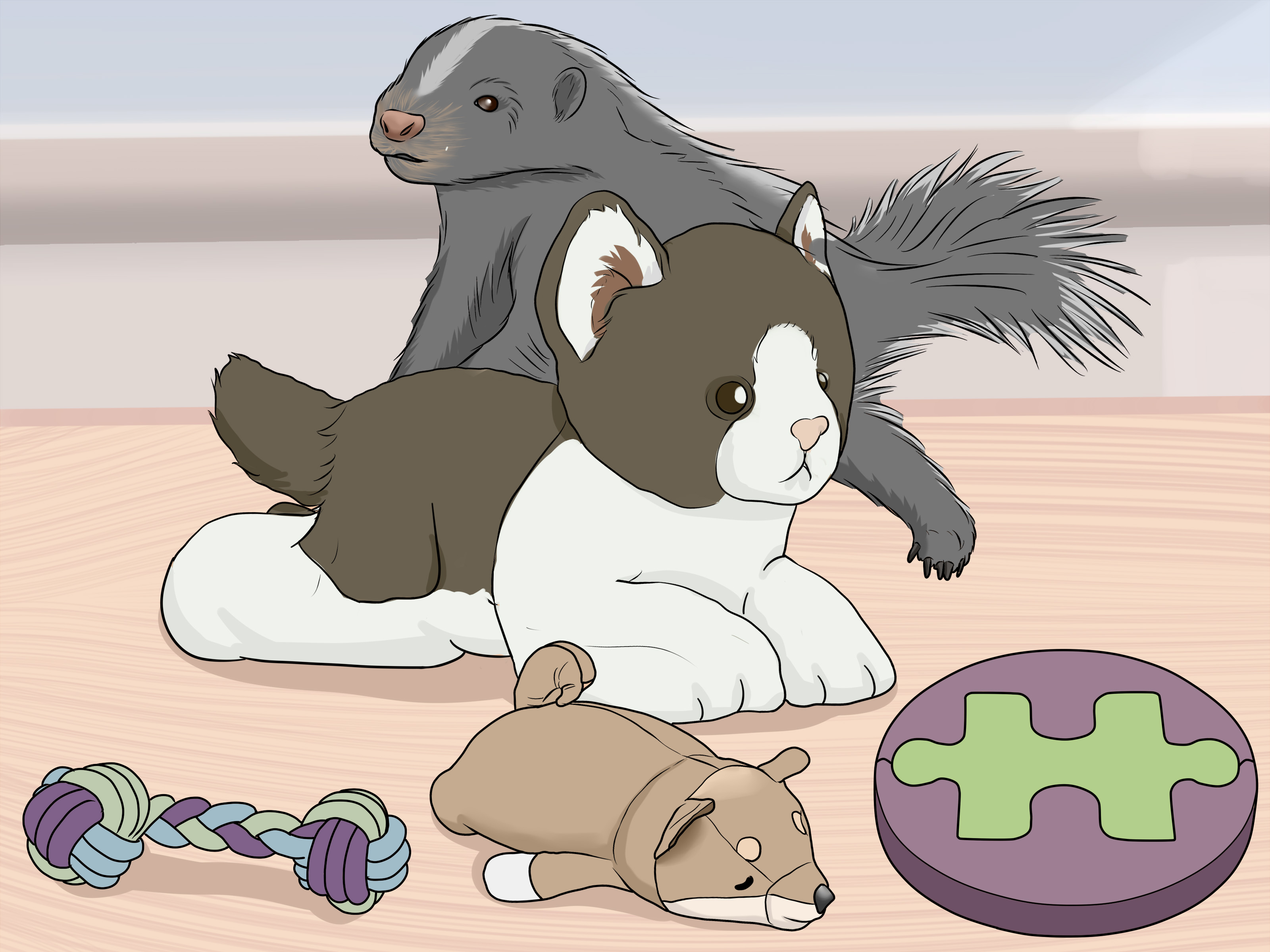
A large kennel or pen can be useful when you cannot supervise, but a skunk should not be confined in a small cage all day. These animals need room to explore, dig, sniff, climb low objects, nap, and investigate. Provide soft bedding, washable blankets, tunnels, sturdy toys, puzzle feeders, and digging boxes filled with safe material.
Litter training takes patience
Skunks can often be litter trained, but they may choose the bathroom location first. Many prefer corners, so place litter pans where the skunk naturally goes. Use unscented, safe litter or paper-based options recommended by your vet. Keep boxes clean, because a dirty box is basically a written invitation to use your floor.
If accidents happen, clean thoroughly and avoid harsh punishment. Skunks respond better to routine and redirection than scolding. Remember, you are not negotiating with a Labrador. You are negotiating with a small striped roommate who has strong opinions about corners.
Supervise outdoor time
If you take a pet skunk outside, use a properly fitted harness and leash in a secure area. Never let a skunk roam freely. A lost skunk may not find its way home, and a descented skunk has little defense against predators. Avoid extreme heat, direct sun for long periods, unfamiliar dogs, standing water, pesticides, and contact with wildlife.
4. Handle, Groom, and Socialize Your Skunk Like a Respectful Roommate
The fourth way to take care of a pet skunk is daily relationship-building. Skunks can be affectionate, playful, and social when handled properly, especially if they are gently socialized from a young age. But they can also become nippy, stubborn, fearful, or defensive if mishandled.
Use gentle handling and predictable routines
Handle your skunk calmly and support its body. Do not grab, chase, tease, or roughhouse. Teach children that a skunk is not a plush toy with legs. Interactions with kids and other pets should always be supervised. Even a friendly skunk can bite if frightened, hurt, cornered, or overexcited.
Build trust through routine. Feed at predictable times, offer enrichment daily, use positive reinforcement, and give your skunk a safe retreat where it can rest without being bothered. A skunk that feels secure is easier to handle, easier to train, and less likely to communicate through teeth.
Keep up with grooming and hygiene
Pet skunks usually need nail trims, brushing, bedding changes, litter-box cleaning, and occasional baths. They may shed seasonally, so brushing can help reduce loose hair. Dental care matters too. Ask your vet whether tooth brushing, dental chews, or professional cleanings are appropriate for your skunk.
Watch for warning signs such as appetite loss, vomiting, diarrhea, sudden weight changes, coughing, eye or nose discharge, limping, excessive scratching, lethargy, tooth grinding, or changes in bathroom habits. Skunks often hide illness until a problem becomes serious, so do not wait days hoping things magically improve.
Common Pet Skunk Mistakes to Avoid
The most common mistake is assuming a skunk is simply a quirky alternative to a cat. It is not. A pet skunk needs specialized care, and the wrong setup can quickly lead to legal trouble, obesity, escape, injury, or illness.
- Do not acquire a skunk before checking laws. Ownership can be restricted or prohibited depending on location.
- Do not take a skunk from the wild. Wild skunks belong in the wild or with licensed wildlife rehabilitators when injured or orphaned.
- Do not skip the vet search. Find an exotic-animal veterinarian before the skunk comes home.
- Do not overfeed. Skunks gain weight easily in captivity, especially on fatty or sugary foods.
- Do not trust a skunk-proofed room forever. Recheck locks, gaps, cords, and chewable objects often.
- Do not leave outdoor time unsupervised. Escapes and predator encounters can be dangerous or fatal.
When a Pet Skunk May Not Be Right for You
A pet skunk may not be the best choice if you move often, rent housing with strict pet rules, have no exotic vet nearby, cannot manage daily cleaning, or want a pet that can be boarded easily while you travel. Skunks also require patience. If you want an animal that obeys quickly, ignores cabinets, and never makes questionable life choices, a skunk may test your emotional warranty.
They can be wonderful for experienced, prepared owners who enjoy exotic pet care and have the time, money, legal clearance, and patience to do it properly. But they are a poor match for impulse buyers. Responsible ownership means asking not only, “Can I get one?” but also, “Can I give this animal a safe, healthy life for many years?”
Real-Life Experience Section: What Living With a Pet Skunk Can Actually Feel Like
Owner experiences with pet skunks often sound like a blend of living with a clever ferret, a determined toddler, and a very small detective. A skunk may wake up ready to inspect every corner of the house, check whether the cabinet locks are still worthy opponents, drag a blanket into a preferred sleeping spot, and then stare at you as if you are late with breakfast by six calendar years.
The fun part is the personality. A well-socialized pet skunk can be affectionate, funny, and surprisingly interactive. Many enjoy following their favorite person from room to room, nosing through toys, playing gentle games, or curling up in soft bedding after a busy exploring session. They may develop routines quickly. For example, a skunk may learn that the sound of a food container means mealtime, that a particular mat means training treats, or that a certain blanket is obviously theirs because they stole it three times and possession is nine-tenths of skunk law.
The challenging part is that skunks are persistent. If a skunk discovers that a drawer contains snacks, socks, or anything interesting, it may return to that drawer again and again. Owners often learn to think one step ahead: move the trash can, lock the pantry, block the laundry room, hide the rubber bath mat, and never underestimate the reach of a motivated nose. A skunk does not need thumbs to create drama. It only needs curiosity and five quiet minutes.
Daily care also teaches humility. Litter training may go beautifully in one corner and fail spectacularly in another. A diet plan may need adjustment after a weight check. Nail trimming may require two people, a favorite treat, and the calm energy of someone defusing a tiny striped alarm system. Outdoor walks may be short because the skunk wants to sniff one patch of grass for ten minutes and then go home like the expedition was a full wilderness documentary.
Experienced owners often say the best approach is routine. Feed measured meals at consistent times. Keep the litter box clean. Rotate toys before boredom turns into remodeling. Offer safe digging opportunities. Handle gently and often, but respect the skunk’s need for rest. Make vet visits part of the plan, not a last-minute panic. Above all, keep expectations realistic. A pet skunk can be charming, but it will never be a perfectly predictable pet.
The emotional reward is real when care is done well. Watching a skunk become comfortable, playful, and trusting can be deeply satisfying. But the responsibility is real too. The best pet skunk owners are not people who simply love unusual animals. They are people who love preparation, research, cleaning supplies, secure latches, and the daily comedy of sharing a home with an animal that looks adorable while plotting cabinet access.
Conclusion
Learning how to take care of a pet skunk starts with respect. Respect the law, respect the animal’s wild ancestry, respect the dietary challenges, and respect the fact that “cute” does not automatically mean “easy.” A healthy pet skunk needs legal ownership, a knowledgeable exotic veterinarian, a balanced diet, safe housing, enrichment, litter training, gentle handling, and consistent grooming.
If you can provide all of that, a captive-bred pet skunk may become a memorable, affectionate, and highly entertaining companion. If you cannot, the kindest choice is to admire skunks from a distance and let them remain the charming little night wanderers they were born to be. Either way, the skunk wins, and your cabinets may sleep easier.

