
Makeup
Man Documents Incredible Transformation Into Woman
Aug
A transition timeline can make years of courage, paperwork, medical appointments, awkward experiments, and emotional growth look like a two-minute makeover. One photograph shows a person presenting as male; the next shows a confident woman smiling into the camera. Between those images, however, is a much bigger storyone that cannot be explained by better lighting and a heroic set of eyebrows alone.
The headline “Man Documents Incredible Transformation Into Woman” captures a popular search phrase, but respectful language adds important context. A transgender woman is not simply a man who suddenly decides to become someone else. She is a woman whose gender identity differs from the sex she was assigned at birth. Transition is the personal process through which she may bring her appearance, name, voice, social role, documents, or body into closer alignment with that identity.
When a transgender woman documents that journey, the resulting photographs can be visually striking. Yet the most meaningful transformation is often not the length of her hair or the shape of her face. It is the gradual shift from hiding to living openlyand from seeing a stranger in the mirror to recognizing herself.
What the Transformation Photographs Really Show
A typical transition diary may begin with an ordinary selfie taken before the person has come out publicly. Later pictures might capture a first feminine outfit, a new hairstyle, professionally shaped eyebrows, laser hair removal, hormone therapy milestones, voice lessons, updated identification, or simply the first day she feels comfortable smiling for a photograph.
Transition is not a universal checklist. Some transgender women socially transition by changing their name, pronouns, clothing, hairstyle, or the way they introduce themselves. Some pursue gender-affirming hormone therapy. Others consider procedures such as facial feminization, breast augmentation, or genital surgery. Many combine certain options and skip others entirely. A woman does not need hormones or surgery to make her identity legitimate. There is no final exam, no official finish line, and thankfully no judge holding up scorecards.
Organizations including the American Psychological Association, GLAAD, and the Human Rights Campaign describe transition as an individualized process that can include social, legal, and medical steps. The correct path is the one that reflects the person’s goals, health needs, financial situation, safety, and comfortnot the expectations of curious strangers on the internet.
How Visible Changes May Develop Over Time
Personal Style Often Changes First
Many early changes do not require medical treatment. Growing or restyling hair, learning skin care, experimenting with makeup, adjusting posture, removing facial hair, and finding flattering clothes can dramatically affect how someone appears in photographs.
This stage may involve trial and error. The first attempt at liquid eyeliner can resemble a minor plumbing accident. A poorly chosen wig may have ambitions of its own. Clothing sizes can seem to have been invented by mischievous mathematicians. Over time, however, experimentation becomes self-knowledge. The woman learns which colors make her feel alive, which outfits feel authentic, and which beauty trends should be returned to the internet from which they escaped.
These choices are sometimes dismissed as superficial, but presentation can carry deep emotional meaning. Being addressed correctly by a store clerk or seeing a familiar reflection in a fitting-room mirror may represent something far more important than fashion.
Feminizing Hormone Therapy Can Produce Gradual Changes
For transgender women who choose it, feminizing hormone therapy generally involves estrogen and, in many cases, medication that reduces or blocks testosterone. Medical plans vary according to the individual, and treatment should be prescribed and monitored by a qualified healthcare professional.
Possible changes include softer and less oily skin, reduced muscle mass, breast development, redistribution of body fat, changes in sexual function, and slower growth of some body hair. Changes usually emerge gradually, and their timing and extent depend on factors such as age, genetics, dosage, health, and individual biology. Hormones are more like a second puberty than an instant filter: they work on their own schedule and refuse to read anybody’s content calendar.
Estrogen does not generally raise a voice that deepened during testosterone-driven puberty. A transgender woman who wants to change her voice may work with a speech-language professional on pitch, resonance, rhythm, intonation, articulation, and communication style. Some people also consider voice surgery, while others decide that their natural voice already feels right.
Medical Procedures Are Options, Not Requirements
Some transition timelines include recovery photographs following gender-affirming surgery. Depending on a person’s needs, procedures may involve facial features, the chest, reproductive anatomy, or the genital area. Each surgery has its own eligibility considerations, costs, recovery period, risks, and potential benefits.
It is inaccurate to assume that every transgender woman wants surgery. It is also inappropriate to ask a person what procedures she has had merely because she posted a photograph. Medical history remains private unless she chooses to discuss it. A public selfie is not a notarized invitation to investigate someone’s underwear.
Major medical centers emphasize that surgical care is individualized. Facial feminization may include several possible procedures, while vaginoplasty and vulvoplasty are distinct operations with different outcomes. Some women pursue multiple procedures, some choose one, and many choose none.
Why Someone Might Document Her Transition
Photographs Reveal Progress That Is Hard to Notice Daily
Physical changes can be so gradual that the person experiencing them may feel as though nothing is happening. Monthly photographs make small differences easier to see: softer facial contours, clearer skin, changing hairlines, new expressions, or increased confidence in front of the camera.
The images may also help during discouraging periods. On a difficult day, looking back can prove that progress has occurred even when the bathroom mirror is being an unreliable narrator.
A Timeline Can Reclaim the Person’s Story
Transgender people are frequently discussed by politicians, commentators, relatives, doctors, and strangers. Publishing a personal transition diary allows a woman to tell her own story in her own words. She controls which moments are shared, how they are framed, and what the changes mean to her.
That control matters because a transition is not merely a medical event. It can involve relationships, family conversations, employment, housing, personal safety, legal documents, finances, and mental health. A photograph may show a new haircut, but the story behind it might include months of saving money, searching for an affirming salon, and finally becoming brave enough to ask for the style she wanted.
Visibility Can Help Other Transgender People Feel Less Alone
A thoughtfully documented transition may provide hope to people who are questioning their gender or who have recently begun transitioning. Realistic timelines can demonstrate that meaningful change takes time and that there is no single correct age to begin.
Research reviews have found associations between gender-affirming hormone therapy and improvements in areas such as depression, anxiety, psychological distress, or quality of life, although individual experiences and study findings vary. Research also consistently highlights the importance of supportive families, friends, healthcare providers, schools, workplaces, and communities.
The Difficult Parts That a Photo Timeline May Not Capture
Patience Can Be Emotionally Exhausting
People viewing a finished timeline can swipe from year one to year five in seconds. The person in the photographs had to live every day between those images. Waiting for appointments, treatment effects, hair removal sessions, document changes, or surgical consultations can be frustrating.
Progress is rarely perfectly linear. Some months bring visible changes and growing confidence. Others bring dysphoria, uncertainty, money problems, side effects, or the sudden conviction that every item of clothing in the closet has formed an alliance against its owner.
Healthcare Decisions Require Real Medical Guidance
Hormones should not be treated like beauty supplements. Clinicians may evaluate a patient’s medical history, discuss expected effects, monitor laboratory results, and consider risks related to medications and existing health conditions. The Endocrine Society recommends individualized treatment and ongoing medical monitoring rather than a one-size-fits-all regimen.
Feminizing hormone therapy may reduce sperm production and affect fertility, potentially on a long-term basis. Anyone who may want genetically related children in the future should discuss fertility preservation before starting treatment. Storing sperm may be one option, depending on the person’s circumstances.
Routine preventive care also remains important after transition. Screening decisions should reflect a person’s age, family history, hormone exposure, and the organs or tissues present. For example, a transgender woman may still need prostate-related care, while breast screening recommendations can depend on age and duration of estrogen exposure.
Public Documentation Can Create Privacy and Safety Risks
Sharing a transition publicly can attract warmth, friendship, and encouragement. It can also attract harassment, invasive questions, stolen photographs, impersonation accounts, or people who treat the subject’s identity as an argument to be won.
Anyone creating a public timeline should consider removing location data from images, hiding addresses and medical paperwork, reviewing old usernames, limiting information about appointments, and deciding in advance which topics will remain private. Posting less is not dishonesty. A person can be visible without turning her entire life into an unlocked filing cabinet.
Transgender people also face structural barriers and discrimination that can make healthcare and public visibility more complicated. The Centers for Disease Control and Prevention has documented how stigma, cost, inadequate insurance, and limited access to affirming clinicians can interfere with care. In some cases, these barriers lead people to obtain hormones without medical supervision, which carries avoidable risks.
How to View a Transition Story Respectfully
The most respectful response to a transition timeline is to remember that the photographs feature a person, not a special effect. Use the name and pronouns she currently uses. Avoid calling her former appearance her “real self,” and do not circulate old photographs beyond the context in which she shared them.
Questions about surgery, anatomy, sexual activity, or fertility should not be treated as normal small talk. Unless the person has invited discussion, the same privacy rules that apply to everyone else still apply. Curiosity is not an all-access pass.
Compliments should also focus on more than whether a transgender woman “passes” as cisgender. Comments about her confidence, style, creativity, perseverance, or happiness recognize the whole person. Gender affirmation is not a competition in which the prize is being mistaken for somebody else.
Accurate reporting avoids sensational descriptions such as “sex swap” and does not reduce transition to surgery. GLAAD recommends using the person’s chosen name, pronouns, and own language for her identity while treating transition as a complex, individual process.
Experiences Behind an Incredible Male-to-Female Transition
The following experiences represent common themes associated with transgender transition stories rather than the private history of one specific individual.
The First Private Photograph
For many transgender women, the first meaningful photograph is never posted. It may be taken late at night after trying on a dress, applying makeup, or styling hair in a way that feels feminine. The room is quiet, the door is locked, and the camera is held at a carefully negotiated angle.
The image may not look polished. The makeup might be uneven, the wig might sit too high, and nervousness may be visible. Yet the photograph can create a powerful reaction: “There I am.” That moment of recognition may matter more than technical perfection.
Some women save the picture in a hidden folder. Others delete it immediately because discovery feels dangerous. Even when the image disappears, the experience remains. It becomes evidence that another way of living is possible.
The First Day Outside
Going outside while presenting as a woman for the first time can feel exciting and terrifying. A simple trip to buy coffee may involve checking clothing repeatedly, worrying about voice, planning where to park, and rehearsing an order that has somehow become a Shakespearean monologue.
The experience is not always dramatic. The cashier may simply ask, “Anything else?” Other customers may barely look up. That ordinariness can be surprisingly emotional. The woman realizes that she can exist in public without the sky splitting open or a brass band announcing her arrival.
A photograph taken afterward often shows more than makeup or clothing. It captures relief. The person has crossed a psychological border that once seemed impossible.
The First Time Someone Uses Her Name Naturally
Hearing a chosen name in conversation can create a sense of affirmation that outsiders may underestimate. The most memorable occasion may not be a formal announcement. It could be a friend calling from another room, a nurse using the correct name at an appointment, or a coworker introducing her without hesitation.
At first, the name may feel new, almost like a pair of shoes that needs breaking in. Eventually, it stops feeling chosen and simply feels like hers. When old friends use it naturally, the interaction signals that they see her present identity rather than treating it as a temporary performance.
The Months When Nothing Seems to Change
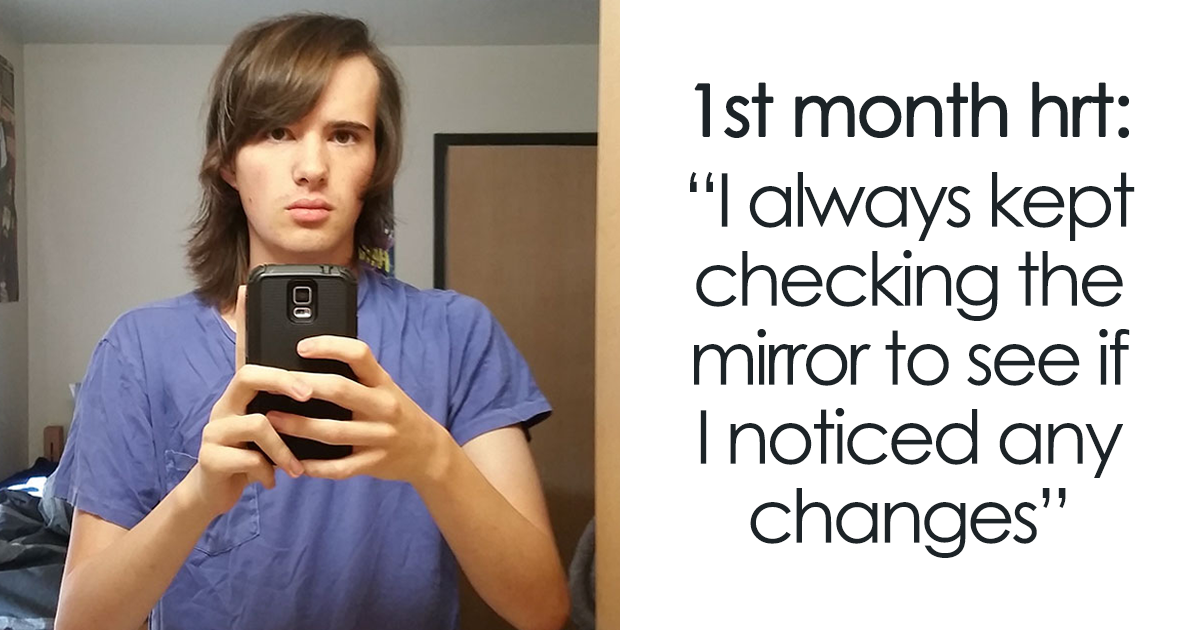
Transition photographs often hide long stretches of waiting. During the first months of hormone therapy, a woman may inspect her face every morning for evidence of change. Because she sees herself daily, gradual differences can be nearly invisible.
This can lead to disappointment or constant comparisons with other transition timelines. Genetics, age, healthcare access, treatment plans, photography, and cosmetic choices all vary, so comparisons are rarely fair. A highly edited photograph posted by someone else cannot serve as a medical calendar.
Taking standardized monthly picturesin similar lighting, from similar angles, without heavy filtersmay reveal progress more honestly. The woman might discover that her cheeks have subtly changed, her skin appears different, or her expression has become less guarded. Sometimes confidence arrives in photographs before she consciously notices it.
Coming Out to Family and Coworkers
Physical transition is only one part of the experience. Telling family members or colleagues may require far more courage than changing a wardrobe. Some people respond immediately with love. Others need education and time. A few may react with rejection.
Workplace transition can involve coordinating with human resources, updating email addresses, changing identification badges, discussing restroom access, and deciding how colleagues will be informed. Employers with clear transition guidelines can reduce confusion and place responsibility on management rather than forcing the employee to solve every issue alone.
The emotional experience may therefore contain joy and grief at the same time. A woman can feel thrilled to live honestly while mourning relationships that did not survive the change. A cheerful photograph does not mean every part of the journey was easy.
Recognizing Herself Without Trying
One of the most profound milestones can occur when transition stops occupying every thought. The woman wakes up, gets dressed, answers messages, works, shops for groceries, and realizes at the end of the day that she did not spend hours analyzing her gender.
The mirror becomes less of a courtroom. Photographs no longer need to prove progress. She may still enjoy documenting anniversaries, but the camera has changed roles: it records a life rather than defending an identity.
This is why the most incredible image in a transition timeline may not be the most glamorous one. It might be a casual photograph taken while laughing with friends, cooking dinner, walking a dog, or sitting on the couch without posing. The transformation is visible not because every feature has changed, but because the tension has left her face.
Conclusion: More Than a Before-and-After Story
A woman documenting her transition offers viewers a rare opportunity to see change unfold across months or years. Hormones, grooming, clothing, voice work, healthcare, and optional procedures may influence her appearance, but photographs cannot fully capture the patience, vulnerability, fear, support, and self-discovery behind them.
The story should not be reduced to a “man becoming a woman” as though identity were a costume change. It is better understood as a transgender woman gradually creating the freedom to live, speak, dress, and be recognized as herself.
The final photograph may receive the most attention, but every image matters. Together, they record something more compelling than a makeover: the slow replacement of uncertainty with recognition and of hiding with an ordinary, hard-earned confidence.

