
Hair Care
Kenwood Cooking Chef Induction Kitchen Machine
Aug
The Kenwood Cooking Chef induction kitchen machine is what happens when a serious stand mixer, an induction cooktop, a digital scale, and a confident sous-chef decide to share one very sturdy metal body. It can knead bread, whip meringue, melt chocolate, cook risotto, steam vegetables, proof dough, and stir sauces while you attend to more important matterssuch as finding the measuring spoon that was in your hand three seconds ago.
This is not a compact gadget designed to hide behind the toaster. The Cooking Chef is a premium, countertop-dominating appliance built for enthusiastic home bakers, ambitious cooks, large households, and anyone who regularly moves a recipe between a mixer and the stove. Its main attraction is simple: the stainless steel bowl can heat ingredients while the planetary mixing mechanism stirs them.
However, the Cooking Chef name covers more than one generation. The earlier KCL95 Cooking Chef XL generally heats from 68°F to 356°F, or 20°C to 180°C, while the newer KCL96 Cooking Chef reaches approximately 392°F, or 200°C. Screen size, app support, preset programs, machine weight, and included tools may also differ. Knowing which model you are considering is therefore essential.
What Is the Kenwood Cooking Chef?
At its core, the Kenwood Cooking Chef is a large planetary stand mixer with an induction heating system positioned beneath the bowl. Planetary mixing means the selected tool rotates on its own axis while also traveling around the bowl. This movement helps collect ingredients from a wider area than a simple center-mounted agitator.
Switch on the heat, and the machine becomes far more versatile than an ordinary mixer. It can gently warm butter, maintain a steady proofing temperature, simmer a sauce, cook custard, sauté aromatics, or bring a stew to a controlled bubble. Because the tool continues to move through the bowl, many recipes require less manual stirring.
The KCL95 generation uses induction heating from 20°C to 180°C in precise one-degree increments, giving it enough finesse for delicate pastry work and enough heat for sautéing and stir-frying. The newer KCL96 generation raises the upper limit to approximately 200°C and adds a larger five-inch color display, 60 preloaded recipes, and a wider collection of touchscreen presets.
Kenwood Cooking Chef Specifications at a Glance
The exact specification depends on the model and regional package, but the following comparison covers the two versions shoppers are most likely to encounter.
| Feature | KCL95 Cooking Chef XL | KCL96 Cooking Chef |
|---|---|---|
| Heating range | Approximately 68°F to 356°F | Approximately 68°F to 392°F |
| Bowl capacity | 6.7 liters, roughly 7 quarts | 6.7 liters, roughly 7 quarts |
| Display | 4.3-inch color TFT | 5-inch color TFT |
| Mixing controls | Variable speeds and stirring intervals | Eight continuous speeds and four stirring speeds |
| Recipe app | Kenwood World | Kenwood & Me |
| Built-in weighing | Yes | Yes |
| Guided recipes | Available through connected functions | 60 recipes preloaded, plus app recipes |
Kenwood lists the KCL96 with a metal body, a 6.7-liter bowl, eight continuous speeds, four stirring speeds, and a weight of about 33.6 pounds. Its stated maximum capacities include approximately 8.8 pounds of cake mixture, 5.7 pounds of dough, and 16 egg whites. The older KCL95 also has a 6.7-liter bowl but uses a smaller screen and may weigh closer to 39 pounds, depending on the version.
Features That Make the Cooking Chef Different
Induction Heating Inside the Mixing Bowl
The induction system is the star of the show. Traditional stand mixers are excellent at combining ingredients but must stop when a recipe needs heat. The Cooking Chef keeps the process in one bowl.
For chocolate work, low and controlled temperatures help reduce the risk of scorching. For bread, gentle warmth creates a stable proofing environment. For savory cooking, higher settings let you soften onions, toast spices, reduce sauces, and simmer soups without moving the food to a saucepan.
High temperature does not automatically make the bowl identical to a wide skillet. Its tall sides and smaller cooking surface affect evaporation and browning. Nevertheless, independent testers have successfully prepared stir-fries, risotto, slow-cooked dishes, caramel mixtures, and even popcorn using the heated bowl.
Integrated Digital Scales
Built-in scales allow ingredients to be weighed directly in the bowl or in an attachment positioned above the scale mechanism. This is one of those conveniences that sounds minor until you make bread without covering three separate bowls, a scale, and half the counter in flour.
The tare function lets you return the display to zero after each ingredient. You can add flour, reset, add water, reset again, and continue through the recipe. It reduces washing and helps prevent the classic baking mystery known as “Did I add the second cup already?”
Touchscreen and Guided Cooking
The display controls time, temperature, mixing speed, and automated programs. The KCL96 expands this system with a five-inch screen, preloaded guided recipes, and presets for common techniques. Instructions appear step by step, prompting the cook to add ingredients or fit a particular tool.
The machine can then adjust heat and movement for the next stage. You remain responsible for preparing ingredients and confirming prompts, so it is not a tiny restaurant chef trapped in a metal box. Still, it can remove much of the timing and temperature management from complicated recipes.
App Connectivity
Connected recipes expand the machine beyond its built-in programs. One detail deserves attention: Kenwood states that the KCL96 works with the Kenwood & Me app, while older Cooking Chef XL and Cooking Chef Gourmet models use the Kenwood World app.
This difference matters when reading reviews or buying a used machine. A tutorial created for the KCL95 may not match the interface of the KCL96, even when the cooking principles are similar.
Large Bowl and Powerful Mixing Action
The approximately seven-quart bowl gives the Cooking Chef enough capacity for celebration cakes, family bread batches, double portions of cookie dough, and meal-prep recipes. It can also whip up to 16 egg whites under ideal conditions, which is enough meringue to make your kitchen look temporarily employed by a French pastry shop.
Large bowls have one predictable weakness: very small quantities may sit below the most effective reach of certain tools. One egg white, a spoonful of frosting, or a tiny sauce may be easier to prepare with a hand mixer or small saucepan.
Tools and Attachments
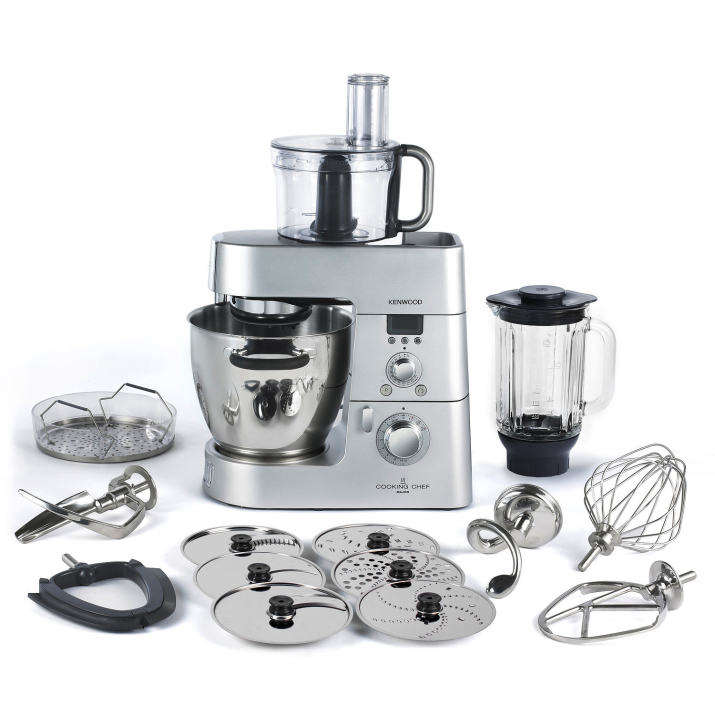
Common Cooking Chef packages include a stainless steel bowl, K-beater, balloon whisk, dough hook, creaming beater, stirring tool, steamer basket, splash guard, spatula, and dough scraper. Kenwood’s official KCL96 listing confirms the principal mixing tools and steamer basket, although bundle contents can vary.
K-Beater
The K-beater handles cake batter, cookie dough, mashed potatoes, pastry fillings, and many everyday mixtures. Its distinctive shape moves through dense ingredients without introducing as much air as the balloon whisk.
Balloon Whisk
The whisk is designed for egg whites, whipped cream, mousses, and airy batters. Combined with controlled heating, it becomes especially useful for Swiss meringue, Italian-style preparations, and cooked frostings.
Dough Hook
The dough hook kneads bread, pizza, brioche, and enriched doughs. After kneading, the same bowl can provide gentle heat for proofing, removing the need to search the house for a mysterious “warm, draft-free place.”
Creaming Beater and Stirring Tool
The flexible creaming beater scrapes closer to the bowl surface when working with butter, sugar, frosting, or soft mixtures. The stirring tool moves ingredients more gently during cooking, reducing the likelihood of breaking vegetables, beans, or tender pieces of meat.
Optional Attachment Ecosystem
Depending on compatibility and regional availability, optional attachments can add blending, food processing, grinding, slicing, grating, pasta rolling, spiralizing, juicing, and frozen-dessert functions. The attachment system can make the Cooking Chef a genuine appliance consolidator, but it also creates a new hobby: finding cabinets large enough to store everything.
What Can You Make With It?
Bread and Pizza Dough
The machine can weigh ingredients, mix them, knead the dough, and maintain a warm proofing environment. This continuous workflow is one of its strongest practical advantages. Independent testing found that the dough hook developed a smooth dough quickly and that the controlled proving function produced a strong rise.
Cakes, Cookies, and Frosting
The planetary action handles creaming, folding, whipping, and heavier mixtures. A small amount of heat can soften refrigerated butter before creaming, although it should be used cautiously; warm butter can turn an airy cake into a sweet yellow paving stone.
Custard, Pastry Cream, and Curds
These recipes normally require constant stirring and careful heat control. The Cooking Chef can maintain the selected temperature while its tool keeps the mixture moving. It is particularly useful when preparing lemon curd, crème anglaise, pastry cream, or custard-based ice cream.
Risotto and Polenta
Slow stirring is well suited to dishes that demand regular attention. The machine cannot taste the rice and offer philosophical advice about seasoning, but it can maintain heat and movement while you prepare garnishes or clean the cutting board.
Soups, Stews, and Sauces
The heated bowl can sauté initial ingredients and continue into simmering. Because the bowl is narrower than a Dutch oven, large pieces of meat and vegetables should be cut evenly. Dense root vegetables may require smaller pieces or additional cooking time.
Steamed Foods
A steamer basket enables the preparation of vegetables, fish, dumplings, and similar foods above heated liquid. Depending on the recipe, a sauce or broth can cook below while another component steams above it.
Performance Advantages
- Fewer transfers: Ingredients can move from weighing to mixing, heating, and stirring in one bowl.
- Precise temperature control: Delicate mixtures are easier to manage than they are over an unpredictable burner.
- Large capacity: The bowl suits families, entertaining, batch baking, and holiday cooking.
- Strong baking performance: It remains a capable stand mixer rather than becoming a cooking appliance with mediocre mixing tools.
- Hands-off stirring: Sauces, risotto, custard, and slow-cooked recipes require less hovering.
- Expandable functions: Optional attachments can replace several separate appliances.
Drawbacks to Consider
It Requires Serious Counter Space
The Cooking Chef is broad, deep, and heavy. It is not an appliance most owners will enjoy lifting from a lower cabinet every morning. Measure the counter, check the clearance beneath wall cabinets, and plan to give it a permanent home.
The Price Is Premium
This machine makes the most financial sense when its cooking functions will be used regularly. Someone who only bakes one birthday cake each year can buy an excellent conventional mixer and still have money left for several birthdays’ worth of frosting.
There Is a Learning Curve
The combination of heat, speed, stirring intervals, tools, presets, and app recipes takes time to understand. Beginners may initially get better results from guided programs before adapting conventional recipes manually.
Not Every Bundle Includes the Same Accessories
Retail packages often use similar model names while including different attachments. Compare the complete model code and box contents rather than relying on a product photograph filled with accessories that may be sold separately.
It Does Not Replace Every Cooking Appliance
The heated bowl is excellent for controlled cooking, but it does not provide the broad searing area of a skillet, the dry heat of an oven, or the pressure of a pressure cooker. Think of it as a highly capable cooking mixernot a magical portal through which all other appliances disappear.
Who Should Buy the Kenwood Cooking Chef?
The machine is particularly well suited to frequent bakers, bread makers, pastry enthusiasts, large families, recipe developers, small catering operations, and home cooks who enjoy preparing food from scratch. It is also attractive to people who make recipes requiring continuous stirring or accurate temperatures.
It may be excessive for cooks with limited counter space, people who mostly reheat prepared meals, or bakers who only need basic mixing. A conventional stand mixer is simpler, lighter, and less expensive when heating and guided cooking are unlikely to be used.
How to Choose the Right Cooking Chef Model
- Check the full model number. KCL95 and KCL96 machines have meaningful differences.
- Confirm the heating range. The KCL95 generally tops out at 180°C, while the newer KCL96 reaches approximately 200°C.
- Review included tools. A package containing a blender or food processor may offer better value than a bare machine.
- Verify app compatibility. The KCL96 uses Kenwood & Me; older connected models use Kenwood World.
- Confirm voltage and plug type. Many listings are intended for European or British electrical systems.
- Investigate regional warranty support. Imported appliances may not qualify for local repairs or manufacturer coverage.
- Measure the kitchen. Include room for lifting the mixer head and attaching accessories above or in front of the machine.
At the KCL96 launch, availability was initially limited to the United Kingdom, illustrating why American shoppers should verify local voltage, service support, and warranty conditions before importing a machine.
Real-World Experience With the Kenwood Cooking Chef Induction Kitchen Machine
Living with the Cooking Chef is less about discovering whether it can mix cake batterit certainly canand more about learning which everyday routines become easier. The first noticeable change is reduced movement around the kitchen. A bread recipe can begin with flour and water weighed directly into the bowl, continue through kneading, and finish with the dough proofing under controlled warmth. There is no separate scale to clean and no need to warm an oven briefly before turning it off and hoping the dough enjoys its improvised sauna.
The heating function is equally persuasive when making pastry cream. With a saucepan, the cook must manage the burner, whisk continuously, watch the corners, and react quickly when thickening begins. In the Cooking Chef, the whisk or flexible tool keeps the mixture moving while the induction system controls the heat. You should still monitor texture and temperature, but the process feels calmer and more repeatable.
Risotto demonstrates both the machine’s strengths and its limits. The gentle stirring action saves effort and produces an evenly cooked result without constant attention. Onions can be softened in the bowl before rice, wine, and stock are added. However, cooks who enjoy manually adding stock one ladle at a time may find the automated approach less theatrical. There is no leaning over a steaming pan pretending to be the lead chef in a restaurant drama.
The large bowl is wonderful for double batches, but it can feel comically spacious when preparing a small portion. Two egg whites may whip successfully with the tool correctly adjusted, yet tiny quantities are not where this machine offers its greatest advantage. For a tablespoon of dressing or half a cup of cream, a smaller tool is usually faster.
Cleaning is generally manageable because many removable components are dishwasher safe. Sticky dough often releases cleanly, and warm water can loosen cooked-on sauce. Sugar syrups, caramel, and starchy mixtures deserve more immediate attention. Allow them to dry completely and they may attach themselves to the bowl with the emotional commitment of a barnacle.
The touchscreen and presets become more useful after the first few sessions. Initially, manual controls can seem overwhelming because temperature, speed, time, and stirring intervals interact. Guided recipes provide a helpful introduction. After learning how the machine responds, adapting personal recipes becomes easier. A familiar stovetop custard, for example, can be translated into a target temperature, low stirring speed, and defined cooking time.
Noise is present but generally appropriate for a powerful stand mixer. Whipping at high speed is naturally louder than slow stirring during a stew. The machine’s weight helps it remain stable when kneading heavy dough, although that same weight discourages moving it. Owners who leave it permanently on the counter are likely to use it much more often than those who store it in a cabinet.
The best experience comes from treating the Cooking Chef as a workflow machine rather than a novelty cooker. Use the integrated scale, proof dough in the bowl, make sauces that benefit from constant stirring, and explore attachments that replace appliances you already use. When its features are incorporated into weekly cooking, the price and footprint become easier to justify. When used only as an oversized mixer, much of its clever engineering sits idle looking expensive.
Final Verdict
The Kenwood Cooking Chef induction kitchen machine is one of the most capable mixer-cooker combinations available. It preserves the strengths expected from a premium planetary stand mixer while adding accurate induction heating, integrated weighing, automated stirring, guided recipes, and a substantial attachment ecosystem.
Its size, weight, cost, and learning curve prevent it from being the ideal choice for every kitchen. For frequent bakers and adventurous home cooks, however, it can streamline genuinely complicated processes rather than merely adding another glowing screen to the counter.
Note: Specifications, electrical requirements, software compatibility, warranties, and included accessories vary by model and country. Confirm the complete model number, voltage, plug type, package contents, and local service coverage before purchasing.

