
Body Care
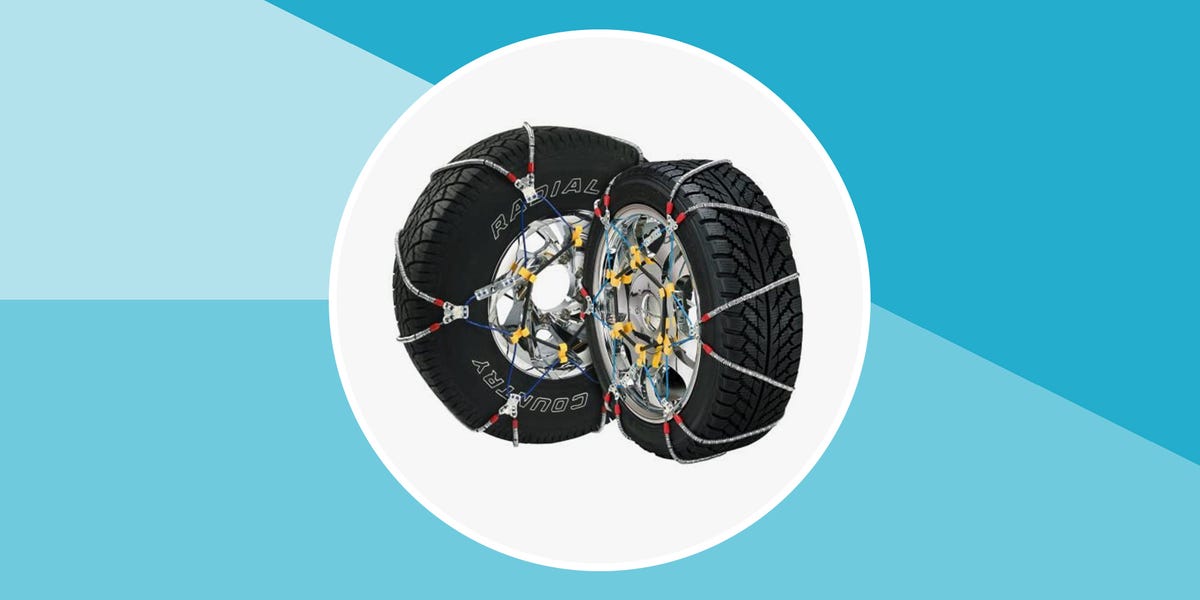
8 Best Tire Chains For Snowy Winter Driving
Aug
Research synthesis draws on current information from Peerless/SCC, König, Car and Driver, Popular Mechanics, etrailer, Les Schwab, TireChains.com, Caltrans, WSDOT, Oregon TripCheck, AAA, Michelin, and GT Radial.
Snow has a charming side when it is decorating pine trees, improving holiday photos, or giving you a respectable excuse to cancel plans. It becomes considerably less adorable when your tires begin spinning halfway up a mountain pass.
The best tire chains can provide the extra bite needed to start, brake, and steer more effectively on packed snow and ice. They can also help you comply with temporary chain-control requirements in mountain regions. Four-wheel drive and all-wheel drive improve acceleration, but they do not magically shorten every icy stop or exempt a vehicle from every chain requirement. In severe conditions, transportation agencies may require chains on nearly all vehicles.
This guide compares eight reputable tire-chain options for passenger cars, crossovers, SUVs, pickup trucks, and vehicles with extremely limited wheel-well clearance. Rather than naming one model “best” for everyone, each recommendation is matched to a specific use case. After all, a chain designed for a compact sedan is not automatically the right answer for a three-quarter-ton pickup carrying enough camping equipment to establish a small nation.
Important: Always check your vehicle owner’s manual, exact tire size, drivetrain instructions, and available wheel-well clearance before purchasing or installing any traction device.
Chain requirements and winter-driving recommendations vary by jurisdiction and posted conditions.
Quick Comparison of the Best Snow Tire Chains
| Product | Best For | Design | Tensioning | Key Advantage |
|---|---|---|---|---|
| König XG-12 Pro | Best overall for SUVs and vans | Diamond-pattern alloy chain | Automatic | Excellent balance of grip, clearance, and convenience |
| Peerless Auto-Trac LT | Easy installation on trucks and SUVs | Diamond-pattern alloy chain | Automatic ratcheting | Installs without moving or lifting the vehicle |
| SCC Super Z6 | Very limited wheel-well clearance | Diagonal cable chain | Built-in rubber tensioner | Requires only about 6.3 millimeters of inner-side operating space |
| SCC Radial Chain | Budget emergency use | Ladder-style cable | Manual | Affordable, compact, and easy to store |
| Titan Chain Diamond Pattern | Best value diamond chain | Square-link diamond chain | Assisted | Smooth ride with straightforward installation |
| König CG-9 | Premium passenger-car use | Low-profile diamond chain | Self-tensioning | Compact nine-millimeter design |
| König K-Summit | Zero inner-wheel clearance | Externally mounted chain | Automatic centering | No components behind the tire |
| Titan Chain Alloy Chains With Cams | Heavy-duty truck traction | Square-link ladder chain | Cam-assisted manual adjustment | Durable construction and aggressive bite |
How We Selected These Tire Chains
The strongest tire-chain recommendations are not based on the number of exclamation points printed on the package. We compared construction, chain pattern, tensioning method, installation complexity, vehicle compatibility, clearance requirements, durability, and suitability for different winter conditions.
Diamond and diagonal patterns generally maintain more continuous contact with the road than conventional ladder patterns. That usually produces steadier cornering and a less rhythmic ride. Ladder chains remain useful, however, particularly when maximum forward traction, durability, affordability, or heavy-truck compatibility matters more than refinement.
We also favored established manufacturers that publish fitment data and installation instructions. Independent automotive evaluations were considered alongside manufacturer specifications and retailer installation guidance. No tire chain is universally compatible, so these recommendations refer to product families. The exact part number must be matched to the complete tire size printed on the sidewall.
Independent evaluations and comparison guidance support choosing by vehicle, clearance, installation, and intended conditions rather than brand alone.
The 8 Best Tire Chains for Snow and Ice
1. König XG-12 Pro Best Overall for SUVs and Vans
The König XG-12 Pro is a premium snow chain designed primarily for midsize and full-size SUVs, vans, motorhomes, and similar vehicles. Its diamond-pattern chain creates frequent contact points across the tread, helping provide confident acceleration, lateral stability, and braking on snow-covered roads.
The headline feature is its automatic micro-adjusting tensioning system. After the primary connections are made, the chain continues centering and tightening as the vehicle begins moving. This eliminates much of the crouch-connect-drive-stop-retighten routine associated with old-fashioned chains.
Its 12-millimeter profile is relatively compact for a chain intended for larger vehicles. Short-pitch links and flattened hardware help reduce the space occupied around the tire, although owners still need to verify that their vehicle permits a 12-millimeter traction device.
Why it stands out: The XG-12 Pro combines substantial snow-and-ice traction with a polished installation system. It is expensive, but frequent mountain travelers may decide that frozen fingers are already contributing enough to the adventure.
Watch for: It is not a universal SUV chain. Confirm the exact tire size, vehicle weight category, and clearance specification before ordering.
König specifies a 12 mm design, automatic micro-adjusted tensioning, and suitability for SUVs, vans, and motorhomes.
2. Peerless Auto-Trac LT Best Easy-Install Chain for Trucks and SUVs
The Peerless Auto-Trac LT is an excellent choice for drivers who want a real alloy chain without wrestling with separate rubber adjusters. It uses a pair of self-tightening ratchets to maintain a snug fit as the tire rotates.
Installation can be completed without moving the vehicle forward, driving onto the chain, or lifting the axle. The driver connects the inner cable, secures the outer components, and allows the ratcheting system to handle ongoing tension. Peerless specifically advises against adding separate chain tensioners to this design.
The manganese-alloy cross members use a compact profile intended to provide multiple gripping points while reducing unnecessary chain mass. The diamond pattern is also better suited to cornering and braking than a basic ladder arrangement.
Why it stands out: It offers one of the friendliest installation processes among conventional chains for pickups and SUVs.
Watch for: Auto-Trac is sold in passenger and light-truck configurations. Select the version and part number recommended for your precise tire dimensions.
Peerless states that Auto-Trac LT installs without moving or jacking up the vehicle, uses automatic ratcheting tensioners, and meets Class S clearance requirements in compatible applications.
3. SCC Super Z6 Best for Extremely Tight Clearance
Modern vehicles often place suspension components, brake lines, sensors, and bodywork uncomfortably close to the tire. The SCC Super Z6 was designed for exactly this crowded neighborhood.
This diagonal-pattern cable chain requires approximately 6.3 millimeters, or one-quarter inch, of operating space at the critical inner sidewall area. That is substantially less than the space required by many traditional chains. Its low-profile alloy traction coils provide grip without surrounding the tire with thick steel links.
A built-in rubber tensioning system simplifies installation and removes the need for a separate adjuster. The diagonal configuration also creates more consistent contact during turns than a basic ladder cable.
Why it stands out: Super Z6 is one of the most practical choices for vehicles that permit chains but provide very little room behind the tire.
Watch for: “Low clearance” does not mean “approved for every low-clearance car.” Some manufacturers prohibit conventional chains entirely on particular wheel-and-tire combinations.
Peerless/SCC reports that Super Z6 requires 6.3 mm of operating space at the inside sidewall and includes a designed-in tensioning system.
4. SCC Radial Chain Best Budget Tire Cable
The SCC Radial Chain is a sensible emergency option for drivers who encounter snow occasionally and do not want a premium chain occupying half the winter-travel budget. It uses steel rollers mounted on cross cables to create a compact traction device with relatively low operating-space requirements.
Radial cables are lighter and easier to store than heavy link chains. They can be a good fit for paved roads, moderate snowfall, and temporary chain controls when the vehicle manufacturer allows cable-style devices.
The trade-off is performance. A budget cable usually cannot match the deep-snow bite, ice grip, longevity, or smoothness of a high-quality diamond-pattern alloy chain. Installation is also more manual, and an appropriate adjuster may be recommended for certain models.
Why it stands out: It is affordable, compact, widely available in multiple sizes, and useful as a trunk-ready emergency solution.
Watch for: Choose it for occasional paved-road use, not repeated abuse on steep, icy back roads.
Peerless identifies Radial Chain as a low-operating-space passenger traction product, while comparative testing publications commonly select it as a budget choice.
5. Titan Chain Diamond Pattern With Assisted Tensioning Best Value Diamond Chain
Titan Chain’s diamond-pattern square-link models offer a useful middle ground between inexpensive cables and premium European chains. Their manganese-nickel alloy links are designed to resist wear and corrosion, while the diamond arrangement keeps more chain crossing the contact area throughout each tire rotation.
The result is smoother power delivery and more predictable lateral grip than a conventional ladder pattern. Built-in assisted tensioners reduce the number of loose accessories that can disappear into the snow moments before you need them.
Many versions meet SAE Class S clearance dimensions, but fitment varies by tire size. Some models use links around 3.7 millimeters thick, helping preserve clearance without turning the product into a lightweight cable.
Why it stands out: It provides many premium-chain characteristicsdiamond coverage, square links, integrated adjustment, and corrosion-resistant alloyat a comparatively accessible price.
Watch for: Titan offers numerous similar-looking part numbers. Ordering by wheel diameter alone is not enough; every number in the tire size matters.
Etrailer specifications describe Titan diamond-pattern chains with assisted tensioning, Class S compatibility in applicable sizes, and manganese-nickel alloy square links.
6. König CG-9 Best Premium Chain for Passenger Cars
The König CG-9 brings premium self-tensioning convenience to passenger cars. Its nine-millimeter profile suits many vehicles that permit low-profile chains but cannot accommodate bulkier truck-oriented hardware.
The chain uses a diamond pattern with compact square links, helping maintain traction through acceleration, braking, and directional changes. Color-coded connection points make the fitting sequence easier to understand when the pavement is white, the sky is gray, and every black hook suddenly looks identical.
Once connected, the self-tensioning mechanism helps maintain chain fit during operation. The CG-9 is particularly appealing for drivers who regularly travel to ski areas or mountain communities and want something more refined than a basic cable.
Why it stands out: It combines low-profile construction, automatic tensioning, smooth road manners, and good passenger-car compatibility.
Watch for: Its premium engineering comes with a premium price. Occasional users may be adequately served by a less expensive assisted-tension chain.
König and etrailer describe the CG-9 as a low-profile, diamond-pattern, self-tensioning passenger-car chain.
7. König K-Summit Best for Zero Inner-Wheel Clearance
The König K-Summit takes a radically different approach. Instead of wrapping around both sides of the tire, it mounts from the outside and attaches through an adapter fitted to a wheel bolt or nut. No chain components sit behind the tire.
That external design makes the K-Summit a potential solution for vehicles with essentially zero usable clearance between the inner tire sidewall and suspension components. Its arms position chain sections across the tread, and the assembly centers itself as the vehicle begins moving.
Welded traction bars improve bite, while the integrated ratchet helps secure the assembly without requiring the user to reach behind the wheel. Different K-Summit versions are designed for passenger cars, crossovers, SUVs, vans, and heavier electric vehicles.
Why it stands out: Few conventional chains can compete when the vehicle has no room for an inner cable, chain, or connector.
Watch for: This is a costly and comparatively complex system. Proper adapter setup should be completed before the first snowstorm, preferably somewhere warmer than a windy highway shoulder.
König specifies that the K-Summit has no components on the inner side of the wheel, mounts externally, and automatically positions itself while driving.
8. Titan Chain Alloy Snow Chains With Cams Best for Heavy-Duty Truck Traction
When the job involves a heavy pickup, wide-base tire, deep snow, or repeated winter work, a traditional ladder chain still makes plenty of sense. Titan Chain’s alloy square-link models with cams prioritize durability and aggressive forward traction over luxury-car smoothness.
The square links provide defined edges that dig into packed snow and light ice. Cam tighteners around the side chain allow the installer to remove slack using the included adjustment tool. Compared with chains that require separate rubber tensioners, cams provide a tidy and mechanically straightforward fit.
The ladder pattern can feel bumpier than a diamond chain and may offer less continuous lateral coverage. However, it is easy to inspect, repair, and understandqualities appreciated by drivers who use chains as working equipment rather than an occasional emergency accessory.
Why it stands out: It delivers rugged construction, strong climbing traction, and practical cam adjustment for compatible trucks and larger tires.
Watch for: Heavy ladder chains require generous clearance and may not satisfy Class S limitations. Never assume that a large truck automatically has room for them.
Titan alloy cam chains are described as heavy-duty ladder-pattern chains with corrosion-resistant manganese-nickel alloy square links and cam tighteners.
How to Choose the Right Tire Chains
Start With the Complete Tire Size
Read the full size from the tire sidewall, such as 225/65R17. The width, aspect ratio, and wheel diameter all affect fit. Two tires mounted on 17-inch wheels can require completely different chain sizes.
Read the Owner’s Manual Before Shopping
The manual may identify which axle receives chains, limit the acceptable chain thickness, approve cables only, restrict chains to certain tire sizes, or prohibit conventional chains. These instructions protect brake lines, suspension parts, steering components, fenders, and electronic sensors.
Measure and Respect Clearance
Clearance is needed above the tread, beside the sidewall, and behind the tire. A chain that fits while the car is parked can still lift outward as speed increases. That dynamic movement is why “it looked fine in the driveway” is not an engineering standard.
Choose the Correct Pattern
- Diamond chains: Provide frequent tread coverage, smoother operation, and strong all-around control.
- Diagonal cables: Offer low-profile traction and better lateral coverage than basic ladder cables.
- Ladder chains: Deliver strong forward bite, simple construction, and good value, but can feel rougher.
- V-bar chains: Add aggressive gripping points for severe ice and hard-packed snow but require substantial clearance.
- External chains: Avoid components behind the tire and may work on certain zero-clearance vehicles.
Consider How Often You Will Use Them
A basic cable may be enough for an annual trip through a region where chains must be carried. Frequent mountain drivers benefit more from automatic tensioning, durable alloy links, and a smoother diamond pattern. Commercial and rural users may prioritize repairability and aggressive traction instead.
Fitment guides emphasize exact tire size, owner-manual restrictions, clearance, and test fitting before travel.
Essential Tire-Chain Safety Tips
Practice installing your chains at home. A dry driveway offers better lighting, warmer hands, and approximately 100% fewer snowplows passing three feet from your elbows.
Install chains on the axle specified by the vehicle manufacturer. Front-wheel-drive vehicles commonly use the front wheels, and rear-wheel-drive vehicles commonly use the rear wheels, but AWD and 4WD instructions vary significantly. Follow the manual rather than an internet diagram for a vaguely similar vehicle.
After installation, confirm that every cable, hook, fastener, and tensioning component is secure. Drive a short distance at very low speed, stop in a safe location, and inspect the fit when required by the product instructions.
Never exceed the chain manufacturer’s speed limit. Many chains specify a maximum near 30 mph, but conditions may require a much lower speed. Avoid sudden acceleration, hard braking, spinning the tires, sharp steering, and cruise control.
Remove chains when the road becomes consistently bare. Dry pavement rapidly wears chains, produces an unpleasant ride, and increases the risk of breakage. A broken cross chain can strike body panels, brake components, or wiring with considerable enthusiasm.
Finally, carry waterproof gloves, a kneeling mat, a flashlight or headlamp, reflective clothing, repair links, and a storage bag. Snow chains work best when the driver can install them without becoming a snowbank ornament.
Transportation agencies and tire-safety organizations recommend carrying chains where appropriate, practicing installation, avoiding cruise control on slippery roads, following posted controls, and removing chains only in a safe area beyond chain controls.
Are Tire Chains Better Than Winter Tires?
Tire chains and winter tires solve related but different problems. Winter tires are designed for everyday cold-weather driving and use rubber compounds and tread patterns that remain effective in low temperatures. Chains are temporary traction devices intended for snow-covered or icy surfaces, steep grades, emergencies, or posted chain-control areas.
Drivers who live in consistently cold and snowy regions generally benefit from four quality winter tires. Chains can then be carried as an additional tool for severe conditions. Installing chains on worn all-season tires does not transform the vehicle into an unstoppable alpine creature; it simply adds temporary mechanical grip where the chains contact the surface.
Michelin and other tire guidance distinguish daily cold-weather benefits of winter tires from temporary chain use in severe or regulated conditions.
Final Verdict
The König XG-12 Pro is our best overall choice for compatible SUVs and vans because it combines strong traction, a manageable 12-millimeter profile, and automatic tensioning. The Peerless Auto-Trac LT is especially appealing to truck and SUV owners who prioritize quick installation, while the SCC Super Z6 addresses vehicles with very limited operating clearance.
Budget-conscious drivers should consider the SCC Radial Chain, and the Titan diamond-pattern chain offers an attractive balance of price and performance. Passenger-car owners seeking premium convenience can choose the König CG-9. For vehicles with no usable inner clearance, the externally mounted König K-Summit occupies a category of its own. Heavy-truck users who value rugged traction should look closely at Titan’s alloy square-link chains with cams.
The best tire chain is ultimately the one that fits your exact tires, is permitted by your vehicle manufacturer, matches the available clearance, and can be installed correctly before your hands become too cold to negotiate with tiny hooks.
Real-World Experience: What Winter Chain-Up Teaches Drivers
The first lesson of snowy winter driving is that buying chains and being ready to use them are two entirely different achievements. A neatly packaged set in the cargo area can create a comforting sense of preparedness, but that confidence evaporates quickly when the instructions are still factory-folded and the chain-control sign appears through heavy snowfall.
Drivers who practice at home tend to discover small problems that would be miserable on the road. The chains may be the wrong size despite matching the wheel diameter. A connector may be difficult to reach behind the tire. The vehicle’s factory jack, luggage organizer, or full cargo load may block access to the chain bag. Even opening a rigid plastic case can become a surprisingly ambitious project while wearing thick gloves.
A useful practice session should include more than placing a chain over a clean tire. Lay out the entire pair, identify the inside and outside connectors, and check for twists. Install both chains using the gloves and flashlight that will travel in the vehicle. Then remove them, untangle them, and repack them in the order they will be needed. This turns an unfamiliar mechanical puzzle into a repeatable sequence.
Another common experience is underestimating how much room is required to work safely. Chain-up areas can be crowded, slushy, noisy, and poorly lit. Pull as far away from moving traffic as the designated area allows, activate the hazard lights, and wear something reflective. Passengers should remain in a safe location rather than gathering around the wheel to provide eight contradictory opinions.
Once the chains are installed, the vehicle immediately feels different. Steering may become heavier, vibration increases, and the normal relationship between accelerator pressure and vehicle movement changes. The correct response is not panic; it is patience. Accelerate gently, leave much more following distance, and make every steering input gradual. Chains improve traction, but they do not repeal physics or provide diplomatic immunity from black ice.
Drivers also learn that automatic tensioning is more than a luxury feature. In freezing rain or blowing snow, eliminating a second round of manual adjustment can make a meaningful difference. That does not mean automatic systems can be ignored. They still require correct initial installation, inspection, maintenance, and adherence to the manufacturer’s instructions.
After the trip, maintenance is simple but important. Rinse away road salt and deicing chemicals, allow the chains to dry completely, and inspect every cross member, cable, hook, and tensioning component. Look for flattened links, broken wires, corrosion, stretched connectors, or damaged rubber parts. Replacing a worn component in the garage is inexpensive compared with discovering it at midnight on an icy grade.
The final lesson is that good judgment remains the most valuable winter traction device. Chains can help a properly prepared vehicle travel through difficult conditions, but they are not an obligation to continue into a dangerous storm. When visibility disappears, roads close, or conditions exceed the driver’s experience, postponing the trip is not cowardice. It is advanced winter-driving technology powered by common sense.
Note: Product availability, fitment charts, road regulations, and approved traction-device lists can change. Verify current manufacturer instructions, vehicle restrictions, and state transportation requirements before traveling.

