
Hair Care
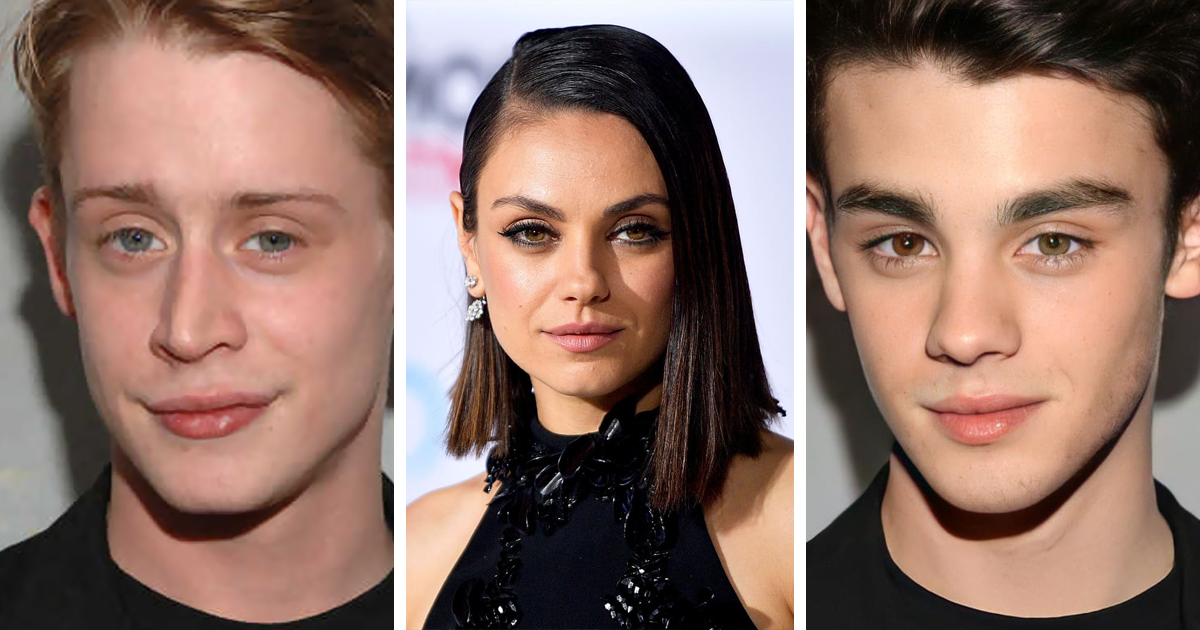
A.I.-Created Images Of Famous Couples’s Kids
Aug
Note: This article discusses AI-created celebrity-family images as a digital culture trend. It does not encourage creating, editing, or sharing realistic images of real minors without consent.
When Celebrity Curiosity Meets the AI Baby Machine
Celebrity culture has always loved a good “what if.” What if that famous couple had stayed together? What if two red-carpet icons had a child? What if the internet could peek into a parallel universe where Hollywood breakups never happened, fictional romances became real, and genetics politely followed fan-service instructions? Enter A.I.-created images of famous couples’ kids, one of the strangest, most clickable, and most eyebrow-raising trends in digital entertainment.
These images usually show fictional children imagined from the facial features of famous couples, ex-couples, or even fictional pairings. Some are playful fan art. Some are surreal. Some are so polished that you stare for five seconds and whisper, “Wait… is that real?” Spoiler: it is not. AI can blend visual traits, generate photorealistic faces, and produce a convincing family portrait, but it cannot predict a real child’s appearance with scientific certainty. Genetics is not a smoothie machine. You cannot toss in two celebrity faces, press “blend,” and get destiny in 4K.
Still, the trend is popular for a reason. It combines celebrity gossip, nostalgia, visual surprise, and the internet’s favorite hobby: imagining alternate timelines. A fan might wonder what the children of a long-broken-up couple could have looked like. A pop-culture page might create “future baby” images for a currently famous pair. A digital artist may use AI, photo-editing tools, and manual retouching to create a polished concept. The result sits somewhere between art, entertainment, social commentary, and a group chat that got dangerously good at Photoshop.
But as fun as the trend can be, it also raises serious questions about privacy, consent, disclosure, child safety, and celebrity likeness. AI-generated celebrity kids may look harmless when framed as a “just for fun” post, but the technology behind them can also be used to mislead audiences, impersonate real people, or blur the line between creative speculation and digital exploitation.
What Are A.I.-Created Images of Famous Couples’ Kids?
A.I.-created images of famous couples’ kids are synthetic visuals made with artificial intelligence tools that imagine what a child might look like if two famous people had children together. The couple may be married, dating, divorced, long separated, fictional, or entirely imagined by fans. In many cases, the image is not made from real genetic analysis but from visual resemblance: eye shape, hair color, face structure, skin tone, smile, and the general “vibe” of both adults.
The phrase often overlaps with related trends such as AI-generated celebrity kids, future baby generator images, celebrity AI art, and synthetic family portraits. These images may be created using text-to-image models, face-mixing apps, generative photo tools, or a combination of AI and traditional editing software. A creator might start with reference photos, ask a model to generate a childlike face that resembles both people, then manually adjust details to make the result look more believable.
At their most innocent, these images are digital daydreams. They are the visual equivalent of saying, “Imagine if these two had a kid.” At their most questionable, they can become misleading content, especially when captions do not clearly say the image is AI-generated. A realistic-looking child beside a famous couple can quickly be mistaken for a real family photo by casual scrollers who are moving fast, tired, and possibly eating chips with one hand.
Why These Images Go Viral So Easily
They Turn Gossip Into a Picture
People do not only follow celebrity relationships for facts. They follow them for stories. A relationship becomes a mini-series: the first sighting, the red-carpet debut, the breakup rumors, the engagement speculation, the “sources say” headlines, and the Instagram post that launches a thousand comments. AI-generated kids push that story into the future or into an alternate reality. Suddenly, the internet is not just asking, “Are they together?” It is asking, “What would their child look like?”
They Are Instantly Understandable
A 1,500-word analysis of celebrity culture takes time. A photorealistic image of an imaginary celebrity child takes half a second to understand. That makes the format perfect for visual platforms. People can react immediately: cute, creepy, accurate, weird, hilarious, or “please delete this before my coffee gets cold.”
They Invite Debate
The comment section is part of the entertainment. One viewer says the child looks exactly like the mother. Another says the father’s eyebrows have staged a hostile takeover. Someone else insists the AI forgot how noses work. These images invite comparison, speculation, and jokes, which means engagement. And on social media, engagement is the engine that keeps the carousel spinning.
How AI Generates Imaginary Celebrity Children
Modern AI image tools are trained to understand patterns in huge collections of visual data. When asked to create a face, they do not “know” a person the way humans do. They generate pixels based on learned relationships among facial features, lighting, composition, age, style, and context. If the tool is guided by reference images, it may produce a face that resembles those references. If it is guided by text only, the result depends heavily on the model’s training, the prompt, and the creator’s editing choices.
For celebrity-couple child images, creators often use three steps. First, they choose clear photos of both celebrities. Second, they use an AI tool or face-blending app to generate childlike faces with shared traits. Third, they polish the result with editing: correcting skin texture, fixing odd hands or teeth, adjusting hair, and making the image look less like it escaped from a haunted wax museum. The best results usually come from human curation, not from pressing a single magic button.
However, accuracy is not the same as realism. An image may look realistic without being biologically meaningful. Real children inherit traits in complex, unpredictable ways. Recessive genes, dominant genes, ancestry, randomness, and family history all matter. AI can imitate resemblance, but it cannot reliably forecast a real person’s future child. The final image is a visual guess wearing a very confident outfit.
The Fun Side: Digital Art, Nostalgia, and Pop-Culture Imagination
There is a genuine creative appeal here. AI-created celebrity-family images can function like fan art, parody, speculative design, or pop-culture collage. Artists have used the format to imagine children of famous ex-couples, alternate families for movie characters, or fictional couples from TV shows and superhero universes. The best examples are clearly labeled, creatively styled, and presented as imagination rather than fact.
This is where the trend works best: as playful, transparent, non-deceptive entertainment. It taps into nostalgia for celebrity couples people remember from earlier eras. It gives fans a way to revisit relationships that shaped pop culture. It also shows how quickly generative AI has changed digital art. A concept that once required advanced illustration skills can now be prototyped in minutes, although making it tasteful still requires judgment. AI may generate the face, but humans are still responsible for the taste level. Unfortunately, taste is not always included in the free trial.
For publishers, these images can attract curiosity-driven traffic. A headline about “what famous couples’ kids would look like” naturally creates a click. Readers want to compare, react, and share. But that popularity also creates responsibility. When a post involves celebrity likenesses, imagined children, or realistic family scenes, clear labeling is not optional from an ethical standpoint. It is the difference between a fun gallery and a digital rumor wearing baby shoes.
The Serious Side: Consent, Privacy, and Digital Likeness
The biggest issue with AI-generated celebrity kids is consent. Celebrities may be public figures, but they are still people. Their faces, relationships, family lives, and children are not raw material without limits. In the United States, legal protection for likeness varies by state, and right-of-publicity rules can become complicated when AI-generated images are used commercially. Even when an image is not illegal, it can still be invasive, misleading, or simply tacky.
The concern becomes sharper when the image involves children. Even if the child is fictional, the visual language is childlike. If the image resembles a real celebrity’s real child, the ethical stakes rise quickly. Children do not choose fame because their parents are famous. Many celebrity parents work hard to shield their kids from public exposure. AI-created family images can undermine that boundary, especially if creators use real photos of minors as references or imply that synthetic images are authentic.
There is also the risk of normalization. When audiences get used to seeing realistic fake children, fake family portraits, and fake private moments, the internet becomes a less trustworthy place. A viewer may not know whether an image is fan art, satire, gossip bait, or a real photograph. That confusion can damage reputations, spread false narratives, and make it easier for bad actors to exploit synthetic media.
Why Labeling Matters
Clear disclosure is one of the simplest ways to make this trend safer. If an image is AI-generated, the caption should say so plainly. Not buried under 19 hashtags. Not hidden behind “concept art vibes.” Not placed in tiny gray text that requires detective equipment. A direct label such as “AI-generated concept image” or “fictional AI artwork” helps viewers understand what they are seeing.
Major platforms have moved toward labeling realistic AI-generated or AI-altered media, especially when it could be mistaken for a real person, event, or scene. The broader industry is also developing provenance tools, digital watermarks, and content credentials that can show whether AI was used. These systems are not perfect, but they reflect a growing consensus: synthetic content needs context.
For celebrity-family images, labels should be even more careful. A good caption might read: “This is a fictional AI-generated image imagining what a child of two public figures could look like. It is not a real person or real family photo.” That may sound less spicy than “OMG their secret baby revealed,” but it has the advantage of not being wildly misleading. Ethics: still undefeated.
Examples of Responsible and Irresponsible Uses
Responsible Use
A responsible post clearly labels the image as AI-generated, avoids using real children’s photos as inputs, does not imply pregnancy or parenthood, and treats the celebrities respectfully. It may use a stylized illustration rather than a photorealistic fake. It may focus on fictional couples or historical pop-culture “what if” scenarios where the audience understands the concept immediately.
Irresponsible Use
An irresponsible post presents a synthetic image as real, uses clickbait suggesting a secret child, copies the look of a real minor, or creates intimate family scenes without context. The worst versions use AI to fabricate scandals, fake pregnancies, fake adoptions, or fake private moments. At that point, the content is no longer harmless celebrity fun. It becomes misinformation with a celebrity filter.
The Gray Area
The gray area is where most viral content lives. A creator may not intend harm. A reader may understand it is fake. A platform may label it eventually. But because the image is realistic and emotionally charged, confusion can still happen. The safest approach is to design for clarity from the beginning. If the joke requires people to be fooled, the joke may need a nap.
What This Trend Says About Celebrity Culture
The popularity of AI-created images of famous couples’ kids says a lot about how audiences relate to celebrities. Fans do not only consume movies, music, sports, or fashion. They build stories around public figures. They imagine futures, families, friendships, rivalries, and alternate endings. AI makes those imagined stories visible.
That visibility can be fascinating, but it can also intensify parasocial behavior. A parasocial relationship is a one-sided emotional connection with a public figure. It is normal to admire celebrities, but AI can make imagined intimacy feel more real. A fake family portrait can create the illusion of access to a private life that does not exist. The image may be fictional, but the emotional reaction can be very real.
For that reason, readers should enjoy these images with a little media literacy. Ask: Who made this? Is it labeled? Is it meant as art, satire, or gossip? Does it involve real children? Could someone mistake it for authentic? A few seconds of skepticism can save everyone from accidentally sharing nonsense with confidence, which is the internet’s unofficial Olympic sport.
SEO and Publishing Tips for Covering This Topic
If you are publishing an article about A.I.-created images of famous couples’ kids, the best approach is to balance curiosity with responsibility. The topic has natural search appeal, but the article should not rely on deception. Use keywords such as AI-generated celebrity kids, celebrity AI images, future baby generator, synthetic media, AI image generator, and digital likeness naturally throughout the page.
Do not stuff the article with repeated phrases. Search engines have gotten smarter, and readers have always been smart enough to leave when a paragraph sounds like it was assembled by a robot trapped in a keyword warehouse. Instead, answer real questions: What are these images? How are they made? Are they accurate? Are they ethical? What should creators disclose? Why are people fascinated by them?
For user experience, include short sections, clear headings, and practical explanations. If the article includes example images, label every synthetic image clearly. Add alt text that also identifies the image as AI-generated. Avoid implying that a fictional child is real. Avoid sensational claims about pregnancy, parenthood, or private family details. The goal is to earn attention without manufacturing confusion.
Experience: What It Feels Like to Cover A.I.-Created Images of Famous Couples’ Kids
Writing about this topic feels a little like walking through a celebrity museum where half the portraits wink at you and the other half might be fake. The first experience is fascination. AI-created images can be genuinely impressive. A well-made synthetic portrait may capture a believable mix of two famous faces: one parent’s smile, the other parent’s eyes, a blended facial structure, and lighting that looks like it came from a professional studio. For a moment, the brain enjoys the puzzle. It starts matching features the way people compare baby photos at family gatherings. “That chin is definitely from Dad,” someone says, despite the fact that Dad is a pop star, the child is fictional, and the chin was born in a graphics processor.
The second experience is discomfort. The longer you look, the more questions appear. Did the creator use public photos only? Did the image resemble a real child? Was it clearly labeled? Would the celebrities involved find it funny, invasive, or exhausting? The internet often treats public figures as characters, but real people have real boundaries. That becomes especially important when the content borrows the visual language of children and family life. A fake movie poster is one thing. A fake child who looks like a private family member is another.
The third experience is recognizing how quickly audiences believe images. Even when readers know AI exists, a realistic face can still create a tiny moment of doubt. That is why disclosure matters so much. In practice, the best AI celebrity content does not try to trick people. It invites them into the concept. It says, “This is a fictional experiment,” and then lets the audience enjoy the creativity without feeling manipulated. The weakest content hides the AI label, uses misleading captions, and depends on confusion to get clicks. That may work briefly, but it damages trust over time.
From an editorial perspective, the topic works best when handled with curiosity and guardrails. You can discuss the trend, explain the technology, analyze the appeal, and even laugh at the weirdness without encouraging invasive behavior. You can point out that AI is not a crystal ball for genetics. You can remind readers that synthetic children are not real people, and real children deserve privacy. You can also acknowledge that digital artists are experimenting in a fast-changing creative space where the rules are still catching up.
The biggest lesson is simple: AI-created images of famous couples’ kids are not just cute internet oddities. They are a preview of the future of visual media. We are entering a world where almost any imagined scene can be rendered convincingly. That is exciting for artists, risky for trust, and complicated for anyone whose face is already famous. The fun is real. The responsibility is real, too. A good publisher can hold both ideas at once without dropping either like a phone in a parking lot.
Conclusion: Enjoy the Imagination, Respect the Humans
A.I.-created images of famous couples’ kids sit at the crossroads of entertainment, technology, celebrity culture, and ethics. They can be playful, imaginative, and visually impressive. They can also be misleading, invasive, or risky when creators ignore consent, privacy, and disclosure.
The best way to enjoy the trend is to treat it as speculative art, not reality. AI can create a convincing face, but it cannot predict a real child. It can remix public imagery, but it should not erase human boundaries. It can give fans a glimpse into a fictional timeline, but it should not turn private family life into clickbait.
For readers, the rule is simple: enjoy with skepticism. For creators and publishers, the rule is even simpler: label clearly, avoid real minors, respect likeness, and never confuse traffic with permission. The internet already has enough blurry lines. We do not need to hand it a baby filter and tell it to run wild.

