
Hair Care
How to Organize Your Day Planner for School: 12 Steps
May
If your school bag is full of half-crumpled worksheets, mystery sticky notes, and one pen that only works when the moon is in the right phase, your day planner might be the hero you need. A good planner is not just a place to dump homework. It is your command center, your stress-reducer, and your gentle little reality check when you think, “I can totally write that essay, study for chemistry, and reorganize my entire life tonight.”
The trick is not owning a planner. Plenty of students own beautiful planners that end up living tragic, unused lives. The trick is organizing your planner so it actually works for school, sports, activities, family obligations, and the occasional need to sleep. Below are 12 practical steps to help you turn your planner into something you will use every day instead of something that stares at you from the desk like a disappointed life coach.
Why a School Planner Matters
A well-organized planner helps you see deadlines before they become disasters. It also helps you balance classes, homework, tests, projects, clubs, practices, and your actual human need for rest. When everything is floating around in your head, school feels chaotic. When it is written down clearly, school feels more manageable. That is the magic. Not glitter pens. Although glitter pens are welcome if they bring you joy and do not smear all over page 14.
12 Steps to Organize Your Day Planner for School
Step 1: Pick a Planner You Will Actually Use
Start with the format, because no organizing system works if you hate opening it. Some students do better with a paper planner they can toss into a backpack and flip through in class. Others prefer a digital planner or calendar app with reminders. Neither option is morally superior. The best planner is the one that fits your routine.
If you like writing by hand, choose a planner with enough room for daily assignments, appointments, and notes. If you live on your phone or laptop, use a digital system that lets you create tasks, deadlines, and recurring reminders. Keep it simple. A planner should reduce friction, not feel like a part-time job.
Step 2: Set Up the Big Picture First
Before you start filling in tonight’s math worksheet, zoom out. Use the monthly pages to add all major dates for the semester or grading period. Write in test dates, project deadlines, paper due dates, field trips, school breaks, sports events, performances, and any other non-negotiable commitments.
This step is important because it helps you see busy weeks before they sneak up on you. If you notice that you have two quizzes, a presentation, and a tournament all in the same week, you can plan ahead instead of acting shocked later. Your future self deserves that courtesy.
Step 3: Add Your Fixed Weekly Commitments
Now organize the planner around the things that happen regularly. Add class times, tutoring sessions, club meetings, practices, part-time work, music lessons, commute time, and even bedtime if your schedule is wild enough to need protection from late-night bad decisions.
These fixed commitments form the skeleton of your week. Once they are in place, it becomes much easier to see where homework, review sessions, errands, and breaks can realistically go. Students often overbook themselves because they plan as if the day is an empty box. It is not. It already has bones.
Step 4: Create a Color System Without Turning It Into Modern Art
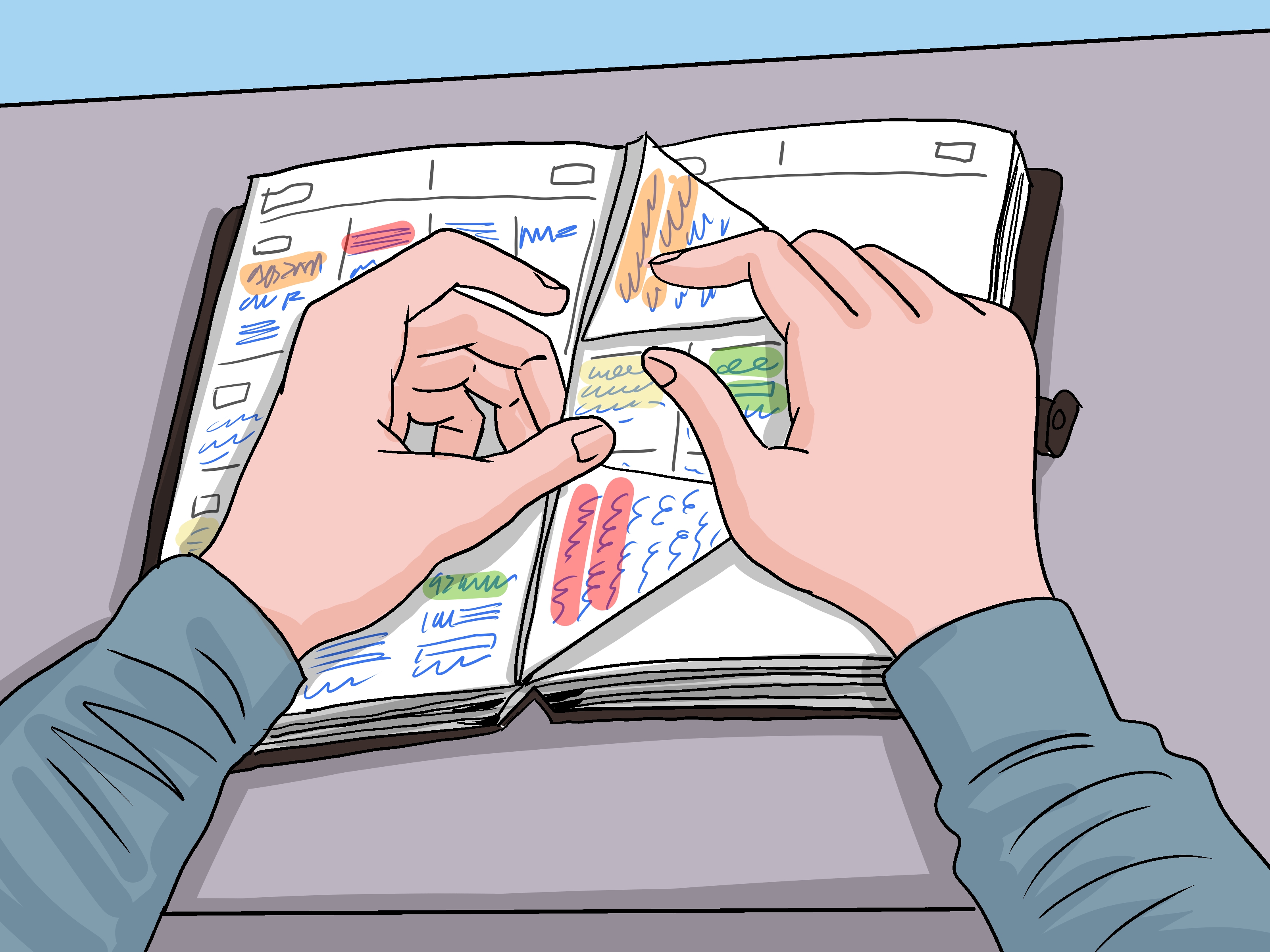
Color coding can make your planner easier to scan quickly. You can assign one color to each subject, or use colors for categories like homework, tests, activities, and personal events. The goal is not to make your planner look like a rainbow exploded. The goal is clarity.
For example, blue could be English, green could be science, red could be deadlines, and purple could be extracurriculars. Keep the system easy enough to remember. If you need a legend, a backup legend, and a decoder ring, the system has gone too far.
Step 5: Write Down Assignments the Moment You Get Them
This step sounds obvious, but it is the one that saves the most panic. The second a teacher assigns homework, a reading, a quiz, or a project update, write it down. Not later. Not “when I get home.” Not “I’ll remember.” You will not remember. Your brain is busy doing seventeen other things.
Be specific. Instead of writing “history,” write “History: read pages 42–58 and answer questions 1–6.” Instead of “science project,” write “Choose topic and gather three sources.” Clear tasks are easier to start, and tasks you can start are tasks you are more likely to finish.
Step 6: Break Big Projects Into Small, Dated Steps
A planner becomes powerful when it helps you divide large assignments into smaller actions. If a research paper is due in three weeks, do not just write the final due date and hope for the best. Break it into steps like choosing a topic, outlining, finding sources, writing a draft, editing, and final submission.
Then assign each step its own date. This turns a giant scary project into a series of smaller, doable tasks. It also prevents the classic student mistake of spending two and a half weeks “thinking about the paper” and then writing the whole thing in one caffeinated blur.
Step 7: Prioritize Your Daily Tasks
Not every item in your planner deserves the same attention. Some things are urgent. Some are important. Some are tiny. Some are honestly just there because writing them down makes you feel productive. At the start of each day, mark your top priorities.
A simple method works well: choose your top three must-do tasks. These should be the items that matter most for deadlines, grades, or stress reduction. Once you finish those, move on to smaller or less urgent tasks. Prioritizing keeps you from spending forty-five minutes decorating a biology heading while forgetting the essay due at midnight.
Step 8: Estimate Time Honestly
One of the biggest planner mistakes is pretending every assignment takes “about twenty minutes.” Sometimes that is true. Sometimes that is pure fiction. Start estimating how long tasks really take you. Reading a chapter might take thirty minutes. A math review might take fifty. A group project message thread might steal half your evening and your patience.
When you assign time realistically, your planner becomes a tool for decision-making instead of a wish list. Over time, you will get better at spotting when you are overloading a day and when you actually have room to get ahead.
Step 9: Schedule Study Blocks, Not Just Due Dates
Many students only write down what is due. Smart planners also show when the work will happen. If you have a test on Friday, block study time on Tuesday, Wednesday, and Thursday. If you have reading to complete, assign a specific time for it rather than vaguely hoping it will occur during some magical pocket of motivation.
Try using short, focused study blocks. This makes schoolwork feel less overwhelming and helps you avoid cramming. It also turns your planner from a record of obligations into an actual strategy for getting things done.
Step 10: Leave Buffer Space for Real Life
Here is an uncomfortable truth: things go wrong. Buses run late. Group partners disappear. You get extra homework. You forget your book in your locker. Your brain decides that Tuesday is not a workday, apparently. That is why you need buffer space in your planner.
Do not schedule every minute as if you are a productivity robot from the future. Leave room for catch-up time, breaks, and unexpected changes. A planner should help you adapt, not collapse the second life becomes life-like.
Step 11: Review and Reset Every Afternoon or Evening
A planner only works if you check it regularly. Take five to ten minutes each afternoon or evening to review what you finished, move unfinished items if needed, and prepare for the next day. This tiny routine prevents assignments from vanishing into the void.
Use this reset time to pack materials, check deadlines, and preview tomorrow’s priorities. It is a small habit with a big payoff. You will start your mornings with a plan instead of with confusion and a slightly haunted expression.
Step 12: Do a Weekly Planner Check-In
Once a week, sit down and review the entire upcoming week. Look at your monthly calendar, daily pages, and any school platforms your teachers use. Add new assignments, shift study blocks, and prepare for heavy days before they happen.
This weekly check-in is where your planner goes from “helpful notebook” to “full academic survival system.” It keeps you proactive, which is a fancy way of saying you stop getting ambushed by your own schedule.
Extra Tips to Make Your Planner Stick
Keep your planner visible. If it lives at the bottom of a backpack under a granola bar and a crumpled permission slip, it will not change your life. Open it during class, after school, and before bed. Pair planner use with routines you already have so it becomes automatic.
Also, do not aim for perfection. You do not need flawless handwriting, aesthetic stickers, or a planner spread worthy of social media fame. You need a system that helps you know what is due, when to do it, and how to avoid last-minute chaos. Messy but functional beats beautiful and abandoned every single time.
Examples of What a Good School Planner Entry Looks Like
Bad entry: “English project.”
Better entry: “English project: finish thesis statement, find two quotes, draft intro paragraph.”
Bad entry: “Study for bio.”
Better entry: “Biology: review cell division notes for 30 minutes, complete quizlet set, answer review sheet questions 1–10.”
The more specific your entries, the easier it is to begin. And once you begin, schoolwork usually feels much less terrifying.
Experiences Students Often Have When They Finally Organize Their Planner
One of the most common experiences students talk about is the feeling of instant relief. Nothing about school has changed yet. The same assignments still exist. The same deadlines are still coming. But once everything is written down in one place, the mental noise drops. Instead of trying to remember six things at once, students can simply look at the page and say, “Okay, this is what today actually looks like.” That shift alone can make school feel less overwhelming.
Another common experience is discovering just how much time gets lost when there is no plan. Students often believe they studied for hours, only to realize they spent a good chunk of that time deciding what to do, finding materials, checking messages, or bouncing between tasks. A planner exposes those gaps. It helps students move from “I was busy all night” to “I finished what mattered.” That difference is huge.
Many students also notice that their confidence improves. When they start checking off assignments, breaking projects into smaller steps, and arriving in class prepared, they feel more in control. Teachers notice. Parents notice. Most importantly, the student notices. It becomes easier to trust yourself when you have proof that your system works.
There is also usually a rough adjustment period, and that is normal. The first week of using a planner can feel awkward. Some students forget to write things down. Others make huge lists that are impossible to finish. Some create a color-coded masterpiece and then never open it again. That does not mean the planner failed. It means the system needs tweaking. Real organization is less about perfection and more about repetition. You try, adjust, simplify, and keep going.
Students who stick with it often describe a very practical kind of freedom. They stop carrying every assignment in their head. They stop relying on panic as a study strategy. They begin planning around tests instead of reacting to them at the last minute. They also get better at protecting time for things they enjoy, because fun is easier to schedule when school is not constantly spilling all over everything.
Some students even discover that a planner helps outside of academics. It can track chores, appointments, sports gear, volunteer hours, college deadlines, and personal goals. In that way, a school planner becomes more than a homework tool. It becomes a life tool, which sounds dramatic, but honestly, once you have survived a semester with organized deadlines and fewer midnight crises, a little drama is allowed.
The best part is that the planner does not need to be fancy to change your day. A simple notebook, a printed calendar, or a basic app can do the job. What matters is the habit of checking it, updating it, and trusting it. Students who build that habit often say the same thing: they wish they had started sooner. Not because planning makes school easy, but because it makes school clearer. And when things are clear, they are a lot easier to handle.
Final Thoughts
Learning how to organize your day planner for school is really about learning how to manage your attention, your energy, and your responsibilities. A planner cannot take your tests for you or write your essays, sadly. But it can help you stop missing deadlines, start planning smarter, and make school feel far less chaotic.
Start simple. Use the 12 steps above. Keep what works, change what does not, and remember that consistency beats planner perfection. The goal is not to become a scheduling machine. The goal is to create a school routine that helps you stay on top of your work and gives your brain a little more breathing room.

