
Makeup
Hay & Poul M. Volther’s J110 Chair
Jul
The HAY J110 Chair by Poul M. Volther is the kind of chair that quietly walks into a room, says very little, and somehow becomes the most interesting guest at dinner. It is tall, graceful, practical, and unmistakably Scandinavian, with a high spindle back that gives it the presence of a lounge chair and the everyday usefulness of a dining chair. In other words, it is not trying to be trendy. It is trying to be good. Big difference.
Originally connected to the democratic design ideals of Denmark’s FDB furniture tradition, the J110 Chair has been brought back into modern interiors by HAY, the Copenhagen-based design brand known for making contemporary furniture feel approachable rather than precious. The result is a chair that fits beautifully in a dining room, reading corner, studio apartment, boutique office, or anywhere that needs a little design intelligence without shouting, “I read architecture magazines and I need you to know.”
This article explores the history, design, materials, comfort, styling potential, and real-life experience of living with the HAY J110 Chair. Whether you are shopping for a Danish dining chair, researching Poul M. Volther’s work, or simply wondering why one wooden chair can inspire so much affection, pull up a seat. Preferably a good one.
What Is the HAY J110 Chair?
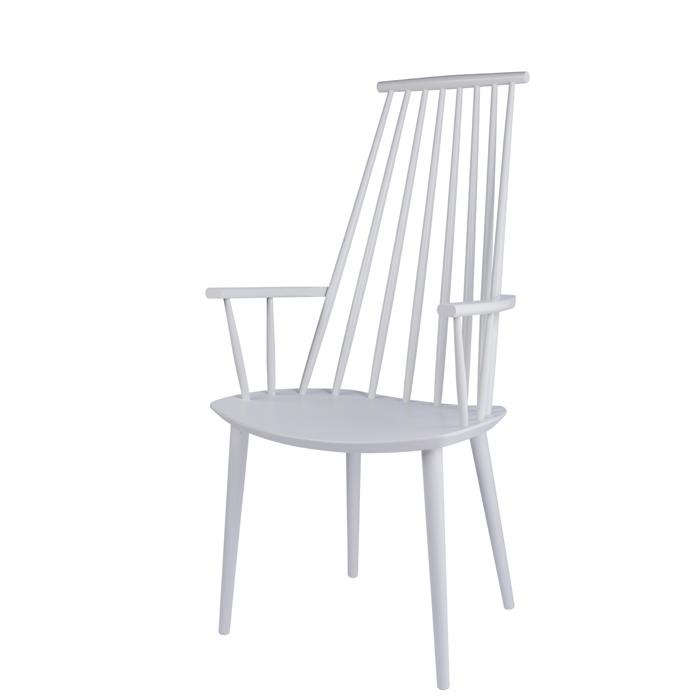
The HAY J110 Chair is a reproduction of Poul M. Volther’s classic chair design, relaunched as part of HAY’s J-Series collection. It combines the visual language of traditional wooden dining chairs with the generous proportions of an armchair. Its most recognizable features are the long vertical rods along the back, gently curved armrests, wide seat, and tall profile.
At first glance, the J110 may look like a Windsor chair’s calm Danish cousin. Look again, and the details become more interesting. The back is high enough to create a sense of enclosure, almost like a small architectural screen. The arms curve naturally from the back toward the front legs, giving the chair a soft, welcoming shape. The seat height remains practical for dining, but the experience feels more relaxed than sitting in a standard side chair.
A Short History: Poul M. Volther and Democratic Danish Design
Poul M. Volther was one of the important figures in Danish functional design. He succeeded Børge Mogensen as artistic director of FDB Møbler in 1950 and helped shape a design culture built around everyday life, honest materials, and furniture that ordinary people could actually use. That last part matters. Danish modern design was never only about looking elegant in a catalog. At its best, it was about making better living available to more people.
Volther is also widely known for the sculptural Corona Chair, but the J110 reveals another side of his design thinking. Instead of dramatic upholstery or futuristic curves, the J110 works through proportion, rhythm, and restraint. It is a chair made from familiar materials, yet it has enough personality to anchor a room.
The FDB furniture movement focused on functional, accessible, well-made designs for the general population. HAY’s J-Series continues that spirit by bringing these classic forms back into contemporary homes with updated finishes, colors, and production standards. The J110 does not feel like a museum object. It feels like a practical piece of design history that still knows how to handle breakfast crumbs.
Design Analysis: Why the J110 Looks So Distinctive
The high spindle back
The tall back is the first thing most people notice about the J110 Chair. It rises to approximately 106 cm, giving the chair a strong vertical presence. The slim rods create a rhythm of light and shadow, so the chair feels open rather than bulky. This is one of the reasons it works in both small and large rooms. It has height, but not heaviness.
The armrests
The curved armrests are essential to the J110’s identity. They make the chair feel more relaxed than a typical dining chair, while still keeping the proportions tidy enough for a table. The armrests also soften the geometry of the piece. Without them, the chair might feel upright and formal. With them, it feels welcoming, like it is politely suggesting you stay for dessert.
The seat
The J110 typically features a molded beech plywood seat with an outer beech veneer, while the backrest and base are made from solid wood. The seat is broad enough to feel comfortable for daily use, and the optional cushion can add extra softness for longer meals, working sessions, or extended debates about whether “warm gray” is a color or a lifestyle.
The silhouette
From the side, the J110 has a charming tension between upright structure and gentle curves. It feels architectural but not stiff. The high back makes it visually commanding, while the open rods prevent it from overwhelming a room. This balance is one reason designers often use it as an accent dining chair, desk chair, or occasional chair.
Materials and Construction
Current versions of the HAY J110 Chair are crafted in solid oak or beech, depending on the finish. Beech is a classic choice for Danish furniture because it is durable, smooth, and well-suited to shaped wooden components. Oak versions offer a slightly richer, more textured appearance, especially in oiled or natural finishes.
Commonly listed dimensions are approximately W53 x D60 x H106 cm, with a seat height of about 44.5 cm. That means the J110 works with many standard dining tables, though buyers should always check armrest height and table clearance before ordering. A beautiful chair that cannot slide under the table is still beautiful, but it may also become the household’s most elegant obstacle.
The chair is often available in natural wood, stained, lacquered, or contemporary colored finishes. HAY’s updated color palette helps the J110 adapt to modern interiors without losing its classic character. In natural wood, it feels warm and traditional. In black, it becomes graphic and dramatic. In lighter or muted tones, it can look playful, soft, or quietly modern.
Comfort: Dining Chair or Lounge Chair?
The most interesting thing about the J110 Chair is that it refuses to stay in one category. It has the seat height of a dining chair, but the high back and arms give it the attitude of a lounge chair. This makes it especially useful in homes where furniture needs to do more than one job.
At a dining table, the J110 offers more support and presence than a simple side chair. In a bedroom corner, it can hold a book, a throw, or the clothes you promised yourself you would hang up. In a home office, it brings style to a desk without looking like a corporate task chair that escaped from a conference room.
Is it as soft as a fully upholstered lounge chair? No. It is still a wooden chair. But it is more generous than many dining chairs, and the optional cushion can make it more comfortable for longer sitting. For people who love structured seating, the J110 can feel supportive and calm. For those who want to sink into furniture like a marshmallow in a hot chocolate commercial, a padded lounge chair may be better.
Best Places to Use the HAY J110 Chair
In the dining room
The J110 can be used as a full set around a dining table, but it also works beautifully as a pair of end chairs. Because it has arms and a high back, using it at the heads of a table creates a natural hierarchy without making the room feel formal. It says “host seat,” not “royal throne,” although it does have a touch of Nordic majesty.
In a reading corner
Add a cushion, place a small side table nearby, and the J110 becomes a graceful reading chair. Its tall back gives a sense of enclosure, while its open rods keep the corner light. Pair it with a floor lamp, a wool throw, and a stack of books you fully intend to read someday.
In an entryway
The J110’s strong silhouette makes it excellent for an entryway or hallway. It provides a practical place to sit while putting on shoes, but it also acts like a design statement. Unlike oversized accent chairs, it does not swallow the space.
In a bedroom
In a bedroom, the J110 can serve as a quiet accent piece. It can hold a robe, create a small vanity area, or simply add a sculptural note. The high back gives it visual importance, so even one chair can make a room feel more finished.
In a studio or creative workspace
For designers, writers, artists, and anyone whose desk is 40 percent work surface and 60 percent “creative pile,” the J110 brings order without being boring. It pairs well with wood desks, white tables, metal shelving, and minimalist interiors.
How to Style the J110 Chair
The J110 is versatile because it bridges traditional craftsmanship and contemporary simplicity. If your space leans Scandinavian, pair it with a pale wood table, linen curtains, neutral walls, and soft lighting. If your home is more eclectic, choose a bold finish and mix it with patterned rugs, vintage art, and ceramics.
For a modern dining room, a black or dark-stained J110 can create strong contrast against a light table. For a softer interior, warm gray, white, sage, or natural beech can keep the room airy. If you want the chair to stand out, let it breathe. Avoid crowding it with visually heavy pieces. The J110 likes company, but it also appreciates personal space, which frankly is relatable.
A seat cushion is both practical and decorative. Choose a neutral cushion for a calm look or a textured fabric to add warmth. Because the chair has a strong vertical back, textiles help soften the overall impression. A cushion also makes the chair easier to use for long dinners, family game nights, or meetings that should have been emails.
Who Should Buy the HAY J110 Chair?
The J110 Chair is a strong choice for people who appreciate design history but still need furniture that works in real life. It is especially appealing if you want a chair that can move between dining, lounging, reading, and occasional use. It is also ideal for anyone who likes the warmth of wood but does not want something rustic or overly traditional.
It may not be the perfect chair for every situation. If you need stackable seating, ultra-light folding chairs, or heavily padded upholstery, the J110 is not trying to compete in that arena. It is best for people who value proportion, craftsmanship, and a strong silhouette.
It is also worth considering scale. The J110 is taller and deeper than many ordinary dining chairs, so it deserves careful measurement. Before buying a set, check your table height, room size, and spacing between chairs. Around a small table, two J110 chairs may work better than four. Around a generous dining table, a full set can look stunning.
Why the J110 Chair Still Feels Modern
Great design often survives because it solves a problem clearly. The J110 solves several. It provides the comfort of arms without becoming bulky. It creates visual drama without closing off space. It references traditional chair-making without feeling old-fashioned. It can be dressed up or down depending on finish, cushion, and setting.
Its modernity also comes from honesty. The chair does not hide its structure. The rods, arms, legs, and seat all clearly show how the object works. This kind of transparency is central to functional design. Nothing feels fake. Nothing feels decorative for the sake of decoration. Even the elegance has a job.
In a design market full of fast trends, the J110 feels refreshingly patient. It does not depend on novelty. Instead, it offers proportion, utility, and character. That is why it can sit comfortably in a mid-century inspired home, a minimalist apartment, a contemporary farmhouse, or a colorful creative studio.
Care and Maintenance Tips
Like most wooden furniture, the J110 Chair benefits from simple, consistent care. Wipe dust with a soft cloth. Clean spills quickly with a slightly damp cloth and mild soap if needed. Avoid harsh abrasives, aggressive cleaners, or anything that sounds like it belongs in a garage rather than near a dining chair.
If the chair has a lacquered finish, protect it from deep scratches and prolonged moisture. If it has an oiled wood finish, it may require occasional maintenance according to the manufacturer’s care instructions. Felt glides can help protect hard flooring and reduce noise. This is especially helpful if you live with children, roommates, or enthusiastic dinner guests who move chairs like they are starting a small furniture parade.
Experience Notes: Living With the HAY J110 Chair
Living with the J110 Chair is a different experience from simply admiring it in photos. Online, the chair looks elegant, almost delicate. In person, it has more presence. The height gives it a confident posture, and the rods create a rhythm that changes throughout the day as light moves across the room. In morning light, the chair can look crisp and architectural. In evening light, it becomes warmer and more atmospheric.
One of the best experiences with the J110 is using it as a flexible chair rather than assigning it one strict job. At breakfast, it feels composed and supportive. During the afternoon, it can move to a desk or reading corner. At night, it becomes the kind of chair someone naturally chooses when the conversation gets longer than expected. It encourages sitting upright, but not rigidly. You feel aware of the chair, yet not distracted by it.
The armrests make a bigger difference than many people expect. They create a relaxed sitting position and make the chair feel more personal. At a dining table, this can make meals feel slower and more comfortable. It is the kind of chair that subtly says, “Stay a little longer.” That can be wonderful, unless your guests are discussing cryptocurrency at hour three, in which case no chair on earth can save you.
The J110 also changes the mood of a room. A single chair in a corner can make an empty space look intentional. Two chairs at the ends of a dining table can make the whole setup feel more designed. A full set can create a strong Scandinavian statement, especially when paired with a simple wooden table and soft lighting. Because the back is open, the chair does not block sightlines, which is useful in apartments and open-plan spaces.
In daily use, the chair rewards people who like furniture with structure. It is not a soft, sleepy lounge chair. Instead, it supports an active kind of comfort: reading, dining, talking, writing, sketching, sipping coffee, or staring thoughtfully out a window while pretending to solve a problem. Add a cushion if you plan to sit for long stretches. Without one, the wooden seat is practical and handsome, but still wood. It will not magically become a sofa, no matter how persuasive your interior design dreams may be.
The best part of the J110 experience is that it feels both special and usable. Some design pieces make you nervous, as if touching them requires white gloves and a minor in museum studies. The J110 is not like that. It has pedigree, but it also has manners. It looks refined, yet it is comfortable with everyday life. It can handle a casual dinner, a quiet reading hour, a laptop session, or an entryway moment with shoes and bags.
Over time, the chair’s value becomes less about making a dramatic first impression and more about how well it keeps fitting in. It does not demand constant attention. It simply improves the room by being well proportioned, useful, and calm. That may be the real genius of Poul M. Volther’s design and HAY’s reproduction: the J110 Chair does not behave like a design trophy. It behaves like a chair. A very good one.
Conclusion
HAY & Poul M. Volther’s J110 Chair is a thoughtful blend of Danish design heritage, functional comfort, and modern versatility. Its high spindle back, curved armrests, solid wood construction, and dining-friendly proportions make it one of those rare chairs that can be practical, beautiful, and memorable at the same time.
For homeowners, designers, and collectors who appreciate Scandinavian furniture, the J110 offers more than a stylish seat. It carries the democratic design values of the FDB tradition while fitting naturally into today’s interiors. Whether used around a dining table, in a reading nook, beside a desk, or as a sculptural accent, the J110 proves that a chair does not need to be loud to be unforgettable.

