
Skincare
Speed Drawing Challenge Asks Artists To Sketch In 10 Mins, 1 Min, And 10 Secs
Jun
Give an artist ten minutes, and they may create something charming. Give the same artist one minute, and suddenly every line becomes a life-or-death decision. Give them ten seconds, and the final drawing may look less like a beloved character and more like a potato who has seen war.
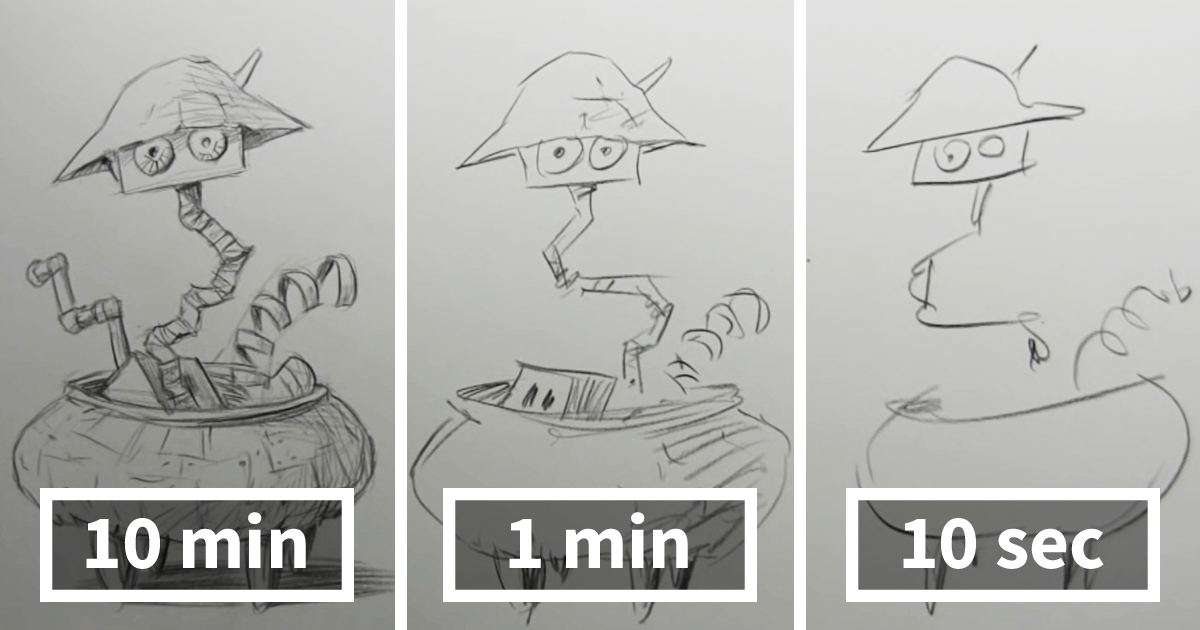
That is exactly the chaotic magic behind the Speed Drawing Challenge, a wildly entertaining art trend that asks artists to sketch the same subject three times: once in 10 minutes, once in 1 minute, and once in 10 seconds. The idea became especially popular after illustrator and author Mark Crilley brought the format to YouTube, inspiring artists, comic creators, digital illustrators, hobbyists, and brave pencil-wielding civilians to test how much personality they could capture before the timer started screaming.
At first glance, the challenge looks like a simple internet game. But beneath the laughs, wonky proportions, and “what happened to the nose?” moments, it reveals something surprisingly deep about drawing: good art is not only about detail. It is about observation, confidence, simplification, and knowing what matters most when time runs out.
What Is the 10-Minute, 1-Minute, 10-Second Drawing Challenge?
The rules are beautifully simple. Pick a character, object, animal, or person. Draw it in 10 minutes. Then draw the same subject again in 1 minute. Finally, draw it one last time in 10 seconds. Place the three sketches side by side and enjoy the emotional roller coaster.
The 10-minute drawing usually looks like a recognizable sketch. There is time for construction lines, facial features, shading, costume details, and a small amount of artistic dignity. The 1-minute drawing strips the subject down to essentials: silhouette, pose, expression, and a few key details. The 10-second sketch is the punchline, but it is also the most revealing version. It shows what the artist believes is absolutely necessary for recognition.
For example, if an artist draws Batman, the 10-minute version might include the cowl, cape, jawline, shadows, and chest emblem. The 1-minute version may keep the ears, cape shape, and stern expression. The 10-second version? Two pointy ears, a square chin, and perhaps a black blob with heroic intentions. Somehow, the viewer still understands: “Ah yes, emotionally unavailable bat man.”
Why the Challenge Became So Popular Online
The internet loves transformation, comparison, and harmless artistic panic. This challenge delivers all three in one compact package. It is visual, fast, funny, and easy to understand even without sound. That makes it perfect for YouTube, TikTok, Instagram Reels, Pinterest, and art communities where process is often just as interesting as the finished piece.
The format also gives viewers a rare behind-the-scenes look at how artists think. Instead of seeing only polished illustrations, audiences see decisions happening in real time. Which lines come first? What details survive the time cut? When does the artist stop drawing anatomy and start praying? The challenge turns technique into entertainment.
Another reason it works is that it lowers the pressure around art. Many beginners assume skilled artists simply sit down and produce perfect drawings like human printers with coffee addictions. The speed drawing challenge proves otherwise. Even professionals create awkward lines, rushed shapes, and hilarious shortcuts when the clock is brutal enough. That honesty makes the art process feel more human and much more approachable.
The Secret Lesson: Drawing Fast Is Really About Seeing Fast
Speed drawing is not about moving your hand like a caffeinated squirrel. It is about training your eye to identify the most important information quickly. The best artists in this challenge do not try to cram every detail into the shorter rounds. Instead, they simplify.
In the 10-minute stage, an artist can think about structure, proportion, expression, shading, and design. In the 1-minute stage, the focus shifts to big shapes and recognizable features. In the 10-second stage, everything becomes pure visual shorthand. A curve can stand in for a hairstyle. A triangle can suggest a cape. A single eyebrow can carry an entire personality if it is dramatic enough.
This is why the challenge connects closely with gesture drawing, a classic training method used by artists, animators, illustrators, and art students. Gesture drawing asks artists to capture motion, energy, and pose in short timed sessions, often 30 seconds to a few minutes. The goal is not to make a finished masterpiece. The goal is to capture life before it stiffens into overworked detail.
10 Minutes: The “I Still Have Hope” Round
Ten minutes sounds short until you compare it with ten seconds. In the first round, artists usually have enough time to plan. They can block in the head, torso, pose, and major proportions. They can correct mistakes, refine the outline, add shadows, and include details that make the subject feel specific.
This stage often shows the artist’s normal process in miniature. Some begin with loose construction shapes. Others jump straight into confident contours. Digital artists may use layers, while traditional artists rely on pencil pressure, erasers, or strategic pretending that mistakes were “expressive choices.”
The 10-minute drawing is important because it sets the visual standard. It gives viewers a clear reference point before the time limit collapses. When the later versions appear, the comedy comes from comparison. The first drawing says, “Here is the character.” The second says, “Here is the character after missing a train.” The third says, “Here is the character as remembered by someone during a fire drill.”
1 Minute: The “Choose Wisely” Round
The 1-minute sketch is where the challenge becomes genuinely educational. Sixty seconds is long enough to make choices, but not long enough to hesitate. Artists must decide what defines the subject. Is it the hair? The pose? The eyes? The costume? The silhouette?
For character art, silhouette becomes especially powerful. Many iconic characters are recognizable even as black shapes because their designs are clear. Think of Mickey Mouse’s ears, Sonic’s spikes, SpongeBob’s square body, or Darth Vader’s helmet. A strong 1-minute drawing leans into these readable features instead of wasting time on tiny details.
This round trains artists to avoid perfectionism. There is no time to lovingly shade one cheekbone for 40 seconds unless the plan is to submit a cheekbone portrait. The artist must keep moving. Lines become more decisive. Shapes become broader. The drawing may be rough, but it often has surprising energy.
10 Seconds: The “Artistic Emergency Broadcast” Round
The 10-second drawing is the star of the show. It is ridiculous, humbling, and weirdly revealing. In ten seconds, there is no time for anatomy, shading, detail, or regret. The artist must grab the subject’s essence instantly.
A successful 10-second sketch is usually not pretty. It may not even be polite. But it can still be brilliant if it captures the key idea. A cat can become two ears, whiskers, and a tail. Spider-Man can become bug eyes and web lines. A dragon can become wings, horns, and a long angry noodle body. The viewer fills in the rest.
This is the real power of visual communication. The human brain is excellent at recognizing patterns. Artists use that ability all the time, whether they are designing logos, storyboards, comics, mascots, or animation thumbnails. The 10-second sketch proves that a drawing does not need everything. It needs the right things.
Why Artists Should Try Speed Drawing
It Builds Confidence
Timed drawing forces artists to make marks without fussing forever. That can be uncomfortable at first, especially for beginners who erase every line until the paper looks emotionally exhausted. But over time, speed drawing builds confidence. Artists learn that one imperfect line is often better than ten nervous ones.
It Improves Observation
Because the clock is running, artists must look harder and faster. They begin to notice the biggest shapes first: the tilt of the head, the curve of the spine, the angle of the shoulders, the outline of a costume, or the rhythm of a pose. This habit improves drawing even when there is no timer.
It Teaches Simplification
Many drawings fail because the artist treats every detail as equally important. Speed drawing teaches hierarchy. Big shapes come before eyelashes. Gesture comes before buttons. Structure comes before sparkles, unless the subject is literally a sparkle monster, in which case proceed carefully.
It Makes Practice Fun
Practice can feel repetitive, especially when artists are drilling fundamentals. A challenge adds play. It turns study into a game and makes mistakes part of the entertainment. That is why so many creators use timed sketching as warm-ups before longer illustration sessions.
Speed Drawing and Social Media: Why the Format Works
The speed drawing challenge is almost engineered for online sharing. It has a clear hook, visible progress, a built-in reveal, and a satisfying side-by-side comparison. Viewers do not need an art degree to enjoy it. They can instantly understand the challenge and judge the results with the confidence of someone who has never drawn hands but knows when a hand looks like a fork.
For creators, the format is also practical. It produces multiple pieces of content from one idea: the timer footage, the reaction, the final comparison, a short-form edit, and possibly a tutorial explaining what went wrong. The challenge invites audience participation because anyone can try it with paper, pencil, and a timer.
It also balances skill and vulnerability. Artists get to show expertise in the 10-minute round, adaptability in the 1-minute round, and a sense of humor in the 10-second round. That combination is powerful. Online audiences like talent, but they love talent that can laugh at itself.
How Beginners Can Try the Challenge Without Melting
If you are new to drawing, do not start by comparing your results to professional illustrators with decades of experience and possibly supernatural wrist control. Instead, treat the challenge as a practice tool.
Choose simple subjects first. Try a coffee mug, a houseplant, a cartoon face, a shoe, or your pet if your pet agrees to remain still, which it absolutely will not. Set up three boxes on one page. Use a phone timer. Start with 10 minutes, then 1 minute, then 10 seconds.
Afterward, compare the drawings without insulting yourself. Ask useful questions: What stayed recognizable? What disappeared? Which lines mattered most? Did the 1-minute version have more life than the 10-minute version? Did the 10-second version accidentally become a cryptid?
The goal is not perfection. The goal is discovery. Each round shows how you think under different limits. That information is valuable.
Tips for Better Speed Drawings
Start With the Biggest Shape
Do not begin with tiny details. Start with the head shape, body angle, pose, or overall silhouette. Big shapes make the drawing readable.
Use Fewer Lines
Short, scratchy lines waste time and create visual noise. Longer, confident strokes often communicate more with less effort.
Exaggerate What Matters
If the character has giant hair, make it giant. If the pose is dramatic, push it. Speed drawing rewards clarity more than subtlety.
Do Not Erase During Short Rounds
In the 1-minute and 10-second rounds, erasing is usually a trap. Keep going. The clock does not care about your emotional need for a cleaner jawline.
Review Afterward
The learning happens after the timer stops. Look at the sketches and identify what worked. The funniest drawing may also teach the best lesson.
What the Challenge Reveals About Artistic Skill
One fascinating part of the speed drawing challenge is that it separates rendering from understanding. A polished drawing can hide weak structure under shading and detail. A quick sketch cannot. When time is limited, the artist’s knowledge of shape, gesture, design, and proportion becomes obvious.
This does not mean fast artists are automatically better artists. Some styles require patience, layering, and careful revision. But speed drawing reveals a specific kind of skill: the ability to communicate visually with economy. That skill matters in comics, animation, concept art, storyboarding, caricature, design, and even teaching.
In animation, for instance, artists often need to capture movement quickly. In comics, a clear pose can matter more than a perfectly rendered sleeve. In concept art, early thumbnails help explore ideas before anyone spends hours polishing the wrong direction. Speed drawing strengthens the muscles behind those decisions.
The Funny Side: Why Bad Speed Drawings Are Good Content
Let’s be honest: part of the appeal is watching talented people create tiny disasters. There is something delightful about seeing a majestic 10-minute dragon become a 10-second flying worm with confidence issues. The humor is not mean-spirited. It is relatable.
Everyone knows what it feels like to have a great idea collapse under pressure. The speed drawing challenge turns that feeling into a shared joke. It reminds viewers that creativity is messy. Even skilled artists do not control every outcome. Sometimes the pencil wins. Sometimes the timer wins. Sometimes the 10-second version looks like a haunted turnip, and that is simply part of the journey.
Experience-Based Takeaways From Trying the Speed Drawing Challenge
The first experience most people have with this challenge is overconfidence. Ten minutes seems manageable. One minute sounds spicy but possible. Ten seconds sounds silly, not dangerous. Then the timer begins, and suddenly the pencil feels like it has been replaced with a breadstick.
During the 10-minute round, the experience is focused but comfortable. You can breathe. You can plan. There is room to correct a lopsided eye, improve the pose, darken important lines, and add personality. This round often feels like normal sketching with a slightly impatient supervisor standing nearby. The main challenge is not getting lost in details. If you spend seven minutes perfecting the face, the body may become a vague afterthought wearing shoes.
The 1-minute round feels completely different. The brain starts negotiating. “Do we need both eyes?” “Is hair more important than shoulders?” “Can a nose be legally represented by one dot?” These questions sound ridiculous, but they teach real artistic priorities. Many artists discover that their 1-minute drawing has more energy than the 10-minute sketch because there is no time to stiffen it with overthinking. The linework may be rough, but the pose often feels alive.
The 10-second round is pure chaos, but it is useful chaos. You learn what your hand does automatically. You learn whether you understand the subject’s silhouette. You learn that panic has a drawing style, and it is not always flattering. Yet sometimes the 10-second sketch captures something surprisingly true: the tilt of a head, the sass of a pose, the weird little shape that makes the character recognizable.
One of the best experiences related to this challenge is doing it with friends. Everyone starts serious, then someone reveals a 10-second sketch that looks like a confused shrimp, and the room loses all professional composure. But after the laughter, people begin comparing choices. One person captured the expression. Another nailed the silhouette. Someone else forgot the legs but somehow drew the attitude perfectly. The challenge becomes a mini art class disguised as a comedy show.
It is also surprisingly motivating. Because the drawings are quick, failure does not feel heavy. If a sketch goes badly, you have only lost a minute or ten seconds, not an entire afternoon. That makes it easier to try again. Over several rounds, artists begin to improve. Lines get cleaner. Shapes become simpler. The 10-second sketches remain ridiculous, but they become ridiculous with purpose.
The biggest takeaway is that speed drawing changes how you judge a sketch. Instead of asking, “Is this perfect?” you start asking, “Is this clear?” That shift is powerful. Clarity is the foundation of strong visual storytelling. Whether you draw cartoons, portraits, comics, fan art, animals, fashion, or fantasy creatures with unnecessary shoulder armor, the ability to simplify is priceless.
In the end, the speed drawing challenge is not just about drawing fast. It is about learning to see what matters, trust your hand, accept imperfection, and laugh when your masterpiece becomes a ten-second goblin. Honestly, that may be the most artistic lesson of all.
Conclusion: A Tiny Timer Can Teach a Big Art Lesson
The Speed Drawing Challenge works because it is both entertaining and educational. It invites artists to test their instincts, reveal their process, and turn pressure into play. The 10-minute sketch shows planning and skill. The 1-minute sketch shows decision-making. The 10-second sketch shows pure visual survival.
For viewers, the challenge is fun because the results are unpredictable. For artists, it is valuable because it builds speed, confidence, observation, and simplification. It proves that drawing is not only about how much detail you can add, but how clearly you can communicate an idea when time is almost gone.
So grab a pencil, pick a subject, set the timer, and prepare for a creative workout. Your 10-minute drawing may impress you. Your 1-minute drawing may surprise you. Your 10-second drawing may require a formal apology to the character involved. But all three will teach you something.
Note: This article is written in standard American English and synthesizes publicly available information about the speed drawing challenge, timed sketching, gesture drawing practice, and online art creator culture. Source-reference markup has been intentionally excluded for clean web publishing.

