
Body Care
Poison Oak Rash: Pictures, Stages, Treatment
Jun
Poison oak rash is the outdoor souvenir nobody asked for: itchy, red, and often arranged in neat little streaks like your skin tried to draw modern art.
The good news? It’s common, it’s treatable, and it’s usually temporary. The tricky part is that it can look like it’s spreading, change day by day,
and show up right when you have plans that involve wearing sleeves.
In this guide, we’ll walk through what poison oak rash looks like (with a “picture guide” you can use even without actual photos),
the typical stages and timeline, what helps at home, what requires a clinician, and how to avoid round two.
(Spoiler: the villain is an oil called urushiol, and it loves hitchhiking on clothes, tools, and pet fur.)
What Causes Poison Oak Rash?
Poison oak (a member of the Toxicodendron plant family) contains urushiol, an oily resin that triggers an allergic skin reaction
in many people. This is a type of allergic contact dermatitis: your immune system sees urushiol as a threat and launches an inflammatory
response that results in itching, redness, bumps, and sometimes fluid-filled blisters.
Key thing to know: it’s not the plant, it’s the oil
- Fresh urushiol on skin can be spread by your hands to other body areas before it’s washed off.
- Urushiol on objects (shoes, gloves, phone cases, camping chairs, gardening tools) can trigger new rashes daysor even much laterif not cleaned.
- The rash itself is not contagious. You can’t “catch it” from someone’s blisters. If you get it from them, it’s because urushiol was still present on skin, clothing, or gear.
Why does it look like it’s spreading?
Poison oak rash often appears in waves. Areas with thinner skin, heavier exposure, or more friction may react faster. Other areas may have a delayed
reaction, which makes it seem like the rash is marching across your body. It’s usually timingnot travel.
Poison Oak Rash Pictures (Without the Photo): A Visual Guide
If you’re comparing your skin to online photos, focus less on “exact matches” and more on patterns. Here’s what poison oak rash commonly looks like:
Picture 1: “The Streaky Brushstroke”
Red, itchy streaks or linesoften where a leaf brushed the skin. This classic “linear” look is a big clue for poison oak/ivy dermatitis.
Picture 2: “The Bumpy Patch”
A red patch with small raised bumps (papules). It may feel warm, tight, or intensely itchy, especially in the first couple of days.
Picture 3: “The Blister Belt”
Clusters of tiny, fluid-filled blisters (vesicles). They can weep clear fluid and later crust over. The fluid is from your skin’s inflammatory response,
not plant oil.
Picture 4: “The Puffy Face Alarm”
Swelling around eyes, lips, or genitals can happen in more severe reactions. This is a “call a clinician” situation, especially if swelling is significant
or the rash is widespread.
Picture 5: “The Mystery Rash That’s Actually Poison Oak”
A scattered rash without obvious lines can still be poison oakespecially if urushiol transferred from clothing, pets, or gear. Think: “I didn’t touch the
plant, but my dog did,” or “I wore the same hiking socks again.”
Tip: Many reputable U.S. health organizations group poison oak with poison ivy and poison sumac because the reaction is caused by the same
oil. If a photo search says “poison ivy rash,” the visual information often applies to poison oak too.
Stages of Poison Oak Rash (Timeline You Can Actually Use)
The timing varies by person and exposure level, but here’s a practical, typical progression.
Stage 0: Exposure and “The Cleanup Window” (Minutes to a Few Hours)
You usually don’t feel anything right away. This is the best time to reduce severity:
- Rinse skin promptly with lukewarm, soapy water.
- Clean under fingernails (urushiol loves to hide there).
- Remove and wash clothing and anything that may have oil on it.
Stage 1: Early Reaction (About 12–48 Hours)
Itching often starts first. Redness follows. You may notice:
- Itch that feels “deep” or relentless
- Pink to bright red areas
- Sensitivity that flares when you get warm or sweaty
Stage 2: Rash Builds (Days 2–4)
Bumps and blisters may appear. The rash can look streaky, patchy, or clustered.
This is where people start texting friends: “Is my skin supposed to do this?”
Stage 3: Peak Itch and Blistering (Often Days 4–7)
Many people report the worst itching and inflammation during this window. Blisters may weep and crust.
Scratching can break skin and raise the risk of infection.
Stage 4: Drying and Healing (Week 2 and Beyond)
Blisters dry up, crusts shed, redness fades, and itching slowly backs off.
Many cases resolve in 1–3 weeks, though more severe reactions can linger longer.
Treatment: What Actually Helps (And What’s Just Vibes)
First aid right after exposure
- Wash skin soon with lukewarm, soapy water. The faster you remove urushiol, the less your immune system can overreact to it.
- Don’t “scrub aggressively” with harsh brushes (irritated skin is not your friend).
- Wash clothing separately and clean gear, shoes, tools, and anything else that might carry oil.
At-home itch and inflammation relief
The goal is to calm inflammation, cool the itch, and protect your skin barrier while it heals.
Cooling options (fast relief)
- Cool compresses (clean cloth + cool water) for 10–20 minutes a few times daily
- Cool showers (avoid hot waterit can intensify itching)
- Colloidal oatmeal baths for widespread itch
Over-the-counter topicals
- Hydrocortisone cream for mild inflammation (use as directed on the label).
- Calamine lotion for itch and drying weepy areas.
- Soothing skin protectants (fragrance-free moisturizers) once the rash starts drying to reduce cracking.
Oral options
- Oral antihistamines can help with sleep if itching is keeping you up (some cause drowsiness; follow label directions).
- Pain relievers may help if skin is sore and inflamed (use only if appropriate for you and per label guidance).
Prescription treatment (when OTC isn’t enough)
If the rash is severe, widespread, or on sensitive areas (face, eyes, genitals), clinicians may prescribe stronger topical steroids or oral corticosteroids.
This isn’t about being “tough”it’s about preventing prolonged misery and complications.
What not to do
- Don’t pop blisters. Open skin increases infection risk.
- Don’t use topical antibiotics “just in case.” They can irritate skin and aren’t needed unless a clinician suspects infection.
- Don’t assume it’s spreading because it’s contagious. New spots usually mean delayed reaction or leftover urushiol exposure.
- Don’t burn poison oak. Smoke exposure can be dangerous for the airways.
When to See a Doctor (Or Seek Urgent Care)
Most poison oak rashes can be managed at home, but some situations deserve medical help:
- Rash on face, around eyes, or on genitals
- Severe swelling or widespread rash covering large areas
- Signs of infection: increasing pain, warmth, pus, or fever
- Symptoms involving breathing or swallowing (especially after smoke exposure)
- Itching so intense you can’t sleep for multiple nights (sleep is not optional maintenance)
- No improvement after about a week, or worsening despite proper care
Prevention: How to Not Meet Poison Oak Again
Learn the plant (and its sneakier forms)
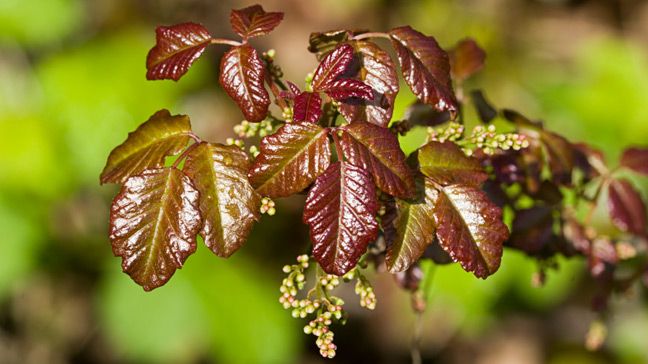
Poison oak can grow as a shrub or climbing vine depending on the region. Leaves often appear in groups of three (“leaves of three” is a helpful clue),
and the plant can look different by season. In winter, bare stems can still carry urushiol.
Protect your skin
- Wear long sleeves, long pants, closed shoes, and gloves when hiking, yard working, or clearing brush.
- Consider barrier skin products designed for poisonous plants if you’re at high risk of exposure.
Decontaminate like a pro
Urushiol can stay active on surfaces for a long time, which is why “I got it again without going outside” is a real thing. After outdoor exposure:
- Wash clothing separately in hot water with detergent.
- Clean tools and gear using soap and lots of water (or other recommended cleaners), and wear gloves while doing it.
- Bathe pets if they may have brushed against poison oak (pet fur can carry urushiol even though pets often don’t react like humans).
Common Myths (Quick Fact Check)
“The blister fluid spreads the rash.”
Nope. Blister fluid does not contain urushiol. If the rash seems to spread, it’s typically delayed reaction timing or new contact with leftover oil.
“If it shows up in new places, it must be contagious.”
The rash itself isn’t contagious. The oil is the problem. If oil remains on skin, clothing, under nails, or on gear, you can keep re-exposing yourself.
“Scratching makes it spread.”
Scratching doesn’t create new poison oak rash in clean areas, but it can break skin and cause infection. Also, if urushiol is still under your nails,
scratching can transfer itso cleaning under nails early matters.
Frequently Asked Questions
How long does poison oak rash last?
Many cases improve within 1–3 weeks. Severity, how quickly you washed after exposure, and individual sensitivity all affect the timeline.
Can poison oak rash show up days later?
Yes. It can appear later due to delayed immune response or because you touched urushiol-contaminated clothing or objects after the initial exposure.
Why do some people barely react while others suffer?
Sensitivity varies. Some people are less reactive, while others have strong allergic responses. Repeated exposures can also lead to stronger reactions over time.
Real-World Experiences: What Poison Oak Rash Feels Like (And What People Wish They’d Known)
People’s poison oak stories tend to follow a familiar scriptpart mystery novel, part comedy, part “why is my skin auditioning for a role as sandpaper?”
Here are common experiences people describe, plus what usually makes the biggest difference.
1) “I didn’t touch anything!” (Yes, you did… indirectly)
A classic: someone hikes, feels fine, and two days later gets an itchy rash that seems to come out of nowhere. The most common “plot twist” is indirect
exposureurushiol on shoelaces, socks, trekking poles, a backpack strap, or a dog that sprinted through brush like it was late for a meeting.
People often realize it only after the rash shows up on wrists (watchbands), ankles (sock lines), or forearms (where they carried a jacket).
What they wish they’d known: cleaning gear matters. Washing skin is great, but if your gloves or hiking shoes are still oily, you can re-expose yourself
the next time you grab them.
2) The “Why is it in lines?” moment
Many people first suspect poison oak because the rash looks like streakslike someone lightly painted their skin with an itchy brush. Those lines often
match a leaf swipe, a branch scrape, or skin contact with a contaminated item dragged along the body (think: pulling a jacket sleeve down with oily fingers).
When people see the pattern, it’s both validating and annoying: “So I really did do this to myself.”
3) Peak itch is a whole personality
People describe poison oak itch as “itch with ambition.” It can ramp up at night, after exercise, or after a hot shower. A common mistake is using hot water
because it feels soothing for five secondsthen the itch comes roaring back like it just drank an espresso. The practical hacks people report helping most are
boring but effective: cool compresses, oatmeal baths, calamine, and sticking to lukewarm showers.
4) “It’s spreading!” (Usually it’s timing)
It’s common to see new patches appear a day or two after the first spots, especially on different body parts. Many people panic and assume they’re
contagious or that blister fluid is the culprit. In reality, the delayed immune response explains a lotplus different exposure levels. A light brush might
react slowly; a heavy smear (or trapped oil under a tight waistband) can react faster and more intensely.
What people wish they’d known: if new spots are appearing, double-check for urushiol sourcesunwashed clothes, towels, gloves, phone cases, car seats,
or even a pet that hasn’t been bathed since the adventure.
5) The “I tried everything” phaseand what finally works
In mild cases, OTC care and time usually win. In moderate-to-severe cases, people often reach a point where the rash is widespread, sleep is wrecked,
and they’re stuck in a scratchy loop. Many describe relief only after medical treatmentparticularly prescription-strength anti-inflammatory medication
recommended by a clinician. The emotional takeaway is consistent: seeking help isn’t “overreacting,” it’s good problem-solving.
If there’s one shared lesson, it’s this: poison oak rash is miserable, but it’s also predictable. If you act fast after exposure, avoid hot showers,
calm inflammation early, and remove urushiol from everything it touched, you’ll usually shorten the drama and get back to being outdoorsjust with a little
more respect for three-leafed plants that look harmless but behave like tiny chaos gremlins.
Conclusion
Poison oak rash can be intensely itchy and surprisingly dramatic, but it follows a familiar pattern: urushiol exposure, a delayed immune reaction, a few rough
days, and then gradual healing. The biggest difference-makers are quick washing after exposure, avoiding repeat contact through contaminated items, and using
proven itch-and-inflammation relief (cool compresses, oatmeal baths, hydrocortisone or calamine, and medical care when it’s severe).
If the rash involves the face or genitals, becomes widespread, shows signs of infection, or disrupts sleep for days, it’s worth getting clinical guidance.
Otherwise, treat it like a temporary (and very rude) skin tantrum: keep it cool, keep it clean, and let time do its job.

