
Hair Care
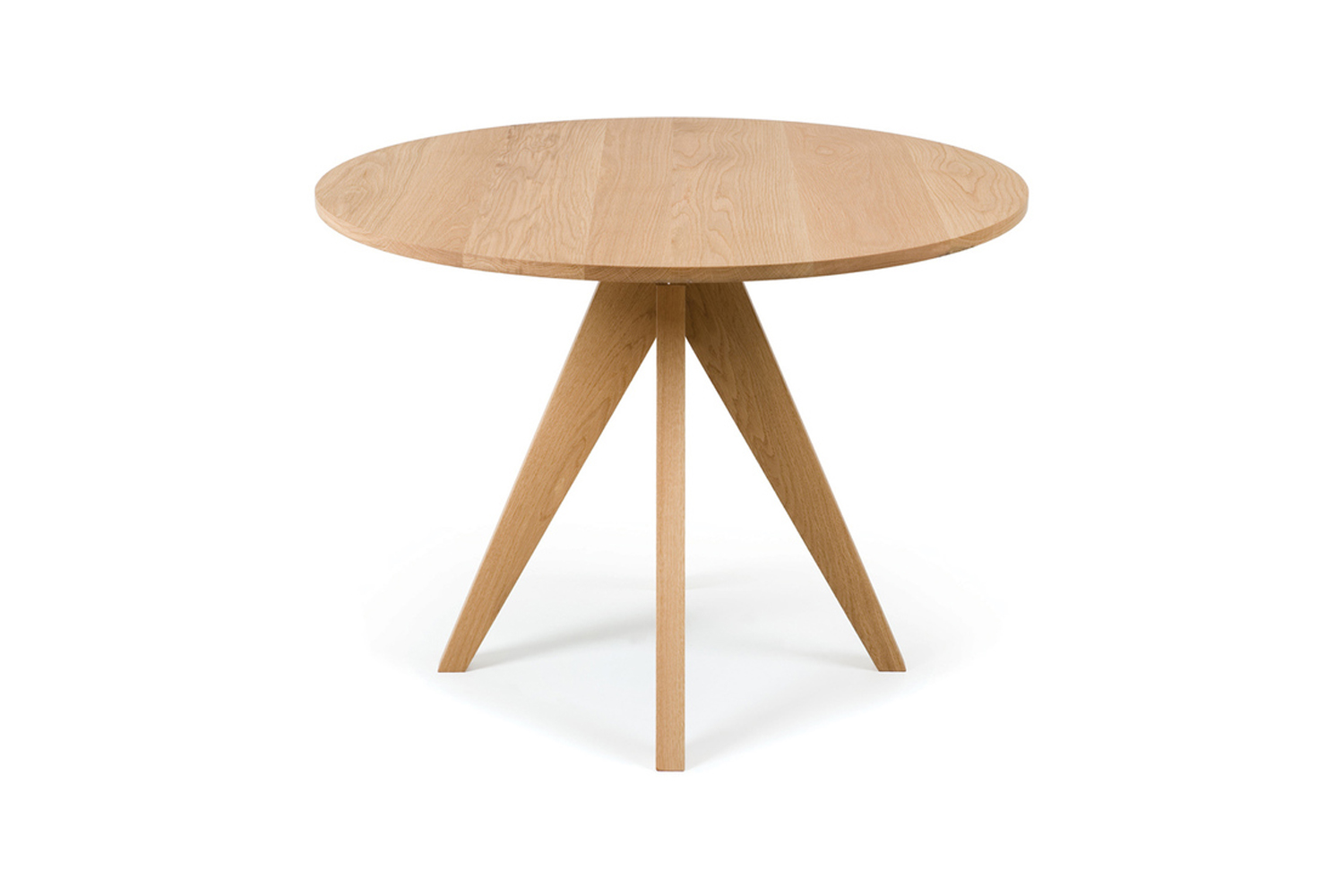
018 Atlantico Round Table
Jun
Note: Finish selections, prices, lead times, and availability may change. Confirm current specifications with an authorized retailer before ordering.
The 018 Atlantico Round Table is the kind of furniture that appears simple until you spend five minutes looking at it. Then the details begin introducing themselves: the solid timber top, the disciplined geometry of the base, the visible grain, and the carefully engineered connections that allow real wood to behave like real wood.
Designed by Atlantico and produced by De La Espada in Portugal, this compact round dining table represents a quieter school of modern design. It does not spin, extend, glow, charge a phone, or offer twelve hidden compartments. It simply aims to be an exceptionally well-made table. In an age when even refrigerators want to send notifications, that restraint feels almost rebellious.
With a diameter of roughly 39.5 inches and a standard dining height of about 29.5 inches, the table is sized for intimate meals, apartment dining areas, breakfast corners, and multipurpose rooms. Its circular top encourages conversation, while the concentrated support structure helps keep the perimeter relatively open for chairs and human knees.
What Is the 018 Atlantico Round Table?
The 018 Atlantico is a small, premium solid-wood dining table created for households that value craftsmanship, natural materials, and visual longevity. It belongs to the Atlantico furniture family, a collection known for substantial timber, straightforward forms, and construction details that are meant to be seen rather than disguised.
Unlike a large banquet table that announces, “We invited fourteen people and now regret it,” this model focuses on everyday gatherings. It is most naturally suited to two to four people. Four adults can dine around it, although place settings should remain reasonably compact. Two people receive generous room for meals, laptops, coffee cups, and the mysterious pile of mail that follows every dining table home.
Key Specifications
| Product | 018 Atlantico Round Table |
|---|---|
| Brand | De La Espada |
| Designer | Atlantico |
| Manufacturing location | Portugal |
| Approximate diameter | 39 3/8 to 39 1/2 inches |
| Approximate height | 29 1/2 inches |
| Primary materials | Solid American white oak or American black walnut, depending on the selected version |
| Common finishes | Danish-oiled oak, white-oiled oak, or Danish-oiled walnut |
| Assembly | Required; the leg frames are connected to the tabletop with supplied hardware |
| Best everyday capacity | Two to four people |
A Design Built Around Restraint
The 018 Atlantico Round Table does not rely on decoration to create interest. Its character comes from proportion, material, and joinery. A broad circular top rests above a compact architectural base, producing a useful contrast between the soft curve of the dining surface and the straighter lines beneath it.
The Round Top
A circular table removes the visual hierarchy created by a rectangular dining table. There is no official “head,” no awkward corner seat, and no need for one diner to conduct negotiations with a table leg. Everyone faces the center, making eye contact and conversation easier.
The approximately 39.5-inch diameter is particularly important. It is large enough to function as a genuine dining table, yet small enough to work in spaces where a 48- or 54-inch model would dominate the room. The absence of corners also improves circulation in compact interiors. You are less likely to perform the familiar sideways shuffle around a sharp edge while carrying hot soup.
The Central Leg Structure
The support system is concentrated toward the middle rather than placed at four distant corners. This keeps more of the outer edge available for seating. The structure is not a conventional single-column pedestal; instead, it uses solid timber components arranged into a stable central framework.
Connections between the leg elements are strengthened through considered joinery, including a double-spline approach described by retailers. Hardware is also intended to accommodate the natural movement of the timber. That last detail matters because solid wood expands and contracts as environmental humidity changes. A table that ignores this fact may eventually express its displeasure through warping, checking, or loosened connections.
Solid Wood Is the Main Attraction
Every major visible component of the 018 Atlantico Round Table is made from solid timber rather than a decorative surface pretending to be a forest. The tabletop, support frame, and legs are constructed from substantial wood planks, allowing grain patterns to continue across broad surfaces.
This creates natural variation. One table may have calm, relatively straight grain, while another displays stronger color shifts or more animated figuring. Buyers should view those differences as part of the product, not defects. Ordering solid wood while demanding that every board look identical is a little like adopting four cats and insisting they share one personality.
American White Oak
White oak typically delivers a lighter, more architectural appearance. Its visible grain brings texture without making the table feel overly dark or visually heavy. A Danish-oiled oak finish generally emphasizes warmth and natural variation, while a white-oiled finish creates a paler, softer look that suits Scandinavian, coastal, minimalist, and contemporary interiors.
Oak is also valued for wear resistance and strength, useful qualities for furniture expected to host breakfast, homework, dinner, and the occasional wildly optimistic craft project.
American Black Walnut
Black walnut provides a richer and more dramatic effect. Its brown tones can range from medium chocolate to deeper, moodier shades, often with lighter streaks or changing grain patterns. A Danish oil finish tends to bring out depth and natural luster rather than placing a thick plastic-looking film over the surface.
Walnut works especially well in rooms featuring warm metals, leather, cream upholstery, deep green accents, or other woods. It usually carries a higher price than oak, but it also gives the table a strong focal-point presence.
Will the 018 Atlantico Fit Your Dining Space?
Before buying any dining table, measure the room rather than relying on hope, optimism, or the product photo in which every apartment appears to be the size of an aircraft hangar.
Interior-planning guidance commonly recommends leaving approximately 36 inches between the table edge and nearby walls or major furniture. This allows diners to pull out chairs and move around the table without requiring everyone else to stand up.
A Practical Room-Size Calculation
The table is about 40 inches across. Adding 36 inches of clearance to both sides creates a recommended open zone of approximately 112 inches, or 9 feet 4 inches. Therefore, a dining area close to 9.5 by 9.5 feet provides comfortable circulation when the table sits near the center.
That does not mean the table cannot work in a smaller area. In an 8-by-8-foot breakfast nook, it may still fit if one side faces a banquette, open walkway, or low-profile seating arrangement. Clearance can be reduced in rarely used zones, but the path between the table and a kitchen counter should remain generous.
How Many People Can Sit Comfortably?
A 39.5-inch round table works best for two to four people. Four armless dining chairs are the most flexible setup. Chairs measuring roughly 18 to 20 inches wide will usually be easier to position than broad armchairs.
Five people might gather around it for coffee, games, or a casual meal, but five full place settings would be cozy in the diplomatic sense of the word. For regular groups larger than four, a larger round table or an extendable model is the wiser choice.
Check Chair Height and Apron Clearance
Because the table stands around 29.5 inches high, it should pair with standard dining chairs. Aim for approximately 10 to 12 inches between the chair seat and the underside of the tabletop or frame. Also inspect the width and height of the central base to ensure your chosen chairs can tuck in as expected.
Comfort, Conversation, and Everyday Use
Round tables excel at small-group conversation because diners face one another at similar distances. At a table of this scale, passing a bowl does not require a relay team, and nobody becomes stranded at the far end of a rectangular surface.
The 018 Atlantico is also a useful size for flexible rooms. It can serve as a breakfast table in the morning, a workstation during the day, and a dining table in the evening. The uninterrupted circular surface supports these transitions well, although users with multiple monitors, printers, and seven open notebooks may discover that geometry still has limits.
Its solid construction should make it feel visually and physically grounded. This is not a featherweight café table intended to be dragged across the floor every afternoon. Owners should decide on its location carefully and use help when moving it.
How to Style the Atlantico Round Table
Choose Chairs That Do Not Compete
The table already provides strong material presence, so dining chairs can be visually lighter. Slim wooden chairs create a cohesive look, while upholstered seats soften the composition. Mixed materials also work well: oak with black metal, walnut with leather, or white-oiled oak with woven natural fibers.
Armless chairs are generally the safest choice for four-person seating. If you prefer arms, measure carefully and consider using only two armchairs opposite two narrower side chairs.
Use a Round Light Fixture
A pendant centered above the table reinforces the circular form. A globe, shallow dome, paper lantern, or compact chandelier can define the dining zone without overwhelming it. The fixture should feel proportional to the tabletop and should hang high enough to preserve sight lines.
Select the Right Rug
A round rug echoes the table’s shape, while a square rug can frame it more strongly. Whichever shape you choose, the rug should extend far enough beyond the table for chairs to remain on it when pulled back. A tiny rug beneath a dining table tends to function less as décor and more as a chair-catching device.
Keep the Centerpiece Low
The tabletop is compact, so oversized arrangements can consume valuable dining space. A low bowl, small vase, sculptural object, or group of candles is usually enough. The wood grain should remain visible; hiding the entire surface would be like buying a painting and immediately covering it with a towel.
Care and Maintenance
Oil-finished solid wood requires more attention than laminate, but the advantage is repairability. Light scratches, dry areas, and minor stains can often be improved with appropriate maintenance products and techniques rather than permanently accepted as part of the family history.
Daily Cleaning
Remove crumbs with a soft, dry or slightly damp cloth. Wipe spills promptly, especially liquids that contain alcohol, oil, strong pigments, or acids. Avoid saturating the surface, and do not leave wet cloths, plant pots, or condensation-heavy glasses in place.
Use trivets beneath hot cookware and coasters beneath drinks. Placemats can reduce routine wear, although rubber-backed or nonbreathable coverings should not remain on the table continuously.
Control Indoor Humidity
Wood exchanges moisture with the surrounding air. Very dry conditions can contribute to shrinkage or checking, while excessive humidity can cause expansion. De La Espada recommends maintaining a stable indoor environment near 50 percent relative humidity when practical.
A basic hygrometer provides an inexpensive way to monitor the room. In dry winters, a humidifier may help; in humid summers, air conditioning or a dehumidifier may be useful. Do not position the table directly against radiators, heating vents, fireplaces, or intense sunlight.
Follow the Correct Finish Procedure
Danish-oiled, white-oiled, and other finishes may require different maintenance products. Follow the manufacturer’s current instructions rather than applying generic furniture polish. Silicone-heavy sprays can create residue, while aggressive household cleaners may dull or discolor the finish.
Oil- or wax-soaked cloths can present a combustion risk when handled improperly. Follow all product safety directions and local disposal requirements.
Advantages and Potential Drawbacks
Reasons to Consider It
- Solid-wood construction with visible natural grain
- Compact dimensions suited to smaller dining areas
- Round form that supports conversation and circulation
- Central support structure that reduces interference near the perimeter
- Repairable oil-finished surface
- Crafted in Portugal using a combination of traditional joinery and modern production
- A restrained design that is less likely to look dated quickly
Possible Disadvantages
- Premium pricing compared with mass-produced dining tables
- Limited capacity for households that regularly seat more than four
- Solid wood requires humidity awareness and periodic care
- Natural grain and color variation may not suit buyers seeking perfect uniformity
- Assembly is required
- The substantial construction may make the table difficult to move alone
Buying, Delivery, and Assembly Considerations
Before ordering, request a current finish sample when possible. Product photography can shift depending on lighting, screen settings, and surrounding colors. A walnut sample viewed beside your flooring will tell you more than twenty minutes of zooming into a compressed image.
Measure doorways, stairs, elevators, and turning points between the entrance and the dining area. The tabletop is compact by dining-table standards, but the package may include protective materials that increase its shipping dimensions.
Dealer information indicates that assembly involves joining the leg frames and securing the structure to the tabletop with provided hardware. The process may take around 20 minutes under favorable conditions, although real life occasionally adds an extra half hour for locating the correct tool and debating whether the diagram is upside down.
Assemble the table on a clean, padded surface and use two people to lift or turn the tabletop. Tighten hardware according to the instructions, but avoid improvising with power tools unless specifically permitted.
A 500-Word Ownership Experience: What Living With the Table May Feel Like
The first experience of the 018 Atlantico Round Table is likely to be tactile. The edge, grain, weight, and oil finish make it feel different from veneered or coated furniture. Rather than presenting a perfectly uniform printed pattern, the top changes as you walk around it. Light catches one board differently from another, and the surface becomes warmer or cooler in appearance throughout the day.
In a compact apartment, the round footprint immediately improves movement. There are no projecting corners to dodge when traveling between the kitchen and living room. Four chairs can form a tidy arrangement, and two can be removed when more open floor space is needed. With only two chairs, the table feels surprisingly generous and can support meals, a laptop, a notebook, and a small lamp without looking crowded.
During an everyday dinner for four, the scale creates intimacy. Everyone can hear the conversation without leaning forward or raising a voice. Plates fit comfortably when place settings remain streamlined, but serving several large dishes in the center requires planning. A sideboard, kitchen counter, or nearby cart becomes useful for family-style meals. Otherwise, the roast chicken may find itself sharing personal space with the water pitcher.
The central base is one of the most noticeable functional advantages. Chairs can be repositioned more freely than they can around many four-legged tables. Diners still need to understand where the internal frame sits, but there are fewer fixed corner legs dictating every seating position. This becomes particularly helpful when adding a temporary fifth chair for dessert or conversation.
As a daytime work surface, the table is comfortable for one person and workable for two. Its standard dining height pairs naturally with supportive dining chairs. The circular shape keeps frequently used objects within reach, although it does not provide the deep rectangular territory preferred by people who spread documents across an entire room. At the end of the workday, clearing a 39.5-inch surface is refreshingly fast.
Ownership also changes the way minor damage is perceived. The first small scratch may inspire dramatic lighting, forensic examination, and a brief period of mourning. Over time, however, an oil-finished solid-wood table can develop a softer, more personal character. Marks do not automatically disappear, but many can be reduced through approved maintenance. The possibility of refreshing the finish makes ordinary wear feel less catastrophic than it might on a thin decorative veneer.
Seasonal changes require quiet attention. A hygrometer near the dining area can reveal when winter heating has made the room unusually dry. Maintaining reasonable humidity helps protect the table and may also improve general indoor comfort. The task is not complicated, but it does distinguish ownership of natural timber from ownership of an indifferent synthetic surface.
Visually, the table becomes an anchor without swallowing the room. White-oiled oak keeps the space bright and calm. Danish-oiled oak adds warmth without becoming too formal. Walnut creates a richer center of gravity, especially under evening lighting. Because the form is restrained, the surrounding chairs, pendant, rug, and artwork can evolve without forcing the table into retirement.
The long-term experience is therefore less about novelty and more about familiarity. This is a table designed to become part of routines: weekday coffee, late-night conversations, birthday cake, tax paperwork, takeout containers, and meals that were supposed to take 30 minutes but somehow became three-hour gatherings. Its greatest luxury may be that it does not need to perform for attention. It simply provides a solid, inviting place for people to meet.
Conclusion
The 018 Atlantico Round Table combines compact proportions with substantial craftsmanship. Its circular solid-wood top, concentrated support structure, oil-finished surfaces, and carefully engineered joinery make it suitable for buyers seeking a long-term dining table rather than a temporary decorative solution.
It is best for two- to four-person households, smaller dining rooms, open-plan apartments, and anyone who values natural variation in timber. It is less suitable for frequent large gatherings or owners who prefer furniture requiring virtually no maintenance.
Measure the room carefully, select chairs with appropriate dimensions, compare finish samples, and prepare to manage indoor humidity. With those practical details handled, the Atlantico can serve as both a functional dining surface and a quietly confident centerpieceno app, subscription, or software update required.

