
Body Care
Queen Latifah Honors Quincy Jones With Oscars Performance
Jun
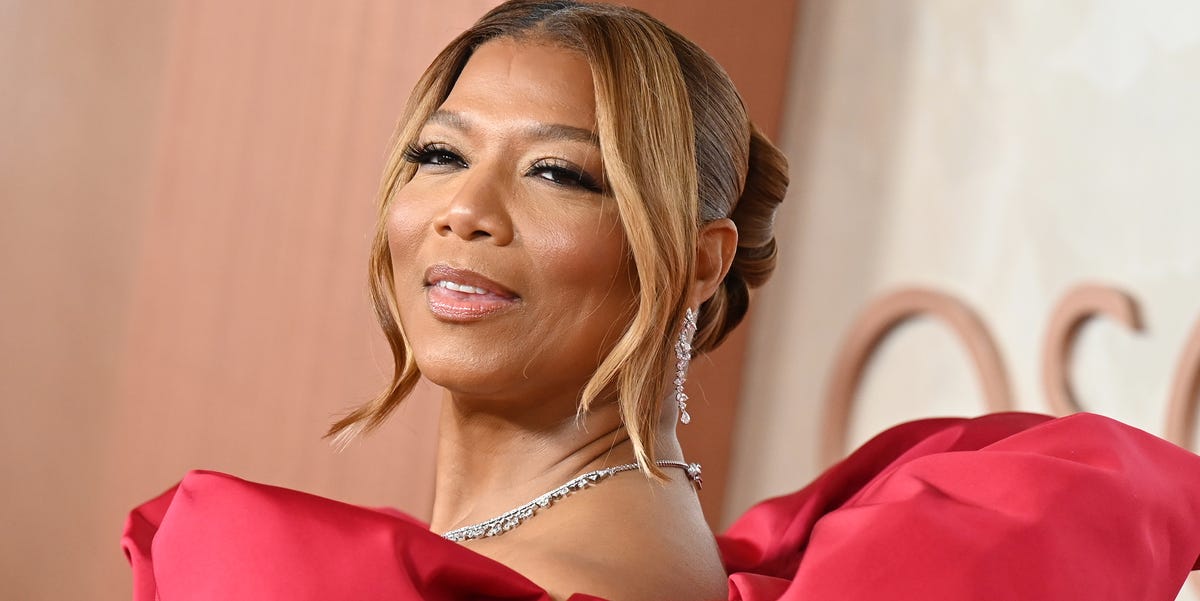
At the 2025 Oscars, Hollywood paused its usual parade of envelopes, gowns, gold statues, and politely terrified nominees to honor a man whose music helped define American entertainment: Quincy Jones. The tribute was not quiet, stiff, or overly polished into museum-glass perfection. It had rhythm. It had color. It had bounce. And leading the musical celebration was Queen Latifah, who performed “Ease on Down the Road” from The Wiz in a joyful salute to Jones’ towering legacy.
The moment arrived during the 97th Academy Awards at the Dolby Theatre in Hollywood, where Oprah Winfrey and Whoopi Goldberg introduced the tribute before Queen Latifah took the stage. The pairing was meaningful before a single note was sung. Winfrey and Goldberg both had life-changing roles in The Color Purple, the 1985 film that Quincy Jones produced and scored. Latifah then carried the celebration into motion with a performance connected to another landmark Jones project: the 1978 film adaptation of The Wiz, for which he served as musical supervisor and music producer.
In a ceremony built around competition, the tribute felt like a collective exhale. Quincy Jones was not merely a successful producer, composer, arranger, conductor, and entertainment executive. He was a bridge between jazz, pop, film, television, Broadway energy, Black cultural excellence, and mainstream American memory. Queen Latifah’s Oscars performance honored that bridge by refusing to make the moment feel like a funeral. Instead, it felt like a procession with good shoes.
Why Queen Latifah’s Oscars Tribute Mattered
The main keyword here is simple: Queen Latifah Honors Quincy Jones With Oscars Performance. But the story behind that headline is bigger than a celebrity appearance. Queen Latifah was an ideal choice because her career, like Jones’, refuses to sit neatly in one box. She is a rapper, singer, actor, producer, Oscar nominee, television star, and cultural trailblazer. In other words, she understands the Quincy Jones method: learn the rules, master the room, then casually redesign the building.
Her performance of “Ease on Down the Road” gave the Oscars a burst of musical theater energy while pointing viewers back to Jones’ work on The Wiz. The song itself is about movement, courage, and continuing the journey even when the road is not exactly paved with red carpet. That made it an inspired tribute. Quincy Jones’ career was a long road of reinvention, from jazz trumpet and big-band arranging to Hollywood film scoring, record-breaking pop production, television, publishing, philanthropy, and mentorship.
Rather than choosing a slow ballad or a somber orchestral piece, the Academy leaned into celebration. That choice mattered. Jones’ death in November 2024 at age 91 was a major cultural loss, but his legacy is not best understood through silence. This was a man whose work moved dance floors, movie scenes, radio charts, award shows, and entire careers. Honoring him with movement felt right.
The Power of “Ease on Down the Road”
“Ease on Down the Road” comes from The Wiz, the beloved retelling of The Wizard of Oz with a Black cast, soul, funk, gospel, and Broadway sparkle all mixed into one technicolor cultural statement. The 1978 film starred Diana Ross, Michael Jackson, Nipsey Russell, Ted Ross, Lena Horne, and Richard Pryor. Quincy Jones’ role as musical supervisor and music producer helped translate the stage musical’s sound into a cinematic experience.
The song was a smart Oscars choice because it is instantly uplifting without being shallow. Its message is not “everything is easy.” It is closer to “keep going anyway.” That is a very Quincy Jones idea. Jones survived a difficult childhood, navigated segregated industries, suffered serious health setbacks, and still built one of the most influential careers in entertainment history. He did not simply ease on down the road. He paved several lanes, installed streetlights, and probably hired a horn section for the opening ceremony.
Queen Latifah’s delivery brought warmth and command to the song. She did not perform it as a cover for nostalgia’s sake. She treated it as a living piece of entertainment history. The result was a tribute that connected older audiences who grew up with Jones’ film and music work to younger viewers who may know him first as the producer behind Michael Jackson’s Thriller, the mentor behind countless stars, or the legendary name that always seems to appear when someone asks, “Wait, who made that possible?”
Oprah Winfrey and Whoopi Goldberg Added Emotional Weight
Before Queen Latifah’s performance, Oprah Winfrey and Whoopi Goldberg helped frame the tribute. Their presence was not random celebrity casting. It was a direct connection to The Color Purple, one of the most important films in Jones’ Hollywood career. Released in 1985 and directed by Steven Spielberg, the film earned 11 Academy Award nominations. Jones was one of its producers and also composed music for the film.
For Winfrey and Goldberg, The Color Purple was more than a movie credit. It changed the trajectory of both careers. Goldberg earned an Oscar nomination for Best Actress. Winfrey earned an Oscar nomination for Best Supporting Actress in her first major film role. Their appearance at the Oscars tribute turned the segment into a living testimony. They were not simply telling the audience that Quincy Jones opened doors. They were standing there as proof.
That is what made the tribute feel personal. Award shows often try to manufacture emotion with lighting, strings, and slow camera pans toward teary celebrities. This one had built-in meaning. Jones was part of the reason those two women became central figures in American entertainment. Their tribute reminded viewers that his genius was not limited to writing, arranging, or producing music. He had an eye for people. He could spot talent, nurture it, and put it where the world could see it.
Quincy Jones’ Oscar History: Honored, Nominated, and Long Overdue
Quincy Jones had a long and complicated relationship with the Academy Awards. Over his career, he received seven Oscar nominations, including nominations connected to The Color Purple. He also received the Jean Hersholt Humanitarian Award at the 67th Academy Awards in 1995, recognizing his humanitarian work. In 2024, the Academy announced that Jones would receive an Honorary Oscar for his artistic genius, relentless creativity, and trailblazing legacy in film music. He died before the Governors Awards ceremony, and the award was accepted posthumously by his children.
That history made the 2025 Oscars tribute feel both celebratory and corrective. Jones had been recognized by the Academy, but many viewers still felt that his contributions deserved even louder acknowledgment. He was a pioneer in film music and became the first Black musical director and conductor for the Academy Awards ceremony in 1971. He helped expand what Hollywood music could sound like, who could lead it, and how Black creativity could shape the center of American cinema rather than decorate its edges.
The Oscars performance by Queen Latifah therefore carried more than entertainment value. It was a reminder that legacy is not always measured by competitive wins. Sometimes it is measured by how many rooms sound different because you walked into them first.
From Jazz Clubs to Movie Scores: The Quincy Jones Blueprint
To understand why Queen Latifah’s performance resonated, it helps to understand the range of Quincy Jones’ career. Born in Chicago in 1933 and raised partly in Seattle, Jones came up through jazz. He worked as a trumpeter, arranger, and bandleader, collaborating with artists such as Ray Charles, Count Basie, Dizzy Gillespie, and Frank Sinatra. His musical foundation was serious, technical, and deeply soulful.
Then he expanded. Jones moved into film and television scoring at a time when Black composers were rarely given major Hollywood opportunities. His film work included projects such as In Cold Blood, In the Heat of the Night, The Wiz, and The Color Purple. He also became a major force in television, later producing cultural staples such as The Fresh Prince of Bel-Air. That alone would be enough for several lifetimes, or at least one very smug LinkedIn profile.
But Jones did not stop there. As a producer, he helped shape Michael Jackson’s Off the Wall, Thriller, and Bad. He produced, arranged, and conducted across genres with a rare ability to make complexity feel effortless. His work on “We Are the World” showed another side of his talent: organizing an impossible room full of stars and turning it into a global charity anthem. Quincy Jones did not just produce records. He produced alignment.
Why Queen Latifah Was the Right Artist for the Moment
Queen Latifah’s presence at the Oscars tribute worked because she embodies a similar kind of multidimensional artistry. She began as one of hip-hop’s most important women, with a voice that carried authority, humor, and social awareness. She then moved into acting, earning an Academy Award nomination for her role as Matron “Mama” Morton in Chicago. She became one of the rare performers who could command a rap stage, a sitcom set, a movie musical, a drama, a talk show, and an awards-show tribute without looking like she wandered into the wrong building.
That range mirrors the Quincy Jones philosophy. Jones believed in crossing borders between genres, formats, and audiences. Queen Latifah has done the same. Her performance was not a random booking; it was a symbolic handoff from one era of barrier-breaking artistry to another. She could honor Jones because she has lived, in her own way, the kind of artistic freedom he helped make possible.
There was also a strong musical theater connection. Queen Latifah appeared in NBC’s The Wiz Live! in 2015, giving her a direct relationship to the material. By returning to “Ease on Down the Road” at the Oscars, she helped connect the original stage legacy, Jones’ film adaptation, and modern televised musical culture. That is not just a tribute. That is a neatly tied bow, and Hollywood loves a bow almost as much as it loves a standing ovation.
The Oscars Needed a Moment Like This
The 2025 Academy Awards included plenty of spectacle, but the Quincy Jones tribute stood out because it had purpose. Modern award shows often struggle to balance entertainment, sincerity, and pacing. Too much comedy and the ceremony feels lightweight. Too much reverence and viewers start checking how many snacks are left. The Queen Latifah performance found a useful middle lane: respectful but alive, emotional but not heavy, nostalgic but not dusty.
The segment also reminded audiences that movie music is not background decoration. It is emotional architecture. A score can tell us when to worry, when to hope, when to laugh, and when to pretend we are not crying in public. Jones understood that better than almost anyone. His film music did not sit politely behind the actors. It shaped the world around them.
By honoring him with a song from The Wiz, the Academy also celebrated Black musical storytelling as a central part of film history. That matters in an industry that has too often treated Black artists as exceptions rather than architects. Quincy Jones was not an exception. He was infrastructure.
Audience Reaction and Cultural Impact
One reason the tribute traveled so quickly online was its emotional clarity. Viewers did not need a musicology degree to understand what was happening. A beloved performer was honoring a beloved genius with a song about moving forward. Oprah and Whoopi brought history. Queen Latifah brought joy. Quincy Jones’ name brought gravity. The Oscars stage brought scale.
The performance also sparked renewed interest in Jones’ film work. Many casual fans know him best for producing Michael Jackson’s biggest albums, but his Hollywood contributions deserve equal attention. The Wiz and The Color Purple showed different sides of his film identity: one bursting with musical fantasy, the other rooted in emotional drama. Together, they reveal an artist who could build soundscapes for both celebration and sorrow.
That is why the tribute worked as both entertainment and education. It invited viewers to revisit a career that stretched across more than seven decades. It also gave younger audiences an accessible entry point. Start with “Ease on Down the Road,” and soon enough you may find yourself exploring Jones’ jazz arrangements, film scores, pop productions, and interviews. Be careful: the Quincy Jones rabbit hole has excellent music, but it is very difficult to leave before 2 a.m.
What the Performance Says About Legacy
Legacy can be a slippery word. It is often used when people want to sound profound without committing to details. In Quincy Jones’ case, the details are almost overwhelming. Twenty-eight Grammy Awards. Seven Oscar nominations. Historic work as a composer, arranger, producer, conductor, executive, and mentor. Collaborations with Frank Sinatra, Ray Charles, Michael Jackson, Aretha Franklin, Ella Fitzgerald, and many others. Film and television credits that helped shape generations of American entertainment.
But the Oscars tribute suggested that legacy is not only about numbers. It is also about energy. When Queen Latifah performed, the room did not feel like it was looking backward at a sealed chapter. It felt like Jones’ influence was still moving through the bodies, voices, and memories of the artists onstage. That is the difference between fame and legacy. Fame gets applause. Legacy gets carried.
Queen Latifah carried it with confidence, joy, and a clear sense of occasion. She honored Jones not by imitating him, but by performing in the expansive spirit he represented. That made the tribute more than a musical number. It became a statement about artistic inheritance.
Experiences Related to Queen Latifah Honoring Quincy Jones With an Oscars Performance
Watching Queen Latifah honor Quincy Jones at the Oscars felt like one of those rare television moments that actually benefits from being watched live. In the age of clips, recaps, and “I’ll catch the highlights tomorrow,” award shows have to work harder to feel essential. This performance did. It had the feeling of a room recognizing that it was not just remembering a famous person, but acknowledging a creative ancestor.
For longtime fans of Quincy Jones, the performance likely stirred memories tied to different chapters of life. Some may remember hearing The Wiz at home, at school, or on television, discovering that Oz could have a different rhythm and still feel magical. Others may connect Jones to Thriller, to the sleek perfection of “Billie Jean,” the cinematic pulse of “Thriller,” or the polished joy of Off the Wall. For film lovers, the emotional pull may come from The Color Purple, where Jones helped bring Alice Walker’s story to the screen with tenderness and force.
Queen Latifah’s performance also created a meaningful experience for people who grew up watching artists move across genres. Latifah herself represents that possibility. She came from hip-hop at a time when many people still treated rap as temporary, local, or limited. Then she became a Hollywood star, a dramatic actor, a musical performer, a producer, and a respected public figure. Seeing her honor Quincy Jones felt like watching one barrier-breaker salute another. It was not a lecture about representation. It was representation with choreography.
There is also something deeply satisfying about a tribute that chooses joy. Many memorial segments lean into sadness, which is understandable. Loss hurts. But some artists leave behind work that asks to be celebrated with volume. Quincy Jones was one of them. His music had elegance, but it also had swing. It had discipline, but it also had mischief. A solemn tribute alone would have missed part of the man. Queen Latifah’s “Ease on Down the Road” captured the idea that grief can move, clap, sing, and still be sincere.
For younger viewers, the performance may have served as a doorway. Maybe they knew Queen Latifah from television. Maybe they knew Quincy Jones only as a legendary name mentioned whenever music history gets serious. The Oscars moment connected the dots in a way that felt easy to understand: this song, this performer, this stage, this legacy. That is how cultural memory survives. Not only through textbooks or documentaries, but through big, vivid moments that make people curious enough to search, listen, and learn.
Personally, the most powerful part of a tribute like this is the reminder that great careers are rarely built in one lane. Quincy Jones did not become Quincy Jones by staying comfortable. Queen Latifah did not become Queen Latifah by accepting narrow definitions either. Their connection on the Oscars stage, even as tribute rather than duet, showed how American entertainment grows when artists are allowed to be many things at once. Composer and producer. Rapper and actor. Mentor and innovator. Historian and hitmaker. The road is wider when artists like them travel it first.
Conclusion
Queen Latifah’s Oscars performance honoring Quincy Jones was one of the most memorable musical tributes of the 2025 Academy Awards because it understood the assignment: celebrate the man by celebrating the motion of his music. With Oprah Winfrey and Whoopi Goldberg grounding the tribute in the history of The Color Purple, and Latifah lifting the room with “Ease on Down the Road,” the Oscars gave Jones a farewell that felt alive, generous, and culturally resonant.
Quincy Jones’ legacy cannot be contained by one award, one genre, one film, or one night. But for a few minutes at the Oscars, Queen Latifah helped translate that legacy into something immediate. The performance reminded audiences that Jones’ work still moves, still teaches, and still opens doors. In the end, the tribute did what the best tributes do: it made viewers miss the artist, then sent them back to the music.

