
Hair Care
“People Who’ve Quit Job On The Spot, What Did It For You?”
Jun
Note: This article is an original synthesis of recurring workplace themes found across reputable U.S. labor, workplace, and public-health research. The experience-based examples near the end are fictional composites, not direct quotations from identifiable people.
Most people do not quit a job on the spot because the office coffee tasted like regret or because someone used the phrase “circle back” for the 14th time before lunch. A dramatic resignation may look spontaneous from the outside, but it is usually the final frame in a very long movie.
The moment might be a manager yelling across a crowded room. It might be another paycheck that does not cover the responsibilities piled onto the job. It might be a schedule change that turns family life into a game of logistical Tetris. Or it might be the realization that the workplace has crossed a line from frustrating to unsafe, disrespectful, or impossible to tolerate.
People who quit jobs on the spot often describe one thing in common: they were not leaving only because of that moment. They were leaving because that moment made everything they had been swallowing suddenly impossible to ignore.
The “I Quit” Moment Is Usually a Final Straw
A walkout can feel theatrical, but most workers who resign immediately have already spent weeks, months, or even years trying to make the situation work. They have stayed late. They have taken on extra duties. They have hoped a new manager, new schedule, new policy, or promised promotion would change the atmosphere.
Then something happens that turns disappointment into clarity.
Maybe the employee realizes that the company keeps calling a staffing shortage a “growth opportunity.” Maybe a supervisor publicly humiliates someone for an honest mistake. Maybe a worker is asked to perform duties outside their training, ignore a safety concern, or work off the clock. Suddenly, the decision is not really about whether to stay until Friday. It is about whether staying one more hour is worth the cost.
That is why quitting a job on the spot is rarely as random as it sounds. It is often a delayed reaction to a workplace pattern that has been sending warning signals for a long time.
What Makes People Quit a Job on the Spot?
1. Public Disrespect From a Manager
There is feedback, and then there is being treated like a malfunctioning printer in front of everyone. Constructive feedback focuses on the work. Humiliation focuses on the person.
Employees often reach their breaking point when a manager insults them, raises their voice, mocks them, blames them for a team failure, or treats them as disposable. A workplace can survive a difficult deadline. It can survive an awkward meeting. It may even survive a questionable potluck casserole. What it struggles to survive is repeated disrespect.
A bad manager can turn a perfectly decent role into a daily stress test. Workers may enjoy their customers, coworkers, projects, and even the company mission, yet still leave because one person makes every shift miserable.
The final straw often sounds simple: “My boss yelled at me in front of everyone.” But behind that sentence may be a year of ignored concerns, inconsistent expectations, favoritism, and the exhausting feeling of never knowing which version of the manager will walk through the door.
2. Pay That No Longer Matches the Job
Employees do not expect every role to come with a corner office and a ceremonial fountain pen. They do expect a fair exchange: time, effort, skill, and responsibility in return for reasonable compensation.
Many sudden resignations happen after a job quietly expands. A receptionist becomes the unofficial office manager. A retail associate becomes the stockroom expert, trainer, cashier, customer-service specialist, and occasional therapist for shoppers who cannot find the return desk. A junior employee absorbs the work of two departed coworkers but receives neither a raise nor a title change.
Eventually, the worker notices the math has stopped mathing.
Pay problems can also become personal quickly. When someone is struggling to pay rent, afford commuting costs, manage childcare, or cover basic groceries, a manager saying “We all need to make sacrifices” can land like a brick through a window. A job may be demanding, but it cannot demand more than a person can realistically afford to give.
3. Empty Promises About Growth
Career advancement is one of the most common reasons people decide a job has reached its expiration date. Workers can tolerate a lot when they see a path forward. They are more likely to leave when the path turns out to be a decorative hallway painted on a wall.
Maybe the promotion was “coming soon” for eighteen months. Maybe the manager promised training that never appeared. Maybe the company hired externally for the exact role an employee had been preparing for. Maybe every conversation about advancement ended with a vague speech about “timing.”
People do not always quit because they hate their current role. Sometimes they quit because they realize the role will never become anything more.
The on-the-spot resignation happens when a worker sees the final proof that the promise was never real. It might be a job posting. It might be a new hire introduced as their future supervisor. It might be another annual review filled with praise but no raise, no plan, and no movement.
4. Chronic Overwork Disguised as Commitment
Every job has occasional crunch periods. A restaurant gets slammed. A holiday season gets wild. A product launch turns the calendar into a haunted house. The problem is not an occasional hard week. The problem is when every week becomes the hard week.
Workers often quit suddenly after realizing the “temporary” workload has become the company’s entire operating model. The team is permanently understaffed. Deadlines are permanently urgent. Messages arrive at night, on weekends, and during vacations. Boundaries are treated as a lack of dedication rather than a normal human need.
Burnout is not always a dramatic collapse. Sometimes it is quieter: irritability, dread on Sunday night, missed meals, poor sleep, constant fatigue, and the eerie sensation that work has moved into every corner of life without paying rent.
When a person finally walks out, they may be responding less to one difficult shift than to the realization that no one at work intends to make the job sustainable.
5. Unpredictable Schedules and Broken Work-Life Boundaries
A schedule is not just a schedule. It determines whether a parent can arrange childcare, whether a student can attend class, whether someone can get to a medical appointment, or whether a worker can have a life that is not entirely organized around waiting for the next shift notification.
Last-minute schedule changes can push employees to the edge, especially in retail, hospitality, health care, warehouses, delivery work, and other shift-based roles. A worker may do everything right, only to learn that their days off are not really days off and their personal commitments are always considered less important than staffing gaps.
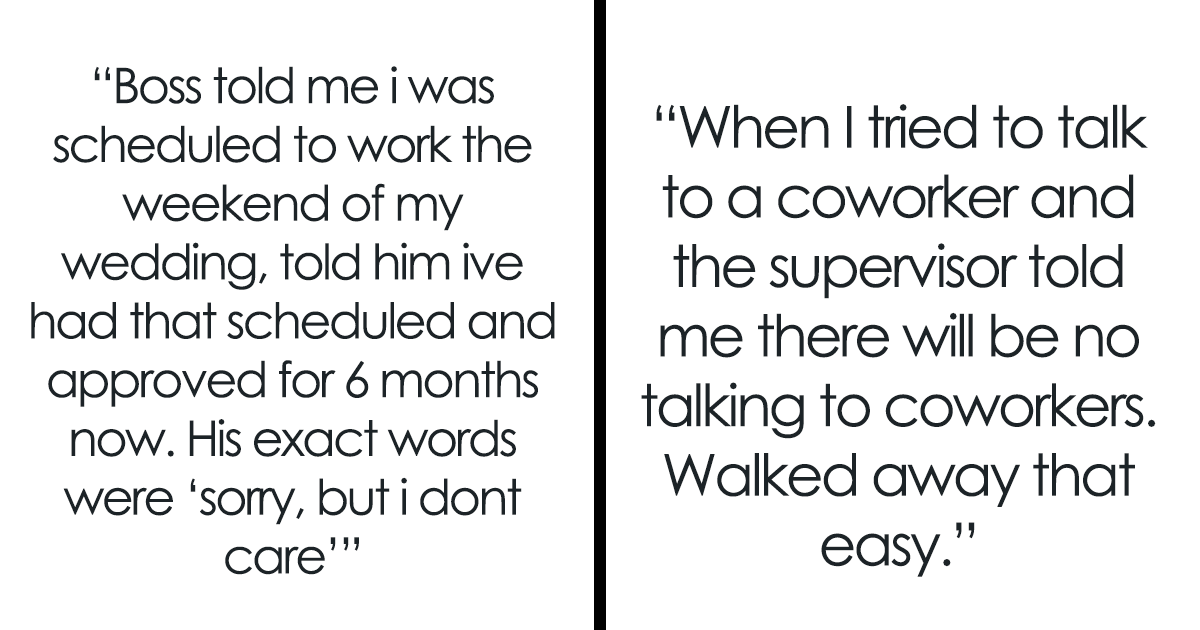
The moment someone quits may come when a supervisor casually says, “You need to figure it out,” after changing a schedule with almost no notice. That sentence can reveal a bigger truth: the company expects workers to have no life outside the building.
6. Unsafe Conditions or Ethical Red Flags
Some resignations are not about career dissatisfaction. They are about safety, legality, or personal values.
A worker may leave after being told to ignore a safety procedure, handle equipment without proper training, overlook a dangerous condition, falsify paperwork, or remain silent about conduct that feels wrong. In those situations, quitting may be less about frustration and more about self-protection.
Not every unpleasant work situation requires an immediate departure, but people should take safety concerns seriously. Workers who face unsafe conditions, harassment, discrimination, unpaid wages, or retaliation may have rights and reporting options depending on their location and circumstances. Documenting concerns, keeping copies of schedules or messages, and seeking qualified advice can be wiser than relying on a verbal promise that “we’ll handle it.”
The Difference Between a Bad Day and a Bad Job
Everyone has bad days at work. A customer may be rude. A project may fail. A coworker may accidentally hit “reply all” and send panic through the department like a raccoon in an air duct.
A bad job is different because the pattern repeats. The same issues return after conversations, complaints, apologies, and promises. The employee no longer thinks, “Today was rough.” They think, “This place is rough.”
Here are a few signs that the problem may be bigger than one stressful shift:
- You feel anxious before nearly every workday, not just before major deadlines.
- Your manager regularly changes expectations without accountability.
- You are doing more work without additional pay, support, training, or authority.
- You have raised concerns multiple times and nothing meaningfully changes.
- Your health, relationships, school, caregiving duties, or basic functioning are being affected.
- You no longer trust the people responsible for making the workplace better.
When those signs pile up, people often stop asking whether they should leave and start wondering why they waited so long.
Should You Quit a Job on the Spot?
There is no universal answer. A sudden resignation can be freeing, but it can also create financial pressure, complicate future job searches, and leave unfinished business behind. The best answer depends on the severity of the situation, your savings, your support system, your employment agreement, and whether there are legal or safety concerns involved.
If there is an immediate threat to your safety or serious misconduct, getting yourself out of the situation matters more than preserving perfect workplace etiquette. You do not owe a dangerous workplace a graceful farewell speech.
In less urgent situations, however, a pause can be powerful. Step outside. Call someone you trust. Write down what happened while it is fresh. Avoid sending a message filled with every thought that has ever crossed your mind during a 9:00 a.m. status meeting.
You can still resign quickly without setting your professional bridge on fire with a novelty flamethrower.
A Practical “Pause Before You Quit” Checklist
- Take a breath and leave the immediate conflict. A five-minute walk can prevent a five-year regret.
- Record the facts. Note dates, names, messages, schedule changes, and what was said or done.
- Check your finances. Know what you have available for rent, food, transportation, and insurance.
- Review your contract or handbook. Look for notice requirements, final-pay policies, noncompete language, and benefits information.
- Decide what outcome you want. Do you want to resign, transfer, report an issue, request a schedule change, or seek outside advice?
- Keep your resignation short. You do not need to submit a 47-page memoir titled Why This Tuesday Changed Me Forever.
How to Quit Professionally When You Are Done-Done
Even when you are leaving because the job has been awful, a clear resignation protects your future self. Keep the message calm, direct, and brief.
For example:
“I am resigning from my position effective today. Please send information about my final pay, benefits, and any next steps to my personal email address. Thank you.”
That is enough. You are not required to debate your decision, solve the company’s staffing problem, or accept guilt as part of your exit package.
If you feel safe doing so, you may choose to give a more specific reason in an exit interview or written message. Describe behavior, policies, and impacts rather than making broad insults. “My workload increased significantly without additional support or compensation” is more useful than “This place is a dumpster fire with Wi-Fi.” Both may feel true, but only one is likely to help you later.
What Employers Miss About Sudden Resignations
Employers sometimes treat walkouts as proof that an employee was unreliable. That can be true in isolated cases, but it can also be a convenient way to avoid asking a harder question: what happened before the person left?
A company that loses workers suddenly should examine patterns. Are certain managers driving people away? Are schedules impossible? Are promotions unclear? Are employees repeatedly doing jobs beyond their pay grade? Are complaints ignored until someone storms out and everyone acts shocked?
Retention is not built with motivational posters, branded water bottles, or a pizza party that arrives after a twelve-hour shift. It is built with fair pay, reasonable workloads, competent managers, honest communication, safe conditions, useful training, and predictable expectations.
Employees are more likely to stay when they believe their effort matters, their voice is heard, and their job does not require them to sacrifice every other part of their life.
Why Walking Out Can Feel Like Relief
For many people, quitting on the spot feels less like rebellion and more like relief. The decision may end a long stretch of dread, self-doubt, or emotional exhaustion. It can restore the feeling that they still have choices.
That does not mean every immediate resignation is easy. People may feel scared, angry, relieved, guilty, or all four before dinner. But leaving can be a turning point when a job has convinced someone that their time, health, or dignity are not worth protecting.
The most important lesson is not that everyone should quit at the first inconvenience. It is that workers should pay attention when a workplace repeatedly asks them to accept what they would never recommend to a friend.
A job is supposed to support a life. When it starts consuming the life instead, the exit door can begin to look less like a failure and more like a map.
Experience Addendum: What the Final Straw Can Look Like
The following approximately 500-word section uses fictional composite experiences based on common themes in workplace surveys, labor guidance, and widely reported employee concerns.
The Retail Worker Who Was Done Being “Flexible”
Maya had worked at a busy clothing store for more than a year. She was dependable, knew the inventory system, trained new hires, and could calm down almost any customer who wanted to return a sweater from three seasons ago without a receipt.
The trouble was her schedule. Every week, her manager changed it at the last minute. Maya missed family dinners, canceled appointments, and once had to scramble for childcare because she was told she needed to cover a shift with only a few hours’ notice.
The final straw came when she said she could not stay late because she had an important personal commitment. Her manager told her, “Work needs to come first.” Maya looked around at the understaffed store, the unpaid extra tasks waiting for her, and the manager who had never once asked what was happening in her life.
She handed over her keys, thanked the coworkers she liked, and left. It was not really about one late shift. It was about realizing that flexibility had only ever been expected from her.
The Office Employee Who Finally Stopped Covering for Everyone
Jordan worked in a small office where “team player” was code for “the person who fixes everything after everyone else goes home.” When two coworkers left, Jordan inherited their tasks but not their pay. Every promised conversation about a raise became another vague meeting about budgets, patience, and “seeing the big picture.”
Then a senior manager criticized Jordan for missing a deadline that required three people to complete. The criticism happened in front of the entire team.
Jordan did not yell. There was no dramatic desk flip. Instead, Jordan calmly said, “I’m no longer willing to carry three jobs for one salary,” packed a laptop, and resigned that afternoon.
The manager called it an overreaction. Jordan called it finally listening to the evidence.
The Restaurant Worker Who Refused to Work for Free
Elena loved the fast pace of restaurant work. She liked her coworkers, knew the regulars, and could carry a tray through a crowded dining room with the balance of an Olympic gymnast.
But closing shifts had become a problem. Staff members were regularly told to clock out before all the closing tasks were finished. The message was always casual: “Just help out for a few more minutes.” A few minutes turned into forty. Forty turned into normal.
One night, after another long shift, Elena asked when the extra time would be paid. Her manager brushed it off and told her not to “make things difficult.” That phrase did the opposite. It made things very clear.
Elena finished what she had been paid to do, documented her hours, and left the job. The final straw was not the mop bucket or the late-night cleanup. It was being told that asking for fair treatment was the problem.
The New Hire Who Saw the Culture Early
Andre had been at his new job for only six weeks when he noticed something strange: every meeting involved blame, every question was treated like incompetence, and every employee seemed afraid to speak first.
At first, he assumed he simply needed time to adjust. Then he watched a manager mock a coworker during a team call. Nobody laughed. Nobody defended the employee. Everyone stared at their screens with the unmistakable expression of people who had seen this movie before.
Andre realized that the problem was not his onboarding. The problem was the culture.
He resigned before the job could become a longer, more expensive mistake. Sometimes quitting quickly is not impulsive. Sometimes it is efficient.
The Worker Who Chose Safety Over a Paycheck
Renee worked in a role that required equipment and procedures she had not been fully trained to use. She asked for clarification, but her supervisor told her to “figure it out” because the team was behind schedule.
Renee knew that rushing through unfamiliar work could put her and others at risk. She raised the issue again. The response was the same: pressure, impatience, and a suggestion that she was not committed enough.
That was the moment she understood the company’s priorities. She left the situation, preserved her notes and messages, and sought advice about her options.
Her decision was not about avoiding hard work. It was about refusing to confuse reckless management with dedication.
Conclusion
People who quit jobs on the spot are often portrayed as impulsive, dramatic, or difficult. In reality, many have simply reached the point where the cost of staying becomes greater than the uncertainty of leaving.
The final straw may be disrespect, burnout, broken promises, impossible scheduling, unfair pay, unsafe conditions, or a manager who mistakes fear for leadership. The visible moment may be sudden, but the reasons are usually old.
Quitting without notice is not always the best choice. But neither is staying somewhere that repeatedly tells you your time, safety, boundaries, and dignity do not matter. Sometimes the most professional thing a person can do is leave with a clear sentence, a calm plan, and the decision to build a better next chapter.

