
Makeup
Time Bandit Clock Hits The Aesthetic Jackpot
Jun
Some clocks politely sit on the wall and whisper, “It is 3:14.” The Time Bandit Clock kicks open the door, spins four fruit-machine reels, flashes a little mechanical drama, and makes checking the time feel like a tiny show. It is not just a clock; it is a conversation starter, a kinetic sculpture, a love letter to old-school electronics, and proof that salvaged parts can have more personality than a showroom full of beige gadgets.
What Is the Time Bandit Clock?
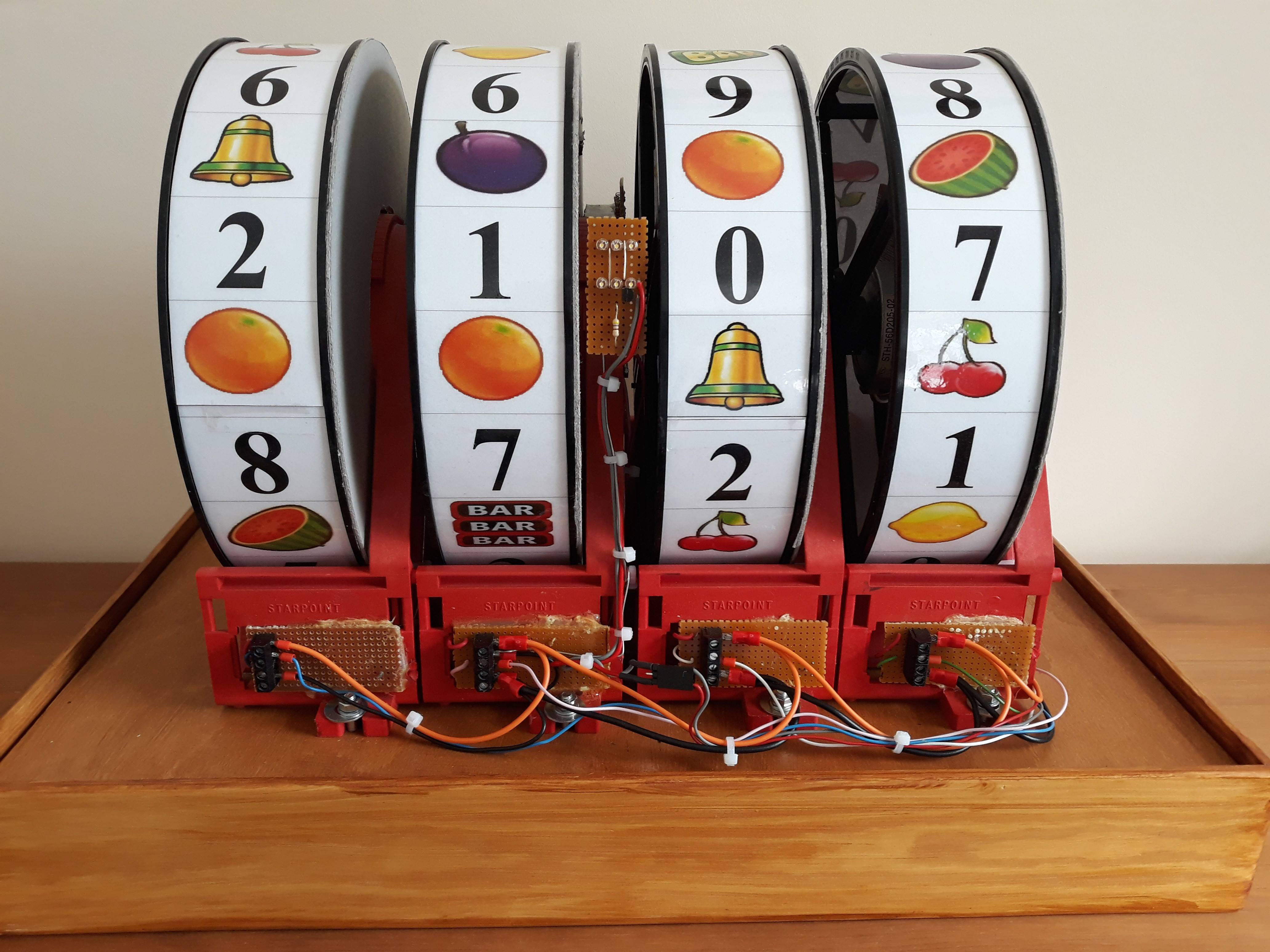
The Time Bandit Clock is a DIY, fruit-machine-themed clock built around four salvaged reels that display the time in 24-hour format. Instead of using a regular digital screen or a set of predictable clock hands, it borrows the visual language of vintage reel machines. Every minute, the reels spin, slow down, and stop one by one until the four digits of the current time appear. The result is part timepiece, part theater, and part “why is everyone in the room suddenly staring at the wall?”
The main keyword here is simple: Time Bandit Clock. But the real charm comes from the ideas surrounding it: aesthetic clock design, DIY clock project, fruit machine clock, kinetic wall clock, binary encoder clock, and upcycled electronics. In a world where phones already tell us the time with military-grade accuracy, this clock answers a different question: can timekeeping still feel magical?
Why This Clock Hits the Aesthetic Jackpot
The Time Bandit Clock works because it turns an ordinary act into a little ritual. Most clocks are passive. They exist, they tick, and occasionally they guilt-trip you for being late. This one performs. The reels create suspense, the lighting gives the build a glowing display-case quality, and the mechanical motion adds texture that a flat screen cannot fake.
Its visual appeal comes from contrast. The clock is technical but playful. It uses old-school logic while looking like something rescued from an arcade, a workshop, and a design museum’s secret basement. That mix gives it a strong retro-futurist personality. It feels vintage without being dusty, clever without being cold, and decorative without being useless. That is a rare jackpot indeed.
Motion Makes It Memorable
Movement is the secret ingredient. A regular wall clock offers information; the Time Bandit Clock offers anticipation. When the reels spin, the viewer briefly stops being a time-checker and becomes an audience member. That tiny pause creates emotional value. You do not merely read the time; you watch the clock decide how to reveal it.
It Makes Mechanical Parts Feel Alive
Salvaged reels bring texture, depth, and imperfection. They remind us that objects once had weight, sound, and physical behavior. The spinning action gives the clock a personality that is impossible to duplicate with a simple LED panel. It is the difference between reading a restaurant menu online and hearing the server dramatically describe dessert. One is efficient. The other is memorable.
The Clever Engineering Behind the Show
Under the playful surface, the Time Bandit Clock is a serious electronics project. Each reel is modified with a DIY binary encoder. A punched disc interrupts infrared light, and sensors read those interruptions to generate a binary word. In plain English: the clock teaches each reel how to report its position so the control electronics know when the correct digit has arrived.
Those reel positions are compared with the output of a binary clock. When the reel matches the correct value, the control circuit knows it can stop. A pulse every minute starts the sequence. The reels spin freely for a short moment, then stop in order from left to right. The finished display shows the time as four digits in 24-hour format.
The use of old-school discrete logic gives the project its soul. In many modern builds, a microcontroller quietly handles nearly everything. Here, the builder leaned into visible, understandable electronics: stripboard, comparators, encoders, stepper drives, and control circuitry. There is a microcontroller involved for sequencing and practical control, but the project’s personality comes from the way it celebrates hardware instead of hiding it.
Why Binary Encoders Matter
A reel can spin beautifully all day, but a clock needs precision. The binary encoder solves that problem. Each reel position must correspond to a known digit. By reading holes in a punched disc through infrared transmitters and receivers, the system identifies where the reel is. That position data becomes the bridge between physical motion and accurate timekeeping.
Why Stepper Motors Fit the Mood
Stepper motors are a natural match for this kind of project because they turn controlled motion into visible behavior. They do not simply “move”; they step, pause, and create a mechanical rhythm. In the Time Bandit Clock, that rhythm supports the whole experience. The reels do not just arrive at the time. They make an entrance.
Design Lessons From the Time Bandit Clock
Great design is not always about making something thinner, quieter, or more invisible. Sometimes great design means giving an object the courage to be noticed. The Time Bandit Clock reminds us that a functional object can also be expressive, humorous, and emotionally sticky.
1. Function Can Be Fun
The clock still performs its basic job: it tells time. But it refuses to do that job in the most boring way possible. This is a valuable lesson for product design and interior decor. A practical object does not have to look like it was designed during a meeting where everyone was afraid of color.
2. Reuse Adds Character
Salvaged parts carry history. The fruit-machine reels are not generic decorative pieces; they come with visual memory built in. That kind of reuse adds authenticity. It also supports a more thoughtful approach to materials, where old components can be reimagined instead of discarded.
3. The Best Objects Invite Questions
A strong statement piece does not merely match the couch. It starts conversations. Guests will ask how the Time Bandit Clock works, why the reels spin, whether it is accurate, and where the idea came from. That is when a clock stops being background decor and becomes part of the room’s social life.
Where the Time Bandit Clock Belongs
This is not a shy clock. It would be wasted in a hallway where people only pass by while looking for their keys. The Time Bandit Clock belongs somewhere it can perform: a workshop, studio, home office, game room, maker space, creative agency, coffee bar, or living room with a strong industrial or eclectic style.
In a minimalist space, it becomes the rebellious focal point. In a retro interior, it feels like it has always belonged. In an industrial room with metal shelving, exposed wood, and warm lighting, it becomes the crown jewel. It also fits beautifully in a maker environment because it reveals the joy of building, not just the polish of finishing.
Styling Ideas
Pair it with warm accent lighting to emphasize the reels and shadows. Keep surrounding wall decor simple so the clock can breathe. A dark wall or wood backdrop would make the illuminated display feel richer. If placed near books, tools, vintage posters, or mechanical objects, the clock will look intentional rather than random.
The goal is not to create a theme park corner. Let the Time Bandit Clock be the main character, then give it supporting actors: a metal lamp, a clean shelf, a few tactile objects, and enough negative space to make the spinning reels feel dramatic.
Why Analog Still Matters in a Digital World
We live surrounded by screens. Phones, laptops, watches, tablets, smart speakers, refrigerators with opinionsthe list keeps growing. That makes analog and electromechanical objects feel special again. They slow the eye down. They show cause and effect. They let us see time as movement rather than just numbers.
The Time Bandit Clock is especially interesting because it is not purely analog or purely digital. It combines physical reels with binary logic. It takes a digital concept and expresses it through mechanical motion. That hybrid quality is why it feels so fresh. It does not reject technology; it makes technology visible, playful, and human.
Who Would Love the Time Bandit Clock?
This unusual clock is perfect for makers, electronics hobbyists, industrial design fans, retro decor lovers, and anyone who thinks “normal” is a suspiciously overused word. It appeals to people who enjoy visible mechanisms and clever engineering. It also appeals to interior design fans looking for a statement piece that does more than sit there looking expensive.
For a maker, the attraction is the technical challenge: encoders, comparators, timing, stepper control, lighting, and packaging. For a design lover, the attraction is the performance. For a casual viewer, the attraction is simple: it looks cool, spins every minute, and makes time feel oddly exciting.
Experience Notes: Living With a Time Bandit-Style Clock
Imagine placing a Time Bandit-style clock in a home office. At first, you think it will simply be a fun object in the background. Then the first minute rolls over. The reels begin moving, and suddenly your attention is gone from the spreadsheet, the inbox, or the half-written message you were pretending not to avoid. The clock spins, stops, reveals the time, and gives the room a small burst of energy. It is only a few seconds, but it changes the atmosphere.
That is the biggest experiential difference between this clock and a standard wall clock: it creates moments. Most clocks disappear into habit. You glance, read, and forget. The Time Bandit Clock turns each minute into a miniature event. In a creative workspace, that can be surprisingly useful. It reminds you that time is passing without feeling like a scolding alarm. It is playful accountability, which is much nicer than a productivity app yelling at you with a notification badge.
In a living room, the experience becomes more social. People notice the reels before they understand the function. Someone asks, “Is that a clock?” Another person waits for the next minute just to see it move. The object creates a pause in conversation, then restarts it with curiosity. That is rare for home decor. A vase may be beautiful, but unless it starts spinning every sixty seconds, it usually does not gather a crowd.
There is also a comforting mechanical honesty to the design. You can sense that something real is happening inside. The reels have weight. The motion has timing. The light has warmth. The clock does not feel like a sealed black box powered by mysterious software updates. It feels understandable, even if the electronics behind it are sophisticated. That makes the experience more personal.
Of course, a clock like this is not for every room. In a bedroom, the movement might be too distracting unless it has a sleep mode or quiet operation. In a formal dining room, it might steal attention from the table. But in the right setting, it becomes a perfect blend of art, engineering, and humor. It makes time visible, audible, and theatrical. More importantly, it makes people smile, which is a feature too many modern products forget to include.
The best experience is probably in a maker studio or creative office, where the clock feels like a mascot. It quietly says: build weird things, reuse good parts, solve problems beautifully, and never underestimate the decorative power of a spinning reel. That is not just timekeeping. That is a philosophy with gears.
Final Verdict: A Clock That Steals the Show
The Time Bandit Clock earns its name because it steals attention in the best possible way. It takes a basic household function and transforms it into a kinetic display of engineering, reuse, and visual wit. The salvaged reels provide nostalgia. The binary encoders provide brains. The lighting and motion provide drama. Together, they create one of those rare objects that satisfies both the technical mind and the design-loving eye.
It is not the simplest way to tell time, and that is exactly the point. Simplicity has its place. So does spectacle. The Time Bandit Clock hits the aesthetic jackpot because it understands that useful objects can still have charm, suspense, and a little mischief. In the grand casino of clock designmetaphorically speaking, of coursethis one walks away with the visual jackpot.
Note: This publication-ready HTML body contains original English content synthesized from real information about the Time Bandit Clock, clock design, kinetic art, and sustainable reuse. No external source markers or unnecessary reference strings are embedded in the article.

