
Beauty Unlocked
OTTO: A Pi Based Open Source Music Production Box
Jun
There are two kinds of electronic musicians: the ones who carefully open a laptop, plug in four controllers, launch a DAW, update three drivers, and then forget the melody they had in their head; and the ones who look at a box covered in buttons and say, “Yes. This will make noises immediately.” OTTO belongs proudly to the second camp.
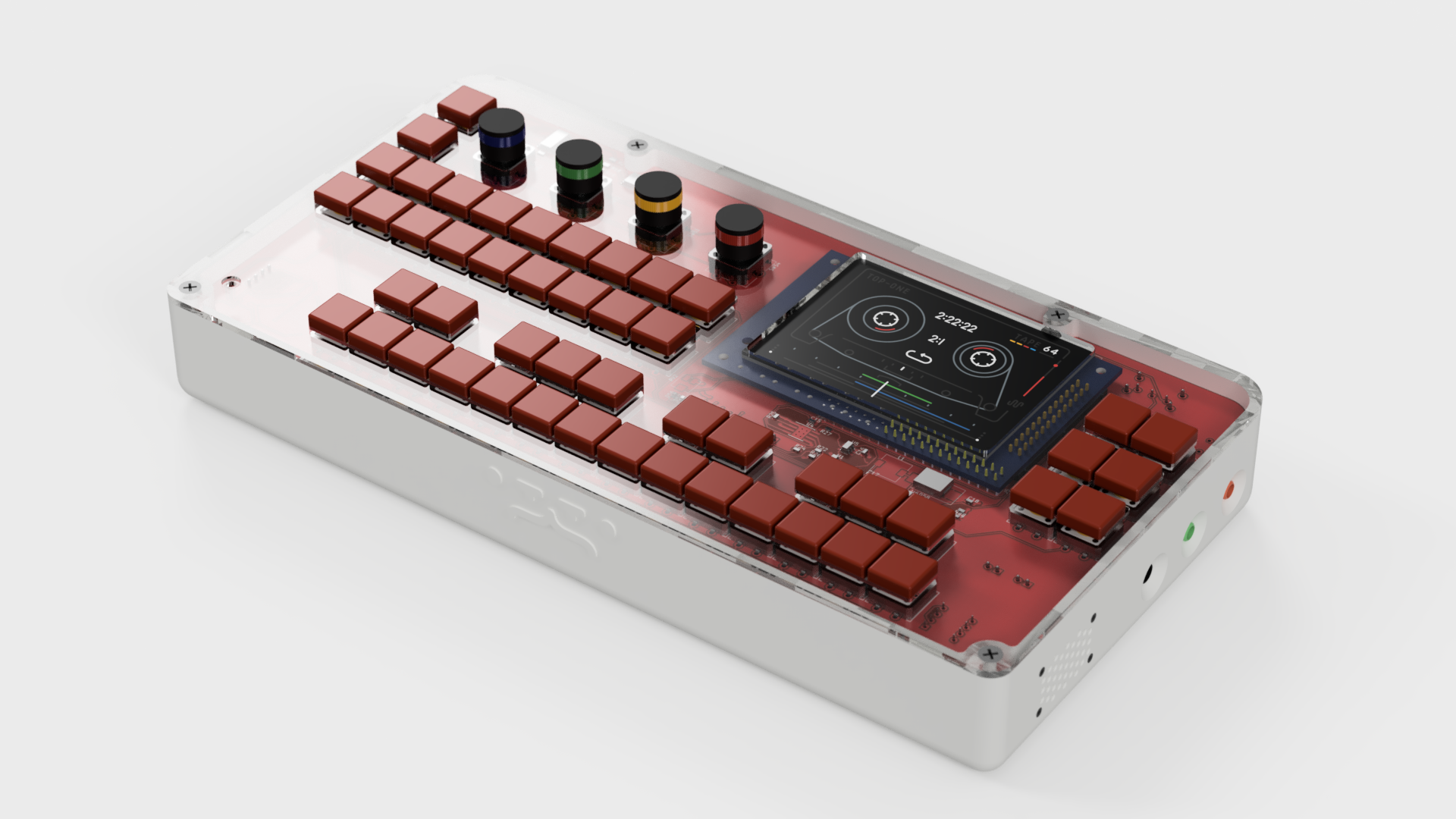
OTTO is a Raspberry Pi based open source music production box designed as a compact, hands-on workstation for synths, sampling, sequencing, effects, and experimental sound design. In plain English, it is the kind of DIY groovebox that makes hardware nerds reach for a soldering iron and musicians reach for headphones. It was inspired by the famous Teenage Engineering OP-1, but it was never meant to be a cheap clone. OTTO’s charm is different: it is open, hackable, modular, and slightly chaotic in the best maker-culture way.
The project attracted attention because it asked a deliciously dangerous question: what if a small single-board computer, a screen, a pile of buttons, a few rotary encoders, and open source software could become a portable music-making machine? That idea still matters. Even though the original OTTO project was later paused, its design remains a fascinating case study in DIY electronic instruments, Raspberry Pi audio, and the dream of building a DAW-like workflow without being trapped behind a mouse cursor.
What Is OTTO?
OTTO is best described as an open source digital hardware synth, groovebox, sampler, sequencer, and effects processor in one box. That is a long job title, but OTTO wears many hats because the goal was never to make a single-purpose synthesizer. The idea was to create a self-contained music production workstation that could generate sound, manipulate samples, sequence patterns, process audio, and invite experimentation.
Instead of depending on a traditional desktop computer, OTTO places a Raspberry Pi at the center. The Pi runs the main software, handles the music logic, communicates with the interface hardware, and connects to audio and MIDI systems. Around that core sits the physical interface: buttons for fast navigation, rotary encoders for parameter control, and a small display for visual feedback. It is the opposite of menu-diving through a tiny calculator screen while muttering dark things about “workflow.”
The project’s early identity was closely tied to the OP-1 because both devices chase the same broad fantasy: portable electronic music creation in a playful, all-in-one form. But OTTO’s developers made it clear that it was not intended to be an OP-1 replacement. OTTO was open source in both spirit and structure. If you wanted one, the joke was basically: congratulations, you are now part musician, part builder, part debugger, and part person crawling under a desk looking for the USB cable you just had.
Why a Raspberry Pi Makes Sense for a Music Box
The Raspberry Pi has become a favorite ingredient in DIY audio projects because it is affordable, compact, powerful enough for many real-time tasks, and supported by a huge community. For a music production box like OTTO, that matters. A maker can start with a familiar Linux-based platform instead of designing an entire embedded computer from scratch. That saves time, money, and at least three emotional breakdowns.
In OTTO’s early hardware concept, the heart of the system was a Raspberry Pi 3. That choice made sense for the era. The Pi 3 offered enough processing power for experimental synth engines, sequencing logic, screen graphics, and controller communication while still fitting inside a small enclosure. It was not a studio supercomputer, and nobody should expect it to run 300 tracks of orchestral plugins while rendering a music video in the background. But for a focused hardware instrument, a Pi can be a surprisingly capable brain.
The Pi also fits the open source philosophy. It encourages tinkering. It runs Linux. It supports common development tools. It can talk to microcontrollers, displays, MIDI hardware, and audio interfaces. In other words, it is not just a computer; it is a tiny invitation to make something weird and useful.
The Hardware: Buttons, Encoders, Screen, and Audio
OTTO’s hardware concept is one of the reasons it became so interesting to musicians and makers. The early design used a Raspberry Pi 3, a Fe-Pi Audio Z V2 audio interface, a small LCD display, dozens of switches, and four rotary encoders. Some versions referenced a 320×200 display, while later summaries and design notes discussed a 320×240 RGB screen. Either way, the mission was clear: give the user enough visual feedback to understand what is happening without turning the device into a touchscreen tablet wearing a fake mustache.
The Raspberry Pi Core
The Pi acts as the main computer. It runs the software environment, handles audio and MIDI systems, manages sequencing, and provides the platform for synth engines and effects. In a device like OTTO, the Pi is not merely “the board inside.” It is the workstation’s central nervous system.
The Audio Interface
Audio quality is critical in any music production box. OTTO’s early design used the Fe-Pi Audio Z V2, an I2S ADC/DAC board, though a USB audio interface could also be used. This matters because the Raspberry Pi’s built-in audio options have historically not been the first choice for serious production. A dedicated audio interface provides better input and output quality, more reliable connections, and a more realistic foundation for synths, samples, and effects.
The Controls
OTTO’s physical controls are the fun part. Early builds included 48 switches and four rotary encoders. The switches and encoders were handled by Arduino Pro Micro boards, which passed control data to the Raspberry Pi. Later concepts discussed roughly 30 hardware buttons and four color-coded encoders. The exact count matters less than the philosophy: OTTO wanted hands-on control.
That is a big deal. Musicians often complain that laptops are powerful but uninspiring. You can do almost anything with a DAW, but you might do it while clicking tiny triangles in a dropdown menu at 1:17 a.m. OTTO’s interface says: turn the knob, press the button, hear the change. That immediacy is the secret sauce of good hardware instruments.
The Software: C++17, Faust, and Real-Time Audio
On the software side, OTTO was ambitious. The core application was written from scratch using C++17, while synth engines, audio effects, and DSP components were associated with Faust, a functional programming language built specifically for sound synthesis and audio processing. Faust is especially interesting because it lets developers describe audio algorithms in a more specialized way and then compile them to efficient code.
That combination gives OTTO an important identity. C++ provides the performance and structure needed for a serious embedded music application. Faust makes it easier for sound designers and audio programmers to create synths and effects without writing every low-level DSP routine by hand. It is a little like having a race car chassis and a modular engine lab in the same garage. You may still get grease on your face, but at least the grease is educational.
OTTO also explored swappable audio and MIDI backends, with JACK mentioned in early coverage as the available audio/MIDI option at the time. That tells us the project was not simply a toy interface wrapped around a few sounds. It was trying to solve the deeper problem of creating a flexible, low-latency, Linux-based music system that could eventually support different setups.
What Could You Actually Do With OTTO?
In concept, OTTO could serve several creative roles. As a synthesizer, it could host multiple sound engines. As a sampler, it could manipulate recorded or imported audio. As a sequencer, it could arrange musical patterns. As an effects processor, it could reshape incoming or internal audio with filters, delays, modulation, distortion, or stranger sonic ingredients. As a groovebox, it could combine rhythm, melody, sampling, and performance controls into a self-contained sketchpad.
Picture this: you start with a drum pattern, add a bass patch, twist an encoder to make the filter growl, sample a weird kitchen sound, chop it into a rhythm, and then run the whole thing through a delay that sounds like a robot falling down stairs in a musical way. That is the appeal. A box like OTTO is not only about finishing polished songs. It is about making the first spark happen quickly.
OTTO vs. a Laptop DAW
A laptop DAW is more powerful than OTTO in almost every technical sense. Ableton Live, Logic Pro, FL Studio, Bitwig, Reaper, and similar platforms can handle enormous projects, professional plugins, automation, editing, mixing, mastering, and all the modern production magic. If you need to produce a radio-ready pop track with 90 vocal layers and a snare drum that has its own legal department, use a DAW.
But power is not the only measure of creativity. Hardware boxes are loved because they reduce friction. They give the user a smaller world with fewer distractions. OTTO’s appeal is that it trades infinite options for a focused interface. Instead of opening social media “just for a second” and waking up 40 minutes later watching a raccoon steal cat food, you stay inside the instrument.
A Raspberry Pi music production box is not meant to replace a full studio. It is meant to become a musical notebook, a performance tool, a learning platform, or a custom instrument that reflects the builder’s personality. That is something no generic laptop template can fully provide.
OTTO vs. the OP-1
The OP-1 is an iconic portable synthesizer and workstation because it combines design, sound, sampling, sequencing, and playful constraints in a beautifully finished package. OTTO borrowed inspiration from that compact, all-in-one idea, especially the concept of four main encoders tied to on-screen parameters. But the comparison should be handled carefully.
The OP-1 is a commercial instrument. You buy it, charge it, learn it, and make music. OTTO is an open source project. You study it, build it, modify it, troubleshoot it, and then hopefully make music after discovering why your encoder is sending values like it has had too much coffee. These are very different experiences.
OTTO’s value is not polish. Its value is openness. You can inspect the software, rethink the hardware, modify the interface, write your own DSP, change the enclosure, or use the project as a foundation for another instrument entirely. For some creators, that is more exciting than buying a finished product. For others, it is a warning label wearing a party hat.
OTTO and the Wider Open Source Synth World
OTTO is part of a broader movement toward open, hackable music hardware. Zynthian, for example, is another Raspberry Pi based open source synth platform that functions as a keyboard expander, effects unit, MIDI processor, groovebox, and micro-DAW. Projects like these prove that musicians are not only consumers of gear. They can also be collaborators, builders, testers, and inventors.
This movement matters because commercial music hardware can be expensive and closed. Closed systems are not automatically bad; many are excellent. But open source instruments create a different kind of value. They invite learning. They encourage repair. They allow customization. They let a community improve the tool instead of waiting for a company to decide whether a feature belongs on next year’s model.
For students, educators, and curious producers, an open source groovebox can become a classroom. You learn audio routing, embedded Linux, MIDI, DSP, interface design, enclosure planning, and the harsh truth that “portable” still requires batteries, cables, and a bag with one mysterious adapter at the bottom.
The Honest Status: OTTO Was Paused
No serious article about OTTO should pretend the project is a freshly released commercial product. It is not. The original team announced that development was suspended in 2022 after several years of work. The reasons were understandable: limited resources, full-time jobs, global chip shortages, repeated hardware rework, and the growing complexity of the project. That does not make OTTO a failure. If anything, it makes it a very real open source hardware story.
Building a music production box is hard. Building one that is open, reliable, affordable, flexible, portable, friendly, and musically inspiring is extremely hard. The graveyard of unfinished DIY instruments is full of noble ideas, brave prototypes, and at least one person whispering, “The firmware was almost done.” OTTO got far enough to inspire coverage, code, prototypes, discussions, and forks. That is meaningful.
The paused status also gives makers a useful lesson: scope matters. A synth is difficult. A sampler is difficult. A sequencer is difficult. An effects processor is difficult. A custom UI is difficult. A hardware enclosure is difficult. OTTO tried to combine all of them. That ambition is why people noticed it, and also why completing it required more time and resources than a small team could reasonably sustain.
Why OTTO Still Matters
OTTO still matters because it captures a vision that refuses to go away: musicians want tools that are powerful, playful, portable, and personal. The project showed that a Raspberry Pi based open source music production box could be more than a novelty. It could be a platform for experiments in interface design, embedded audio, open hardware, and community-driven music technology.
It also reminds us that music technology does not have to be sealed in a sleek aluminum rectangle forever. Sometimes the best instrument is the one you can open, understand, and modify. Sometimes the most inspiring gear is not the most expensive box in the studio, but the strange handmade device that boots into a custom interface and makes a bass sound like a haunted refrigerator.
For developers, OTTO is a reference point for C++ audio applications, Faust DSP integration, hardware controls, and Pi-based embedded design. For musicians, it is a reminder that workflow matters as much as feature count. For makers, it is a challenge: what would your ideal music box look like?
Practical Build Lessons From OTTO’s Concept
1. Start With the Workflow, Not the Parts List
It is tempting to begin with hardware shopping. Raspberry Pi? Check. Audio HAT? Check. Encoders? Check. Screen? Check. Tiny screws that vanish into another dimension? Sadly, also check. But OTTO’s concept shows that the real question is workflow. What should the musician do first? Make a beat? Load a sample? Design a patch? Record a loop? The best hardware choices follow the workflow, not the other way around.
2. Keep Latency in Mind
Real-time audio is unforgiving. A delay that seems tiny on paper can feel terrible when playing keys or finger-drumming. A Pi-based synth needs careful audio configuration, efficient DSP, and realistic expectations. Dedicated audio interfaces, lean Linux setups, and focused software design all help.
3. Physical Controls Are Worth the Effort
Buttons and encoders complicate the build, but they make the instrument feel alive. A music production box should not feel like a spreadsheet with a headphone jack. OTTO’s emphasis on hardware controls is one of its strongest ideas.
4. Open Source Is a Superpower and a Responsibility
Open source projects invite community help, but they also require documentation, structure, and clarity. If people cannot understand how to build, run, or contribute to a project, the openness becomes theoretical. OTTO’s story highlights the importance of documentation, contribution paths, and realistic roadmaps.
Experience Section: What It Feels Like to Build Around the OTTO Idea
The most interesting experience related to OTTO is not simply “using a Raspberry Pi to make sound.” Plenty of projects can do that. The real experience is discovering how quickly a music instrument becomes a conversation between creativity and engineering. One moment you are thinking about basslines; the next moment you are thinking about debounce logic for buttons. Glamorous? Not exactly. Important? Absolutely.
A Pi based music production box teaches patience in a way that a finished commercial groovebox does not. When you buy a polished instrument, the manufacturer has already hidden the boring dragons: power management, interface scanning, audio routing, enclosure tolerances, boot time, driver behavior, and the ancient curse of “why does this work only when the USB cable is upside down?” With an OTTO-style project, those dragons live in your house. You name them. You fight them. Eventually, you may learn to ride one.
The first practical experience is the thrill of immediacy. Once the controls are mapped and the sound engine responds, turning a physical encoder feels dramatically better than dragging a virtual knob with a mouse. A filter sweep becomes a performance gesture. A sample start point becomes something you can play. The device stops feeling like a computer and starts feeling like an instrument. That transformation is the whole reason hardware music boxes exist.
The second experience is constraint. A small screen and a limited set of controls force decisions. This can be frustrating, but it can also be creatively powerful. A laptop DAW says, “Here are 10,000 options; good luck, captain.” A focused box says, “Here are the controls that matter right now.” OTTO’s modal interface idea points toward that kind of creative pressure. Good constraints do not limit music; they stop the musician from drowning in possibilities while the loop keeps playing forever.
The third experience is customization. In an open source project, the instrument can become personal. Maybe you want a different sequencer layout. Maybe you want a dedicated button for resampling. Maybe you hate the encoder acceleration curve with the fire of a thousand suns. In a closed product, you complain on a forum. In an open project, you can change it, document it, and share it with another person who has the exact same oddly specific complaint.
The fourth experience is humility. A compact groovebox looks simple from the outside. Inside, it is a tiny city. Audio code has to run on time. UI code has to feel instant. Buttons have to respond. Screens have to update without stealing too much processing power. MIDI has to sync. Samples have to load. Nothing should crash during a performance, because audiences rarely appreciate a kernel panic as an avant-garde breakdown.
That is why OTTO remains inspiring even in a paused state. It represents the courage to build a complete instrument from common parts and open tools. It reminds musicians that technology can be playful, and it reminds developers that music software has to feel good in human hands. The best version of an OTTO-like box is not merely a Raspberry Pi with audio output. It is a focused creative companion: small enough to carry, deep enough to explore, and open enough to become whatever strange musical machine its builder imagines.
Conclusion
OTTO: A Pi Based Open Source Music Production Box is more than a cool maker headline. It is a snapshot of an idea that keeps returning to the music tech world: a portable, hackable, hands-on workstation that lets musicians create without the usual laptop friction. With a Raspberry Pi at its core, physical buttons and encoders on the surface, C++17 and Faust in the software stack, and open source values baked into the design, OTTO became a symbol of what DIY music hardware can attempt.
It was ambitious, imperfect, and eventually paused, but that does not reduce its importance. In fact, the project’s unfinished nature makes it even more useful as a lesson. Building open source music hardware is not easy. But for the musicians, coders, teachers, and sonic troublemakers who want to understand their tools from the inside out, OTTO remains a wonderful source of inspiration. It is proof that sometimes the best studio idea begins not with a shopping cart, but with a Raspberry Pi, a bold plan, and the confidence to say, “How hard could it be?”

