
Beauty Unlocked
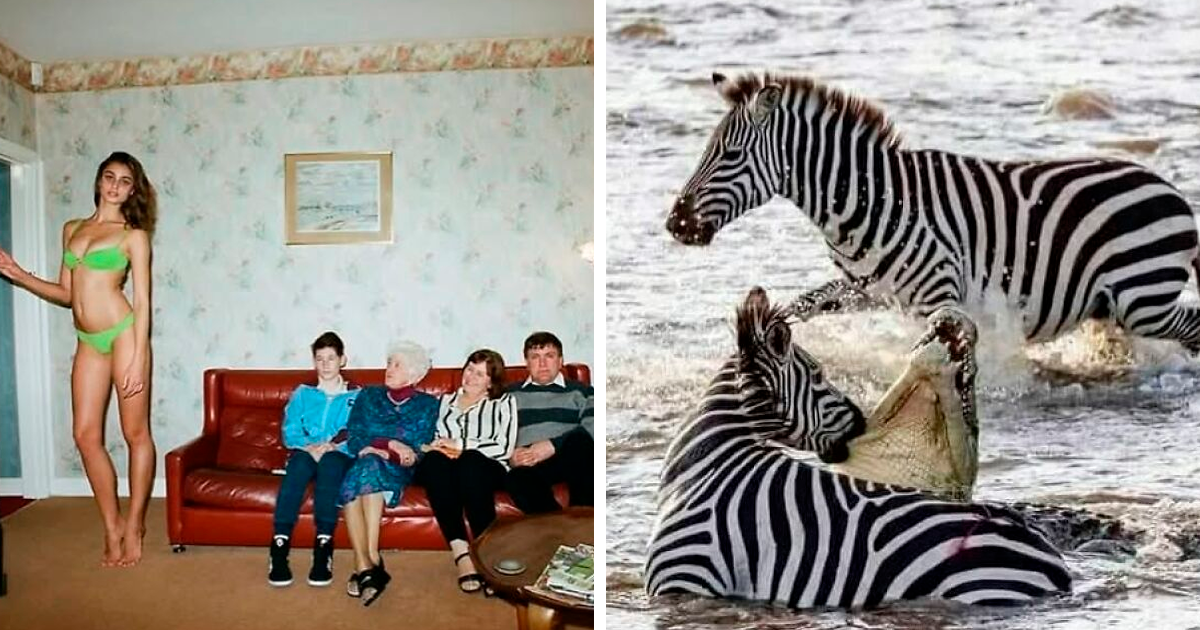
40 Images So Weird They Need Jesus, As Shared By The “Weird Images Worth Seeing” Online Group
Jun
Every corner of the internet has its own weather system. Some places are sunny, polished, and full of brunch photos. Others are digital basements where someone has definitely taped a banana to a ceiling fan and called it home decor. The online group “Weird Images Worth Seeing” belongs proudly to the second category: a chaotic gallery of strange, funny, cursed, and gloriously context-free images that make viewers pause, blink twice, and ask, “Was humanity always like this, or did Wi-Fi make it worse?”
The phrase “images so weird they need Jesus” is, of course, not a theology thesis. It is internet shorthand for pictures so baffling that ordinary language gives up, packs a sandwich, and walks into the woods. These are the photos that feel like a dream you had after eating gas station sushi: a lawn chair in a suspicious location, a pet doing something too human, a kitchen invention that should have been stopped at the blueprint stage, or a public scene so bizarre it seems staged by a raccoon with a film degree.
But weird images are not just random nonsense. They are part of a larger internet tradition: visual humor, meme culture, cursed images, absurdist comedy, and community-driven entertainment. People share them because they are surprising, relatable in the least relatable way possible, and perfect for the modern attention span. In a feed full of predictable content, a truly weird image is a tiny lightning bolt. It interrupts the scroll and whispers, “Look at this. No, I cannot explain it either.”
What Is the “Weird Images Worth Seeing” Online Group?
“Weird Images Worth Seeing” is the kind of online community built around one simple promise: the internet is full of odd visual treasures, and someone should collect them before they disappear into the digital swamp. These groups and pages often gather images from everyday life, old archives, screenshots, thrift-store discoveries, public spaces, pets, food disasters, questionable design choices, and accidental optical illusions.
The appeal is not always that the image is scary. In fact, many weird pictures are funny precisely because they are ordinary objects arranged in deeply suspicious ways. A perfectly normal chair becomes unsettling when it is alone in a supermarket freezer. A dog wearing human sunglasses becomes a small-town mayor. A badly cropped photo can turn a regular family barbecue into what appears to be evidence from a paranormal investigation.
Unlike traditional memes, which often rely on captions, templates, and familiar formats, weird images frequently work without explanation. Their power comes from missing context. Viewers are forced to become detectives, philosophers, and concerned neighbors all at once. Why is there a mannequin in the passenger seat? Who put spaghetti in a shoe? Why does that duck look like it knows my tax history? The lack of answers is the joke.
Why Weird Images Spread So Fast Online
Weird images are shareable because they offer instant emotional impact. You do not need to read a long setup or understand niche internet lore. You simply see the image, feel your brain trip over a coffee table, and send it to someone with the message, “Explain this.”
They Trigger Curiosity
Humans are naturally drawn to things that do not fit expected patterns. A photo of a cat on a couch is cute. A photo of a cat sitting upright at a tiny table with a plate of peas in front of it is a legal proceeding. Strange images create a gap between what we see and what we understand. That gap is where curiosity lives.
They Feel Like Internet Folklore
Before social media, odd stories were passed around as urban legends. Today, weird images play a similar role. They are tiny pieces of internet folklore: unexplained, repeatable, and perfect for group discussion. Someone posts the image, another person invents a caption, a third person adds a conspiracy theory, and suddenly the picture has a life of its own.
They Are Easy to React To
The best weird images invite reactions instead of demanding analysis. A viewer can laugh, cringe, gasp, or simply type, “Nope.” This makes them ideal for comment sections, group chats, and social feeds where speed matters. In the modern internet economy, confusion is a surprisingly strong engagement strategy.
The Rise of Cursed Images and Absurd Visual Humor
The popularity of weird-image groups connects closely to the rise of cursed images. A cursed image is usually a photograph that feels wrong, unsettling, or illogical, even if nothing obviously dangerous is happening. The lighting may be harsh. The subject may be awkwardly framed. The scene may look like it was discovered in an abandoned folder labeled “Do Not Open.”
Cursed images became a recognizable internet genre because they broke the rules of polished online presentation. While Instagram encouraged perfect lighting, smooth skin, curated meals, and homes that looked like nobody actually lived in them, cursed images celebrated the opposite. They were blurry, strange, uncomfortable, and proudly unmarketable.
That is part of their charm. Weird images remind us that real life is not always aesthetic. Sometimes real life is a shopping cart in a tree. Sometimes it is a cake shaped like a realistic foot. Sometimes it is a bathroom sign so poorly designed that nobody knows which door leads to safety. These images succeed because they feel accidentally honest.
Common Types of Weird Images Worth Seeing
Not all weird images are weird in the same way. Some are funny. Some are eerie. Some are so specific they seem intended for one person on Earth, and unfortunately that person is you. Here are several popular categories that often appear in collections like “40 Images So Weird They Need Jesus”.
1. Everyday Objects in Forbidden Places
A chair in the middle of a lake. A microwave on a hiking trail. A single shoe in a grocery store freezer. These images are funny because the object itself is normal, but its location is deeply illegal in the court of common sense. The mind immediately wants a backstory, and the internet happily supplies 300 of them.
2. Animals Acting Like They Pay Rent
Pets are already natural comedians, but weird images turn them into full characters. A raccoon peering through a window looks like a disappointed landlord. A dog sitting in a chair like a retired detective suggests a complicated past. A cat staring into a security camera at 3 a.m. has definitely seen the other side.
3. Food Crimes Against Humanity
Food is one of the internet’s favorite battlegrounds. Weird food images might include hot dogs used as cake decorations, pizza topped with suspicious candy, or soup served in an object that was never meant to experience broth. These images produce a special combination of hunger, fear, and civic concern.
4. Public Design Choices That Raise Questions
Sometimes the weirdest images are not accidents. They are the result of official decisions made by adults with email signatures. A staircase leading into a wall. A bathroom mirror placed at knee height. A sign with arrows pointing in every direction except the useful one. These pictures are funny because they reveal the chaos hiding inside everyday systems.
5. Mannequins, Dolls, and Other Silent Troublemakers
Few things become weird faster than a mannequin in the wrong setting. Put one in a store window and it is retail. Put one in a backyard at night and it is chapter one of a horror movie. Dolls, masks, and human-shaped objects are frequent stars of weird-image collections because they sit directly in the uncanny valley and refuse to pay rent.
Why We Laugh at Things That Make No Sense
Humor often comes from surprise. A joke sets up one expectation and then swerves into another. Weird images do the same thing visually. The viewer expects the world to follow ordinary rules, then the image cheerfully throws those rules into a pond.
Absurd humor also gives people a low-stakes way to process the ridiculousness of daily life. When the news is heavy, work is stressful, and everyone’s inbox sounds like a haunted printer, a bizarre image can provide a quick emotional reset. It does not solve anything, but it does offer a moment of shared laughter. Sometimes that is enough to keep the day from turning into soup.
There is also a social function. Sending someone a weird image is a form of connection. It says, “I saw this nonsense and thought of you,” which is strangely intimate if you do not overthink it. Group chats are built on this exact ritual: one person drops a cursed photo, everyone reacts, and for thirty seconds the world feels smaller and funnier.
The Art of the No-Context Image
No-context images are powerful because they remove explanation. A caption might make a picture clearer, but clarity is not always the point. In weird-image culture, confusion is part of the entertainment. The image becomes a puzzle with no official answer.
This is why many online communities prefer minimal captions. A simple “What is happening here?” can be enough. The comments become the real performance. People invent stories, compare the image to movies, assign fake historical importance, or declare that the subject has “final boss energy.” The picture starts the joke, but the community finishes it.
In that sense, weird images are collaborative comedy. The original photo may be accidental, but the shared interpretation turns it into culture. One person sees a broken chair in a hallway. Another sees a throne for a goblin accountant. The internet is not always wise, but it is rarely short on imagination.
Why These Images Feel So Refreshing in a Polished Feed
Modern social media often rewards perfection. People post the best angle, the cleanest room, the most flattering meal, the vacation photo without the mosquito bites. Weird images push back against that pressure. They are not aspirational. Nobody looks at a photo of a toilet in a forest and thinks, “I need to improve my lifestyle.”
That is refreshing. Weird images give viewers permission to enjoy imperfection. They celebrate the accidental, the badly timed, the inexplicable, and the gloriously unbranded. In a world where so much content is optimized, sponsored, filtered, and focus-grouped, a strange photo can feel weirdly human.
How to Enjoy Weird Images Without Being a Digital Goblin
As funny as weird-image communities can be, it is worth remembering that not every odd photo should be shared without thought. Some images involve real people, private spaces, or sensitive situations. Good internet citizenship still matters, even when the content looks like it was assembled by a sleep-deprived wizard.
Before sharing, consider whether the image humiliates someone who did not ask to become a meme. Avoid reposting private photos, medical situations, accidents, or images that could expose personal information. Weird is fun. Cruel is lazy. The best strange images punch reality in the shoulder; they do not punch down at vulnerable people.
What Makes the “40 Images So Weird They Need Jesus” Format Work?
The numbered-gallery format works because it turns scrolling into a small adventure. Each image is a new room in the haunted house. Some rooms are funny. Some are confusing. Some make you wonder whether your screen needs a blessing. The promise of “40 images” gives readers structure, while the weirdness keeps the experience unpredictable.
It also matches how people consume visual content. Readers can skim, pause, laugh, and move on. The format is snackable without being empty. When paired with smart commentary, it becomes more than a pile of random pictures. It becomes a guided tour through the internet’s junk drawer, where every object has suspicious emotional energy.
Examples of Weird Image Energy
Imagine a photo of a plastic lawn flamingo wearing a tiny construction helmet beside a freshly dug hole. Is it funny? Yes. Is it art? Possibly. Is it evidence? Let us not involve the authorities yet.
Or picture a vending machine selling only hard-boiled eggs, one lonely sock, and a handwritten sign that says, “Do not ask.” That image would work because it creates a story instantly. The viewer knows something happened, but not what. The missing context becomes the engine of the joke.
Another classic example: a cat sitting inside a cardboard box labeled “Important Documents.” The cat is not weird by itself. The label is not weird by itself. Together, however, they suggest that this cat is now legally binding. That is the sweet spot of weird internet humor: ordinary elements combining into suspicious magic.
The Deeper Appeal: Weirdness as a Break From Routine
At its heart, weird-image culture is about surprise. Daily life can become repetitive: wake up, work, answer messages, pretend to understand software updates, sleep, repeat. Weird images interrupt that loop. They remind us that reality still has glitches, jokes, and unexplained side quests.
They also make people feel less alone in noticing absurdity. Everyone has seen something in public that made them think, “Surely I am not the only one witnessing this.” Online groups give those moments a home. They turn private confusion into communal laughter.
Experiences Related to Weird Images Worth Seeing
Spending time with weird-image collections is a very specific emotional journey. At first, you click because the title promises chaos. Then one image catches you off guard: maybe a dog sitting in a baby stroller with the expression of a tired CEO, or a restaurant menu offering something called “mystery cheese event.” You laugh, but not elegantly. It is the kind of laugh that exits through the nose without permission.
Then comes the sharing phase. You send the image to a friend who appreciates high-quality nonsense. They respond with three question marks, a skull emoji, or the sacred phrase, “Why is this so funny?” That reaction becomes part of the experience. Weird images are rarely enjoyed alone. They are meant to be tossed into conversations like tiny emotional grenades.
There is also the familiar late-night scroll. You tell yourself you will look at five images and go to sleep. Thirty minutes later, you are deep in a gallery of cursed furniture, haunted casseroles, and animals photographed at angles nature never approved. Your phone is six inches from your face. Your brain is tired but entertained. Somewhere in the distance, responsibility is clearing its throat.
What makes these experiences memorable is the way they create instant stories. A normal photo says, “Here is what happened.” A weird photo says, “Something happened, and you are now emotionally responsible for guessing what.” That guessing game is addictive. It turns every viewer into a screenwriter. One person sees a mannequin in a shopping cart and imagines a prank. Another imagines a divorce. A third imagines the mannequin is simply tired of retail and seeking a better life.
Weird images also sharpen your eye for everyday absurdity. After browsing enough of them, the real world starts looking more interesting. A crooked sign becomes potential content. A suspiciously dramatic pigeon becomes a main character. A badly placed chair in an office hallway becomes “the meeting throne.” The internet’s weirdness trains people to notice the small, strange poetry of ordinary life.
Of course, there is a limit. Too much cursed content can make the world feel like a poorly supervised dream. That is why the best way to enjoy weird images is in healthy doses: a quick scroll, a good laugh, a few shares, and then a return to reality before you start suspecting your toaster has intentions. The goal is not to drown in chaos. The goal is to visit, take a souvenir, and leave before the souvenir starts whispering.
Ultimately, the experience of viewing 40 images so weird they need Jesus is less about shock and more about shared wonder. It is a reminder that humor does not always need a polished punchline. Sometimes it only needs a blurry photo, a confusing object, and a community of people brave enough to ask, “What on earth am I looking at?”
Conclusion
“40 Images So Weird They Need Jesus, As Shared By The ‘Weird Images Worth Seeing’ Online Group” captures exactly why strange internet pictures continue to thrive. They are funny, unsettling, surprising, and strangely comforting. They break the polished rhythm of social media and replace it with something messier, sillier, and more human.
Whether the image shows a suspicious animal, a design failure, a food decision that should face a committee, or a public scene with no logical explanation, weird pictures give us a shared language for modern absurdity. We laugh because we are confused. We share because others deserve to be confused too. And sometimes, in the middle of a busy day, a photo that makes absolutely no sense is exactly the spiritual support we need.
Note: This article is written as original, publication-ready HTML body content based on publicly available information about weird-image communities, cursed images, meme culture, online humor, and social media sharing behavior.

