
Beauty Tools & Accessories
12 Shiny Facts About Rudolph the Red-Nosed Reindeer
Jun
“`
Rudolph the Red-Nosed Reindeer may look like a simple Christmas character: cute hooves, social anxiety, and a nose bright enough to make a flashlight jealous. But behind that glowing snout is one of the most fascinating success stories in American holiday culture. Rudolph began as a department store giveaway, trotted into a bestselling song, became a stop-motion television legend, and somehow managed to turn being “different” into a superpower before inspirational posters discovered glitter fonts.
Whether you know Rudolph from the classic 1949 Gene Autry song, the 1964 Rankin/Bass TV special, childhood picture books, or a holiday playlist that starts playing before the Thanksgiving leftovers are cold, his story is packed with surprising history. These shiny facts about Rudolph the Red-Nosed Reindeer reveal how a marketing idea became a Christmas icon, why his nose actually makes scientific sense, and how one little reindeer with a visibility problem became the most famous member of Santa’s sleigh team.
1. Rudolph Was Created for a Department Store Promotion
Rudolph did not come from ancient folklore, a snowy Scandinavian legend, or a mysterious scroll found under Santa’s cookie plate. He was created in 1939 by Robert L. May, an advertising copywriter for Montgomery Ward, a major American department store chain. The company wanted a Christmas story it could give away to children during the holiday shopping season instead of buying promotional coloring books from outside publishers.
May’s assignment was practical: create something charming, inexpensive, and memorable. What he delivered was a rhyming story about a young reindeer whose glowing red nose made him an outcast until it saved Christmas. In other words, Rudolph began life as content marketing before content marketing had a LinkedIn profile.
2. The First Rudolph Book Was a Massive Giveaway
The original Rudolph the Red-Nosed Reindeer booklet was distributed by Montgomery Ward in 1939. It was not sold as a fancy hardcover at first; it was handed out to families as a holiday promotion. That first year, millions of copies reportedly reached shoppers, making Rudolph a household name almost immediately.
This is one reason Rudolph’s rise is so unusual. Most fictional characters slowly build an audience through books, newspapers, radio, or film. Rudolph sprinted out of the gate with department-store horsepower. Children met him during Christmas shopping trips, took him home, and helped turn a promotional booklet into a seasonal tradition.
3. Robert L. May Put Real Emotion Into the Story
Rudolph’s story works because it is not just about a glowing nose. It is about feeling left out. Robert L. May understood that feeling. Accounts of Rudolph’s creation often note that May saw something of himself in the character: the shy, overlooked figure who did not fit the standard mold.
The emotional timing was also painful. May’s wife was seriously ill while he was working on the story, and the project became more than just another advertising assignment. That depth helps explain why Rudolph still resonates. The tale is cheerful, but underneath the jingle bells is a very human message: the thing that makes you different may be the thing the world needs most.
4. Rudolph Almost Had a Different Name
Before Rudolph became Rudolph, other names were considered. Among the possibilities were Rollo and Reginald. Both have a certain old-school charm, but let’s be honest: “Rollo the Red-Nosed Reindeer” sounds like a candy with antlers, and “Reginald the Red-Nosed Reindeer” sounds as if he should be wearing a velvet smoking jacket.
Rudolph was the right choice. The name has rhythm, warmth, and just enough dignity for a reindeer who eventually becomes Santa’s lead navigator. It also fits beautifully into Johnny Marks’s later song, which is one reason the character became so singable.
5. Rudolph Joined Santa’s Original Eight Reindeer Later
Santa’s original eight reindeer became famous through the 1823 poem commonly known as “A Visit from St. Nicholas” or “’Twas the Night Before Christmas.” That poem introduced Dasher, Dancer, Prancer, Vixen, Comet, Cupid, Donner, and Blitzen. Rudolph arrived more than a century later, making him the new kid on the sleigh team.
That late arrival is part of his charm. Rudolph is not just another reindeer in the lineup. He is the unexpected addition, the specialist called in when the weather gets dramatic. Every team needs someone who can perform under pressure, and Rudolph’s pressure just happened to include fog, global logistics, and several billion presents.
6. The Famous Song Came 10 Years After the Story
Many people assume the song came first, but Rudolph’s printed story debuted in 1939. The hit song arrived in 1949, written by Johnny Marks, who was Robert L. May’s brother-in-law. Marks transformed the story into one of the most recognizable Christmas songs ever written.
The song’s genius is its simplicity. It quickly introduces the famous reindeer, explains the problem, delivers the turnaround, and ends with Rudolph going down in history. That is storytelling efficiency with sleigh bells attached. No wonder the tune became a holiday standard and remains a reliable earworm every December.
7. Gene Autry Turned Rudolph Into a Recording Superstar
Gene Autry, known as “The Singing Cowboy,” recorded “Rudolph the Red-Nosed Reindeer” in 1949. His version became a huge hit, reaching the top of the U.S. charts during the Christmas season. The recording helped push Rudolph from a popular character into full-blown American Christmas royalty.
Autry’s warm, friendly delivery made the song feel less like a performance and more like a campfire story with bells. His recording became one of the defining holiday records of the 20th century. In 2024, the Library of Congress added Autry’s version to the National Recording Registry, recognizing its cultural and historical importance.
8. Rudolph Had a Screen Life Before the 1964 TV Special
The 1964 television special is the version many families know best, but Rudolph made an earlier screen appearance. In 1948, Max Fleischer directed a short animated film for the Jam Handy Organization. This version was closer to May’s original story and appeared before the Johnny Marks song became the soundtrack of Rudolph’s public identity.
That early cartoon is important because it shows Rudolph was already moving beyond the printed page before the famous Rankin/Bass production. His glow was portable. Booklet, song, cartoon, television specialRudolph adapted to every format like a reindeer with a very good agent.
9. The 1964 TV Special Added Many Beloved Characters
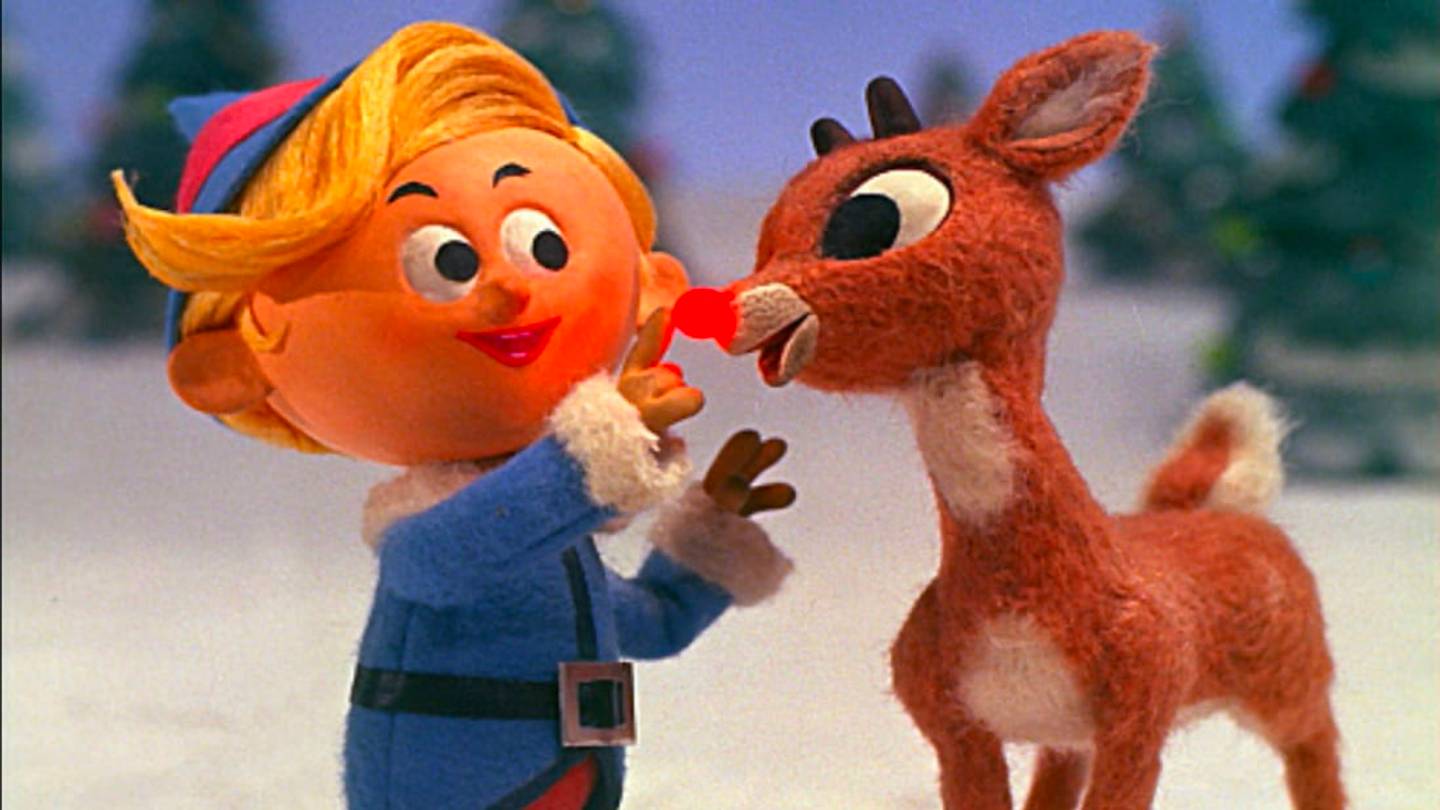
The Rankin/Bass stop-motion special Rudolph the Red-Nosed Reindeer premiered in 1964 and expanded Rudolph’s world dramatically. The original song and booklet did not include many of the characters now considered essential to the Rudolph universe. Hermey the elf, Yukon Cornelius, Clarice, the Bumble, Sam the Snowman, and the Island of Misfit Toys all became part of the broader mythology through the television special.
This adaptation helped make Rudolph’s theme even stronger. Hermey wants to be a dentist instead of making toys. The Misfit Toys want a place to belong. Rudolph wants acceptance. The entire special is basically a support group with snowdrifts, musical numbers, and one very aggressive Abominable Snow Monster.
10. The Stop-Motion Animation Was Groundbreaking
The 1964 special used Rankin/Bass’s charming stop-motion style often called “Animagic.” The production involved handcrafted puppets, miniature sets, and painstaking frame-by-frame animation. The result had a tactile quality that still feels magical today. You can practically sense the felt, glitter, painted wood, and tiny footprints in fake snow.
Part of the special’s lasting appeal is that it does not look perfectly polished by modern digital standards. It feels handmade. The slightly jerky movements and cozy textures give it personality. Rudolph’s world looks like something that might exist in a shoebox diorama brought to life by holiday wishes and possibly too much hot cocoa.
11. Rudolph Became a Stamp-Worthy Christmas Icon
By the time the U.S. Postal Service issued Rudolph-themed Forever stamps in 2014, the red-nosed reindeer had already spent decades delivering joy through books, songs, television, toys, ornaments, and holiday decorations. The stamp designs celebrated the 1964 special and featured characters such as Rudolph, Santa, Hermey, and Bumble.
That postal tribute made perfect sense. Rudolph is, after all, part of the world’s most famous delivery operation. Santa may handle the sleigh, but Rudolph handles visibility. If anyone deserves a stamp, it is the reindeer who made sure the packages arrived despite terrible weather conditions and zero GPS support.
12. Rudolph’s Nose Has a Fun Scientific Explanation
Rudolph’s glowing red nose is fantasy, of course, but scientists have had fun exploring why a red light would be useful in fog. Red light has a longer wavelength than blue light and can perform better in foggy conditions. Reindeer also have remarkable vision adapted for Arctic environments, including sensitivity to ultraviolet light.
In a playful scientific sense, Rudolph’s nose functions like a biological fog lamp. That does not mean ordinary reindeer are secretly hiding aviation-grade lighting equipment, but it does make the story feel surprisingly clever. Santa did not just choose Rudolph because he was cute. He chose him because the little guy was basically a four-legged runway beacon.
Why Rudolph Still Matters
Rudolph the Red-Nosed Reindeer remains popular because his story is simple, emotional, and flexible. Children understand the pain of being teased. Adults understand the frustration of being underestimated. Families understand the joy of seeing someone finally appreciated for who they are. Rudolph’s shiny nose is funny and magical, but the deeper message is what keeps the story alive.
At its heart, Rudolph is not about becoming acceptable by changing who you are. He does not file down his nose, dim his glow, or attend a seminar called “Blending In for Beginners.” He succeeds because the very trait that made others laugh becomes essential. That message still feels fresh in classrooms, workplaces, families, and communities where people often feel pressured to hide their differences.
Personal Experiences and Reflections Inspired by Rudolph
One reason Rudolph feels so personal is that almost everyone has had a “red nose” moment. Maybe it was an unusual hobby, a quiet personality, a loud laugh, a strong accent, a creative dream, or simply the feeling of standing outside the circle while everyone else seemed to know the dance steps. Rudolph gives that experience a holiday shape. He reminds us that being different can feel lonely before it feels powerful.
Think about a child watching the 1964 special for the first time. At first, Rudolph’s glowing nose looks like a problem. The other young reindeer laugh. Even adults in the story do not handle it gracefully. That part can sting because children know exactly what unfair teasing feels like. But then the fog rolls in, Santa needs help, and suddenly the “problem” becomes the solution. For a young viewer, that reversal is thrilling. It says, “Wait. Maybe the thing people tease me about is not the end of my story.”
Adults can feel the same thing. Many people spend years trying to sand down their odd edges. They hide enthusiasm because they fear looking silly. They keep creative ideas quiet because someone once made fun of them. They pretend not to care because caring too much seems risky. Rudolph’s story gently argues against all of that. It says usefulness, beauty, and courage may be hiding inside the very trait you keep trying to cover with a fake black nose.
Rudolph also makes a wonderful family tradition because the story invites conversation. Parents can ask children why the other reindeer laughed, how Rudolph might have felt, and what changed when Santa finally recognized his gift. Those questions turn a Christmas cartoon into a lesson about empathy without making the evening feel like homework. Nobody wants a holiday lecture wearing tinsel. Rudolph works because the message arrives inside music, snow, adventure, and a very shiny face.
There is also a nostalgic comfort in revisiting Rudolph every year. Holiday traditions often matter because they create emotional landmarks. A song, a movie, or a decoration can bring back memories of grandparents, childhood living rooms, school concerts, crowded kitchens, and the smell of cookies that were definitely “taste-tested” too many times. Rudolph has been part of those memories for generations. His story glows not only because of the red nose, but because families keep lighting it again.
In a modern world full of polished superheroes, Rudolph remains refreshingly humble. He is not the strongest reindeer, the loudest, or the coolest. He is awkward, nervous, and visibly different. Yet when the moment comes, he steps forward. That is the kind of heroism people can actually use. Most of us will never save Christmas with our faces, but we may help someone because of a skill, sensitivity, or perspective we once wished we did not have.
That is why Rudolph’s story still shines. It is not just a Christmas tale. It is a yearly reminder that the world changes when someone finally sees a difference as a gift.
Conclusion
Rudolph the Red-Nosed Reindeer has traveled an astonishing path from a 1939 Montgomery Ward booklet to a permanent place in American Christmas culture. His story includes advertising history, music history, television history, animation innovation, collectible puppets, postage stamps, and even a bit of science. Not bad for a reindeer who began as the odd one out.
The real magic of Rudolph is not just that his nose shines. It is that his story helps people see themselves differently. He turns embarrassment into purpose, rejection into belonging, and fog into opportunity. That is why, year after year, Rudolph still guides more than Santa’s sleigh. He guides readers and viewers back to a simple truth: sometimes your brightest gift is the one you were most tempted to hide.

