
Hair Care
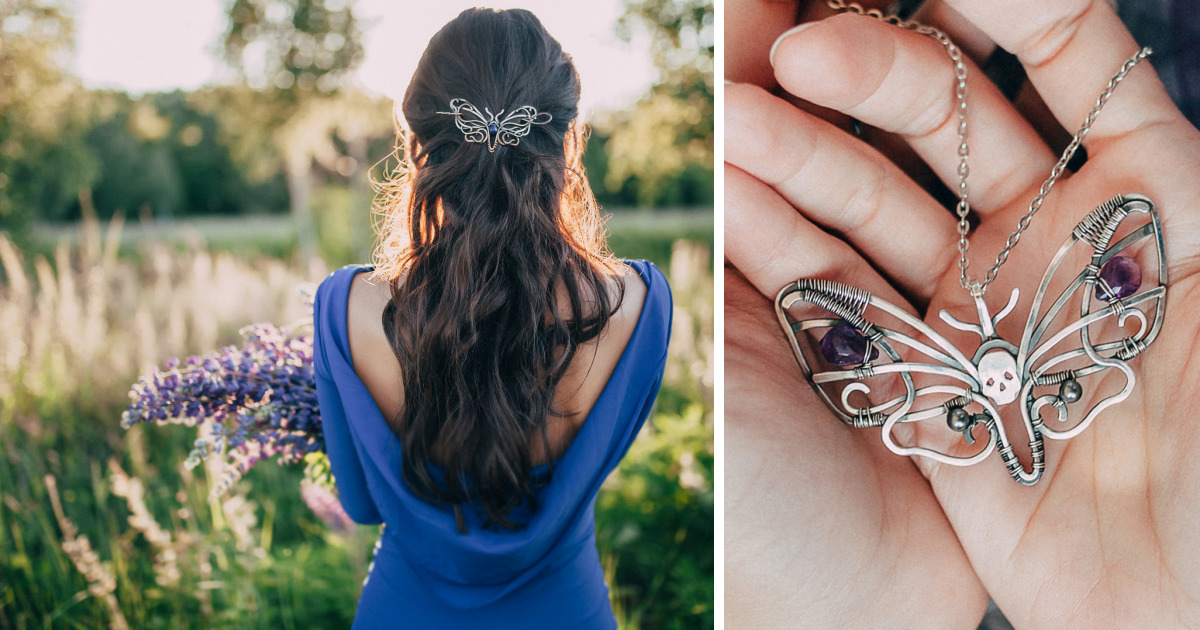
I Create Unique Handmade Jewelry That Mimics The Shape Of True Butterflies
Jun
Some people see a butterfly and think, “How beautiful.” I see a butterfly and immediately wonder, “Could I turn that wing curve into earrings without accidentally inventing a tiny flying lasagna?” That is the strange, sparkly, deeply satisfying world of handmade butterfly jewelry: part nature study, part sculpture, part wearable art, and part gentle reminder that the best designs have already been flying around the garden for millions of years.
Butterfly-inspired jewelry has a special kind of magic because butterflies are not just pretty insects with excellent public relations. Their wings are masterpieces of structure, symmetry, color, and movement. Real butterfly wings are covered in tiny scales, often arranged in patterns that create shimmering color and visual depth. Their silhouettes can be bold and dramatic, like the monarch, or soft and delicate, like a swallowtail drifting through warm air as if it forgot gravity existed.
When I create unique handmade jewelry that mimics the shape of true butterflies, I am not trying to copy nature like a photocopier with rhinestones. I am trying to translate it. A necklace, brooch, ring, or pair of earrings cannot flap away, land on milkweed, or dramatically ignore your personal schedule. But it can capture the feeling of that moment when a butterfly opens its wings and the whole world pauses for one tiny second.
Why Butterfly Jewelry Feels So Timeless
Butterflies have appeared in art, fashion, and personal adornment for generations because they carry meaning without needing a speech. They suggest transformation, freedom, renewal, delicacy, and resilience. That is a pretty impressive résumé for an insect that also looks like it was designed by a painter who had too much coffee and a very good day.
In handmade jewelry, the butterfly motif becomes even more personal. Unlike mass-produced accessories, handmade butterfly jewelry shows the mark of the maker. The wing edges may be slightly textured. The colors may shift from soft blue to smoky violet. A tiny asymmetry may be left on purpose because real butterflies are symmetrical in structure but wonderfully alive in spirit. The result is not cold perfection. It is character.
The Secret Beauty of True Butterfly Shapes
To mimic the shape of true butterflies, the first step is observation. Real butterflies are not generic winged doodles. Their bodies, antennae, wing divisions, tails, spots, veins, and proportions vary widely from species to species. A monarch-inspired pendant, for example, may focus on strong orange-and-black contrast, rounded forewings, and bold vein lines. A swallowtail-inspired brooch may need elegant tail extensions and a more dramatic wing sweep. A blue morpho-inspired necklace may depend less on linework and more on luminous, shifting color.
Wing Symmetry
Butterfly wings are usually the design anchor. In jewelry, symmetry makes the piece feel balanced on the body. But handmade work also allows for soft, organic variation. A perfectly mirrored wing may look polished, while a slightly irregular wing can feel more natural, as if the butterfly stopped by the studio and politely posed for ten seconds.
Wing Veins
The vein lines in butterfly wings are a gift to jewelry artists. They naturally divide the wing into elegant panels, making them perfect for wirework, enamel sections, resin color zones, bead embroidery, or engraved metal. These lines give handmade butterfly earrings or pendants a realistic structure without making the piece look like a science textbook had a baby with a jewelry box.
Color and Light
Butterflies are famous for color, but the best butterfly jewelry does not always need to shout. Some pieces glow with iridescent blues, greens, and purples. Others use warm amber, cream, black, and gold for a vintage botanical feel. Real butterfly colors can come from pigment, structure, or the way light interacts with wing scales, so jewelry makers often mimic that effect with layered resin, glass beads, enamel, mica powder, polished metal, or translucent stones.
Materials That Bring Handmade Butterfly Jewelry to Life
There are many ways to create butterfly-inspired jewelry, and each material brings its own personality. Choosing the right material is like casting actors for a tiny nature drama. Metal plays the reliable lead. Resin brings the glossy special effects. Beads add texture. Polymer clay shows up with snacks and endless color options.
Wire and Metal
Wire is one of the most expressive materials for butterfly jewelry because it can form wing outlines, antennae, loops, veins, and delicate open spaces. Copper, brass, sterling silver, stainless steel, and gold-filled wire can all be used depending on the desired look and durability. Hammering the wire can strengthen the shape and add texture, while polishing or oxidizing can create contrast.
Metal sheet also works beautifully for more sculptural butterfly pieces. A maker can saw the wing silhouette by hand, file the edges, stamp details, engrave vein patterns, and finish the surface with patina or shine. This method creates jewelry that feels sturdy, artistic, and heirloom-worthy.
Resin
Resin is a favorite for capturing the translucent quality of butterfly wings. It can be tinted in thin layers, sprinkled with fine shimmer, or combined with tiny inclusions to create depth. The trick is restraint. Too much glitter and your butterfly begins to look less like a graceful creature and more like it escaped from a birthday card factory. Used carefully, resin can mimic the glassy glow of wings in sunlight.
Polymer Clay
Polymer clay is excellent for handmade butterfly earrings and statement pendants because it is lightweight and highly customizable. Artists can mix colors, create gradients, carve wing lines, add painted details, and bake the final form into durable pieces. It is especially useful for bold, playful designs that need volume without making the wearer’s earlobes file a formal complaint.
Beads and Embroidery
Beaded butterfly jewelry has a rich, tactile quality. Seed beads can mimic wing scales, while crystals and glass beads add sparkle and movement. Bead embroidery allows artists to build wing patterns almost like a mosaic. It is slow work, but the final piece can feel luxurious, detailed, and deeply personal.
Ethical Inspiration: Mimicking Butterflies Without Harm
One reason I love creating jewelry that mimics true butterflies is that it celebrates them without needing to use real wings. Butterflies are important parts of ecosystems, and many species face pressure from habitat loss, pesticide exposure, climate shifts, and declining host plants. A butterfly-shaped necklace can be beautiful, but a living butterfly in a healthy habitat is still the superior limited edition.
Ethical butterfly-inspired jewelry focuses on observation, photography, sketching, and artistic interpretation rather than collecting insects. The goal is not to trap beauty but to honor it. A handmade piece can encourage people to notice pollinators, plant native flowers, support habitat restoration, and think twice before treating insects as decorations instead of living creatures.
How a Handmade Butterfly Piece Is Designed
The process usually begins with a sketch. I study real butterfly shapes, then simplify them into wearable forms. Jewelry has practical limits: earrings cannot be too heavy, rings cannot snag everything in a ten-mile radius, and necklaces need to sit comfortably instead of behaving like tiny metal acrobats.
Step 1: Choose the Butterfly Mood
Every design starts with a mood. Is the piece romantic, dramatic, whimsical, gothic, botanical, minimalist, or bright enough to make a plain T-shirt feel underdressed? A monarch-style brooch may feel bold and symbolic, while a pale blue butterfly necklace may feel dreamy and delicate.
Step 2: Build the Silhouette
The silhouette is the soul of butterfly jewelry. Before adding color or detail, the outline must feel right. The forewings should have presence. The lower wings should balance the design. If tails are included, they need elegance rather than accidental spaghetti energy.
Step 3: Add Veins and Details
Once the shape is formed, details bring the piece alive. Wire veins, etched lines, bead rows, painted patterns, or resin sections can suggest the structure of real wings. The best details support the design instead of overwhelming it. A butterfly does not need every microscopic feature copied to feel true. Sometimes a few graceful lines say more than fifty anxious ones.
Step 4: Finish for Comfort and Durability
Handmade jewelry should be beautiful, but it also needs to survive real life. Edges should be smooth. Ear wires should be comfortable. Clasps should be secure. Resin should be properly cured. Metal should be cleaned and finished. A piece may look like poetry, but it still needs to handle being worn to brunch.
Popular Types of Butterfly-Inspired Handmade Jewelry
Butterfly Earrings
Butterfly earrings are popular because they move with the wearer. Dangling wings can catch light with every turn of the head, while small studs offer a subtle nature-inspired touch. Lightweight materials such as polymer clay, thin metal, or resin are ideal for earrings because comfort matters. No one wants to look magical while silently negotiating with gravity.
Butterfly Necklaces
A butterfly pendant sits close to the heart, making it a meaningful gift for birthdays, graduations, personal milestones, or anyone going through a season of change. Designs can range from tiny minimalist outlines to bold statement pendants with layered colors and sculptural wings.
Butterfly Brooches
Brooches are perfect for detailed butterfly designs because they offer more surface area. A brooch can decorate a jacket, scarf, hat, or bag. It can feel vintage, artistic, or wonderfully eccentric. In my professional opinion, brooches deserve a comeback, preferably with dramatic lighting and snacks.
Butterfly Rings
Butterfly rings are charming but require careful design. The wings must be shaped so they do not catch on clothing or poke nearby humans. A small wing detail or openwork butterfly silhouette often works better than an oversized design unless the wearer is fully committed to being fabulous and mildly impractical.
How to Style Handmade Butterfly Jewelry
Butterfly jewelry is surprisingly versatile. A delicate gold butterfly necklace pairs beautifully with a white blouse, linen dress, or simple black top. Colorful resin butterfly earrings can brighten casual denim, summer outfits, or festival looks. A metal butterfly brooch can transform a blazer from “I have a meeting” to “I have a meeting, but I also have a secret garden.”
For everyday wear, choose one statement piece and keep the rest simple. If the butterfly earrings are large and colorful, skip the competing necklace. If the pendant is dramatic, choose small studs. Handmade jewelry works best when it has room to breathe.
How to Care for Handmade Butterfly Jewelry
Because handmade pieces often use delicate details, proper care matters. Store butterfly jewelry separately to prevent scratches and tangles. Keep resin, polymer clay, plated metals, pearls, and soft stones away from harsh chemicals, perfume, chlorine, and long exposure to direct sunlight. Put jewelry on after lotion and fragrance, not before. Jewelry likes compliments, not chemical warfare.
Clean most pieces gently with a soft cloth. For metal jewelry, mild soap and lukewarm water may be appropriate, but avoid soaking pieces that include glued elements, delicate stones, paper, fabric, or certain resin details. When in doubt, ask the maker for care instructions. Handmade jewelry is not fragile in the dramatic Victorian fainting-couch sense, but it does appreciate respectful handling.
Why Handmade Butterfly Jewelry Makes a Meaningful Gift
A handmade butterfly piece is more than an accessory. It can represent growth after a difficult season, a new beginning, a memorial, a graduation, a move, a recovery, or a personal transformation. Butterflies are small, but their symbolism is huge. They remind us that change can be uncomfortable, messy, and still beautiful in the end.
Because handmade pieces are created in small batches or as one-of-a-kind designs, they feel more intimate than factory-made jewelry. The buyer is not just choosing a product. They are choosing a tiny story, shaped by hand, inspired by nature, and made to travel through someone’s life.
What Makes My Butterfly Jewelry Unique
My goal is to make butterfly jewelry that feels realistic enough to honor nature but artistic enough to stand on its own. I do not want a piece to look like a plastic souvenir from a gift shop next to the keychains. I want it to feel like something found in a dream, a garden, or a very stylish fairy’s emergency accessory drawer.
Each design begins with the natural form of a butterfly, but I adjust the proportions for wearability. I may exaggerate the wing curve, simplify the body, deepen the colors, or add texture to suggest movement. The final piece should feel alive without pretending to be an actual insect pinned in place.
The handmade process also means every piece carries small signs of human touch. That is the beauty of it. Machine-made perfection can be impressive, but handmade jewelry has warmth. It says, “Someone sat with this idea, shaped it, corrected it, probably muttered at it, and finally turned it into something beautiful.”
Studio Experiences: What Creating Butterfly Jewelry Has Taught Me
Working on butterfly-inspired handmade jewelry has changed the way I look at nature. Before I started making these pieces, I admired butterflies in the casual way most people do: “Pretty wings, excellent fluttering, ten out of ten.” But once I began studying their shapes for jewelry, I noticed how much design intelligence exists in every tiny detail. A wing is not just a wing. It is architecture, color theory, movement, camouflage, and elegance all packed into something lighter than a sigh.
One of my favorite experiences is the sketching stage. I often begin with reference photos and quick pencil lines, trying to catch the curve of a wing before overthinking it. This is harder than it sounds. Draw too stiffly and the butterfly looks like a decorative paperclip. Draw too loosely and it becomes a moth who has lost confidence. The challenge is to find that sweet spot where the piece feels natural, balanced, and wearable.
Color mixing is another adventure. Butterfly colors can be surprisingly difficult to recreate. A blue morpho-style effect, for instance, is not simply “blue.” It may need layers of turquoise, cobalt, silver, violet, and a touch of shimmer to create depth. Monarch-inspired colors require warmth and contrast, but if the orange is too flat, the piece loses energy. If the black lines are too thick, the butterfly starts looking like it is wearing eyeliner for a rock concert. Sometimes that works. Usually, it needs editing.
I have also learned patience from making small details. Tiny wire veins, bead rows, painted dots, or resin layers demand slow hands and a calm mood. There is no rushing a delicate butterfly wing. The material knows when you are impatient, and it will absolutely report you by bending, bubbling, smearing, or sticking to something it should not stick to. Handmade jewelry has a sense of humor. Occasionally, it is rude.
Customer reactions are one of the most meaningful parts of the process. People often connect butterfly jewelry with personal stories. Someone may choose a butterfly necklace after a major life change. Another person may buy butterfly earrings because they remind them of a garden their grandmother loved. A brooch might become a memorial piece, a graduation gift, or a symbol of starting over. These stories make the work feel bigger than decoration.
The best lesson is that handmade butterfly jewelry does not need to be perfect to be powerful. Real beauty often lives in tiny variations: a textured edge, a hand-shaped curve, a color blend that cannot be repeated exactly. That is what makes each piece feel alive. When I finish a butterfly design and it catches the light just right, I get the same feeling I have when a real butterfly lands nearby. It is brief, quiet, and a little magical. And yes, I usually stare at it for too long.
Conclusion
Creating unique handmade jewelry that mimics the shape of true butterflies is a way of turning nature’s smallest miracles into wearable art. It combines observation, craft, symbolism, and personal storytelling. From wire outlines and resin wings to beaded details and sculpted clay, each piece offers a different interpretation of butterfly beauty.
More importantly, butterfly jewelry reminds us that transformation is not just a pretty idea. It is a process. It takes time, pressure, patience, and a willingness to become something new. A handmade butterfly pendant, brooch, ring, or pair of earrings may be small, but it can carry a big message: change can be beautiful, delicate things can be strong, and nature remains the best designer in the room.
Note: This article was written in standard American English and synthesized from reputable U.S.-based information on butterfly biology, pollinator conservation, jewelry-making practices, craft culture, jewelry care, and ethical product description standards.

