
Skincare
Ben Graham & Bull Market Brains
Jun
Every bull market has a soundtrack. It starts with cheerful earnings calls, then adds a little “this time is different,” then suddenly your neighbor’s dog has a brokerage account and is outperforming your retirement plan. In moments like that, the ghost of Benjamin Graham clears his throat, adjusts his spectacles, and politely asks everyone to stop confusing a rising price with a sound investment.
Benjamin Graham, often called the father of value investing, built his reputation on a wonderfully unfashionable idea: stocks are not lottery tickets, mood rings, or social media popularity contests. They are ownership pieces in real businesses. A bull market can make that truth feel boring. Prices rise, headlines sparkle, and investors begin to believe they have developed genius-level instincts. Graham’s work is useful precisely because it was designed for markets that try to hypnotize intelligent people into doing silly things.
This article explores “Ben Graham & Bull Market Brains” as a practical investing mindset: how Graham’s core principles can protect investors when optimism gets loud, valuations stretch, and confidence starts wearing a cape.
Who Was Benjamin Graham?
Benjamin Graham was an investor, professor, and author whose ideas shaped modern security analysis. Along with David Dodd, he developed the foundations of value investing at Columbia Business School and co-authored Security Analysis in 1934. Later, Graham wrote The Intelligent Investor, a book Warren Buffett has famously praised as one of the best investing books ever written.
Graham’s philosophy was born from hard experience. He lived through financial panics, market crashes, and the Great Depression. That background mattered. He did not see the stock market as a friendly machine that always rewarded enthusiasm. He saw it as a strange auction room where fear and greed constantly mispriced assets. His job as an investor was not to predict every market wiggle. It was to buy securities only when the numbers gave him a reasonable cushion against being wrong.
That cushion became one of the most important phrases in investing history: margin of safety.
Why Bull Markets Mess With Smart Brains
A bull market is generally defined as a rise of 20% or more in a broad market index over a sustained period. But the technical definition is less interesting than the psychological transformation. Bull markets do not merely lift portfolios; they inflate personalities.
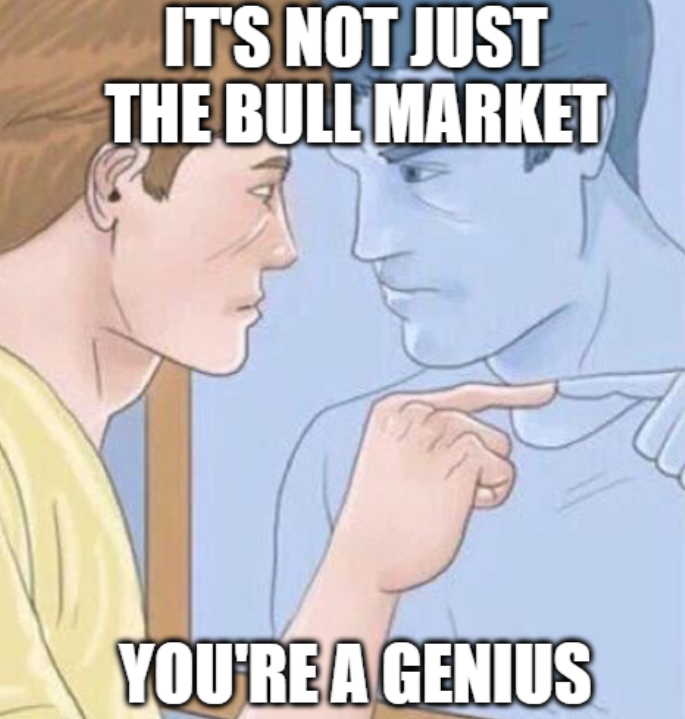
When stocks rise for months or years, investors often start believing recent gains are proof of skill. A few winning trades become “my process.” A lucky entry becomes “deep insight.” A speculative stock doubles and suddenly someone who previously needed three attempts to assemble a bookshelf is explaining discounted cash flow models at dinner.
This is what we might call the bull market brain: the mental state in which rising prices make risk look smaller, patience feel unnecessary, and valuation seem optional. Behavioral finance has long studied patterns such as overconfidence, herd behavior, recency bias, and fear of missing out. These biases become especially powerful when everyone around you appears to be getting rich by ignoring caution.
Graham’s genius was not that he eliminated emotion. Nobody does. His genius was that he built a system to keep emotion from driving the car.
Graham’s First Rule: Price Is Not Value
The most Graham-like sentence an investor can repeat during a bull market is this: price is what the market offers; value is what the business is worth.
In a calm market, that distinction seems obvious. In a roaring market, it becomes surprisingly difficult. If a stock rises 80%, people assume something wonderful must be happening. Sometimes they are right. A company may be growing earnings, expanding margins, improving its competitive position, or creating a product customers truly love. But sometimes the price is simply running ahead of the business, powered by excitement, easy money, or the delightful human habit of believing crowds must know something.
Graham taught investors to estimate intrinsic value using business fundamentals: assets, earnings, debt, dividends, cash flow, and conservative assumptions. He did not ask, “Will people love this stock next week?” He asked, “What is this company reasonably worth, and can I buy it for less?”
That question sounds simple. It is not. It requires saying no when the party is excellent and the snacks are free.
The Margin of Safety: Graham’s Seat Belt
The margin of safety is the gap between a company’s estimated intrinsic value and the price an investor pays. If you estimate a business is worth $100 per share, Graham would not cheerfully pay $99.95 and call it wisdom. He wanted a discount large enough to protect against mistakes, bad luck, and the fact that the future enjoys embarrassing confident forecasts.
Think of it like buying a used car. If the seller says, “Trust me, this sedan is worth $20,000,” you probably do not hand over $20,000 while wearing a blindfold. You inspect it. You check the mileage. You ask why the trunk smells like old soup. Investing deserves at least that level of suspicion.
In bull markets, margins of safety shrink because investors compete to pay higher prices for popular assets. The story may be attractive, but the future return depends heavily on the price paid today. A great company can become a poor investment if bought at a foolish valuation. A dull company can become a good investment if bought cheaply enough. Graham cared deeply about that relationship.
Mr. Market: The Most Useful Imaginary Maniac in Finance
One of Graham’s most memorable ideas is “Mr. Market,” a fictional business partner who shows up every day offering to buy your share of a business or sell you his. Some days Mr. Market is euphoric and quotes a silly high price. Other days he is miserable and quotes a silly low price. The intelligent investor does not have to obey him. The investor can simply take advantage of him when his price is attractive and ignore him when it is ridiculous.
This metaphor is especially powerful in bull markets. When Mr. Market is cheerful, he can look like a genius. He speaks in confident headlines. He says growth will last forever, disruption will fix everything, and valuation is an antique concept kept alive by people who still print boarding passes. Graham would remind us that Mr. Market is not your teacher. He is your servant.
That means the market’s daily quote is an opportunity, not an instruction. A rising price does not command you to buy. A falling price does not command you to sell. The real question is whether the quote gives you favorable terms relative to the underlying value.
Investment vs. Speculation
Graham made a clear distinction between investment and speculation. An investment operation, in his framework, is one that relies on thorough analysis, promises safety of principal as much as reasonably possible, and offers an adequate return. Anything that does not meet those standards is speculation.
Speculation is not automatically evil. People speculate all the time. The danger comes when investors speculate while calling it investment, the way someone might call cake “breakfast architecture.” During bull markets, this confusion spreads quickly. A person buys because a stock is moving, because friends are talking about it, or because a chart looks like it drank three espressos. Then they describe the decision as “long-term conviction.”
Graham would ask for the analysis. What are the earnings? What are the assets? How strong is the balance sheet? What assumptions are baked into the current price? What happens if growth slows? What happens if interest rates rise? What happens if the hot narrative cools off?
If the answer is mostly vibes, it is probably speculation wearing a fake mustache.
Bull Market Brains and the Illusion of Certainty
One reason bull markets are dangerous is that they reward bad habits before punishing them. Investors can ignore valuation, concentrate too heavily, trade too often, chase glamour stocks, and still make money for a while. That temporary success is psychologically expensive. It teaches the wrong lesson.
Overconfidence grows when people mistake market direction for personal brilliance. Recency bias convinces them that the recent past is the obvious future. Herd behavior whispers that safety must exist in numbers: “Everyone owns it, so how risky can it be?” The answer, historically, is: quite risky.
Graham’s approach is an antidote to these mental traps. He did not rely on forecasting the crowd’s emotions. He focused on what could be measured, checked, and compared. That does not make value investing easy. It makes it disciplined.
How Graham Might Analyze a Hot Bull Market Stock
Imagine a fashionable technology company called RocketBanana Inc. The company has exciting products, charismatic leadership, and a ticker symbol people enjoy saying out loud. Its stock has tripled in eighteen months. Analysts love it. Social media loves it. Your cousin, who once confused revenue with profit, loves it deeply.
A Graham-style investor would not begin by asking whether RocketBanana is popular. Popularity is already in the price. Instead, the investor would examine revenue quality, profit margins, debt levels, competitive advantages, cash generation, share dilution, and realistic growth expectations. Then comes the crucial question: even if RocketBanana is a good business, is the stock priced to deliver a good return?
If the market price assumes ten years of flawless growth, zero competitive pressure, perfect management execution, and customers who buy subscriptions in their sleep, the margin of safety may be thin or nonexistent. Graham would likely pass. Not because he hated innovation, but because he disliked paying for perfection in a world that specializes in surprises.
The Defensive Investor: Graham’s Calm Market Citizen
Graham wrote for different types of investors. The defensive investor wants simplicity, protection, and reasonable results without turning life into a full-time stock research bunker. For such investors, Graham emphasized diversification, quality, financial strength, and discipline.
In modern terms, the defensive investor may use broad index funds, high-quality bonds, diversified asset allocation, and periodic rebalancing. Graham’s exact stock screens came from a different era, but the spirit remains useful: avoid unnecessary complexity, avoid overpaying, and do not let excitement replace process.
During a bull market, defensive investing can feel dull. That is partly the point. A portfolio does not need to entertain you. In fact, if your portfolio provides daily emotional fireworks, it may be auditioning for a role it should not have.
The Enterprising Investor: Work Harder, Not Louder
Graham also described the enterprising investor, someone willing to do deeper research in search of superior returns. This investor may analyze individual stocks, special situations, neglected industries, or securities trading below asset value. But Graham did not define “enterprising” as “more confident.” He defined it as more disciplined, more analytical, and more prepared.
That distinction matters. Many bull market participants become active investors without becoming skilled investors. They buy more names, follow more tips, check more charts, and call the activity research. Graham would not be impressed by motion. He cared about evidence.
The enterprising investor must earn the right to act differently from the crowd. That means reading financial statements, understanding business economics, comparing valuation to history and peers, and demanding a real margin of safety. Otherwise, “enterprising” becomes just another word for “busy with a brokerage app.”
Graham, Buffett, and the Evolution of Value
Warren Buffett began as a close student of Graham’s deep-value methods, including buying statistically cheap securities. Over time, influenced by Charlie Munger, Buffett evolved toward buying wonderful businesses at fair prices rather than merely fair businesses at wonderful prices. Still, the Graham foundation remained: treat stocks as businesses, demand a margin of safety, and let market volatility serve you rather than scare you.
This evolution is important for modern investors. Graham’s principles do not require buying only cigar-butt stocks or companies trading below liquidation value. Markets have changed, accounting has changed, and intangible assets such as software, brands, and networks can be hugely valuable. But the central question survives: are you paying a sensible price for future cash flows?
Value investing is not about low price alone. It is about price compared with value. A low multiple can hide a declining business. A high multiple can occasionally be justified by exceptional economics. Graham’s discipline is not mechanical cheapness; it is rational comparison.
Practical Graham Rules for Bull Markets
1. Write Down Why You Bought
Before buying, write a short investment thesis. Include valuation, risks, expected return, and what would prove you wrong. If your thesis is “it keeps going up,” congratulations: you have discovered momentum, not analysis.
2. Separate Business Performance From Stock Performance
A company can improve while its stock becomes overpriced. A company can stumble while its stock becomes attractive. Track the business, not just the ticker.
3. Use Conservative Assumptions
Bull markets encourage heroic forecasts. Graham preferred assumptions that could survive disappointment. If an investment only works under perfect conditions, it is not an investment; it is a tiny financial soap opera.
4. Keep Cash From Feeling Like Failure
Cash can feel embarrassing when everything is rising. But cash is also optionality. It allows investors to act when bargains appear. Graham-style discipline often means waiting longer than your ego enjoys.
5. Rebalance Without Drama
If one asset class or stock position grows too large, rebalance according to a plan. Rebalancing is not a prediction that the winner will crash. It is risk management before risk files a complaint.
Why Graham Still Matters in Modern Markets
Today’s markets move faster than Graham’s markets. Information travels instantly. Trading costs are lower. Algorithms compete in milliseconds. Investors can buy fractional shares from a phone while standing in line for tacos. Yet the human brain has not been upgraded nearly as much as the trading interface.
Fear, greed, envy, impatience, and overconfidence remain extremely well-funded. That is why Graham still matters. His principles are less about old-fashioned accounting and more about emotional architecture. He gave investors a mental structure for surviving markets that constantly invite them to abandon common sense.
In every bull market, someone declares that valuation no longer matters. In every cycle, investors discover that it eventually does. Graham’s message is not that optimism is bad. Optimism built great companies and long-term wealth. The problem is optimism without price discipline. A sunrise is beautiful; that does not mean you should pay $900 for a toaster because the morning feels promising.
Experience Notes: Living With a Graham Mindset During a Bull Market
The hardest part of using Benjamin Graham’s ideas in a bull market is not understanding them. The hard part is applying them while other people appear to be getting rich faster. A Graham mindset can feel like bringing a calculator to a fireworks show. Everyone else is looking up, cheering, and shouting ticker symbols. You are standing there asking about free cash flow. Socially, it is not always glamorous.
One common experience is the discomfort of passing on popular investments that later keep rising. This is where many investors abandon discipline. They think, “I was wrong because the price went up.” But Graham would separate process from outcome. A stock can rise after being overpriced. A lottery ticket can win after being a bad bet. The question is whether the decision was intelligent based on the information available at the time.
Another experience is learning that patience has a strange emotional texture. It does not feel productive. It feels like doing nothing while the market throws a parade without you. Yet in investing, doing nothing can be an active decision. Waiting for a margin of safety is not laziness. It is refusing to let the crowd set your standards.
Investors who adopt Graham’s approach often become more comfortable with being temporarily unpopular. They may hold boring companies, maintain diversification, or keep some cash while friends chase the latest market celebrity. This can feel lonely. But markets have a way of changing the guest list. When enthusiasm fades, the people who looked boring often look prepared.
A Graham-style experience also teaches humility. Valuation is not magic. Estimates can be wrong. Businesses can deteriorate. Management can disappoint. Industries can change. That is exactly why the margin of safety matters. It is not a decoration on the analysis; it is the recognition that humans are fallible and the future is rude.
Perhaps the most valuable personal lesson is that investing discipline reduces emotional noise. When you know what you own, why you own it, and what price would make you buy more or sell, the market becomes less like a casino siren and more like a sometimes-useful auction. You do not need to react to every headline. You do not need to envy every hot stock. You do not need to become a different person because the index had a good quarter.
Graham’s mindset is not about pessimism. It is about informed optimism. It allows investors to participate in capitalism without worshiping every price quote. It says, “Yes, the future may be bright, but let us still check the numbers.” In bull markets, that sentence is worth taping to your monitor, your notebook, and possibly your forehead before opening a trading app.
Conclusion: Keep Your Brain When the Bull Starts Dancing
Benjamin Graham’s lessons are most valuable when they feel least fashionable. In a bull market, rising prices make caution look unnecessary. But that is exactly when investors need a framework that separates value from excitement, process from luck, and investing from speculation.
“Ben Graham & Bull Market Brains” is ultimately a reminder that the market can be optimistic without being rational, and investors can be confident without being correct. Graham’s principlesmargin of safety, intrinsic value, Mr. Market, diversification, and disciplined analysisremain powerful because they address the oldest problem in finance: the human tendency to get carried away.
A bull market can build wealth, but it can also build bad habits. The intelligent investor enjoys the sunshine while still carrying an umbrella. Graham would approve. He might not dance at the party, but he would probably be the one who still had money when the music stopped.
Note: This article is for educational and informational purposes only. It does not provide personalized financial, investment, tax, or legal advice.

