
Beauty Unlocked
Mono Petit Children’s Flatware
Jun
Children’s flatware usually lives in one of two worlds. In the first world, it is covered in cartoon rockets, smiling dinosaurs, and handles so chunky they look like gym equipment for toddlers. In the second world, it is simply adult flatware shrunk down with very little thought about how children actually eat. Mono Petit Children’s Flatware takes a more elegant route: it respects children as real diners while still making room for the glorious chaos of applesauce, noodles, and the occasional pea launched into orbit.
Designed by Peter Raacke for Mono, Mono Petit is the child-sized relative of the famous Mono A flatware line. It keeps the same clean, minimalist spirit but adapts the size, shape, and mood for smaller hands. The result is a set of children’s utensils that feels grown-up without being stiff, playful without looking disposable, and durable enough to survive family dinners, weekend pancakes, and whatever mysterious “soup” a child invents with milk, crackers, and confidence.
What Is Mono Petit Children’s Flatware?
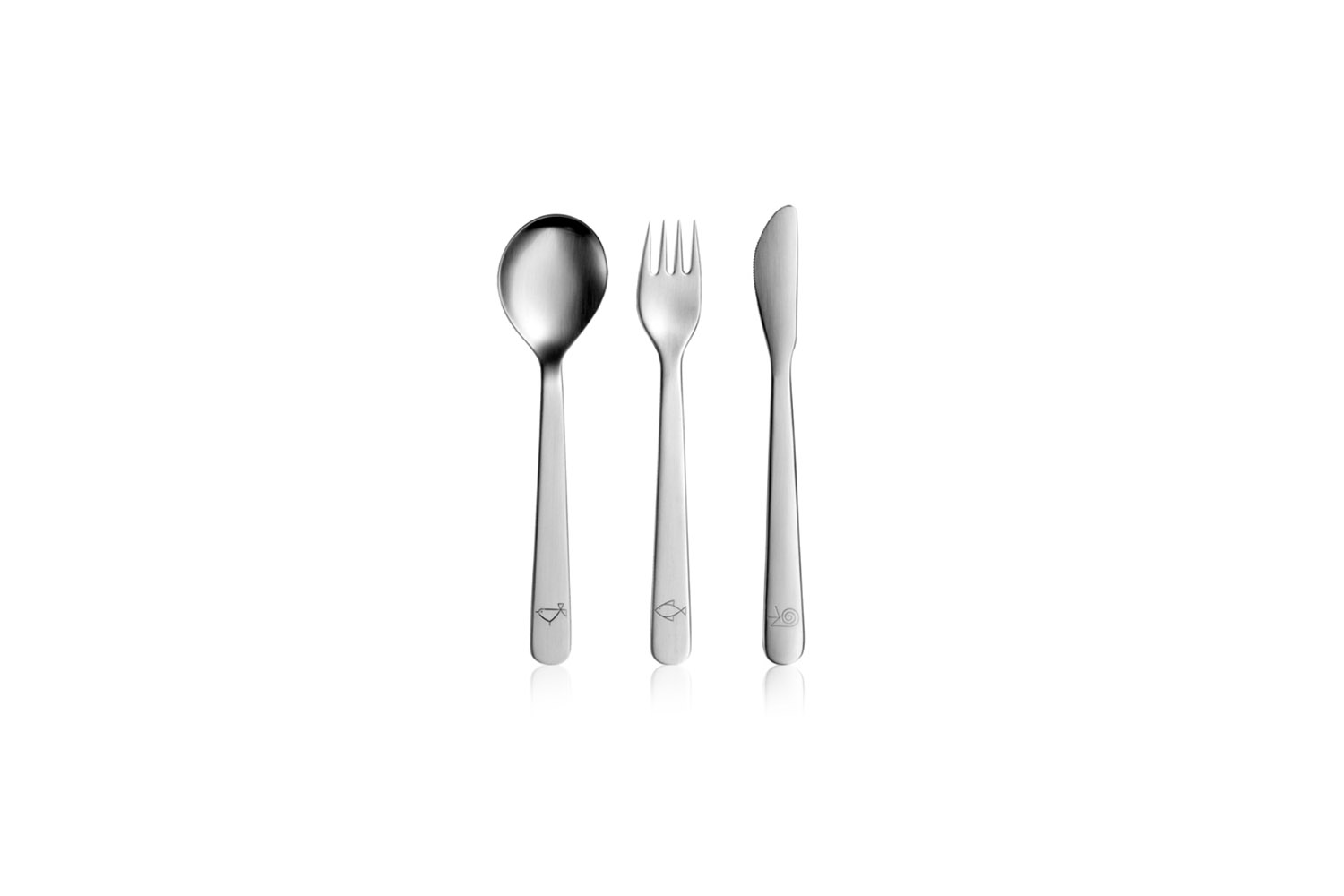
Mono Petit Children’s Flatware is a premium kids’ cutlery set created for children who are ready to practice eating with real utensils. Depending on the set, it may include a child-sized knife, fork, spoon, an additional spoon, and in some versions, a fish-shaped wooden cutting board. The pieces are made from stainless steel with a matte brushed finish, giving them a refined look that fits easily beside adult tableware.
The set is best understood as “real flatware, thoughtfully scaled down.” It is not a novelty toy, and that is exactly the appeal. The knife is intentionally dull, helping children learn the motion of cutting without handing them something that belongs in a steakhouse duel. The fork and spoon are smaller and easier to manage, while the handle details add a quiet note of fun. Small stamped animal motifs at the ends of the handles give the set personality without turning the dinner table into a circus tent.
Why Design Matters in Children’s Utensils
At first glance, a spoon is a spoon. Then a toddler tries to use one, and suddenly it becomes a tiny engineering challenge. A good children’s spoon must be light enough to lift, balanced enough to control, and shaped well enough to reach the mouth before yogurt lands on the dog. A fork must help children spear soft foods without feeling sharp or intimidating. A beginner knife should teach the idea of cutting while keeping safety in mind.
This is where Mono Petit stands out. It treats children’s flatware as a design object, not an afterthought. The proportions are adapted for children, but the visual language remains timeless. Parents who prefer a calm, modern table setting will appreciate that Mono Petit does not scream “kid product” from across the room. Children, meanwhile, get utensils that feel special, grown-up, and properly theirs.
The Story Behind Mono Petit
Mono Petit comes from the same design family as Mono A, a landmark flatware design introduced in 1959 by Peter Raacke. Mono A became known for its radical simplicity, clean lines, and focus on function. Mono Petit carries that legacy into the world of children’s dining. Instead of adding bulk, bright plastic, or gimmicks, it follows a simple idea: children deserve well-designed tools too.
The design is especially interesting because it does not talk down to kids. Many children’s products try so hard to be cute that they become visually exhausting by breakfast. Mono Petit takes another path. It is elegant, restrained, and just playful enough. The animal motifs are like a wink, not a marching band.
Key Features of Mono Petit Children’s Flatware
Child-Friendly Size
The most important feature of any kids’ flatware set is proportion. Adult utensils can feel long, heavy, and awkward in a child’s hand. Mono Petit is scaled for smaller users, making it easier for children to practice the motions of scooping, spearing, lifting, and cutting.
Stainless Steel Construction
Mono Petit is made with stainless steel, often listed as 18/10 stainless steel by the manufacturer and retailers. Stainless steel is valued in flatware because it is strong, easy to clean, resistant to everyday corrosion, and suitable for repeated use. For families trying to reduce disposable or short-lived kitchen items, stainless steel children’s utensils make practical sense.
Dull Beginner Knife
The child-sized knife has a dull edge, which helps children learn the habit of using a knife and fork together. It can handle soft foods such as pancakes, omelets, cooked vegetables, and tender fruit while reducing the risks associated with sharper blades. In other words, it teaches table manners without turning dinner into a safety briefing.
Subtle Animal Motifs
At the end of the handles, small stamped animal details give the set charm. They are understated, so the flatware still looks refined. For children, these small details can make the utensils feel personal and inviting. A tiny animal at the handle end can be surprisingly powerful when convincing a child that peas are not, in fact, a personal insult.
Dishwasher-Friendly Practicality
Many versions of Mono Petit are described as dishwasher safe, which matters because children’s utensils work hard. They touch oatmeal, tomato sauce, mashed avocado, peanut butter, and unidentified sticky substances known only to preschool science. Easy cleanup is not a luxury; it is survival.
Who Is Mono Petit Best For?
Mono Petit is a strong choice for families who want children’s flatware that is beautiful, durable, and developmentally appropriate. It is especially suitable for children transitioning from silicone baby spoons or finger foods to more independent table habits. It also makes a thoughtful gift for birthdays, baptisms, baby showers, holidays, or a first “big kid table” moment.
This set may not be the cheapest option, and it is not trying to be. It belongs in the category of long-lasting, design-forward children’s tableware. If you want a quick backup spoon for a daycare bag, a budget multipack may be better. But if you want a keepsake-quality flatware set that can be used daily and possibly saved for another child, Mono Petit has real appeal.
How Mono Petit Supports Self-Feeding Skills
Self-feeding is more than a cute milestone. It helps children build fine motor control, hand-eye coordination, independence, and confidence at the table. Pediatric guidance often encourages parents to give children opportunities to practice with spoons and forks, even when the early results look like modern art on a high chair tray.
Child-sized utensils can make this practice easier. When the handle fits the hand and the bowl of the spoon is not too large, children can focus on the skill instead of wrestling with an oversized tool. Mono Petit gives kids a set that resembles adult flatware, which may also encourage imitation. If parents and older siblings are using knives and forks, many children want to join the club. Preferably today. Preferably with pancakes.
Mono Petit vs. Plastic Children’s Flatware
Plastic utensils are popular because they are lightweight, inexpensive, and colorful. For very young babies starting solids, soft silicone or plastic spoons can be useful. But as children grow, many families begin looking for more durable options. Stainless steel flatware offers a different experience: it has weight, balance, and a realistic feel that helps children learn table skills they will use beyond toddlerhood.
Mono Petit is not competing with cartoon-themed starter spoons. It is better suited for the stage when a child is ready to practice “real meal” behavior. The stainless steel construction also means the set can blend with family flatware rather than being hidden in a drawer full of neon plastic. It says, “We have taste,” even if dinner is boxed macaroni and cheese. Balance is everything.
Safety Considerations for Children’s Flatware
When choosing utensils for children, safety should always come first. Look for smooth edges, appropriate size, sturdy construction, and materials intended for food contact. Avoid utensils with loose decorative parts that could break off. For young children, supervision matters, especially when introducing forks or beginner knives.
Mono Petit’s dull knife and child-scaled design help address common concerns, but parents should still match utensils to a child’s age, coordination, and eating habits. A child who is still throwing spoons like tiny javelins may need more time with simpler tools. A child who is eager to copy adults and can sit steadily at the table may enjoy the responsibility of using a more grown-up set.
Cleaning and Care Tips
To keep Mono Petit Children’s Flatware looking its best, rinse pieces after meals, especially after acidic foods such as tomato sauce or citrus. Use the dishwasher if allowed by the product care instructions, or hand wash with mild dish soap and a soft sponge. Drying the pieces after washing can help reduce water spots and preserve the clean matte finish.
If your set includes a wooden cutting board, treat it differently from the stainless steel utensils. Wood generally prefers hand washing, quick drying, and occasional conditioning with food-safe oil. Do not let it soak in the sink unless you enjoy watching beautiful objects develop tragic personalities.
How to Introduce Mono Petit at the Table
The easiest way to introduce Mono Petit is to make it part of a relaxed meal rather than a formal lesson. Start with foods that are easy to scoop, stab, or cut. Good examples include scrambled eggs, banana slices, steamed carrots, soft pasta, pancakes, meatballs, roasted sweet potatoes, and tender fish. These foods give children a chance to succeed without turning dinner into a wrestling match.
Parents can model the motion first: fork in one hand, knife in the other, gentle pressure, small bite. Then let the child try. The first attempts may be messy. That is normal. In fact, messy practice is often how children learn. The goal is not instant elegance. The goal is progress, confidence, and maybe getting at least half the food into the correct human.
Why Parents Like Design-Forward Kids’ Tableware
Parents often spend a lot of energy creating a home that feels calm, functional, and personal. Then children arrive with rainbow cups, cartoon plates, and snack containers shaped like vehicles. There is nothing wrong with playful gear, but many families appreciate children’s items that fit the rest of the home. Mono Petit offers that balance beautifully.
It also sends a subtle message: children are part of the table, not separate from it. Giving a child well-made flatware can make meals feel more inclusive. The child is not using a throwaway tool while everyone else uses “real” utensils. They have their own version, made for them, with the same seriousness and care.
Gift Potential: Small Set, Big Impression
Mono Petit Children’s Flatware makes an excellent gift because it is practical, beautiful, and a little unexpected. Many baby gifts are quickly outgrown, but a well-made flatware set can be used for years. It is the kind of present that feels thoughtful without being overly sentimental. Add a child’s plate, a linen napkin, or a simple recipe card for pancakes, and you have a gift that says, “Welcome to the table.”
It is also a strong option for design-loving parents. If the family appreciates modern furniture, simple ceramics, quality kitchen tools, or anything described as “timeless,” Mono Petit will likely land well. It is minimal, but not cold. Premium, but not fussy. Child-friendly, but not childish.
Things to Consider Before Buying
Before choosing Mono Petit, consider your child’s age and readiness. Very young babies may still do better with soft starter spoons. Children who are ready for more advanced self-feeding may benefit from the realistic feel of stainless steel. Also consider whether you want the three-piece set or a larger set with the cutting board. The three-piece option is simple and practical, while the expanded version feels more gift-worthy.
Price is another factor. Mono Petit is a premium design product, so it costs more than basic children’s utensils. The value comes from its materials, design heritage, durability, and long-term usefulness. If your family tends to buy fewer, better things, this set fits that philosophy. If your spoons regularly disappear into lunchboxes, sandboxes, or the strange portal behind the couch, you may want a backup set for everyday chaos.
Experience Notes: Living With Mono Petit Children’s Flatware
Using Mono Petit at home feels different from using ordinary kids’ utensils. The first thing many parents notice is the weight. It is not heavy in an awkward way, but it has enough substance to feel real. Children often respond to that. A spoon that feels like a “grown-up spoon” can make them sit a little taller, even if they are wearing pajamas with syrup on the sleeve.
One practical experience is that Mono Petit works especially well for slow weekend meals. Think pancakes, soft fruit, scrambled eggs, waffles, and tiny pieces of toast. The dull knife gives a child the chance to practice cutting without requiring the parent to hover like a nervous helicopter. The fork is useful for foods that are soft but not slippery, and the spoon handles cereal, yogurt, soup, and oatmeal with the dignity those foods can reasonably expect.
Another pleasant surprise is how easily the set fits into family routines. Some children’s flatware looks so different from adult utensils that it creates a separate “kid zone” at the table. Mono Petit blends in. It can sit beside ceramic plates, cloth napkins, stainless adult flatware, and simple glassware without looking out of place. That may sound like a small thing, but families who care about the look and feel of the table will appreciate it daily.
There is also an emotional side. Children love ownership. When they know a set belongs to them, they may become more interested in setting the table, choosing their seat, or helping clean up. A child might say, “Where is my fork?” with the seriousness of a tiny restaurant critic. That sense of responsibility can be useful. It turns mealtime tools into part of a routine rather than random objects pulled from a drawer.
The learning curve is real, of course. A child may hold the fork backward, scoop air, saw dramatically at a banana, or use the spoon as a microphone between bites. That is part of the process. Mono Petit does not magically create perfect manners. No flatware set can do that, and any product claiming otherwise should be investigated by parents and possibly magicians. What it does offer is a beautiful, functional tool that supports practice.
For cleanup, the stainless steel pieces are refreshingly low-maintenance. After sticky meals, a quick rinse before dishwashing helps. If hand washing, a soft sponge is enough. The matte finish may show water spots if left to air dry, so drying with a towel keeps the pieces looking sharper. If the set includes the wooden cutting board, it deserves gentler care: hand wash, dry promptly, and avoid soaking.
In everyday use, Mono Petit feels like a product designed for families who want childhood to be joyful without making every object loud. It respects children’s independence, respects parents’ taste, and respects the fact that dinner is often messy no matter how beautiful the fork is. That combination is rare. Mono Petit Children’s Flatware is not just a cute set for small hands; it is a small invitation to join the table with confidence, curiosity, and maybe fewer noodles on the floor.
Conclusion
Mono Petit Children’s Flatware is a thoughtful choice for families who want kids’ utensils that are practical, durable, and genuinely beautiful. With its stainless steel construction, child-friendly proportions, dull beginner knife, subtle motifs, and design connection to Mono A, it offers more than a place to park mashed potatoes. It helps children practice independence while giving parents a tableware option that does not clash with the rest of the kitchen.
It may not be the cheapest children’s flatware set, but it is one of the most considered. For design-minded families, gift-givers, and parents who want real tools for growing eaters, Mono Petit delivers charm without clutter and function without fuss. In the grand adventure of teaching children to eat politely, it will not prevent every spill. But it will make the journey look much better.

