
Hair Care
Introduction to First Aid
Jun
First aid is the calm, practical help given to an injured or suddenly ill person before professional medical care arrives. It is not about turning your living room into an emergency department or pretending to be a TV doctor with dramatic background music. It is about doing the right simple things at the right time: checking for danger, calling for help, controlling bleeding, starting CPR when needed, cooling a burn, helping someone who is choking, and staying steady when everyone else is auditioning for the role of “panic with sneakers.”
Learning the basics of first aid can make homes, workplaces, schools, gyms, parks, and road trips safer. Emergencies rarely send calendar invites. A person may collapse during dinner, a child may fall at recess, a coworker may cut a hand, or a neighbor may show signs of heat stroke on a scorching afternoon. In those first few minutes, your actions can protect life, prevent a condition from getting worse, and comfort someone who is frightened or in pain.
This introduction to first aid explains the core principles, common emergency responses, essential first aid kit supplies, and the mindset that helps ordinary people act with confidence. It is educational, not a substitute for certified training or medical advice. When in doubt, call 911 or your local emergency number. Nobody has ever won a trophy for “waiting to see if the serious emergency becomes more serious.”
What Is First Aid?
First aid is immediate care given to someone experiencing injury or sudden illness until emergency medical services or a qualified healthcare professional takes over. It can be as simple as washing a small cut and covering it with a bandage, or as urgent as performing CPR, using an automated external defibrillator, or applying direct pressure to severe bleeding.
The goal of first aid is often summarized in three priorities: preserve life, prevent the condition from worsening, and promote recovery. That sounds formal, but in real life it means: keep the person breathing, stop dangerous bleeding, reduce further harm, and provide reassurance. A steady voice can be surprisingly powerful. “I’m here, help is coming” is not fancy medical equipment, but it can help someone feel less alone.
The First Rule: Make Sure the Scene Is Safe
Before helping, pause and look around. Scene safety comes first because one injured person is already enough. Check for traffic, fire, electrical hazards, violence, chemicals, unstable structures, aggressive animals, or anything else that could harm you or the injured person. If the scene is dangerous, call emergency services and wait for trained responders.
If it is safe to approach, introduce yourself and ask for permission to help if the person is awake and responsive. Use personal protective equipment when available, such as disposable gloves or a CPR face shield. If there is blood or body fluid, avoid direct contact. Good first aid is helpful, but it should not turn the rescuer into patient number two.
The Basic First Aid Action Plan: Check, Call, Care
Check
Check the scene, then check the person. Are they awake? Are they breathing normally? Are they bleeding heavily? Do they seem confused, pale, weak, or in severe pain? Look for medical alert bracelets, medication bottles, or bystanders who know what happened. Do not move someone with a possible head, neck, or spine injury unless they are in immediate danger.
Call
Call 911 for life-threatening emergencies, including unconsciousness, trouble breathing, chest pain, stroke symptoms, severe bleeding, major burns, seizures, poisoning with serious symptoms, severe allergic reaction, or suspected spinal injury. If others are nearby, point to a specific person and say, “You, call 911 and come back to tell me what they said.” Specific instructions work better than yelling “Somebody call!” into a crowd of frozen statues.
Care
Provide care within your training level until help arrives. This may include CPR, using an AED, controlling bleeding, helping a choking person, cooling a burn, keeping someone still, or monitoring breathing. Stay with the person if it is safe. Share important information with emergency responders when they arrive: what happened, when it happened, what care you gave, and any changes you noticed.
CPR and AED Basics
Cardiac arrest happens when the heart suddenly stops pumping effectively. A person in cardiac arrest is unresponsive and not breathing normally, or only gasping. This is a call-911-now situation. CPR helps move oxygen-rich blood to the brain and vital organs until advanced help arrives.
For an adult or teen who suddenly collapses, hands-only CPR is often recommended for untrained bystanders. Place the heel of one hand in the center of the chest, put the other hand on top, lock your elbows, and push hard and fast. A common target is 100 to 120 compressions per minute. Think of a brisk beat, not a sleepy elevator song.
If an automated external defibrillator is available, send someone to get it. AEDs are designed to guide users with voice prompts. Turn it on, follow the instructions, and continue CPR when directed. You do not need to be a superhero to use an AED; the machine does the rhythm analysis. Your job is to follow directions and keep people clear when a shock is advised.
How to Help Someone Who Is Choking
Choking occurs when food or another object blocks the airway. If the person can cough, speak, or breathe, encourage them to keep coughing. Do not slap their back just because you saw it in a sitcom. If they cannot breathe, speak, or cough effectively, they need immediate help.
For a conscious choking adult or child, first aid training often teaches cycles of back blows and abdominal thrusts, depending on the protocol learned and the person’s age, size, and condition. For infants, the technique is different and should be learned in a certified class. Call 911 if the obstruction does not clear quickly, the person becomes unresponsive, or you are unsure what to do.
Severe Bleeding: Stop the Bleed
Life-threatening bleeding can kill quickly, so fast action matters. Signs include blood that is spurting, pooling, soaking through clothing, or bleeding that does not stop. Apply firm, direct pressure to the wound with clean gauze, cloth, or even a clean piece of clothing if that is all you have. Keep pressure steady. This is not the time to keep lifting the cloth to “check how it’s doing.” Bleeding control is not a soufflé.
If bleeding is severe and direct pressure is not enough, trained responders may use wound packing or a tourniquet for arm or leg injuries. A tourniquet should be placed above the bleeding site, tightened until bleeding stops, and left in place for emergency responders. Learning these skills through a Stop the Bleed or first aid course is highly recommended because practice builds confidence.
Cuts, Scrapes, and Minor Wounds
For minor cuts and scrapes, wash your hands, rinse the wound with clean running water, remove small debris if easily possible, apply gentle pressure if bleeding continues, and cover the area with a sterile bandage. Watch for signs of infection such as increasing redness, swelling, warmth, pus, red streaks, or fever.
Seek medical care for deep wounds, animal or human bites, dirty puncture wounds, wounds that gape open, injuries caused by rusty or contaminated objects, or bleeding that does not stop after several minutes of steady pressure. Also consider whether a tetanus booster may be needed.
Burns: Cool First, Then Cover
For a minor thermal burn, cool the area with cool running water for several minutes. Remove tight jewelry or clothing near the burn before swelling begins, but do not peel off anything stuck to the skin. Cover the burn with a clean, dry dressing. Do not apply butter, toothpaste, or mystery kitchen potions. Butter belongs on toast, not trauma.
Call 911 or seek urgent medical care for burns that are deep, large, on the face, hands, feet, genitals, or major joints, caused by chemicals or electricity, or associated with trouble breathing. Chemical burns need immediate flushing with water unless a product label or emergency dispatcher gives different instructions.
Heart Attack and Stroke Warning Signs
First aid includes recognizing medical emergencies that do not involve visible blood. A heart attack may cause chest pressure, pain spreading to the arm, jaw, neck, back, or stomach, shortness of breath, nausea, sweating, lightheadedness, or unusual fatigue. Symptoms can vary, and some people have subtle signs. Call 911 immediately. Do not drive the person yourself unless emergency services are unavailable and there is no safer option.
For stroke, remember FAST: Face drooping, Arm weakness, Speech difficulty, Time to call 911. Sudden confusion, vision trouble, severe headache, dizziness, or loss of balance can also be warning signs. Stroke treatment is time-sensitive, so do not wait for symptoms to “sleep it off.” Brains are not leftovers; they do not improve by sitting overnight.
Allergic Reactions and Anaphylaxis
Anaphylaxis is a severe allergic reaction that can become life-threatening. Warning signs may include trouble breathing, swelling of the lips or tongue, tight throat, widespread hives, vomiting, dizziness, fainting, or a sense of doom after exposure to a trigger such as food, insect stings, medication, or latex.
If the person has a prescribed epinephrine auto-injector, help them use it according to the device instructions if you are trained or the person asks for help. Call 911 for severe symptoms, worsening symptoms, or uncertainty. Keep the person lying down if possible, monitor breathing, and be ready to begin CPR if they become unresponsive and stop breathing normally.
Poisoning: Do Not Guess
Poisoning can happen through swallowing, breathing, skin exposure, eye exposure, bites, stings, or medication errors. If someone collapses, has a seizure, has trouble breathing, or cannot be awakened, call 911 immediately. For other possible poison exposures in the United States, contact Poison Control at 1-800-222-1222 or use an official online poison help tool.
Do not induce vomiting unless a poison expert or emergency professional tells you to do so. Keep the container, label, pill bottle, plant, chemical, or substance available so experts can identify it. “It was a blue cleaner from under the sink” is better than nothing, but “here is the exact bottle” is much more useful.
Heat Illness and Cold Emergencies
Heat exhaustion can cause heavy sweating, weakness, dizziness, headache, nausea, and cool, clammy skin. Move the person to a cooler place, loosen clothing, offer cool water if they are awake and able to drink, and use cool cloths. Heat stroke is more dangerous and may involve confusion, fainting, seizures, very high body temperature, or hot skin. Call 911, move the person to shade or air conditioning, and cool them quickly.
Cold emergencies include hypothermia and frostbite. Hypothermia may cause shivering, confusion, slurred speech, sleepiness, and poor coordination. Move the person to warmth, remove wet clothing, cover them with blankets, and call emergency help for moderate or severe symptoms. For frostbite, protect the area and avoid rubbing the skin, which can worsen injury.
First Aid Kit Essentials
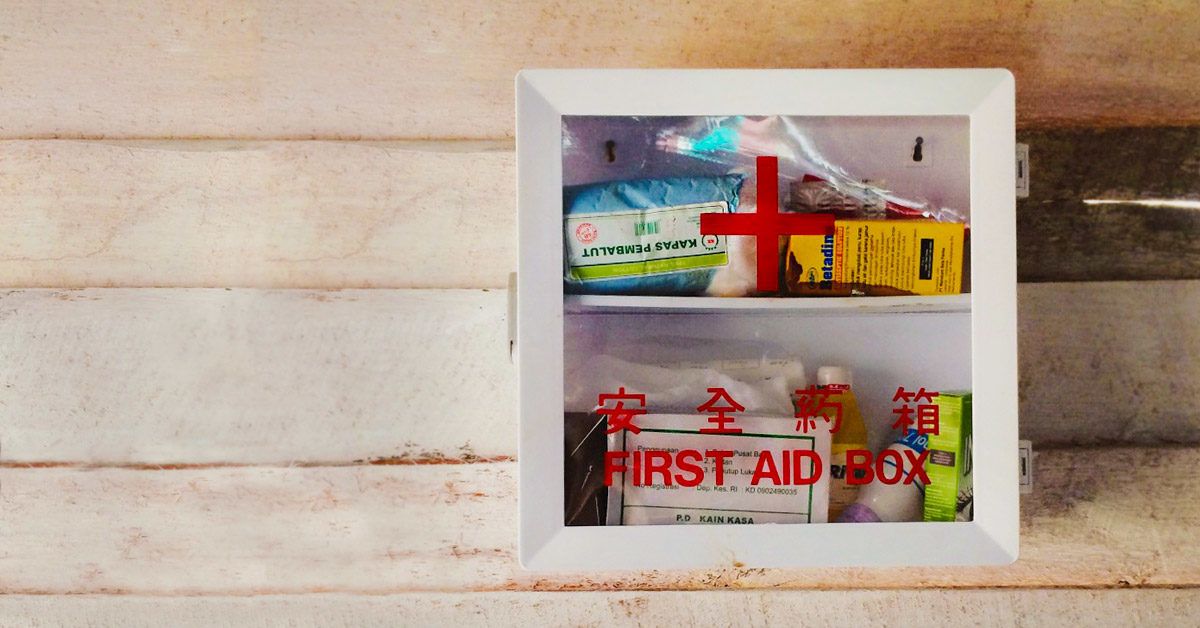
A practical first aid kit should be easy to find, organized, and checked regularly. Useful supplies include adhesive bandages, sterile gauze pads, roller gauze, adhesive tape, antiseptic wipes, disposable gloves, tweezers, scissors, an instant cold pack, elastic wrap, a CPR face shield, a digital thermometer, burn dressing, antibiotic ointment packets, and emergency contact information.
For homes, add personal medications, allergy information, a flashlight, and copies of important medical details. For cars, include gloves, trauma dressings, bottled water, a blanket, and a reflective warning triangle. For workplaces, follow OSHA and industry-specific requirements. The best first aid kit is not the fanciest one; it is the one people can actually find when someone yells, “Where are the bandages?”
Training Matters More Than Reading Alone
Reading about first aid is a valuable start, but hands-on training is better. Certified courses teach CPR, AED use, choking response, bleeding control, burn care, and emergency decision-making. Practice helps your body remember what to do when your brain is busy shouting, “Oh wow, this is real.”
Consider taking a class through a reputable organization such as the American Red Cross, American Heart Association, National Safety Council, local fire department, hospital, workplace safety program, or community training center. Refresh your skills regularly. First aid knowledge can fade like a phone battery at 2 percent, so review matters.
First Aid Mindset: Stay Calm, Stay Useful
One of the most important first aid skills is emotional control. You do not need to be fearless. You only need to be useful. Take a breath, speak clearly, assign tasks, and focus on the next right action. Call for help early. Protect yourself. Use what you know. Comfort the person. Keep observing.
It is also important to know your limits. First aid is not a replacement for emergency medical care. Do not give medications unless trained, authorized, or instructed by emergency professionals. Do not move seriously injured people unless necessary for safety. Do not perform procedures beyond your training. Responsible first aid is confident, not reckless.
Real-Life Experiences That Show Why First Aid Matters
First aid becomes memorable when it moves from textbook language into everyday life. Picture a family picnic on a warm Saturday afternoon. Someone is laughing, someone is guarding the last slice of watermelon like it contains state secrets, and then a child trips while running across the grass. The scrape is not serious, but the child is scared. A calm adult washes the wound, applies gentle pressure, covers it with a bandage, and says, “You’re okay. That was a dramatic entrance, but you’re okay.” The care is simple, yet it changes the mood instantly. First aid is not always heroic in a movie-trailer way. Sometimes it is a clean bandage, a steady voice, and the ability to prevent a small injury from becoming a big production.
Now imagine a workplace break room. A coworker begins coughing during lunch, then suddenly cannot speak. The room goes quiet in that strange way rooms do when everyone understands something is wrong but nobody wants to be the first to move. One trained employee asks, “Are you choking?” The coworker nods. Another person calls 911. The trained employee begins the appropriate choking response while others clear space. The object comes loose, the coworker breathes, and the room exhales together. Later, everyone says how fast it happened. That is the point. Emergencies feel sudden because they are sudden. Training gives people a script when panic tries to grab the microphone.
Severe bleeding offers another powerful lesson. A person using a kitchen knife, power tool, or piece of broken glass can lose a dangerous amount of blood before help arrives. The rescuer who knows to apply firm direct pressure, keep pressure on the wound, and call 911 can buy precious time. Without training, people may freeze, run for paper towels, or repeatedly peek under the cloth. With basic bleeding control knowledge, they act faster and more effectively. The difference is not personality; it is preparation.
Outdoor settings teach similar lessons. On a hot day, a runner may become confused, weak, and unable to cool down. Friends might think the person is simply tired. A first aid-aware bystander recognizes possible heat stroke, calls 911, moves the runner to shade, removes excess clothing, and starts rapid cooling. That quick recognition matters. First aid often begins with noticing that something is not normal and refusing to dismiss it.
The most valuable experience many people gain from first aid training is confidence. Not arrogance, not “stand back, I watched one video,” but grounded confidence. You learn to check the scene, call for help, use gloves, start CPR, find an AED, control bleeding, and speak calmly. You learn that helping does not require perfection. It requires action within your skill level. In real emergencies, the first responder is often not a paramedic. It is a parent, teacher, coach, coworker, friend, cashier, driver, or neighbor who decides to step forward. First aid turns ordinary people into capable bridges between danger and professional care.
Conclusion
First aid is one of the most practical life skills anyone can learn. It helps you respond to cuts, burns, choking, bleeding, allergic reactions, heat illness, poisoning, heart attack, stroke, and cardiac arrest with more confidence and less panic. You do not need to know everything. You need to know how to recognize danger, call for help, protect yourself, and provide simple care until professionals arrive.
The best time to learn first aid is before an emergency. Take a certified first aid, CPR, and AED class. Build a first aid kit. Keep emergency numbers handy. Review the basics with your family or coworkers. Emergencies may be unpredictable, but preparation is not. And when the moment comes, calm action can be the most powerful tool in the room.

