
Beauty Tools & Accessories
Dry Elbows or Psoriasis Elbows? Differences, Pictures, Relief
Jun
Note: This article is for educational purposes and should not replace medical advice. If your elbow rash is painful, spreading, bleeding, infected, or not improving with basic care, a dermatologist can give you a clear diagnosis and treatment plan.
Elbows are the body’s forgotten corners. We lean on them, bump them into doorframes, scrape them on desks, and then act shocked when they become rougher than a hiking trail. Most of the time, dry elbows are simply dry elbows: thickened, thirsty skin that needs better care. But sometimes those chalky, flaky patches are not just dryness. They may be psoriasis on the elbows, a chronic inflammatory skin condition that often shows up exactly where elbows like to misbehave.
The tricky part is that dry skin and elbow psoriasis can look similar at first glance. Both may feel rough. Both may flake. Both may make you glance down during a Zoom call and think, “Has my elbow joined a desert survival program?” The differences matter because the best relief depends on the cause. A thick moisturizer may be enough for ordinary dryness, while psoriasis often needs anti-inflammatory treatment, prescription topicals, phototherapy, or other therapies guided by a healthcare professional.
This guide explains how to compare dry elbows vs psoriasis elbows, what pictures commonly show, how to find relief safely, and when to stop guessing and ask a dermatologist.
What Do Dry Elbows Look Like?
Dry elbows usually look rough, dull, ashy, flaky, or slightly darker than the surrounding skin. The surface may feel tight, scratchy, or sandpapery. In lighter skin tones, dryness may appear pale, grayish, pink, or flaky. In deeper skin tones, dry elbows may look gray, purple-brown, or darker than nearby skin because dryness and friction can make discoloration more noticeable.
Dry elbows often happen because elbow skin has fewer oil glands and gets a lot of friction. Leaning on desks, wearing rough fabrics, taking hot showers, using harsh soaps, cold weather, low humidity, aging, and not moisturizing after bathing can all make the area worse. The elbow also bends constantly, so when skin loses moisture, tiny cracks may form along the creases.
Common signs of dry elbows
- Rough, flaky, or ashy skin
- Mild itchiness or tightness
- Small cracks, especially in cold weather
- Dryness on both elbows or one elbow
- Improvement after consistent moisturizing
- No sharply raised plaque border
- No thick silvery scale that keeps returning
If your elbows improve within a week or two of using a thick, fragrance-free cream or ointment, dryness is the likely culprit. Dry skin loves attention. Give it a good moisturizer and it often calms down like a cat in a sunbeam.
What Does Psoriasis on Elbows Look Like?
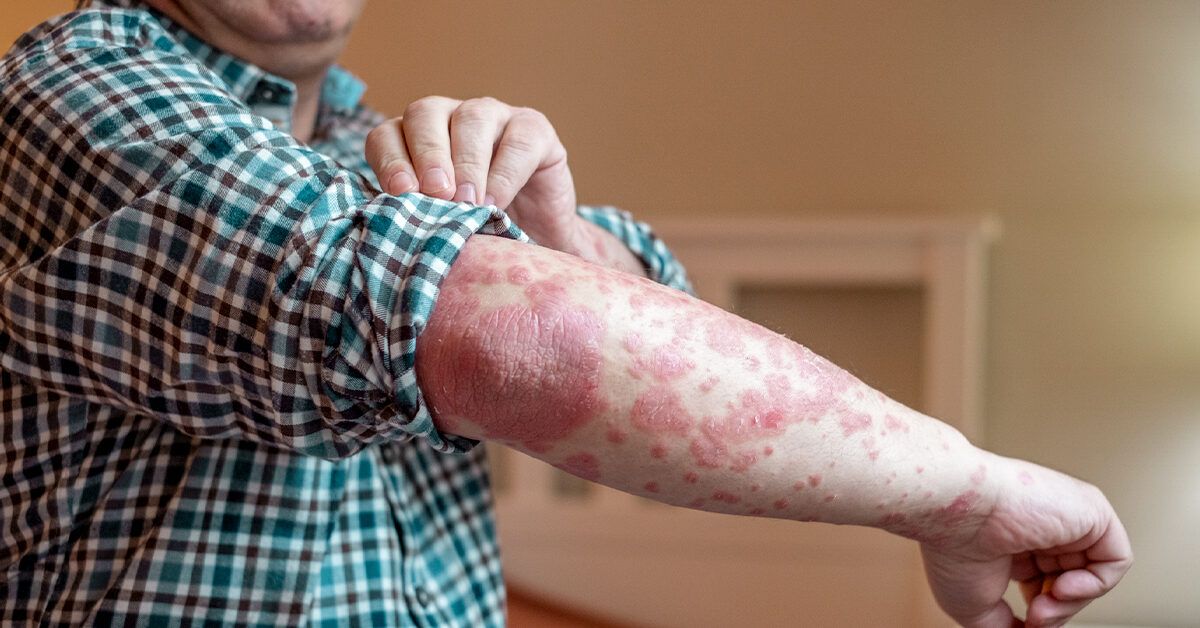
Elbow psoriasis most often appears as plaque psoriasis, the most common type of psoriasis. It can create raised, inflamed, scaly patches called plaques. On lighter skin, plaques are often pink or red with white or silvery scale. On darker skin, plaques may look purple, gray, dark brown, or reddish-brown, and the scale may appear thicker or less “silvery” than textbook photos suggest.
Psoriasis happens when the immune system speeds up skin cell turnover. Instead of shedding gradually, skin cells build up quickly, creating thick, layered patches. Elbows and knees are classic psoriasis spots because they are high-friction areas. That does not mean every flaky elbow is psoriasis, but if the same thick patch keeps coming back in the same place, psoriasis becomes more suspicious.
Common signs of psoriasis elbows
- Raised, thick plaques with a clear edge
- White, silver, gray, or flaky scale
- Itching, burning, stinging, or soreness
- Cracking or bleeding when scales are picked or scratched
- Recurring patches that do not fully clear with moisturizer
- Similar patches on knees, scalp, lower back, hands, or nails
- Nail pitting, lifting, thickening, or discoloration in some people
Psoriasis is not contagious. You cannot catch it from a handshake, towel, hug, gym bench, or someone’s elbow accidentally touching yours. It is an immune-related condition influenced by genetics, triggers, and inflammation.
Dry Elbows vs Psoriasis Elbows: The Quick Difference
| Feature | Dry Elbows | Psoriasis Elbows |
|---|---|---|
| Texture | Rough, flaky, tight | Thick, raised, scaly plaques |
| Color | Ashy, dull, pink, gray, or darker skin | Red, purple, brown, gray, or inflamed patches |
| Edges | Usually blended into surrounding skin | Often more sharply defined |
| Scale | Fine flakes | Thicker white, silver, or gray scale |
| Symptoms | Mild itch, tightness | Itch, soreness, burning, cracking, bleeding |
| Response to moisturizer | Usually improves clearly | May soften but often does not fully go away |
| Pattern | Often seasonal or friction-related | Often recurring, chronic, and may appear elsewhere |
Picture Guide: What to Look for in Elbow Photos
When people search for psoriasis elbows pictures, they are usually trying to compare their own skin with examples online. Pictures can help, but they can also mislead. Lighting, skin tone, camera quality, scratching, lotion, and even how long the rash has been present can change the appearance.
Picture clue #1: Fine flakes suggest dryness
Dry elbows often show powdery flakes or a rough, dull surface. The skin may look like it needs moisture rather than medical treatment. The area may not have a raised border, and the dryness may spread softly across the elbow rather than forming a distinct patch.
Picture clue #2: Thick plaques suggest psoriasis
Psoriasis photos often show a thicker patch that sits on top of the skin. It may look layered, crusty, or “built up.” The plaque can have a more obvious outline, almost like the skin has drawn a border around the problem and said, “Here. This is the drama zone.”
Picture clue #3: Skin tone changes the color story
Many psoriasis images online show red plaques with silvery scale on light skin. That is only part of the story. On brown or Black skin, psoriasis may look violet, gray, dark brown, reddish-brown, or hyperpigmented. After inflammation fades, discoloration can remain for weeks or months. A patch that does not look “red” can still be psoriasis.
Picture clue #4: Location matters
Psoriasis commonly affects elbows, knees, scalp, lower back, and nails. If elbow patches appear with dandruff-like scalp scaling, nail pitting, or similar plaques on the knees, psoriasis becomes more likely than ordinary dryness.
Why Elbows Get So Dry in the First Place
Elbows are hardworking joints covered by skin that stretches, folds, and rubs against the world. Several everyday habits can dry them out:
- Hot showers: Hot water strips natural oils faster than warm water.
- Harsh soaps: Strong cleansers can disrupt the skin barrier.
- Low humidity: Winter air and indoor heating pull moisture from the skin.
- Friction: Leaning on elbows or wearing scratchy fabrics thickens and irritates skin.
- Skipping moisturizer: Skin loses water after bathing unless moisture is sealed in quickly.
- Age: Skin often produces less oil over time.
Dry elbows can also be linked with eczema, contact dermatitis, thyroid problems, diabetes, kidney disease, medication side effects, or nutritional issues. That does not mean your elbows are sending a medical mystery novel, but persistent dryness deserves attention if it does not respond to basic care.
What Triggers Psoriasis on the Elbows?
Psoriasis triggers vary from person to person. Common flare triggers include stress, infections, skin injury, cold weather, dry air, smoking, heavy alcohol use, certain medications, and friction. Elbows are especially vulnerable because small injuries and repeated pressure may aggravate the skin.
Some people with psoriasis experience the Koebner phenomenon, where new psoriasis lesions appear after skin trauma such as cuts, scrapes, sunburn, bug bites, tattoos, or repeated rubbing. For elbows, that trauma may be as boring as leaning on a desk every day. Your elbow did not ask for an office job, but here we are.
Relief for Dry Elbows: A Simple Skin Barrier Plan
If your elbows are dry but not strongly suggestive of psoriasis, start with a consistent moisture routine for two weeks.
1. Switch to lukewarm showers
Use warm, not hot, water. Keep showers shorter when your skin is very dry. Hot water may feel luxurious, but your skin barrier may interpret it as a tiny betrayal.
2. Use a gentle cleanser
Choose a fragrance-free, dye-free, mild cleanser. Avoid aggressive scrubbing, rough loofahs, and harsh exfoliating tools on irritated elbows.
3. Moisturize while skin is damp
After bathing, pat your skin dry and apply a thick cream or ointment while your elbows are still slightly damp. Look for ingredients such as petrolatum, glycerin, ceramides, dimethicone, hyaluronic acid, lactic acid, or urea. Ointments are greasier but often more effective at sealing moisture.
4. Try overnight occlusion
For very dry elbows, apply a thick moisturizer or petroleum jelly before bed and cover the area with soft cotton sleeves or a breathable wrap. Do not wrap tightly, and do not use this method over infected, painful, or open skin unless your clinician advises it.
5. Reduce friction
Use a desk pad, avoid leaning on elbows for long periods, and choose softer fabrics. If one elbow is worse, look at your daily habits. The villain may be your desk, your hoodie seam, or your dramatic habit of leaning like a detective in a crime show.
Relief for Psoriasis Elbows: What Usually Helps
Psoriasis care often combines gentle skin care with medical treatment. Moisturizer helps soften scale and reduce cracking, but it usually does not control the underlying inflammation by itself.
Topical treatments
Doctors commonly treat mild to moderate plaque psoriasis with prescription topical medications. These may include corticosteroids, vitamin D analogs, retinoids, calcineurin inhibitors for certain areas, or combination products. Over-the-counter products with salicylic acid may help loosen scale, but they can irritate some people and should be used carefully.
Phototherapy
Controlled ultraviolet light therapy may help some people with psoriasis. This is not the same as random sunbathing, and tanning beds are not a safe substitute. Phototherapy should be supervised by a trained medical professional.
Systemic treatments
If psoriasis is widespread, painful, resistant to topical care, or linked with joint symptoms, a clinician may recommend oral medications or biologic therapies that target the immune pathways involved in psoriasis. These treatments are individualized and require medical monitoring.
Do not pick the scale
Picking psoriasis plaques can cause bleeding, soreness, infection risk, and possibly more inflammation. Soften scales with moisturizer instead. Your elbow is not a scratch-off lottery ticket. There is no prize under there.
When to See a Dermatologist
Make an appointment if your elbow patches:
- Do not improve after two weeks of consistent moisturizing
- Are thick, raised, painful, or sharply bordered
- Crack, bleed, burn, or interfere with sleep
- Spread to your knees, scalp, hands, feet, or nails
- Show signs of infection, such as warmth, pus, swelling, or increasing pain
- Come with joint pain, swelling, morning stiffness, or sausage-like fingers or toes
Joint symptoms are especially important. Psoriatic arthritis can occur in some people with psoriasis and may cause pain, stiffness, swelling, tendon pain, and nail changes. Early diagnosis matters because treatment can help reduce symptoms and protect joints.
Home Care Mistakes That Make Elbows Worse
Scrubbing too hard
Dry elbows may feel like they need sanding, but skin is not furniture. Aggressive scrubbing can worsen irritation and trigger more thickening.
Using fragranced lotions
Fragrance may smell like a spa vacation, but irritated skin may treat it like an uninvited guest. Choose fragrance-free products, not just “unscented,” because unscented products may still contain masking fragrance chemicals.
Skipping sunscreen
Sunburn can worsen irritation and may trigger psoriasis flares in some people. If your elbows are exposed, use broad-spectrum sunscreen and protective clothing.
Assuming every rough patch is psoriasis
Dryness, eczema, contact dermatitis, fungal infection, keratosis pilaris, calluses, and other conditions can affect the elbows. A dermatologist can help sort out the real cause.
What About Eczema on Elbows?
Eczema can also cause dry, itchy, inflamed elbow skin. It often appears in the inner elbow creases, though it can affect the outer elbows too. Eczema tends to be intensely itchy and may look red, brown, purple, bumpy, cracked, or weepy depending on the person and stage. Psoriasis usually forms thicker, more defined plaques on outer elbows, but overlap happens.
If your rash is extremely itchy, triggered by products, or located in the elbow folds, eczema or contact dermatitis may be part of the picture. Treatment may still involve fragrance-free moisturizers and topical anti-inflammatory medication, but diagnosis matters because the best plan can differ.
Everyday Prevention Tips for Smoother Elbows
- Moisturize elbows daily, not only when they look like chalk.
- Apply cream or ointment after every shower.
- Use a humidifier in dry seasons if indoor air is harsh.
- Wear soft, breathable fabrics.
- Avoid leaning on elbows for long periods.
- Use gentle cleansers without fragrance, alcohol, or dyes.
- Protect skin from cuts, scrapes, and sunburn.
- Track possible psoriasis triggers such as stress, illness, weather, and skin injury.
Real-Life Experience: What People Often Notice Before They Get Answers
Many people first notice elbow trouble during ordinary moments. Maybe one elbow catches on a sweater sleeve. Maybe a white dusting appears on a black shirt. Maybe someone moisturizes faithfully for three days, sees no miracle, and declares the entire skincare industry suspicious. The experience can be frustrating because elbows are visible enough to bother you but easy enough to ignore until they crack, itch, or start shedding flakes like tiny confetti nobody ordered.
A common dry-elbow story goes like this: winter arrives, showers get hotter, indoor heating runs all day, and the elbows become rough. The skin feels tight but not deeply painful. A thick cream helps, but only when used consistently. Once the person switches to warm showers, gentle soap, and moisturizer right after bathing, the elbows gradually soften. The biggest lesson is not glamorous: consistency beats fancy packaging. A plain, fragrance-free ointment used daily often does more than an expensive lotion used once and abandoned in the bathroom cabinet.
A psoriasis-elbow story often feels different. The patch may return in the same place again and again. It may be thicker than ordinary dryness and have a defined edge. The person may notice similar patches on the knees or scalp. Moisturizer softens the scale but does not make the plaque disappear. Scratching may cause tiny bleeding points, soreness, or more irritation. Some people say the skin feels like it has a “cap” on it, as if a layer is sitting above the normal surface. That recurring, stubborn pattern is one reason many people eventually search for dry elbows or psoriasis elbows and compare photos.
Another experience people describe is embarrassment. Elbow psoriasis can make someone avoid short sleeves, gym workouts, swimming, or resting their arms on a table. Dry elbows can do that too, especially when flakes are obvious. The emotional side matters. Skin conditions are not vanity problems. Skin is visible, touchable, and tied to confidence. A small elbow patch can feel much larger when you are trying to enjoy dinner and worrying that everyone is staring at your arm. Most people are not staring, of course. They are usually thinking about their own lives, their phones, or whether they should have ordered fries. But the self-conscious feeling is real.
People also learn through trial and error that not every “natural” remedy is gentle. Lemon juice, baking soda scrubs, undiluted essential oils, and harsh exfoliating acids can burn or worsen irritated elbows. If skin is cracked or inflamed, simple is safer. A boring moisturizer is sometimes the hero. It may not look exciting on a shelf, but neither does a fire extinguisher, and we respect that.
The best experience-based advice is to take a two-week observation approach. Photograph the elbows in the same lighting. Moisturize twice daily. Avoid hot showers and scrubbing. Note whether the patch improves, stays the same, or returns quickly. Also check the scalp, knees, nails, and joints. If the elbows soften and normalize, dryness was probably the main issue. If plaques remain thick, raised, painful, or recurring, it is time for a dermatologist. Getting a diagnosis is not overreacting. It is how you stop guessing and start treating the right problem.
Conclusion
Dry elbows and psoriasis elbows can both be flaky, rough, and annoying, but they are not the same problem. Ordinary dry elbows usually improve with gentle cleansing, thicker moisturizers, less friction, and better shower habits. Psoriasis on the elbows tends to create raised, persistent plaques with thicker scale, clearer borders, and a habit of returning even after moisturizing.
The most useful clues are texture, pattern, location, symptoms, and response to care. If your elbows are mildly rough and improve with moisturizer, keep protecting the skin barrier. If the patches are thick, painful, recurring, spreading, bleeding, or linked with nail or joint changes, see a dermatologist. Your elbows may be small real estate, but they deserve the right diagnosis.

