
Skincare
4 Ways to Sex Tortoises
Jul
Note: In this guide, “sex tortoises” means identifying whether a tortoise is male or female based on safe, external observation. It is not a breeding guide, and it should never replace advice from a qualified reptile veterinarian or experienced chelonian specialist.
Trying to figure out whether a tortoise is male or female can feel like solving a tiny armored mystery. Your tortoise will not fill out a form, pose politely, or say, “Actually, I’m a male Russian tortoise, thanks for asking.” Instead, you have to read the clues: the tail, the underside of the shell, the vent position, and a few species-specific details that become clearer with age.
The tricky part is that tortoises do not all follow one perfect rule. A mature male sulcata tortoise may look obvious once his tail and plastron develop, while a young Mediterranean tortoise may keep everyone guessing. Some females have mild curves in the plastron. Some males are late bloomers. Some species are simply more dramatic than others. Tortoises, apparently, enjoy keeping their owners humble.
This article explains four practical ways to sex tortoises using real husbandry and wildlife-identification principles. You will learn what to look for, when to wait, what mistakes to avoid, and how to handle your tortoise safely while checking. The goal is not to become a tortoise fortune-teller overnight. The goal is to build a careful, low-stress checklist that helps you make a better identification over time.
Why Knowing a Tortoise’s Sex Matters
Knowing whether your tortoise is male or female is useful for health, housing, behavior, and long-term care. A female tortoise can lay eggs even if she has never been with a male. Those eggs will be infertile, but she still needs proper nutrition, calcium, hydration, and sometimes a nesting area. If she cannot lay normally, she may become egg-bound, which is a serious veterinary problem.
Male tortoises can also change the rhythm of your enclosure. Some mature males become territorial, restless, or overly persistent with females. Two males housed together may compete, shove, ram, or stress each other, especially in species known for strong male behavior. In other words, sexing your tortoise is not just about choosing the perfect name. “Sir Lettuce” and “Madam Squash” are fun, but safe care matters more.
Sex identification also helps keep records accurate. If you adopt, rehome, or take your tortoise to a reptile veterinarian, knowing the likely sex can guide discussions about diet, reproductive health, enclosure design, and behavior. However, it is important to say “likely male” or “likely female” if you are not fully sure. Tortoises reward patience, not overconfidence.
Before You Start: Age and Species Matter
The most common mistake is trying to sex a tortoise too early. Many young tortoises look female because their adult male traits have not developed yet. Their tails are still small, the plastron may be flat, and the anal scutes may not show a clear pattern. A tiny hatchling tortoise is basically a walking question mark with a shell.
Sexual maturity depends on species, size, diet, environment, and overall health. Some smaller species show reliable traits sooner, while large species may take many years. A sulcata tortoise, for example, can be difficult to sex confidently when young because it takes time for male features such as a longer tail and more concave plastron to become obvious. Radiated tortoises and other species may also require substantial growth before external sexing becomes dependable.
Species matters because not every tortoise uses the same visual “cheat sheet.” In many tortoises, males tend to have longer tails and a concave plastron. In some species, males also have larger gular scutes, different anal scute shapes, wider rear shell openings, or stronger body-size differences. Box turtles, aquatic turtles, and tortoises overlap in some traits, but they are not identical. Always compare your tortoise to information for its specific species whenever possible.
Way 1: Check the Tail Length and Thickness
The tail is often the most useful everyday clue for sexing tortoises. In many adult tortoise species, males have longer, thicker tails. Females usually have shorter, smaller, stubbier tails. If you have two mature tortoises of the same species side by side, the difference can be surprisingly clear.
A male’s tail is usually not just longer; it may also be carried differently. Many males tuck the tail to one side under the rear of the shell. Females are more likely to have a short tail that points more directly backward or downward. This is not a universal law, but it is a helpful clue.
How to Look Safely
Place the tortoise on a stable, low surface where it cannot fall. Never hold a tortoise high in the air while trying to inspect the tail. Tortoises are stronger than they look and can suddenly push, wiggle, or pull their legs in. A fall can cause serious injury.
Lift the rear of the shell only slightly if needed, keeping the animal supported. Do not pull the tail hard. If the tortoise clamps down, struggles, or seems stressed, pause and try again another day. A good sexing check should be calm, quick, and boring. Boring is excellent in reptile care.
Male Tail Clues
Adult males commonly show a longer tail that extends farther beyond the shell. The base of the tail may look thicker. In some species, the tail tapers to a more pointed shape. The tail may also rest sideways, tucked along the back edge of the shell.
Female Tail Clues
Females generally have shorter tails with less bulk at the base. The tail may look more button-like, wedge-shaped, or compact depending on the species. Because females need room to pass eggs, the rear shell opening and tail area may look broader or less tightly angled in some mature individuals.
The tail is a strong clue, but it should not stand alone. A young male may still have a short tail. A large female of certain species may have a tail that looks longer than expected. Use the tail as clue number one, then move to clue number two.
Way 2: Find the Cloaca Position
The cloaca, often called the vent, is the opening on the underside of the tail. Its position is one of the most important sexing details. In many tortoises, males have the cloaca farther away from the body, closer to the tip of the tail. Females usually have the cloaca closer to the base of the tail, nearer the shell.
This makes sense anatomically. The male tail is usually longer and carries the cloaca farther outward. The female tail is shorter, and the vent tends to sit closer to the shell. If you are comparing two mature tortoises of the same species, this difference can be more reliable than tail length alone.
What to Look For
Look at the underside of the tail without forcing the tortoise into an uncomfortable position. In a likely male, the vent may sit well beyond the rear edge of the plastron when the tail is extended. In a likely female, the vent may sit near or just under the rear shell opening.
Vent shape may also vary by species and maturity. Some keepers describe male vents as more slit-like and female vents as more rounded or star-shaped, especially in certain small tortoise species. However, shape is easier to misread than position, so beginners should focus first on where the vent is located.
Common Mistake: Staring Too Hard at One Feature
Do not make the call based only on the cloaca. Lighting, posture, tail tension, and age can fool you. A nervous tortoise may tuck the tail tightly, making the vent harder to see. A young tortoise may not show mature proportions yet. The best approach is to write down what you observe: “short tail, vent close to shell, flat plastron.” Three clues together are stronger than one lonely clue trying its best.
Way 3: Examine the Plastron Shape
The plastron is the underside of the shell. In many tortoise species, mature males develop a concave plastron, meaning it curves inward slightly. Females usually have a flat or nearly flat plastron. This difference helps males fit more securely during mating, which is a biological explanation you can now know without making dinner conversation weird.
To check the plastron, gently view the underside while keeping the tortoise secure. For small tortoises, you may be able to lift them briefly with two hands, keeping them close to a soft surface. For large tortoises, do not flip or lift them unnecessarily. Instead, observe during normal movement, ask a reptile veterinarian, or take clear photos from safe angles.
Male Plastron Clues
A likely male may show a noticeable inward curve, especially toward the rear half of the plastron. In some species, the curve is dramatic. In others, it is subtle. Older males usually show the feature more clearly than younger males.
Female Plastron Clues
A likely female usually has a flatter plastron. Some females may show a shallow curve, so do not panic if the underside is not perfectly flat like a kitchen counter. Tortoises are living animals, not manufactured furniture. Slight variation is normal.
Why Plastron Shape Can Mislead You
Plastron shape is helpful but not foolproof. Juveniles of both sexes often have flat plastrons. Some species do not develop a strong concavity. Body condition, shell growth, and individual variation can also affect appearance. If the tail and cloaca suggest one answer but the plastron is unclear, do not force the conclusion. Mark it as uncertain and check again after more growth.
Way 4: Compare Species-Specific Features
The fourth way to sex tortoises is to look at traits that matter more in certain species. This is where tortoise identification gets less like a simple checklist and more like being a detective with a lettuce-loving witness.
Anal Scutes and Rear Shell Opening
The anal scutes are the shell plates at the rear of the plastron, near the tail. In some species, males have a wider, more V-shaped opening, while females may have a rounder or more U-shaped opening. This difference may give the male tail more room and may give females more space for egg laying. However, anal scute shape can vary, especially in young tortoises, so it works best as a supporting clue.
Gular Scutes or Gular Horns
Some tortoises, especially gopher and desert tortoise relatives, show sex differences in the gular scutes, the forward-projecting parts of the plastron under the neck. Mature males may have longer or more upward-curving gular projections. These can be used in male-to-male pushing or combat. Females usually have shorter, less dramatic gular scutes.
Body Size and Shape
In some tortoise species, males are larger. In others, females are larger. In many Mediterranean tortoises, females may be bigger and rounder, while males may look narrower or more elongated. In large species such as sulcatas, mature males can become heavier and more imposing. Because size patterns vary so much, body size should never be your only method.
Claws, Color, and Eyes
Some turtles show sex differences in claw length, eye color, or markings. These clues are more common in certain aquatic turtles and box turtles than in many tortoises. For example, male box turtles may have different eye coloration or claw shape depending on species. With tortoises, these features are usually secondary. Use them only when they are known to apply to your exact species.
A Simple Tortoise Sexing Checklist
Use this checklist when examining a mature tortoise:
- Tail: Long and thick suggests male; short and compact suggests female.
- Cloaca: Farther toward the tail tip suggests male; closer to the shell suggests female.
- Plastron: Concave suggests male; flat or nearly flat suggests female.
- Anal scutes: Wider V-shape may suggest male in some species; rounder U-shape may suggest female.
- Species traits: Check whether gular scutes, size, claws, or shell shape matter for your species.
- Age: If the tortoise is young, wait. Guessing early is how many “female” tortoises become surprise “males” later.
Handling and Hygiene Tips
Always wash your hands after handling a tortoise, its enclosure, water dish, food bowl, bedding, or waste. Reptiles can carry Salmonella bacteria even when they look clean and healthy. Do not kiss your tortoise, do not eat while handling it, and do not clean reptile equipment in the kitchen sink. Your tortoise may be adorable, but it is still a reptile, not a dinner guest.
Keep sexing checks short. Avoid flipping a tortoise onto its back for long periods. Being upside down is stressful and can be dangerous, especially for heavy tortoises or tortoises with breathing issues. If you need help, take clear photos from safe angles and ask a reptile veterinarian, rescue, or experienced keeper familiar with the species.
When to Ask a Reptile Veterinarian
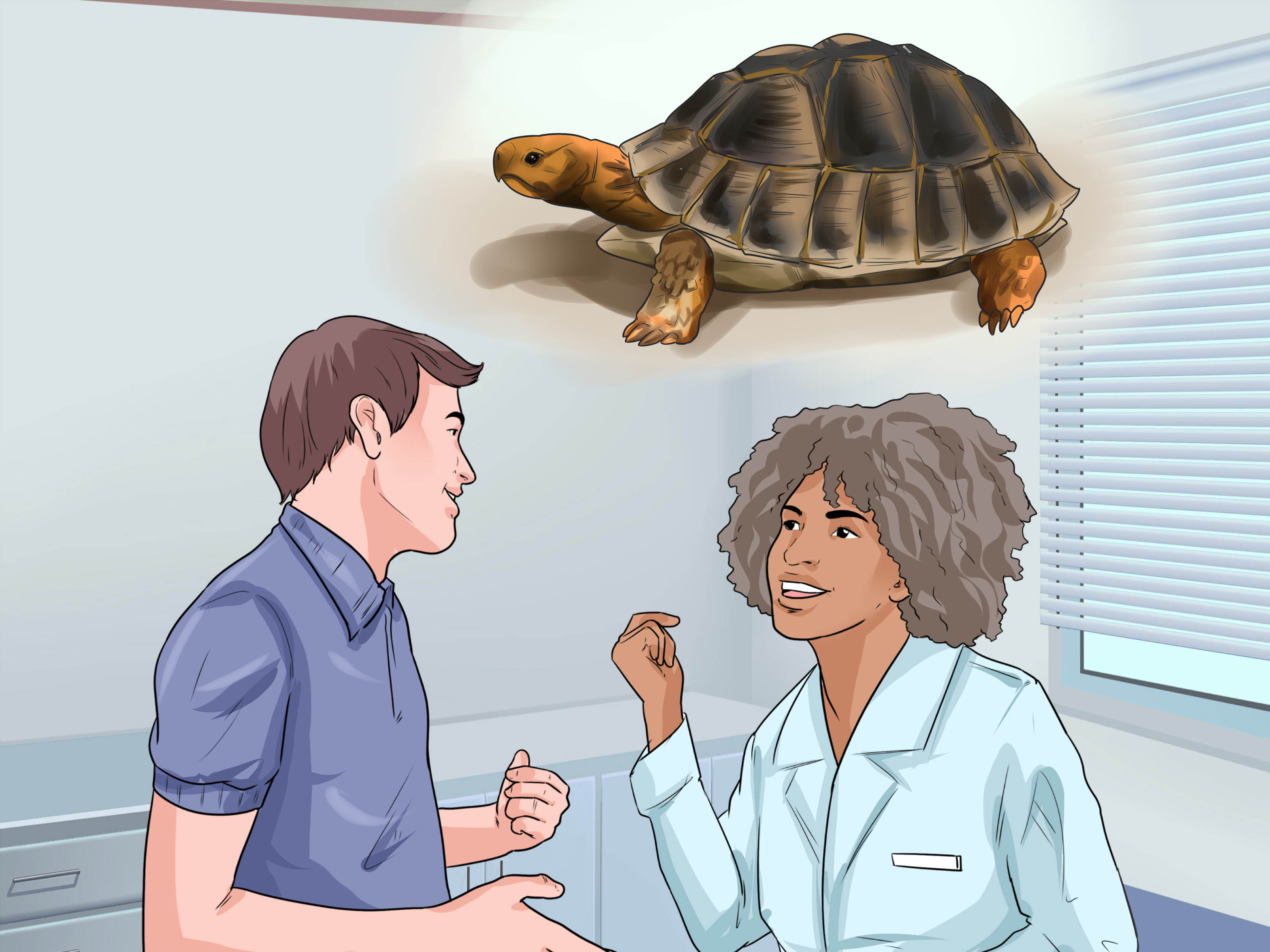
Ask a reptile veterinarian if your tortoise is too young to sex, has unusual anatomy, shows swelling near the tail, strains, stops eating, becomes lethargic, or behaves differently. A vet may use physical examination, imaging, endoscopy, or other professional methods when external traits are not enough. Do not attempt invasive sexing methods at home.
Professional help is also smart before pairing tortoises. Housing males and females together can lead to stress, injuries, repeated breeding pressure, or unwanted eggs. Keeping tortoises is not as simple as putting two shells in the same yard and hoping nature writes a polite roommate agreement.
Common Questions About Sexing Tortoises
Can you sex a baby tortoise?
Usually not reliably. Most baby tortoises lack clear external sex traits. Many young males look female until they grow. For accurate results, wait until the tortoise reaches a species-appropriate size or age.
Is a concave plastron always male?
Not always. A strongly concave plastron in a mature tortoise is a good male clue in many species, but some females can have slight curves and some males show only mild concavity. Combine this clue with tail and cloaca position.
Do females lay eggs without males?
Yes. Female tortoises can lay infertile eggs without ever mating. If you have a mature female, provide proper nutrition and learn the signs of egg-laying behavior, such as restlessness, digging, or reduced appetite.
What is the most reliable external clue?
For many adult tortoises, tail length and cloaca position are among the most useful external clues. Plastron shape and species-specific traits help confirm the identification.
Experience-Based Tips for Sexing Tortoises
After watching keepers, rescuers, and tortoise owners work through the “male or female?” question, one lesson stands out: the best identifications are made slowly. People often want a quick answer because they need a name, a housing plan, or simple peace of mind. That is understandable. But tortoises do not develop on our schedule. A young tortoise may look female for years, then suddenly grow a longer tail and reveal that the original guess was wrong. This is common enough that experienced keepers often avoid making firm claims too early.
A practical approach is to keep a photo record. Take clear pictures of the tail, plastron, and rear shell opening every few months. Label each photo with the date, species, age if known, and straight shell length. Over time, patterns become easier to see. A tail that once looked stubby may begin to lengthen. A flat plastron may start showing a slight inward curve. The anal scutes may become more defined. This method is especially helpful for slow-growing tortoises because memory can be unreliable. Photos do not get embarrassed when proven wrong.
Another useful habit is comparing only like with like. Do not compare a young Russian tortoise to an adult sulcata or a box turtle to a leopard tortoise. That is like comparing a bicycle, a tractor, and a toaster because they all have parts. Look for examples of the same species and similar size. If possible, compare multiple mature males and females from reliable care guides, veterinary sources, or experienced breeders who can explain why each animal is identified that way.
Handling style also matters. A calm tortoise shows its body more naturally. A stressed tortoise may tuck its tail tightly, clamp down, or scramble. Try checking after the tortoise is warm, awake, and settled, not right after a stressful move or bath. Use a low, stable surface. Keep the session short. Offer normal routine afterward, not a circus performance. The less dramatic the inspection, the better the information you get.
Owners should also avoid turning sexing into a single “big reveal.” It is better to say, “This tortoise is likely female based on a short tail, close vent, and flat plastron,” than to announce certainty from one blurry photo. If the tortoise is still small, write “unknown” without shame. Unknown is not failure. Unknown is good science wearing a shell.
Finally, remember why you are doing this. The point is better care. A likely female may need attention to calcium, nesting behavior, and egg-laying risks. A likely male may need separate housing if he harasses others or fights with another male. A tortoise of unknown sex simply needs patient observation and excellent husbandry. Whether your tortoise turns out to be Mr. Pickle, Ms. Pickle, or Officially Still Pickle, the real win is a healthy animal with enough space, warmth, food, hydration, and respect.
Conclusion
Sexing tortoises is easiest when you think like a careful observer, not a magician. Look at the tail, check the cloaca position, examine the plastron, and compare species-specific traits. The more clues that point in the same direction, the more confident you can be. If the tortoise is young or the signs conflict, wait and document changes over time.
For many adult tortoises, males tend to have longer, thicker tails, vents farther from the shell, and concave plastrons. Females tend to have shorter tails, vents closer to the body, and flatter plastrons. But species differences matter, and nature enjoys exceptions. When in doubt, ask a reptile veterinarian or a knowledgeable tortoise rescue. Your tortoise may move slowly, but good care decisions should still move in the right direction.
SEO Tags

