
Hair Care
30 Of The Funniest And Most Random Text Interactions Ever, According To This Twitter Profile
Jul
Some text messages arrive like tiny emotional support snacks. Others burst through the door wearing tap shoes, holding a raccoon, and asking whether “bread can feel betrayal.” That is the chaotic magic behind the viral world of funny text interactions: short conversations that start normally, take a hard left turn, and somehow become more memorable than an entire season of prestige television.
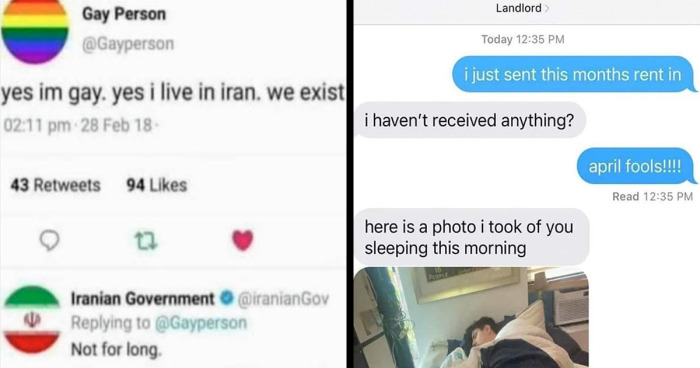
The title “30 Of The Funniest And Most Random Text Interactions Ever, According To This Twitter Profile” points to a familiar internet pleasure: screenshots of bizarre online conversations collected and shared for public amusement. The Twitter/X profile Craziest Interactions became known for posting strange, confusing, awkward, and accidentally brilliant exchanges from everyday digital life. These are not polished comedy sketches. They are better. They are real-feeling moments of human confusion, social panic, wild confidence, typo-based disaster, and conversational whiplash.
In a world where texting has become one of our default forms of communication, it makes sense that our funniest mistakes now happen inside blue, green, gray, and white bubbles. We flirt by typo, apologize with emojis, misread tone, overexplain lunch plans, and occasionally send a message so strange it deserves to be framed in a museum labeled “Humanity, Apparently.”
Why Random Text Interactions Are So Funny
The best random text interactions work because they feel unplanned. A traditional joke has a setup and punchline. A chaotic text exchange has a grocery list, an accidental insult, one person refusing to understand context, and then a final message that makes the whole thing explode like a confetti cannon in a quiet library.
Funny text messages also benefit from speed. There is no time for body language, facial expression, or the gentle social braking system we use in person. Texting removes those guardrails. Suddenly, “sure” can sound romantic, angry, tired, sarcastic, or like someone has mentally moved to a cabin in Oregon. Add autocorrect, screenshots, wrong numbers, family group chats, and strangers with too much confidence, and you have a comedy machine powered entirely by thumbs.
Another reason these interactions go viral is relatability. Even if you have never texted someone about a suspicious chicken salad or been asked whether you were walking a pig, you probably know the feeling of staring at your phone and thinking, “I understand every word in this message, but not the sentence.” That tiny moment of confusion is universal.
The Twitter/X Profile Behind the Chaos
Craziest Interactions, the profile highlighted in the viral Bored Panda feature, built its appeal around collecting internet conversations that seem too weird to be scripted. The account’s charm lies in its simple promise: here are people communicating online, and no, nobody is fully in control of the situation.
The featured interactions typically include screenshots from texts, direct messages, social media replies, dating app chats, customer-service exchanges, and family conversations. Some are savage. Some are wholesome. Some are so random that the only reasonable response is to close the app, drink water, and reconsider civilization.
What makes the format especially addictive is that each screenshot is bite-sized. You do not need a plot summary, a character arc, or a three-minute intro. You see the setup, the misunderstanding, the absurd reply, and the aftermath in seconds. It is snackable comedy for people whose attention span has been lightly microwaved by the internet.
30 Types of Funny and Random Text Interactions People Love
Instead of copying the original screenshots, let’s look at the kinds of interactions that make collections like this so irresistible. These categories appear again and again across viral text-message humor because they tap into common digital-life experiences.
1. The Wrong Number That Refuses to Leave
A stranger texts the wrong person, gets corrected, and then continues the conversation anyway. This is the digital equivalent of entering the wrong house and asking what is for dinner.
2. The Parent Who Discovers Texting Like It Is Ancient Magic
Parents often text with the energy of someone operating mission control. Random capitalization, dramatic punctuation, and mysterious sign-offs make even simple messages feel like classified government documents.
3. The Autocorrect Betrayal
Autocorrect is helpful until it decides your message about “dinner” should become a confession involving “dinosaurs.” One tiny replacement can turn a normal sentence into a family legend.
4. The Dry Reply That Ends a Career
Some people can destroy an entire paragraph with one word: “Ok.” It is not always rude, but it can feel like being emotionally audited.
5. The Group Chat Meltdown
Group chats are where plans go to multiply. One person asks where everyone wants to eat, and thirty-seven messages later someone is discussing childhood trauma, parking, and soup.
6. The Dating App Plot Twist
Dating app conversations often begin with “Hey” and somehow end with a stranger explaining their business idea for luxury socks. Romance is alive, but it may need a software update.
7. The Customer Service Conversation That Becomes Theater
When a customer and representative both stay polite while the situation gets increasingly absurd, the result can feel like a tiny workplace sitcom.
8. The Overly Honest Friend
Some friends do not sugarcoat. They salt, pepper, grill, and serve the truth with a side of “I said what I said.”
9. The Message Sent to the Wrong Chat
Few modern experiences create instant panic like realizing your private joke landed in the family group chat. That is not a notification. That is a siren.
10. The Unhinged Compliment
“You look like a haunted painting, but in a good way” is technically a compliment. It is also a sentence that needs supervision.
11. The Person Who Answers a Question Nobody Asked
Sometimes someone joins a conversation with full confidence and zero relevance. The confidence makes it funnier.
12. The Accidental Roast
A person tries to be helpful and accidentally delivers a verbal uppercut. The funniest roasts are often unintentional because the sender sounds completely innocent.
13. The Pet-Related Emergency
Animals make texts better. A cat stealing bread, a dog judging a Zoom meeting, or someone asking whether a pig was just seen on a walk can instantly turn a normal day into folklore.
14. The Typo That Creates a New Personality
Misspell one word badly enough and suddenly the sender sounds like a medieval wizard ordering takeout.
15. The Screenshot With Perfect Timing
Some exchanges are funny because the final reply arrives at the exact second the conversation should have ended. Comedy loves timing; texting accidentally provides it.
16. The Passive-Aggressive Masterpiece
Texting is a paradise for soft conflict. “No worries” can mean “No worries,” or it can mean “I am building a statue of this betrayal in my mind.”
17. The Sibling Conversation
Siblings text like two raccoons sharing one brain cell and a long legal history. The result is often blunt, chaotic, and weirdly loving.
18. The Boss Text With No Context
Work texts can be unintentionally hilarious when they arrive without explanation. “Do not touch the printer. It knows.” Fine. Understood. Terrified, but understood.
19. The Grandparent Emoji Experiment
When grandparents use emojis, the meaning may be clear, mysterious, or legally unknowable. A string of eggplants, angels, and thumbs-up icons can create a family emergency.
20. The Friend Who Treats Every Minor Problem Like a Crime Scene
A lost sock becomes evidence. A weird smell becomes motive. A missing sandwich becomes a betrayal worthy of a detective board.
21. The Conversation That Escalates Too Fast
One person asks a simple question. The other responds with a life update, a conspiracy theory, and a photo of soup. Nobody knows how we got here, but everyone is invested.
22. The Stranger With Main Character Energy
Some strangers text like they have been waiting their whole life for this wrong number. They do not apologize. They begin Act Two.
23. The Message That Sounds Like a Riddle
“Bring the triangle thing, not the triangle thing” is technically communication. It is also a puzzle designed by a sleepy goblin.
24. The Family Member Who Signs Every Text
“Love, Mom” is sweet. “Ok, I bought bananas. Love, Mom” is sweeter. “The microwave screamed. Love, Mom” is art.
25. The Accidental Philosophical Crisis
Sometimes a random text asks a question so strange it becomes profound. Can soup be a beverage? Is cereal a salad? Why do we park in driveways? The phone becomes a tiny philosophy department.
26. The Person Who Misreads the Mood
Nothing creates comedy faster than someone responding to serious news with the energy of a coupon announcement.
27. The Friend Who Sends Evidence Without Explanation
A blurry photo. No caption. A shoe in a sink. A timestamp. This is not a message; it is a cold case file.
28. The Conversation Where Everyone Is Confused but Committed
Some text threads survive purely on momentum. Nobody understands what is happening, but nobody wants to be the first to admit it.
29. The Savage Comeback
A perfect comeback in a text exchange feels like watching someone land a paper airplane in a coffee cup from across the room. Short, clean, devastating.
30. The Wholesome Random Ending
Not every funny text needs to be mean or embarrassing. Sometimes the best ones end with kindness, confusion, and someone deciding to continue the friendship anyway.
What These Viral Texts Say About Modern Communication
Funny text interactions are more than disposable jokes. They reveal how strange and flexible online communication has become. We use texts to flirt, apologize, negotiate dinner, manage work, parent, vent, gossip, comfort, and occasionally send a photo of a suspicious object with no explanation. The same format handles everything from “I love you” to “Why is there a goose in the hallway?”
Texting also compresses personality. In person, someone’s tone, posture, facial expression, and timing help explain what they mean. In a text, personality must squeeze through punctuation, word choice, emojis, reaction buttons, and reply speed. That is why a single period can sound hostile, a delayed response can create a dramatic subplot, and “lol” can mean anything from genuine laughter to “please let this conversation end peacefully.”
Viral screenshots succeed because they make private confusion public in a controlled, entertaining way. Readers get to witness a social puzzle without having to suffer the embarrassment themselves. It is the same reason people enjoy blooper reels: we recognize the mistake, we feel the awkwardness, and we laugh because it happened to someone else first.
The SEO Value of Funny Text Message Content
For publishers, funny text message roundups perform well because they combine visual storytelling, quick reading, emotional reaction, and shareability. Searchers looking for “funny text interactions,” “random text messages,” “hilarious text screenshots,” or “funny Twitter conversations” usually want light entertainment that delivers fast. A strong article can meet that intent with clear headings, short sections, and commentary that adds value instead of merely stacking screenshots.
Good SEO writing around meme culture should do more than say, “Here are funny things.” It should explain why the content works, what patterns readers recognize, and how the trend fits into everyday digital life. That approach helps the article appeal to both search engines and human readers. Google and Bing can better understand the topic, while readers get a smoother experience than a random pile of images with captions.
Related keywords can be included naturally: funny text messages, random text interactions, hilarious texts, Twitter screenshots, viral conversations, awkward messages, texting humor, internet memes, and online communication. The key is not to shove them into every sentence like a robot wearing a fake mustache. Search engines are smarter than that, and readers are definitely more judgmental.
A Quick Privacy Reminder Before Sharing Screenshots
As funny as random text interactions can be, privacy matters. Before publishing or reposting a screenshot, remove phone numbers, full names, addresses, workplaces, school names, profile pictures, personal photos, and anything that could identify someone who did not agree to be part of the joke. The internet has a very long memory and a very short attention span, which is a dangerous combination.
There is a big difference between laughing at a harmless misunderstanding and exposing someone’s private life. The best viral text content keeps the humor while removing unnecessary personal details. Crop carefully, blur generously, and ask one simple question before posting: would this still be funny if I were the person in the screenshot?
Why We Keep Coming Back to These Conversations
People love funny random texts because they make ordinary life feel less ordinary. Most of us send and receive boring messages all day: “On my way,” “Need milk,” “Meeting moved,” “Can you send the file?” Then, out of nowhere, someone sends a sentence that sounds like it escaped from a dream wearing roller skates. That break in routine is refreshing.
These interactions also remind us that everyone is a little ridiculous. The internet often encourages people to look polished, successful, attractive, productive, and emotionally balanced. Funny texts cut through that performance. They show people being confused, dramatic, clumsy, sincere, impulsive, and wonderfully strange. In other words, human.
That is why a collection of 30 random text interactions can feel more alive than a perfectly curated social feed. The messages are messy. The timing is weird. The people involved are not trying to build a brand strategy. They are simply trying to communicate, and sometimes communication falls down the stairs in the funniest possible way.
Experiences Related to Funny and Random Text Interactions
Anyone who has owned a phone for more than five minutes probably has a personal archive of text-message weirdness. Maybe it was the wrong-number message that began with “Are you still bringing the goat?” Maybe it was a parent sending a thumbs-up emoji in response to deeply emotional news. Maybe it was a friend texting “urgent” and then asking whether potatoes expire emotionally. These moments stick because they interrupt the predictable rhythm of daily life.
One of the most common experiences is the accidental group-chat disaster. Someone means to complain privately, but the message lands in the exact chat containing the person being complained about. The silence afterward is not ordinary silence. It is cinematic silence. You can almost hear the camera slowly zooming in. Then someone sends “?” and the sender’s soul briefly leaves the building.
Another relatable experience is the mysterious no-context photo. A friend sends a blurry image of a chair, a parking lot, a receipt, or a suspicious sandwich. There is no caption. No follow-up. Just evidence. You stare at it like a detective with no training and too much confidence. Ten minutes later, the friend replies, “Wrong person,” which somehow raises more questions than it answers.
Family texting deserves its own museum wing. Parents may use voice-to-text and accidentally create sentences that sound like prophecy. Grandparents may treat every text like a formal letter. Siblings may communicate entirely through insults, memes, and food requests. The family group chat can contain birthday wishes, medical updates, holiday plans, and one uncle sending a blurry photo of a bird he insists is “up to something.”
Workplace texting can be just as funny, though usually with a thin layer of panic. A boss might send a message like “Call me when you see this,” which instantly ages the recipient seven years. Then the call turns out to be about printer paper. Coworkers also create accidental comedy through overly formal messages about very small problems. “Per my previous sandwich” may be a typo, but it is also a phrase that deserves a commemorative plaque.
Dating texts are another goldmine because both people are trying to seem normal while absolutely not being normal. Someone sends a risky joke. Someone else misreads it. A compliment becomes confusing. An attempt at charm becomes a weather report. Yet even awkward dating messages can be endearing because they show effort. Bad flirting is often just optimism wearing slippery shoes.
The best personal lesson from funny text interactions is simple: communication does not need to be perfect to be memorable. In fact, imperfection is often the whole charm. A typo can become an inside joke. A confusing message can start a friendship. A wrong number can become a story people retell for years. Texting may be casual, but it carries personality in every strange little bubble.
So the next time a random message makes no sense, resist the urge to dismiss it immediately. It might be a mistake, a joke, a cry for help from autocorrect, or the opening scene of a tiny comedy masterpiece. Just remember to screenshot responsibly, blur the private details, and appreciate the fact that modern life occasionally delivers free entertainment directly to your pocket.
Conclusion
“30 Of The Funniest And Most Random Text Interactions Ever, According To This Twitter Profile” captures exactly why internet users love chaotic screenshots: they are quick, relatable, surprising, and deeply human. Whether the humor comes from a wrong number, a savage comeback, a parent discovering emojis, or a conversation that makes less sense with every reply, funny text interactions remind us that communication is not always clean and polished. Sometimes it is weird, awkward, accidental, and absolutely hilarious.
In the end, the appeal of these viral conversations is not just randomness. It is recognition. We see our friends, families, coworkers, dates, and ourselves in those little message bubbles. We laugh because we have been there. We laugh because we are glad we were not there. And sometimes, we laugh because somewhere in the chaos of modern texting, a person accidentally says the funniest possible thing at the funniest possible time.
Note: Before publishing screenshots of real conversations, remove identifying information and avoid exposing private or sensitive details. Humor works best when the joke is funny without turning real people into targets.

