
Hair Care
3 Ways to Amuse Your Parakeet or Other Bird
Jun
Your parakeet (budgie) wakes up every morning as a tiny feathered athlete with a PhD-level curiosity and a beak that says,
“I can remodel this entire cage by lunch.” In the wild, birds don’t spend their day staring into a seed bowl like it’s a
dramatic soap opera. They climb, forage, problem-solve, gossip with the flock, and investigate anything that looks even
slightly suspicious (especially if you said, “Don’t touch that.”).
When a pet bird gets bored, they don’t quietly scroll their phone. They may scream, chew the wrong things, pace, or
develop habits you’d both rather skip. The good news: entertaining your parakeet or other pet bird doesn’t require a
giant toy budget or a degree in circus arts. It takes a little strategy, a little variety, and a willingness to accept
that your bird will fall in love with the $0.03 paper scrap instead of the $30 “premium deluxe” toy.
Below are three practical, bird-approved ways to keep any companion bird engagedbudgies, cockatiels, conures, lovebirds,
and beyondplus safety notes so the fun doesn’t turn into a vet visit.
1) Turn Meals Into a Treasure Hunt: Foraging Fun
Why foraging is basically streaming entertainment for birds
Food is more than calories for birdsit’s an activity. In nature, many parrots spend a huge portion of the day searching
for food, manipulating it, and moving from place to place while doing it. In a cage, the “work” is often reduced to
“walk two inches, eat everything, demand encore.” If you want to amuse your parakeet, turning meals into a game is
one of the fastest, most natural forms of bird enrichment you can offer.
The goal isn’t to frustrate your bird. The goal is to make them think, explore, and earn a little of what they’d normally
inhale in 90 seconds. Think of it as giving your bird a jobexcept the job pays in snacks and glory.
Foraging Level 1: Easy wins for budgies and small birds
Start ridiculously simple. If your bird has never foraged before, you’re not building an escape room on day one. You’re
building a “snack scavenger hunt” that feels safe and solvable.
- Paper Cup Surprise: Put a few seeds or tiny treats in a plain paper cup, then lightly crumple the rim so it’s “closed” but not sealed.
- Coffee Filter Burrito: Wrap a small treat in an unbleached coffee filter like a tiny bird burrito. Twist the ends like candy.
- Newspaper Wrap: Wrap a favorite item (like a small spray of millet) in a strip of plain newspaper and twist it shut. (Skip glossy pages.)
- Tube Time: Hide a treat in a cardboard tube (paper towel or toilet paper roll), then fold in the ends. For small birds, cut the tube down so it’s not intimidating.
Pro tip: For budgies, keep portions tiny and frequent. Your parakeet doesn’t need a full buffet hidden in one puzzle.
Three minutes of “hunt, shred, triumph” is the point.
Foraging Level 2: DIY puzzle buffet (still cheap, now extra impressive)
Once your bird understands “I can manipulate stuff and food magically appears,” you can level up with simple household
materials (bird-safe, clean, and free of staples/tape where your bird can chew it).
- Egg Carton Hunt: Put a few pellets/seeds in a paper egg carton cup, cover with crumpled paper, and close the lid.
- Shredded Paper “Dig Box”: Use a shallow tray filled with plain paper strips; sprinkle a small amount of food so your bird has to rummage.
- Wiffle Ball Stuffing: Stuff plain paper through a wiffle ball and tuck treats inside. Birds love “destroy to discover.”
- Skewer Safari: Clip greens or safe veggies so your bird has to climb and nibble (great for many species).
Rotate the “format” every few days. Even swapping the location of a foraging toy can make your bird re-check it like a
detective returning to the scene.
Foraging safety: keep “fun” from becoming “uh-oh”
- Skip adhesives and staples: If you must use fasteners, use bird-safe hardware (like stainless steel clips) and place them where chewing is unlikely.
- Watch the ink and coatings: Avoid glossy or heavily dyed paper. Choose plain paper/cardboard whenever possible.
- Limit high-fat treats: Foraging should often use the bird’s regular diet (pellets, measured seed, chopped veg) with treats as a bonus.
- Supervise new setups: Especially the first few times, watch how your bird interacts. Some birds shred; others swallow weird things like it’s a competitive sport.
2) Teach Tiny Tricks: Positive-Reinforcement Training Games
Training isn’t “obedience”it’s a brain workout (with snacks)
Birds are smart. Like, “I can open that latch you thought was secure” smart. Training gives that brain a safe place to go.
It also improves handling, reduces fear, and creates a shared language between you and your bird.
The secret sauce is positive reinforcement: your bird does something you like, you mark it (with a click or a consistent
word like “Yes!”), and you deliver a tiny reward. The humor here is that your bird will quickly learn you are a
treat-dispensing vending machine with feelings.
Keep sessions short, upbeat, and repeatable
- Length: 3–5 minutes per session is plenty for most birds, especially budgies and smaller parrots.
- Frequency: Two short sessions a day often beats one long session where everyone gets cranky.
- Rewards: Use tiny piecesmillet crumbs for budgies, a single seed, a pellet fragment, or a micro-bite of a favorite food.
- End on a win: Stop while your bird is still excited. Leave them thinking, “Wait, the show is over already?”
Three easy training games that amuse birds fast
A) Target Touch (the “follow the magic wand” game)
Hold a target (a chopstick or target stick) a short distance away. When your bird leans toward it, mark and reward.
Gradually shape this into a gentle beak tap on the target. Target training is the Swiss Army knife of bird training:
you can use it to guide your bird around the cage, onto a perch, into a carrier, or away from trouble without drama.
B) Step-Up / Step-Down (the classic, but make it fun)
For parrots and parakeets, “step up” can become a game instead of a demand. Present your hand or perch calmly at belly
level. The moment your bird shifts weight forward or lifts a foot, mark and reward. Reward generously for calm, polite
stepping. For birds that are nervous, use a handheld perch first.
C) Spin, Wave, or “High-Five” (party tricks with real benefits)
Simple tricks provide movement and confidence. Use the target to lure a small turn (spin), then mark and reward the
completed rotation. For a wave, reward any foot lift, then gradually shape it into a deliberate “hello.” Your bird gets
enrichment, exercise, and a new way to charm guests into becoming unpaid treat donors.
Common training mistakes (and how to avoid them)
- Going too long: If your bird’s attention wanders, you missed the stop sign. End the session and try later.
- Accidental bribery: Don’t show the treat first as a lure forever. Mark the behavior, then deliver the reward.
- Forcing contact: Birds remember scary moments. If your bird backs away, slow down, lower criteria, and rebuild trust.
- Ignoring body language: Fluffed feathers, pinned eyes, lunging, or frantic movement can mean “not now.” Respect that.
Done right, training becomes daily entertainment: your bird gets a puzzle, you get better manners, and everyone gets
snacks. It’s basically a wholesome sitcom.
3) Build a Mini Adventure Park: Environment & Sensory Enrichment
Make the cage a “home,” not a waiting room
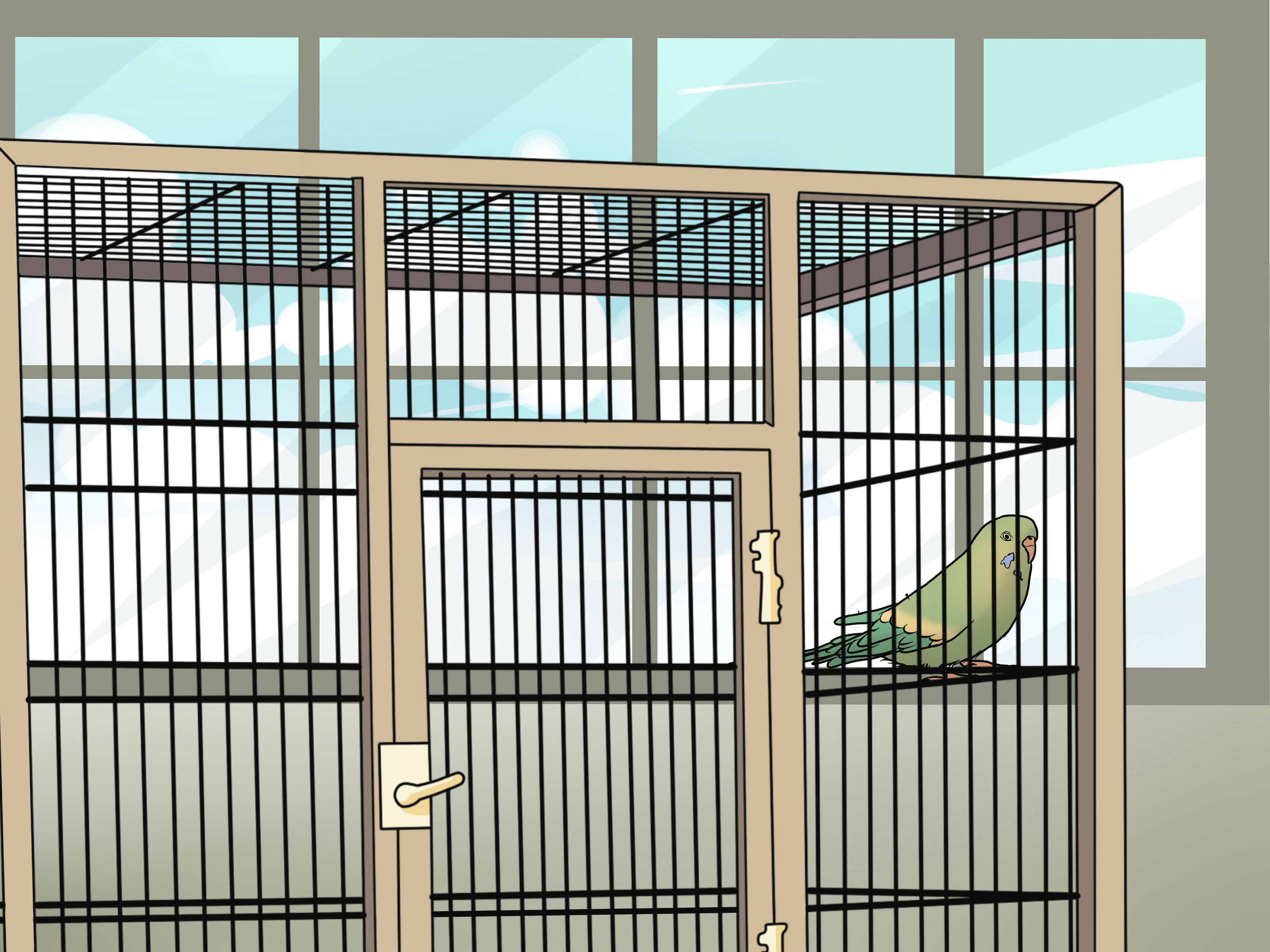
A bird’s environment is either a playground… or a tiny box of existential dread. A great cage setup supports climbing,
chewing, exploring, and choice. And choice is huge for birds: they feel safer and calmer when they can move away from
something, pick a perch, or investigate on their terms.
Start with variety: different perch diameters and textures, swings or ladders, safe chewable toys, and at least one
“quiet spot” where your bird can relax without being stared at like a museum exhibit.
Rotate toys like a comedian testing new material
Your bird doesn’t need 40 toys in the cage at once. That’s not enrichment; that’s clutter. Instead, offer a smaller set
and rotate. One week: shreddables. Next week: a bell-and-bead toy (size-appropriate). Then: a foraging toy plus a new
perch. The novelty is what keeps your bird curious.
- Shredding toys: Great for many parrots; budgies often adore thin paper, balsa, sola, and palm-style shreddables.
- Climbing toys: Ladders, swings, boings (monitored), and platform perches for birds who like to lounge.
- Manipulation toys: Light plastic toys for non-chewers (like finches), or sturdier options for stronger beaks.
Out-of-cage play zones: safe exploration without chaos
If you want to truly entertain your bird, create a designated “bird zone” outside the cage: a play stand, a tabletop gym,
or a perch tree. This becomes the place where fun happenstraining, foraging, social time, and “investigate the world”
energy.
Before out-of-cage time, bird-proof like you’re hosting a toddler with wings:
- Close windows and doors; turn off ceiling fans.
- Remove other pets from the room.
- Cover or block dangerous gaps (behind appliances, open water, etc.).
- Keep cords, toxic plants, and small swallowable items out of reach.
Bird TV: sound, baths, and “newness” without stress
Sensory enrichment can be simple and surprisingly effective:
- Music and rhythm: Many birds enjoy predictable sounds. Try gentle music, whistling routines, or a “good morning” phrase your bird learns to anticipate.
- Bath options: Some birds love a shallow dish bath; others prefer misting or a shower perch. Bath time can be both enrichment and feather care.
- Window time (safely): A perch near natural light can provide stimulation. Avoid drafts and keep the area free from kitchen fumes and aerosols.
- New objects, introduced slowly: A paper bag, a new perch, a cardboard “tunnel.” Present it at a distance first so cautious birds don’t panic.
Safety: the “please don’t learn this the hard way” checklist
Birds are sensitive in ways that surprise new owners. A few high-impact safety reminders:
- Avoid non-stick/PTFE fumes: Keep birds away from kitchens and overheated non-stick cookware or appliances. Ventilation matters.
- Watch for heavy metals: Old hardware, cheap chains, and questionable bells can contain dangerous metals. Choose bird-safe materials and inspect wear.
- Inspect rope and fibers: Frayed rope can tangle toes or be ingested. If you use rope perches/toys, monitor chewing and trim frays immediately.
- Remove broken toys fast: If parts loosen, crack, or splinter, retire the toy. Your bird’s beak is basically a demolition tool with opinions.
- Skip aerosols around birds: Strong sprays, smoke, and scented products can be risky in poorly ventilated spaces.
Fun is great. Safe fun is better. “Emergency fun” is not a category anyone wants to explore.
Putting It Together: A Simple Weekly Plan
If you like structure (and your bird likes predictability), here’s an easy rhythm:
- Daily: 1 small foraging activity + 3–5 minutes of training + a little out-of-cage time (when possible).
- Twice a week: Rotate one toy or perch. Keep the cage functional and uncluttered.
- Weekly: Introduce one “new” thingan herb clip, a paper craft toy, a different foraging wrapper, a new sound routine.
The point isn’t to entertain your bird every second. The point is to create a life that feels active, interesting, and
socially connectedbecause that’s what most companion birds are built for.
Conclusion
If you remember nothing else, remember this: your bird is not “being dramatic” when they want stimulation. They’re being
a bird. The fastest way to amuse your parakeet or other pet bird is to give them the kind of activities their species
evolved to dosearch for food, solve small problems, and interact with their flock (that’s you, congratulations).
Start with foraging to make meals interesting. Add short, upbeat training games for a brain workout and better manners.
Then build an environment that encourages movement, choice, and safe exploration. Rotate, observe, adjust, and laugh a
little when your bird chooses cardboard over the fancy toy you were oddly proud of.
Experiences and Lessons Bird Owners Commonly Share (Extra )
While every bird has a unique personality, many bird owners describe a few repeating patterns that can help you troubleshoot
“my bird is bored” moments without overcomplicating things.
1) The “expensive toy rejection” phenomenon is real. Owners often report buying a beautiful toy only to watch their bird ignore it like
it’s a tax document. Then the bird falls head-over-heels for a paper straw, a plain cardboard strip, or a crumpled receipt
(which, for the record, is not a recommended chew). The lesson: birds like what they can manipulate and “defeat.” If your
bird ignores a toy, try breaking it into smaller, less intimidating pieces or pairing it with a tiny treat so the toy has a
reason to exist in their world.
2) Foraging often changes the whole mood of the household. Many caretakers notice that when they introduce a small daily foraging ritual
like a paper cup stuffed with a few pellets and a pinch of milletthe bird becomes calmer afterward. The bird has “done
something” with their energy instead of channeling it into yelling at the refrigerator. One common approach is the “morning
mission”: the first meal of the day is partly hidden so the bird starts the day with a win.
3) Training works best when it’s treated like a game, not a test. People often say their bird learns fastest when sessions are tiny and silly:
one successful target touch, a reward, and a celebration voice like you’re hosting a tiny game show. Owners also report that
birds can get cranky if training drags on, especially after dinner when many parrots shift into “I would like to be admired
quietly” mode. The big takeaway: stop early. Leave your bird wanting more. You want the bird thinking, “That was fun,” not
“I have filed a complaint with the union.”
4) The environment matters more than people expect. A recurring story: a bird that “never plays” suddenly becomes playful after the cage setup changes.
Sometimes the fix is simplemoving the cage away from a busy doorway, adding a higher perch so the bird feels secure, or
uncluttering the center so the bird can move comfortably. Owners also report that rotating just one or two items at a time
is less stressful for cautious birds than a full cage makeover that looks like a new apartment overnight.
5) Birds love routines with tiny surprises. Many people describe success with a predictable schedule (lights, meals, out-of-cage time), plus a small daily
novelty: a different foraging wrapper, a new safe veggie clipped to the bars, or a “music minute” where you whistle the same
tune. Birds often seem to enjoy knowing what’s comingand also enjoying a little bonus content.
6) Safety is part of the enrichment story. Owners frequently mention that their best “upgrade” wasn’t a new toyit was learning what to remove: fraying rope,
questionable metal parts, fumes from the kitchen, or dusty old items that crumble. A safe setup gives you freedom to be more
creative because you’re not constantly playing defense.
In the end, the most shared experience is simple: when you meet your bird’s need to forage, learn, and explore, they often
become more confident, more interactive, and yesmore amusing. Your bird gets a richer life, and you get the joy of living
with a tiny creature who thinks you’re fascinating and slightly trainable.
SEO Tags

