
Skincare
130 Of The Funniest And Most Accurate History Memes That People Shared On This Group
Jul
History has a reputation problem. Mention the subject and some people immediately picture dusty textbooks, suspiciously long timelines, and an exhausted teacher attempting to make the Treaty of Versailles sound exciting before lunch. History memes, however, take a different approach: they compress centuries of ambition, disaster, betrayal, and spectacularly poor decision-making into one image and a punchline.
The best history memes are not simply modern jokes pasted onto portraits of people wearing powdered wigs. They work because the joke depends on something recognizable and at least reasonably accurate. You laugh at the Roman Empire’s endless political drama, Napoleon’s logistical headaches, or the Cold War’s nuclear anxietyand then realize you have accidentally remembered a historical concept.
That is the appeal behind collections such as 130 Of The Funniest And Most Accurate History Memes That People Shared On This Group. The memes cover famous rulers, overlooked innovators, ancient customs, world wars, religious conflicts, scientific breakthroughs, and enough collapsed empires to make modern project managers feel surprisingly competent.
The Online Group Where the Past Becomes a Punchline
Much of this style of historical comedy comes from the r/HistoryMemes community, a public forum created in 2012. Its rules require posts to remain history-related, encourage historical accuracy, prohibit atrocity denial, and generally limit subjects to events that happened at least 20 years ago. In other words, yesterday’s awkward meeting is not history yet, no matter how traumatic it felt.
The community’s members transform complicated events into visual shorthand. A familiar reaction image might represent the Roman Senate watching another emperor create a constitutional crisis. A distracted boyfriend template can explain shifting European alliances. A nervous cartoon character can summarize the moment a government realizes that invading Russia involves snow, distance, mud, and consequences.
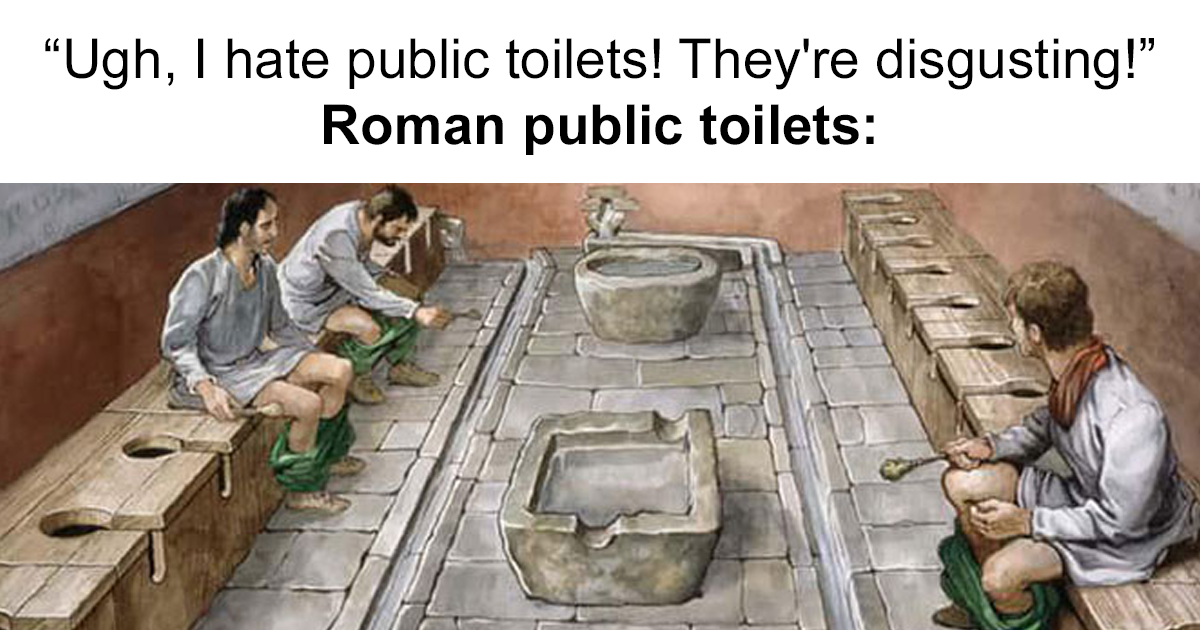
The original roundup includes jokes involving swimmer Gertrude Ederle, wartime blackout rules, ancient Egyptian cats, Roman public toilets, Antarctic explorers, precolonial African architecture, the Trojan horse, religious rivalries, musicians, scientists, and political leaders. The subjects jump across continents and centuries, but the formula remains consistent: establish the historical situation, add a modern emotional reaction, and let humanity’s recurring chaos provide the punchline.
Why Funny History Memes Work So Well
They Turn Huge Events Into Understandable Situations
A textbook might need several pages to explain why an alliance collapsed. A meme can portray one country as the friend who organized the party and then refused to attend. That comparison does not provide every diplomatic detail, but it gives readers an immediate mental framework.
One popular example of this style concerns the League of Nations. President Woodrow Wilson promoted the organization after World War I, yet the United States never became a member. That contradiction practically writes its own meme: someone enthusiastically creating a group chat and then leaving before anyone else responds. The joke is simple, while the historical irony is real.
They Reveal That Historical Figures Were Still Human
Paintings and statues often make historical figures look permanently serious, as though they never lost an argument, missed an appointment, or made a decision while hungry. Memes remove some of that ceremonial distance.
Kings become nervous managers. Generals become overconfident gamers who ignored the tutorial. Philosophers become people who asked one question and accidentally created 300 years of homework. Explorers become travelers who refused to admit they were lost. Once historical figures are presented as recognizable personalities, their choices become easier to examine.
This does not mean every ruler should be reduced to “that one chaotic guy.” It means humor can provide an entrance into a larger story. The joke creates curiosity; curiosity leads to names, dates, primary sources, and, occasionally, a 2 a.m. investigation into medieval tax policy.
They Make Obscure Details Memorable
Major battles receive plenty of classroom attention, but history memes often shine brightest when they feature small, strange details. A bagpiper playing near an unimpressed penguin in Antarctica is more likely to remain in someone’s memory than the official name of an expedition. Ancient communal toilets suddenly make Roman daily life feel less abstract. Egyptian cat imagery becomes evidence that the internet’s feline obsession may simply be the latest stage of a very old tradition.
These details help readers imagine the past as a lived environment rather than a list of governments. People ate, complained, traveled, entertained themselves, argued with neighbors, and adopted animals long before anyone could post about it.
The Historical Eras That Produce the Best Memes
Ancient Civilizations: Monumental Achievements and Eternal Drama
Ancient history offers almost unlimited meme material. The Egyptian relationship with cats fits modern pet humor perfectly. Greek mythology contains enough family conflict to power several television networks. Roman politics delivers assassinations, civil wars, suspicious successions, military coups, and leaders who treated the empire like a personal lifestyle brand.
Roman memes often focus on expansion, engineering, public life, and imperial instability. One joke may celebrate aqueducts and roads; the next may show the Senate reacting to yet another general arriving with loyal troops and a relaxed attitude toward constitutional procedure.
The Trojan horse also remains irresistible, even though it belongs to epic tradition rather than straightforward documented history. The idea of soldiers hiding inside a wooden horse while attempting not to cough, sneeze, or ask whether the plan has been approved is naturally funny. It is the ancient equivalent of hiding behind a curtain while wearing armor.
The Middle Ages: Plagues, Castles, and Questionable Medical Advice
Medieval history memes enjoy contrasting romantic fantasy with uncomfortable reality. Modern audiences imagine shining knights, dramatic castles, and noble quests. The memes respond with mud, disease, inheritance disputes, religious conflict, agricultural labor, and medical treatments that make “drink more water” sound revolutionary.
Plague-doctor imagery is especially popular because the long-beaked mask looks both eerie and unexpectedly fashionable. Yet responsible memes should distinguish between later plague-doctor clothing and the many different responses to outbreaks across medieval and early modern Europe. A recognizable costume is useful for comedy, but it should not become a substitute for an entire historical period.
Revolutions: When the Group Project Becomes a Regime Change
The American, French, Haitian, Russian, and other revolutions provide ideal setups: inequality, political frustration, competing factions, powerful slogans, and leaders who discover that controlling a revolution is much harder than starting one.
French Revolution memes particularly enjoy the rapid movement from reform to radicalization. One panel may show citizens demanding representation; the next features a guillotine working overtime while political factions accuse one another of insufficient enthusiasm. Robespierre’s rise and fall is frequently summarized as the ultimate example of becoming far too committed to a workplace policy.
Good memes also make room for revolutions that popular summaries overlook. Including Haiti, anticolonial movements, Indigenous resistance, and women’s political activism expands the historical conversation beyond the usual parade of European generals.
Imperialism: Maps, Rivalries, and Terrible Boundary Decisions
Imperial history memes often depict European powers staring at a world map as though they were dividing a pizza nobody had invited them to order. The humor exposes greed, competition, and the absurd confidence with which distant governments claimed lands already inhabited by complex societies.
Memes can also challenge stereotypes. Images of precolonial African cities and architecture push back against the false idea that the continent lacked sophisticated states, scholarship, commerce, or urban development before European conquest. A clever joke may grab attention, but the deeper value lies in encouraging readers to question the incomplete narratives they previously encountered.
The World Wars: Dark Humor With Necessary Boundaries
World War I memes frequently center on tangled alliances, trench warfare, outdated military assumptions, and the grim realization that industrial technology had transformed combat. Leaders expected movement and glory; soldiers received mud, artillery, barbed wire, and waiting.
World War II memes often use recognizable events such as civilian blackout regulations, codebreaking, logistical failures, resistance movements, and shifting fronts. Humor can make complicated strategy easier to understand, but it must never trivialize genocide, mass suffering, or crimes against humanity. The Holocaust was the systematic, state-sponsored persecution and murder of six million European Jews by Nazi Germany and its allies and collaborators, alongside the persecution and murder of millions of other victims. Accuracy and respect are not optional when the joke approaches such subjects.
The Cold War: Global Tension, Local Panic, Excellent Reaction Images
The Cold War gave history-meme creators espionage, propaganda, proxy wars, competing space programs, ideological arguments, nuclear drills, and politicians pretending everything was completely under control.
The space race can be portrayed as two superpowers trying to outdo each other with increasingly expensive science projects. Nuclear diplomacy resembles two people holding lit fireworks while insisting the other person should calm down. The Berlin Wall, the Cuban Missile Crisis, and intelligence operations all fit naturally into modern formats about anxiety, surveillance, and deeply uncomfortable group chats.
When a History Meme Is Accurateand When It Is Just Confident
A meme can be funny without being reliable. Images are easily miscaptioned, legends are repeated as facts, and complicated people are reduced to one personality trait. The funniest wording in the world cannot transform a false claim into history.
Readers should treat memes as starting points. Check the date, identify the people shown, and search for the original context. Ask whether the image actually comes from the period described. Look for primary materials such as letters, photographs, speeches, government records, maps, newspapers, and artifacts.
The Library of Congress describes primary sources as the raw materials of history, while the National Archives emphasizes that analyzing original documents helps students engage in the work historians actually do. Primary sources still require interpretation, but they provide a stronger foundation than an image reposted by an account named “DefinitelyRealFacts1488.”
Historical context also matters. A quotation can be authentic but misleading when separated from the speech, audience, or political situation in which it appeared. A statistic might be technically correct while hiding uncertainty. A famous anecdote may have been invented decades later. Responsible meme creators understand that simplification is necessary; distortion is not.
Can History Memes Actually Help People Learn?
Humor improves attention because it gives the audience a reason to stop scrolling. Familiar templates also reduce the initial effort required to understand unfamiliar material. Readers already recognize the emotional structureconfusion, betrayal, overconfidence, panicso they can focus on the historical comparison.
Educators have noted that short, playful history videos and memes can require genuine synthesis. Reducing a complicated event to one clear joke demands an understanding of its central conflict. The limitation is equally important: a 15-second video or single image cannot provide the whole story. It can summarize an idea and inspire research, but it should not become the final authority.
In classrooms, students can create their own memes after studying a topic. To make the assignment useful, they should explain the joke, identify the evidence supporting it, and describe what the meme leaves out. That turns casual comedy into an exercise in interpretation, sourcing, and historical reasoning.
A Reader’s Experience: One Meme, Twelve Tabs, and a Lost Afternoon
The typical history-meme experience begins innocently. You see an image of a confused emperor, understand approximately 60 percent of the joke, and decide to verify one tiny detail. This seems reasonable. It will take two minutes.
The first search reveals that the emperor had three official titles, four political enemies, and a relative whose identity remains disputed. You open another page to understand the family tree. The family tree looks less like a tree and more like a plate of spaghetti thrown at a government building.
A second meme appears while you are reading. It concerns a battle you vaguely remember from school, except the joke suggests that weather played a major role. Naturally, you investigate. Soon you are comparing maps, troop movements, supply routes, and seasonal rainfall. You have forgotten the original meme but developed strong opinions about military logistics.
Then comes the comment section. One person adds a useful correction. Another supplies a related fact. A third confidently announces something completely false. Someone else responds with a three-paragraph explanation and a scanned document. Two strangers begin arguing about terminology used in a language neither of them speaks. A moderator arrives like a weary village constable.
The most enjoyable moment occurs when a joke overturns an old assumption. Perhaps you discover that a famous “fact” was propaganda, that an overlooked woman completed an extraordinary achievement, or that an ancient society was more technologically and culturally complex than popular entertainment suggests. The meme has done more than produce a laugh; it has exposed a gap in your understanding.
There is also an oddly comforting rhythm to the collection. Every era contains leaders who ignored advice, institutions that resisted change, plans ruined by weather, alliances built on mutual suspicion, and public projects that exceeded their budgets. Clothing changes. Technology changes. The human ability to say “this will probably be fine” immediately before disaster remains remarkably stable.
After an hour, you return to the original collection. You now understand the first meme, but the next one mentions a scientific dispute from the nineteenth century. Another tab opens. Then another. At some point, the afternoon is gone, your coffee is cold, and you know far more about Antarctic bagpipes than you expected to learn.
That is the real experience behind great history memes. They do not replace serious reading. They create the itch that serious reading can scratch. A successful meme leaves the reader laughing, questioning, and searching. It converts “I never cared about this” into “Wait, did that really happen?” Few history lessons have a better opening line.
Conclusion: History Is Funnier When You Know the Context
The funniest and most accurate history memes succeed because they respect both comedy and evidence. They find familiar emotions inside unfamiliar centuries, transforming emperors, inventors, revolutionaries, soldiers, artists, and ordinary citizens into people whose triumphs and mistakes still feel recognizable.
A meme may not explain every cause of a war, every consequence of colonialism, or every faction within a revolution. It can, however, make someone curious enough to begin learning. That is no small achievement in an online environment where attention spans are regularly defeated by videos of cats falling off furniture.
Enjoy the jokes, appreciate the creative comparisons, and fact-check the captions. History deserves more than memorizationbut it also deserves better than misinformation wearing a funny hat.

