
Beauty Unlocked
10 Shameful Facts About Japanese-American Internment
Aug
Historians usually prefer the more precise term Japanese American incarceration, because “internment” can sound almost tidy compared with what actually happened. In reality, after Pearl Harbor, the U.S. government forced tens of thousands of people of Japanese ancestry out of their homes, stripped away basic liberties, and confined them in remote camps under the banner of national security. The official story was fear. The real story was fear mixed with racism, haste, and a spectacular failure of American ideals.
The Ugly Truth Behind a National Scandal
This history is shameful not because it is confusing, but because it is painfully clear. The government had power, public panic, and a convenient enemy. Japanese Americans had none of those things. What followed was one of the most serious civil-liberties abuses in U.S. history, and it still matters because it shows how quickly constitutional rights can disappear when prejudice gets dressed up as policy.
1. Executive Order 9066 made mass removal look legal
On February 19, 1942, President Franklin D. Roosevelt signed Executive Order 9066, which authorized the military to exclude people from designated areas and ultimately led to the forced removal of Japanese Americans from the West Coast. The order did not name Japanese Americans outright, but it created the machinery for their removal anyway. That is one of the most alarming things about it: a broad bureaucratic order became a tool for sweeping away an entire community’s rights.
2. Most of the people punished were American citizens
Nearly 120,000 people of Japanese ancestry were forced from their homes, and roughly two-thirds of them were U.S. citizens by birth. That means the government did not just target immigrants; it targeted Americans. That fact alone should stop any easy attempt to excuse the policy as a wartime inconvenience. It was not. It was the mass confinement of citizens based on ancestry.
3. Families were given almost no time to prepare
Many families had only a few days to shut down shops, sell equipment, pack what they could carry, and figure out who would take care of everything else. The result was chaos that looked a lot like legalized theft. Homes were left behind. Farms were abandoned. Businesses were sold for a fraction of their value, if they could be sold at all. The government’s speed was not a virtue here; it was part of the cruelty.
4. The camps were remote, isolated, and deliberately miserable
The incarceration sites were placed in lonely, harsh locations, often in deserts or other isolated areas. The government called them “relocation centers,” a classic euphemism that sounds almost polite until you remember that barbed wire, guard towers, and armed soldiers were not especially polite at all. People lived in barracks built for speed, not dignity, and the settings themselves reinforced the message that they were being hidden away from the rest of America.
5. Property loss was enormous and rarely fully repaired
Behind every family’s removal was a trail of financial damage: farms left untended, stores shuttered, leases broken, tools sold, and savings drained. The loss was not just emotional; it was economic, generational, and deeply practical. Some families never recovered financially. Others rebuilt only after years of work that no compensation could truly match. The redress effort eventually recognized the injustice, but it came decades too late to restore what had already been taken.
6. Due process was basically thrown out the window
Japanese Americans were not individually charged with crimes, and the government did not have to prove that each person was a threat. Instead, ancestry itself became the excuse. That is the civil-liberties nightmare at the heart of this history: people were deprived of freedom because of what they looked like and where their parents came from, not because of anything they personally did. The National WWII Museum notes that the policy violated essential constitutional rights, and Densho’s history materials emphasize how quickly rights can vanish when fear takes over.
7. The “loyalty questionnaire” turned trauma into a paperwork test
In 1943, adults in the camps were asked to answer a loyalty questionnaire that became one of the most controversial parts of the incarceration experience. The form helped the government sort people into categories, but it also split families and communities, because the questions were loaded, confusing, and often impossible to answer without consequences. Instead of healing the damage, the questionnaire deepened it. Some people were labeled disloyal for answers that reflected anger, confusion, or loyalty to family members already behind barbed wire.
8. The Supreme Court did not save them when it mattered
Fred Korematsu challenged the government’s authority to detain Japanese Americans, but the Supreme Court upheld the exclusion policy in 1944. The decision later became a symbol of judicial failure in the face of wartime panic. Even though the ruling has been condemned for decades, the harm had already been done by the time the legal system caught up emotionally and morally. A democracy can survive a bad decision only by admitting it was bad. This one took far too long.
9. Japanese Americans still served the country that imprisoned their families
One of the most bitter ironies of this history is that Japanese Americans served in the U.S. military even while their families were being held in camps. More than 33,000 Nisei volunteered to serve, and segregated units such as the 442nd Regimental Combat Team became among the most decorated in U.S. military history. That service did not erase racism, but it exposed the absurdity of the government’s claim that Japanese ancestry itself was the problem. The nation asked for loyalty while withholding justice.
10. The apology came decades later, which is not the same as making it right
Congress eventually passed the Civil Liberties Act of 1988, which provided a formal apology and reparations for surviving Japanese Americans. That was important, necessary, and long overdue. But the delay itself is part of the shame. A wrong this large should not require generations of advocacy before the government admits what happened. The apology mattered. The waiting was the injury on top of the injury.
Why this history still matters
The Japanese American incarceration is not just a chapter in World War II history. It is a test case for what happens when national fear outruns constitutional restraint. Densho, the National Archives, the Smithsonian, and the National WWII Museum all stress that the legacy is about more than one community’s suffering; it is about the fragility of civil liberties under pressure. When a government can convince itself that ancestry is suspicious, the danger is never limited to one group for long.
What This History Feels Like in Real Life
Learning about Japanese-American incarceration is different from memorizing a date. A date sits still on the page. A human story does not. The first time many people encounter this history seriously, the reaction is usually a mix of disbelief and embarrassment. Disbelief, because it sounds too extreme to have happened in the United States. Embarrassment, because once you see the facts clearly, the moral failure is impossible to miss. That combination matters. It means the story is doing its job: it is refusing to let the past stay neatly packaged.
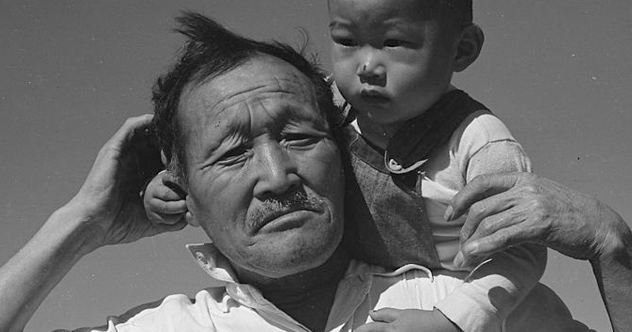
For students, the experience often begins with a photo. It might be a family standing beside a suitcase. It might be a barrack in a dusty landscape. It might be a classroom display at Manzanar or Tule Lake. Suddenly the topic stops being abstract. The family’s clothes look ordinary. The bags look too small. The people look as if they expected to return home in a few days, because many of them did. That is the part that lands hardest: not only were they removed, but they were removed with the kind of speed that makes dignity nearly impossible.
For descendants, the experience can be even more complicated. There is often pride in family survival, but also grief that never fully went away. A grandmother may have stopped talking about camp life. A grandfather may have saved a camp photograph in a drawer for decades. A parent may have grown up hearing fragments instead of full stories, because the adults who lived through the camps learned that silence was safer than reliving the hurt. In that way, the incarceration was not a single event. It was a long inheritance.
When people visit a camp site today, the landscape can feel strangely quiet. The desert wind, the remains of foundations, and the reconstructed blocks of barracks create a kind of silence that is heavy rather than peaceful. You do not just learn that confinement happened there. You feel the scale of it. You begin to understand how the camps were designed to make ordinary life hard: the distance from cities, the weather, the dust, the fences, the watchtowers, the sheer boredom. Even in a museum, those details carry force. They remind visitors that oppression is not only dramatic. It is also repetitive, administrative, and boring in the most dangerous way.
Another common reaction is to rethink the word “citizenship.” Before learning this history, citizenship can sound like a stable shield. Afterward, it can feel more fragile. Japanese Americans who were citizens by birth were still removed. That fact pushes people to ask better questions: What protects rights when fear rises? Who is counted as fully American when panic spreads? Which groups are suddenly asked to prove they belong? Those questions are not trapped in the 1940s. They are the reason this history keeps returning in classrooms, memorial programs, and civil-rights discussions.
There is also something deeply moving about the way the story ends for many learners: not with revenge, but with persistence. Japanese American families, activists, attorneys, teachers, veterans, and survivors kept telling the truth until the truth could no longer be ignored. That persistence becomes its own kind of lesson. It says that justice can be delayed, but memory can still do work. It can repair language, shape policy, and keep a democracy honest enough to look at its own worst choices.
In practical terms, that is why this history belongs in schools, museums, family conversations, and public memory. It teaches what happens when prejudice gets legalized. It teaches how euphemisms hide cruelty. It teaches that “security” can be used as a costume for discrimination. And it teaches something even more uncomfortable: a country can praise freedom while violating it, unless people are willing to name the contradiction out loud.
For many readers, the most powerful experience is not anger, although anger is justified. It is recognition. The pattern feels familiar: a crisis, a scapegoat, a rush to punish first and ask questions later. That recognition is useful because it turns history into a warning instead of a souvenir. Once you see the pattern clearly, you are less likely to accept it the next time it shows up wearing a different uniform.
That is the real reason this story should be remembered. Not to wallow in guilt, and not to recite tragedy like a museum plaque, but to keep a democratic society alert. The Japanese-American incarceration is one of the clearest examples of how constitutional rights can be violated with paperwork, propaganda, and public applause. Remembering it is not an exercise in shame alone. It is a promise to do better than the generation that failed.
Note: Although this article uses the widely searched term “internment,” the more accurate historical description is the forced incarceration of Japanese Americans during World War II.

