
Body Care
10 Recently Discovered Ancient Skeletons That Tell Curious Tales
Aug
Skeletons are history’s least chatty witnesses, yet they often have the most astonishing stories to tell. They cannot exaggerate, flatter a king, blame the weather, or insist that the missing treasure was “definitely there when they left.” Instead, bones preserve quieter clues: a healed wound, an unusual burial position, traces of disease, a carefully performed operation, or DNA that overturns a century of confident assumptions.
In modern archaeology, a “recent discovery” does not always mean that a skeleton was lifted from the soil last Tuesday. Sometimes the bones were excavated decades ago but have only recently surrendered their secrets through radiocarbon dating, isotope analysis, genomic sequencing, three-dimensional imaging, and forensic examination. A neglected tooth can suddenly identify a medieval man mentioned in a saga. A group once described as a family can turn out to be unrelated. A supposed pair of lovers may actually be a mother and daughter.
The following ancient skeleton discoveries reveal surgery, violence, migration, family bonds, ritual sacrifice, disaster, and the occasional archaeological plot twist. Think of it as history’s cold-case unit, except the evidence has been waiting several thousand years and nobody remembers where the paperwork went.
1. The 31,000-Year-Old Amputee Who Survived Surgery
Inside Liang Tebo cave on the Indonesian island of Borneo, archaeologists uncovered the remains of a young person whose lower left leg had been deliberately amputated. Dating showed that the individual lived at least 31,000 years ago, making the operation the earliest known surgical amputation by a breathtaking margin.
The shape and healing of the bones indicated that the leg was not lost to an animal attack or a random accident. The limb had been removed with care, and the patient survived for another six to nine years. That survival is the real shocker. Amputation without controlling blood loss, infection, and shock is extraordinarily dangerous. Whoever performed the procedure apparently understood enough anatomy to avoid fatal vessels and enough wound care to keep the patient alive in a humid tropical environment.
The discovery challenges the old idea that complex medicine emerged only after farming created settled communities. These hunter-gatherers appear to have possessed practical surgical knowledge, medicinal resources, and a social network willing to support a person with limited mobility. In other words, prehistoric health care may have been considerably more sophisticated than “rub a leaf on it and hope.”
2. The Vietnamese Man Who May Have Survived an ArrowTemporarily
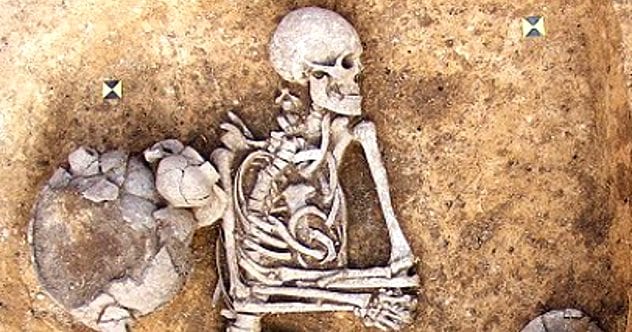
A well-preserved skeleton excavated from Thung Binh 1 cave in northern Vietnam belonged to a man who died roughly 12,000 years ago. He was about 35 and had been buried in a curled position with his face resting near his hands. At first, his bones appeared relatively ordinary. A closer examination revealed an extra cervical rib near his neckand that unusual rib had been fractured and infected.
Researchers also found a tiny barbed quartz point near the injury. The stone did not resemble tools normally recovered from the cave or neighboring sites, raising the possibility that it arrived with an outsider. One interpretation is that the man was struck by a dart or arrow tipped with exotic quartz. He survived the initial wound for weeks or months, long enough for infection to damage the bone, but the infection may eventually have killed him.
Scientists remain cautious because the projectile might have caused an accidental injury rather than an attack. Still, the combination of the embedded-style point, damaged rib, unusual raw material, and prolonged infection makes this a compelling candidate for early interpersonal violence in Southeast Asia. His careful burial also suggests that others cared for him while he was injured. The bones therefore tell two stories at once: conflict may have wounded him, while community support helped him endure.
3. The Neolithic Farmer Found Beneath a Polish Town Square
Renovation work in Słomniki, near Kraków, Poland, unexpectedly uncovered a complete skeleton approximately 7,000 years old. The individual had been placed on one side with the limbs drawn inward. Pottery fragments and pieces of flint found nearby connected the burial with the Linear Pottery culture, one of the earliest farming populations to spread into Central Europe.
The skeleton’s excellent preservation resulted partly from the surrounding soil, which was loose and not strongly acidic. That chemical good fortune protected bones that might otherwise have disappeared. It also gave archaeologists a rare opportunity to study one of the farming communities that entered the forested landscapes north of the Carpathian Mountains during the sixth millennium B.C.
These early farmers were moving into territory already inhabited by hunter-gatherers. For roughly two millennia, the two ways of life overlapped: one centered on crops and livestock, the other on hunting, fishing, and gathering wild resources. Researchers hope analysis of the skeleton’s age, sex, diet, ancestry, and health will clarify how those populations lived and interacted. A public construction project had expected pipes, paving stones, and inconvenient traffic delays. Instead, it found a representative of one of Europe’s greatest cultural transformations.
4. The Belgian Skeleton Assembled From at Least Eight People
When archaeologists excavated an intact skeleton at Pommerœul, Belgium, in the 1970s, they classified it as an unusual Roman-period burial. A bone pin near the skull supported that interpretation. Decades later, researchers noticed anatomical inconsistencies, including vertebrae that appeared to come from people of different ages.
Radiocarbon dating and ancient DNA produced one of archaeology’s strangest results. The body had been assembled from the bones of at least eight unrelated men and women. Most of the skeleton came from people who lived during the late Neolithic period, while the skull belonged to a Roman-era woman who lived more than 2,000 years later.
The bones had not simply been dumped in a pile. They were carefully arranged to resemble a complete person placed in a fetal position. Archaeologists have proposed several explanations. Roman communities may have disturbed a prehistoric grave and attempted to restore it, perhaps adding a contemporary skull when the original was missing. Alternatively, the composite body may have been deliberately created to establish a symbolic connection with ancient inhabitants of the land.
Whatever happened, the grave proves that ancient people could be archaeologists of a sort themselves. They encountered old bones, interpreted them through their own beliefs, and rearranged the pastapparently with the confidence of someone assembling furniture without checking the instruction manual.
5. The “Lovers” Who Were Actually Mother and Daughter
A double burial discovered in Wels, Austria, contained two people lying closely together, one with an arm placed around the other. A complete horse skeleton rested beneath them. Based on the grave’s layout and the association with a horse, the burial was initially assigned to the early medieval period. The individuals were popularly imagined as an embracing couple.
Modern radiocarbon dating moved the grave back several centuries to around A.D. 200, when Wels was the Roman settlement of Ovilava. Genetic analysis then showed that both people were biologically female and first-degree relatives. Their ages made a mother-daughter relationship the most likely explanation.
The older woman was probably between 40 and 60, while the younger was roughly 20. Golden pendants found in the grave suggest that they held relatively high social status. The horse burial remains unusual for Roman Austria and may reflect cultural traditions that did not fit neatly inside conventional Roman funerary customs.
The emotional position of the bodies is still meaningful, but the relationship was different from the one modern observers invented. That is an important archaeological lesson: two people embracing are not automatically romantic partners. Sometimes a dramatic ancient love story is actually a family story, which may be less cinematic but is no less moving.
6. The Pompeii Victims Killed by an Earthquake Before the Ash Arrived
Mount Vesuvius destroyed Pompeii in A.D. 79, and its victims are commonly associated with suffocating ash, falling pumice, and scorching pyroclastic surges. Two skeletons discovered in the House of the Chaste Lovers revealed another deadly part of the disaster: powerful earthquakes shaking the city during the eruption.
The two men were found beneath the remains of a collapsed wall. Their injuries and the surrounding building debris indicated that they were crushed when the structure failed. Volcanic deposits above them helped establish the sequence. They apparently survived the first stage of falling pumice, only to be killed when seismic activity brought the room down.
The discovery adds physical evidence to ancient accounts describing earthquakes during the eruption. It also reconstructs the terrifying choices facing residents. Remaining inside offered protection from falling stones but exposed people to collapsing roofs and walls. Running outside meant entering darkness, ash, projectiles, and panicked crowds. Pompeii did not experience a single neat catastrophe; it endured a chain of hazards, each capable of killing anyone who survived the previous one.
The skeletons remind us that disaster histories can become oversimplified. “Killed by Vesuvius” is correct, but it hides the complicated and brutally unlucky sequence of events that ended individual lives.
7. The Pompeii “Family” That DNA Broke Apart
Pompeii’s plaster casts are among archaeology’s most emotionally powerful objects. Created by pouring plaster into voids left by decomposed bodies, they preserve final poses that appear to show parents protecting children, relatives embracing, and families dying together.
Recent DNA analysis of skeletal fragments inside several casts demonstrated how easily body language can mislead. At the House of the Golden Bracelet, four victims had long been presented as a nuclear family. An adult wearing elaborate jewelry was assumed to be a mother sheltering a child. Genetic results indicated that all four individuals were male and were not close biological relatives.
Elsewhere, two victims locked in an embrace had been described as sisters or as a mother and daughter. At least one was genetically male. The findings do not make the scenes less tragic, nor do they prove the people were strangers. They may have been friends, partners, household members, enslaved workers, or unrelated residents seeking comfort during the eruption.
The real lesson is that jewelry, posture, and proximity do not automatically reveal sex or kinship. Earlier interpretations often projected modern family structures onto ancient bodies. DNA did not erase the human story; it replaced a tidy story with a more honest and intriguing one.
8. The Boys and Twins Sacrificed at Chichén Itzá
For generations, popular stories claimed that young women were the primary victims of ritual sacrifice at the Maya city of Chichén Itzá. Ancient DNA recovered from 64 children buried in a subterranean chultún overturned that familiar narrative.
Every genetically analyzed child was male. Many were closely related, including brothers and cousins, and researchers identified two pairs of identical twins. The boys were mostly interred between about A.D. 800 and 1050, during the city’s period of political power. Isotope analysis suggested that related children consumed similar diets, possibly because they had lived in the same households.
The presence of twins is especially significant because paired brothers play central roles in Maya mythology. In the Popol Vuh, the Hero Twins confront the gods of the underworld, undergo sacrifice, and ultimately triumph. Researchers cannot prove that every burial directly reenacted that story, but the repeated selection of related boys and twins suggests a highly specific ritual logic rather than random victim choice.
The study also connected the ancient population with living Maya communities near the site. The discovery therefore reaches beyond death. It reveals biological continuity, challenges sensational myths, and demonstrates why Indigenous descendants should be active partners in research involving ancestral remains.
9. The Man in a Well Who May Have Stepped Out of a Norse Saga
The medieval Sverris Saga describes a 1197 attack on Sverresborg Castle in Norway. According to the account, raiders threw a dead man headfirst into the castle well and filled it with stones, possibly to contaminate the water supply and insult their enemies.
A skeleton was discovered deep inside that well in 1938, although most of it remained unexcavated until renewed work in 2014 and 2016. Radiocarbon dating placed the man in the correct historical period. Injuries to the skull, the body’s position, and the surrounding rubble also matched the general circumstances described in the saga.
DNA extracted from a tooth revealed that the man had ancestry associated with southern Norway and probably had blue eyes with blond or light-brown hair. That southern ancestry was unexpected because the castle’s defenders were thought to have come mainly from central Norway, while the attackers came from the south. The victim may therefore have been one of the raiders rather than a defender, although genetics cannot determine political loyalty.
Researchers carefully stop short of claiming absolute identification. Still, this may be the first time scientists have reconstructed the genome of a specific person apparently mentioned in an Old Norse saga. He received only one sentence in medieval literature. Eight centuries later, science gave him an appearance, an origin, and a much larger supporting role.
10. The Roman Soldiers Dumped Into a Croatian Well
Excavations in Osijek, Croatiathe site of the Roman city of Mursauncovered seven complete male skeletons inside a disused water well. A multidisciplinary study combining radiocarbon dating, bone analysis, isotopes, archaeological evidence, and ancient DNA concluded that the men were probably Roman soldiers killed during the empire’s chaotic third century.
All were adults, generally young or middle-aged, with robust bodies and skeletal signs of strenuous activity. Several had old injuries, while two displayed wounds inflicted around the time of death. Punctures and cuts were consistent with arrows, spears, or long-bladed weapons. Their bodies appear to have been thrown into the well during a single event while still intact.
Genetic analysis showed varied ancestry rather than strong continuity with the earlier local population. That diversity fits the Roman military system, which recruited and transferred men across enormous distances. A coin minted in A.D. 251 and radiocarbon dates place the deaths near the Crisis of the Third Century, when emperors, challengers, frontier enemies, and ambitious generals turned the empire into history’s most dangerous management meeting.
The researchers suggest the men may have died during the Battle of Mursa in A.D. 260 or during related regional violence. Their stripped, unceremonious disposal points toward defeat, execution, or hurried battlefield cleanup rather than an honorable military funeral.
What These Ancient Skeleton Discoveries Teach Us
Together, these skeletons show that ancient life cannot be reduced to simple labels such as warrior, victim, farmer, patient, mother, or sacrifice. A prehistoric amputee reveals medical knowledge and long-term care. An injured hunter-gatherer reflects both possible violence and social support. Roman burials expose migration across an empire, while DNA from Pompeii demonstrates that companionship did not always follow biological family lines.
They also show how archaeological interpretation evolves. Early researchers did not necessarily perform poor work; they were limited by the evidence and technology available to them. Modern genetic sequencing, microscopic bone analysis, chemical testing, and improved dating methods can revisit old conclusions without treating earlier scholarship as a collection of embarrassing bloopers.
Most importantly, bones do not provide complete biographies. They offer evidence from which researchers build probabilities. The best archaeological stories clearly separate what is known, what is likely, and what remains delightfully unresolved.
A 500-Word Experience Guide: Encountering Ancient Skeleton Stories Responsibly
The Experience of Seeing a Human Burial
For many museum visitors and archaeology readers, the first encounter with an ancient skeleton produces an odd mixture of fascination, discomfort, and recognition. A decorated pot may be beautiful, and a sword may be impressive, but a human skeleton immediately collapses the emotional distance between the present and the past. The curve of a hand, a damaged tooth, or an arm placed around another person makes the individual seem less like an exhibit and more like someone interrupted in the middle of a life.
A useful way to approach such remains is to slow down before chasing the most dramatic interpretation. Museum labels frequently distinguish between evidence and reconstruction. Phrases such as “may have,” “possibly,” and “researchers suggest” are not signs of weakness. They are evidence that specialists are being honest. Archaeology becomes more rewarding when uncertainty is treated as part of the experience rather than an inconvenience that needs to be chased away with a sensational headline.
Reading the Evidence Like an Archaeologist
When reading about an ancient skeleton discovery, begin with the physical context. Where was the body found? Was it inside a formal grave, a cave, a collapsed building, a battlefield pit, or a well? Was the skeleton complete and articulated, or had the bones been moved? Objects found nearby can be important, but proximity alone does not prove ownership. A weapon beside a skeleton does not automatically create a warrior, just as jewelry does not automatically identify a woman.
Next, examine the scientific methods. Radiocarbon dating estimates age. Isotope analysis can provide evidence about diet or geographic movement. Ancient DNA may identify biological sex, ancestry, pathogens, and family relationships. Bone remodeling can show that an injury healed, while the absence of healing may indicate damage near the time of death. Each method answers a different question, and the strongest interpretations combine several independent lines of evidence.
It is also worth checking whether outside experts agree with the headline. The Vietnamese quartz point, for example, may indicate violence, but an accident remains possible. The Norwegian Well Man fits the saga remarkably well, yet researchers acknowledge that absolute identification is impossible. Responsible archaeology often ends with a strong case rather than a courtroom-style confession.
Respecting the People Behind the Discovery
Human remains are not merely scientific specimens. They may be ancestors of living communities, members of historically mistreated populations, or individuals whose bodies were collected under practices that would be rejected today. Ethical research increasingly involves consultation, community participation, careful sampling, and, where appropriate, repatriation or reburial.
This perspective changes the visitor’s experience. Instead of asking only, “What amazing secret can this skeleton reveal?” it is worth asking, “Who has the right to study, display, interpret, or rebury this person?” That question does not make archaeology less exciting. It makes the discipline more human.
The best experience comes from holding two ideas at once: ancient skeletons are extraordinary archives of medical, cultural, and historical information, and they are also the remains of people who once felt pain, depended on others, belonged to families, and expected their dead to be treated according to meaningful customs. Curiosity opens the door, but respect should always walk through it first.
Conclusion
These recently investigated ancient skeletons demonstrate that the past is not silent; it is simply written in a language of bones, soil, chemistry, and DNA. Surgery occurred far earlier than once believed. Family relationships were more complicated than burial poses suggested. Empires moved people across continents, rituals selected individuals according to beliefs that researchers are only beginning to understand, and historical texts occasionally preserved events that archaeology can independently test.
Every new technique gives old remains another opportunity to speak. The next major archaeological revelation may not emerge from a spectacular golden tomb. It may come from a single tooth in a museum drawer, patiently waiting for technologyand an extremely careful scientistto ask the right question.
SEO Data

