
Makeup
Russia’s New Missile Submarine Sure Looks Familiar
May
Editor’s note: This article is based on publicly available information and avoids classified or tactical details.
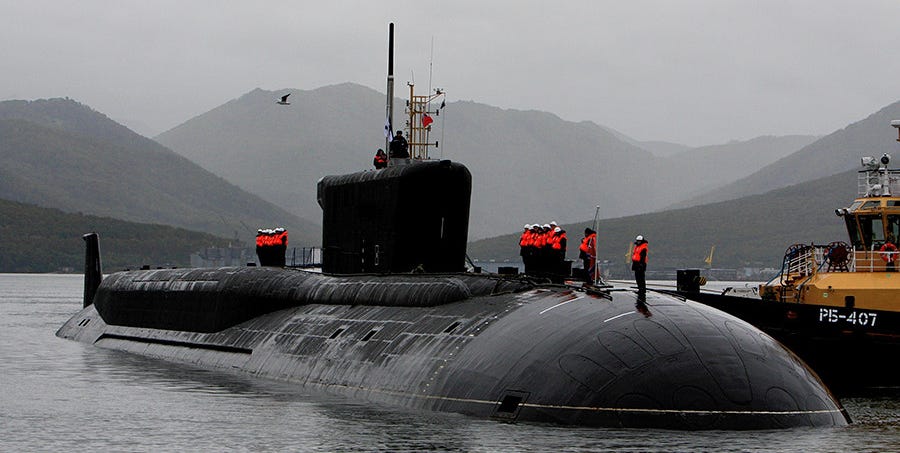
Russia’s new missile submarine has the strange energy of a person showing up to a party wearing a “totally original” outfit that somehow looks a lot like three other people’s outfits. Nobody is saying the designers copied anyone’s homework. Submarine design is more complicated than that, and the ocean is a brutally strict teacher. But when Russia’s Borei-A class ballistic missile submarine appeared with a cleaner sail, a modernized stern, and pump-jet propulsion, naval watchers immediately noticed something familiar: it looked less like an old Soviet brute and more like a sleek Western-style strategic submarine.
The phrase “Russia’s new missile submarine sure looks familiar” captures a real design conversation about the Borei-A, especially the first improved boat, Knyaz Vladimir, and later Borei-A submarines that continue to modernize Russia’s sea-based nuclear deterrent. These vessels are not just military hardware; they are floating symbols of national strategy, engineering ambition, and a very expensive game of underwater hide-and-seek.
At the heart of the story is the Borei family, also known as Project 955 and Project 955A. These nuclear-powered ballistic missile submarines, or SSBNs, are designed to carry Bulava submarine-launched ballistic missiles. Their mission is not to chase enemy ships around like an action-movie villain. Their job is quieter and more serious: disappear into the ocean, survive a first strike, and preserve Russia’s ability to retaliate. In nuclear strategy, that is called second-strike capability. In plain English, it means “you may not know where this submarine is, and that is the point.”
Why the Borei-A Looks So Familiar
The “familiar” part begins with the submarine’s shape. Earlier Russian and Soviet ballistic missile submarines often had more visibly bulky lines, prominent missile compartments, and design features shaped by Cold War-era requirements. The Borei-A appears smoother, cleaner, and more refined. Its sail blends more gracefully into the hull. Its stern arrangement and control surfaces resemble design ideas seen on Western submarines, including American ballistic missile submarines.
This does not automatically mean espionage, imitation, or some dramatic spy-novel scene involving stolen blueprints and a suspiciously nervous engineer. Hydrodynamics has a way of pushing designers toward similar answers. A quiet submarine must reduce drag, vibration, turbulence, and machinery noise. Whether the flag painted on the pier is Russian, American, British, or French, water behaves the same. The ocean does not care about ideology. It only cares about physics.
That said, the Borei-A does represent a noticeable shift in Russian submarine styling. Analysts have pointed to Western-looking features in the tail and sail. The use of pump-jet propulsion is another major point of comparison. Pump-jets have long been associated with advanced Western nuclear submarines because they can improve acoustic performance under certain operating conditions. For an SSBN, quietness is not a luxury feature. It is the whole business model.
Borei-A: The Basics Behind the Big Shadow
The Borei-A is a large nuclear-powered ballistic missile submarine, but “large” almost feels too polite. It is roughly the length of one and a half football fields and built to carry strategic weapons across oceans while remaining difficult to detect. Public sources generally describe Borei-class submarines as carrying 16 Bulava missiles, each designed for nuclear payloads. The exact operational loadout can vary depending on arms-control limits and Russian deployment decisions, but the central purpose is clear: the Borei-A is built around strategic deterrence.
The Bulava missile, also known by the NATO designation SS-N-32, is a submarine-launched ballistic missile developed for the Borei class. It is solid-fueled, intercontinental in range, and designed to carry multiple independently targetable warheads. In practical terms, this gives a single submarine enormous destructive potential, which is precisely why these boats attract so much attention from naval analysts, arms-control experts, and anyone who enjoys sleeping poorly after reading nuclear strategy papers at midnight.
The Borei-A also represents a generational upgrade over Soviet-era strategic submarines such as the Delta and Typhoon classes. The Typhoon was famously gigantic, almost mythic in scale, and visually unforgettable. The Borei-A, by contrast, is more modern in its priorities. It is still big, but the design emphasis is on stealth, survivability, and integration with current Russian nuclear doctrine.
The Pump-Jet Question: Quiet Is the New Loud
One of the most discussed features of the Borei and Borei-A family is pump-jet propulsion. Traditional propellers can create cavitation, which is the formation of vapor bubbles that collapse and produce noise. Noise is bad news for a submarine. In underwater warfare, sound is often the difference between being a ghost and becoming a very expensive sonar contact.
A pump-jet encloses the propulsor inside a duct, potentially reducing noise and improving efficiency in certain speed ranges. Western navies adopted pump-jet systems on several advanced nuclear submarines, and the appearance of similar technology on Russian strategic submarines signaled that Moscow was serious about acoustic improvement.
Is a pump-jet magic? No. Submarines are not powered by wizardry, although the budget process may occasionally look like dark magic. A pump-jet is only one piece of a larger quieting puzzle. Machinery isolation, hull coating, reactor design, crew training, maintenance quality, and operating habits all matter. Still, the move toward pump-jet propulsion on a Russian SSBN is meaningful because it shows the design priority: stay hidden longer, reduce detectable signatures, and give the submarine a better chance of surviving in contested waters.
The Sail, the Stern, and the “Western Influence” Debate
The Borei-A’s sail is another reason the submarine looks familiar. A smoothly faired sail base reduces turbulence and helps water flow more cleanly around the hull. Older Soviet designs often looked more utilitarian, with shapes that could appear abrupt or angular. The Borei-A’s sail has a more integrated look, which is why observers have compared it to modern American and NATO submarine design language.
The stern arrangement has also drawn attention. Modern control surfaces, including all-moving rudders and stabilizer features, can improve maneuverability and hydrodynamic efficiency. Similar ideas have appeared in Western submarine design. Again, that does not prove copying; it proves that quiet, stable underwater movement has a limited number of elegant solutions.
Think of it like aircraft. Many modern airliners look similar because they all have to solve the same problems: lift, drag, fuel efficiency, safety, and passenger comfort. Nobody expects a new jetliner to have square wings just to prove originality. Submarines follow the same rule, only with more secrecy and fewer tiny bags of pretzels.
Still Very Russian Under the Skin
Despite the Western-looking details, the Borei-A is not simply a Russian submarine wearing a NATO Halloween costume. It retains major Russian design traditions, including a double-hull approach. Many Western submarines use single-hull construction, while Russian submarines have often favored double-hull designs that provide reserve buoyancy and support certain internal arrangements.
The earlier Borei boats also had an unusual development history. Public analysis has described how the first three Borei-class submarines incorporated sections or design elements connected to unfinished Soviet-era submarine projects. That gave the class a hybrid character: partly new, partly shaped by the industrial leftovers of a collapsed superpower. The Borei-A, however, is more of a clean-sheet improvement. That matters because it gave Russian designers more freedom to refine the submarine’s layout, acoustic profile, and external form.
This is why the Borei-A is fascinating. It is not a simple copy. It is a transitional design: old Russian naval DNA, new Russian strategic priorities, and design cues that seem to acknowledge Western lessons about quietness and hydrodynamics.
Why Russia Needs These Submarines
Russia’s nuclear forces rest on a triad: land-based missiles, strategic bombers, and submarine-launched ballistic missiles. Of those three, submarines are uniquely valuable because they can hide. Land-based silos can be mapped. Mobile launchers can be tracked. Bombers need airfields. But a ballistic missile submarine can vanish into deep water, patrol under ice, or move through vast ocean spaces where detection is difficult.
For Moscow, the Borei-A class helps replace aging Soviet-era boats and preserve the naval leg of the nuclear triad. This is especially important as older Delta-class submarines approach retirement. The Borei and Borei-A boats are meant to serve for decades, which means they are not just weapons systems. They are long-term strategic infrastructure.
The Arctic also plays a major role. Russia’s Northern Fleet operates from bases near the Kola Peninsula, with access to the Barents Sea and Arctic waters. The region is strategically valuable because ice cover, depth, geography, and proximity to Russian territory can help create protected patrol areas. At the same time, NATO countries closely monitor Russian submarine activity in the North Atlantic and Arctic approaches. The result is a slow-motion contest in which both sides listen, track, analyze, and try very hard not to admit exactly how much they know.
What Makes the Bulava Missile Important?
The Borei-A is the delivery platform; the Bulava is the long-range punch. Developed after the Cold War, the Bulava program had a difficult history, including test failures and delays. Over time, however, Russia continued investing in the missile, and it became central to the Borei class.
The missile’s value lies in range, survivability, and multiple-warhead capability. A submarine carrying 16 Bulava missiles can potentially threaten targets across continents. That is not because the submarine needs to sail close to an opponent’s coastline like a movie villain approaching in dramatic fog. Intercontinental-range missiles allow the boat to patrol in safer areas while still fulfilling its strategic mission.
From a deterrence perspective, this is the entire point. An SSBN does not need to be flashy. It needs to be survivable, reliable, and hard to find. The best ballistic missile submarine is the one that never trends on social media because nobody knows where it is.
Familiar Does Not Mean Inferior
It is tempting to laugh at the “looks familiar” angle and reduce the Borei-A to a visual joke. But that would miss the deeper story. A familiar-looking submarine can still be a serious technological and strategic achievement. In fact, familiarity may signal maturity. When naval architects across rival countries arrive at similar solutions, it often means those solutions work.
The real question is not whether the Borei-A resembles Western submarines. The better question is whether Russia can build, maintain, crew, and deploy these submarines consistently. A submarine’s effectiveness depends on far more than its silhouette. Shipyard quality, reactor reliability, sonar performance, quieting standards, missile readiness, communications security, and crew proficiency all matter.
That is where public analysis becomes cautious. Russia has demonstrated real submarine-building capability, but it has also faced industrial delays, sanctions pressure, budget constraints, and the broader strain of war in Ukraine. A submarine may look modern on launch day, but operational credibility is earned over years at sea.
What It Means for the United States and NATO
For the United States and NATO, the Borei-A is not a surprise guest. Western navies have watched Russia modernize its submarine fleet for years. The concern is not that one Russian submarine looks a little like an Ohio-class boat from certain angles. The concern is that quieter Russian SSBNs complicate anti-submarine warfare and strengthen Moscow’s second-strike posture.
Anti-submarine warfare is among the most demanding military missions in the world. It requires satellites, seabed sensors, maritime patrol aircraft, surface ships, attack submarines, intelligence fusion, and patience measured in uncomfortable quantities. The ocean is huge, noisy, and uncooperative. Tracking an advanced nuclear submarine is not like following a delivery driver on an app. There is no cheerful icon moving across the screen saying, “Your ballistic missile submarine is arriving in 12 minutes.”
As Borei-A submarines enter service, NATO planners must assume that Russian sea-based deterrence is becoming more survivable than it was during the post-Soviet slump. That does not mean Russia has regained every Cold War capability. It does mean the underwater competition is very much alive.
Common Myths About Russia’s New Missile Submarine
Myth 1: If It Looks Western, It Must Be a Copy
Not necessarily. Similar missions produce similar shapes. The Borei-A’s Western-looking features likely reflect the universal demands of stealthy submarine design more than a simple act of copying.
Myth 2: Bigger Always Means Better
The Soviet Typhoon class was enormous, but modern submarine effectiveness is not measured by size alone. Quietness, sensors, reliability, missile integration, and patrol patterns matter more than raw tonnage.
Myth 3: SSBNs Are Offensive First-Strike Weapons
Ballistic missile submarines can be part of offensive planning, but their classic strategic role is deterrence through survivability. Their main value is making a nuclear first strike against their country irrationally dangerous.
Myth 4: A New Submarine Changes Everything Overnight
One new submarine does not rewrite the global balance by itself. What matters is the larger force structure, training cycle, missile reliability, maintenance capacity, and the number of boats available for patrol.
Experience-Based Perspective: Reading the Shape of a Silent Giant
For anyone who follows naval technology, studying the Borei-A is a strangely human experience. You begin with a photograph, usually grainy, sometimes taken during a launch ceremony, with half the important parts covered or hidden by scaffolding, shadows, tarps, or inconveniently placed officials in winter coats. Then the detective work begins. You compare the sail to earlier boats. You squint at the stern. You read what analysts say about the control surfaces. You look again and wonder whether you are seeing a design revolution or just a bad camera angle.
That is the first lesson of submarine analysis: humility. Surface ships show off. Aircraft pose. Tanks rumble past cameras like they are auditioning for a metal album cover. Submarines, especially strategic submarines, are different. They reveal just enough to start an argument and then disappear under the waves. The Borei-A is a perfect example. Its public image says, “Look, we modernized.” Its real value says, “Please stop looking.”
The second experience is realizing how much design is shaped by compromise. A missile submarine must carry enormous weapons, support a nuclear reactor, house a crew, maintain communications, survive pressure, reduce noise, and still move efficiently through water. Every curve has a cost. Every opening in the hull matters. Every piece of machinery can become an acoustic liability. When you look at the Borei-A’s smoother form, the faired sail, and the pump-jet discussion, you are not just looking at style. You are looking at a negotiation between physics, strategy, industry, and secrecy.
The third experience is resisting easy narratives. It is fun to say, “Russia copied the West.” It is also incomplete. The better interpretation is that Russian designers studied the same underwater problem Western designers studied: how to make a giant nuclear missile carrier quieter and harder to track. The answer, unsurprisingly, pushed them toward similar features. In engineering, convergence is not embarrassing. It is often proof that the problem has only a few good solutions.
The fourth experience is recognizing the emotional weight of the topic. A Borei-A submarine is not just a machine. It is a vessel built around nuclear deterrence, a concept that depends on fear, restraint, uncertainty, and credibility. Writing about it can feel like describing a sports car, except the “horsepower” is measured in civilization-ending consequences. That contrast is unsettling. The design details are fascinating, but the mission is deadly serious.
Finally, studying Russia’s new missile submarine is a reminder that military technology rarely moves in clean lines. The Borei-A is modern, but it carries Soviet inheritance. It looks familiar, but it is not foreign. It is quieter than older Russian boats, but quietness is relative. It strengthens deterrence, but deterrence is only as stable as the politics around it. In other words, the submarine is not just familiar because of its shape. It is familiar because it belongs to an old pattern: rival powers watching each other across dark water, learning, adapting, and pretending not to be impressed.
Conclusion: A Familiar Shape With Strategic Weight
Russia’s new missile submarine sure looks familiar, but the more interesting truth is that it looks logical. The Borei-A reflects a global trend in advanced submarine design: smoother lines, quieter propulsion, better hydrodynamics, and a relentless focus on survivability. Its Western-looking features do not erase its Russian identity. They show how the demands of underwater stealth can make rival designs converge.
For Russia, the Borei-A is a cornerstone of naval nuclear modernization. For NATO, it is a reminder that anti-submarine warfare remains one of the most important and difficult missions in modern defense. For readers, it is a rare chance to see how design, strategy, and geopolitics meet in one silent machine.
The submarine may look familiar, but its purpose is unmistakably serious. It is built to vanish, wait, and preserve deterrence from beneath the sea. That is not flashy. That is not cinematic. But in the world of strategic submarines, the scariest thing is often the thing you cannot see.

