
Beauty Tools & Accessories
3 Ways to Treat a Smashed Fingernail
May
A smashed fingernail has a special talent for turning a normal day into a tiny dramatic movie starring your finger, a door, and one very loud “OW.” Whether you slammed your fingertip in a car door, dropped a can on your nail, missed the nail you meant to hit with a hammer, or lost a battle with a drawer, the result can be throbbing pain, swelling, bruising, and a nail that suddenly looks like it joined a heavy metal band.
The good news: many smashed fingernail injuries are minor and can be managed safely at home with basic first aid. The not-so-fun news: some nail injuries need medical care, especially when there is severe pain, blood trapped under the nail, a deep cut, a loose nail, trouble bending the finger, or signs of a broken fingertip. The trick is knowing which situation you are dealing with before your finger writes a strongly worded complaint.
This guide explains 3 ways to treat a smashed fingernail: immediate home care, protecting the nail while it heals, and knowing when to get professional treatment. It is written for everyday readers, not medical robots in lab coats, but it is based on real first-aid and nail-injury guidance.
What Happens When You Smash a Fingernail?
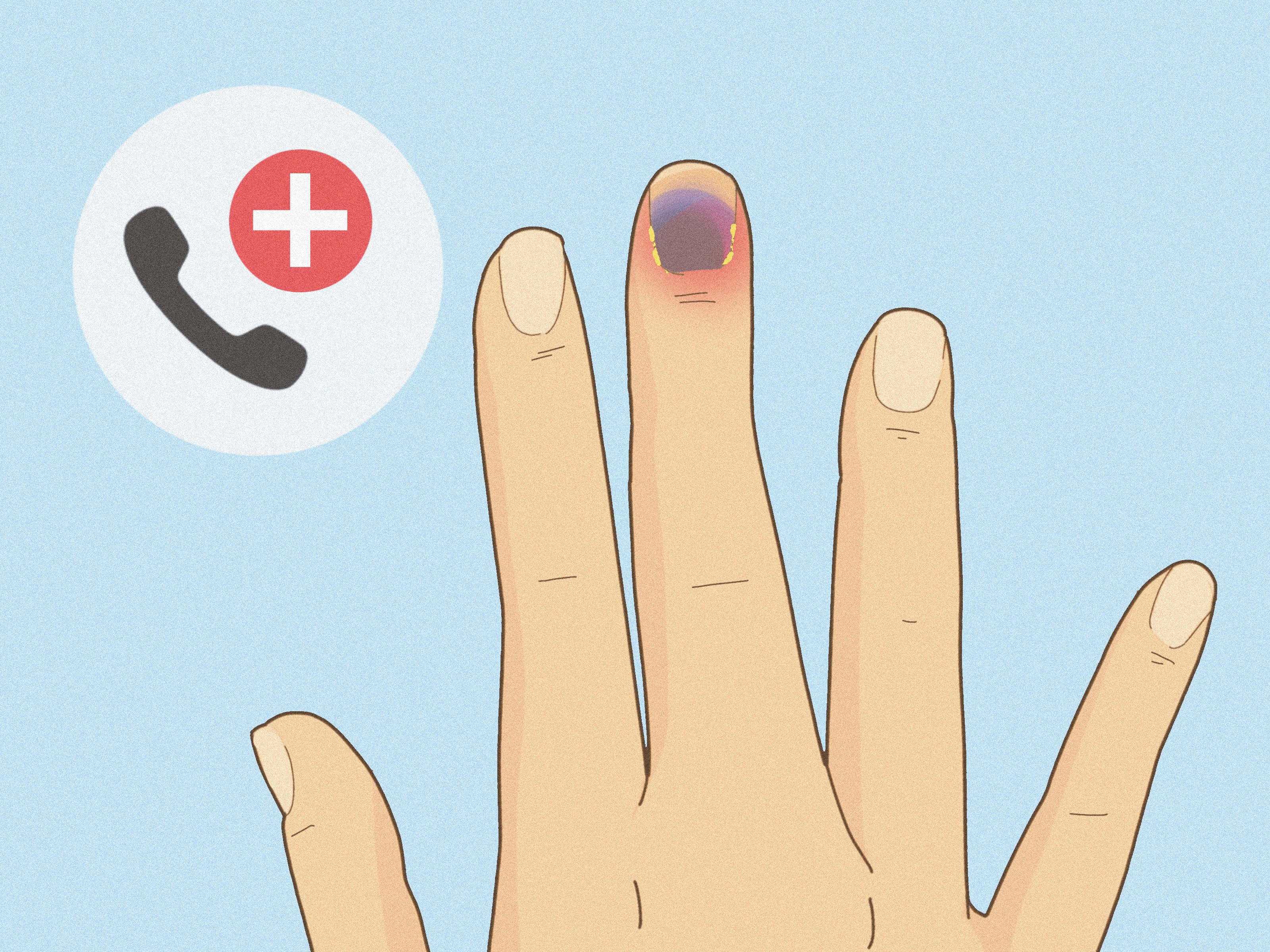
A smashed fingernail is usually a crush injury. The force can bruise the fingertip, damage the nail plate, irritate the nail bed underneath, or break tiny blood vessels. When blood collects under the nail, it is called a subungual hematoma. That is the medical name for “my nail is purple, throbbing, and personally offended.”
The nail plate is the hard part you trim. Under it is the nail bed, a sensitive layer of tissue that helps support nail growth. Near the base is the nail matrix, where new nail forms. If the nail bed or matrix is badly injured, the new nail may grow with ridges, grooves, splitting, or a different shape.
Mild injuries often improve with rest, ice, elevation, and protection. More serious injuries may require a clinician to drain trapped blood, repair a nail-bed cut, check for a fracture, or update tetanus protection if the wound is dirty or deep.
Way 1: Start With Safe At-Home First Aid
The first few minutes after a smashed fingernail matter. Your goal is simple: reduce swelling, control pain, protect the nail, and avoid making things worse. No heroics. No internet “life hacks” involving hot needles. Your finger has suffered enough.
1. Remove rings right away
If the injured finger has a ring on it, remove it as soon as possible. Swelling can happen quickly, and a ring that feels loose now may become painfully tight later. If the ring will not come off easily, do not force it aggressively. Seek medical help, especially if the finger becomes numb, cold, blue, or increasingly swollen.
2. Wash the finger gently
If the skin is broken or there is bleeding around the nail, wash the area with clean running water and mild soap. Pat it dry with clean gauze or a clean towel. Avoid scrubbing under the nail or pulling at loose nail pieces. A smashed nail is not a kitchen pan; it does not need elbow grease.
3. Control bleeding with gentle pressure
If there is bleeding, apply gentle pressure with sterile gauze or a clean cloth. Keep pressure steady for several minutes. If bleeding does not stop, or if the cut is deep, wide, dirty, or gaping, get medical care.
4. Ice the injury
Wrap an ice pack or a bag of frozen vegetables in a thin towel and place it on the injured finger for about 15 to 20 minutes at a time. Do not put ice directly on the skin because that can irritate the tissue. During the first day, icing several times can help reduce swelling and pain.
5. Elevate your hand
Keep your hand raised above heart level when possible. Elevation helps reduce throbbing by slowing fluid buildup in the fingertip. This is one of those simple first-aid moves that looks too easy to work, but your finger may appreciate it.
6. Use pain relief wisely
Over-the-counter pain relievers such as acetaminophen or ibuprofen may help, depending on your health situation and label directions. Ibuprofen can help with pain and swelling, while acetaminophen helps with pain. Do not exceed the recommended dose. If you have kidney disease, stomach ulcers, bleeding problems, take blood thinners, or have been told to avoid certain medicines, ask a healthcare professional before using them.
Way 2: Protect the Nail While It Heals
After the initial shock fades, the next job is protecting the nail from infection, snagging, pressure, and accidental re-injury. This is especially important because a smashed fingernail can stay tender for days, and the nail may look worse before it looks better.
Keep the nail clean and covered
If the nail or surrounding skin is tender, cover it with a nonstick sterile dressing. Tape the bandage to the skin around the nail, not directly onto the damaged nail if you can avoid it. Pulling tape off an injured nail is a small tragedy no one needs.
Change the dressing daily or whenever it gets wet or dirty. If a healthcare provider recommends antibiotic ointment, use it as directed. Do not assume more ointment means faster healing; the finger is not a sandwich, and ointment is not mayo.
Do not rip off a loose nail
If part of the nail is loose, trim only sharp or jagged edges that catch on fabric, and only if you can do it without pain or pulling. Do not tear off a nail that is still attached. The remaining nail can act like a natural protective cover while the nail bed heals.
Watch the color under the nail
A small bruise under the nail can be normal after trauma. It may look red, purple, blue, brown, or black. As the nail grows, the dark mark may slowly move outward with the nail. Fingernails usually take several months to fully grow out, so patience is part of the treatment plan. Annoying? Yes. Normal? Often.
Protect the fingertip during daily life
For a few days, avoid activities that put pressure on the nail, such as heavy lifting, contact sports, intense gripping, or playing “let’s see if it still hurts.” If you need to type, write, cook, or work, keep the finger lightly protected. A small bandage can prevent bumps and keep the injury from snagging on pockets, towels, bedding, and other surprisingly aggressive household objects.
Return to motion gently
If there is no suspected fracture, deep cut, or severe pain, gentle movement can help prevent stiffness. Bend and straighten the finger slowly a few times a day. Stop if the pain is sharp or worsening. If the finger cannot bend or straighten normally, or if the fingertip looks crooked, get medical care instead of trying to “work it out.”
Way 3: Know When Medical Treatment Is Needed
Some smashed fingernails need more than home care. The biggest warning signs are severe throbbing, a large area of blood under the nail, a deep cut, a loose or split nail, a deformed finger, numbness, or trouble moving the finger.
Get care for severe pressure under the nail
If blood collects under the nail and the pain is intense or throbbing, a healthcare provider may perform nail trephination. This means making a tiny opening in the nail plate to release trapped blood and pressure. It can bring quick relief when done properly in a medical setting.
Do not try to drain the nail at home with a heated paperclip, needle, drill bit, pin, or any other tool from the “bad idea drawer.” At-home draining can cause burns, infection, nail-bed damage, or deeper injury. A clinician can also check whether the nail injury is simple or whether there is a fracture, nail-bed cut, or other problem hiding under the drama.
See a clinician if more than half the nail is dark
When blood covers a large portion of the nail, especially more than half, medical evaluation is wise. A large subungual hematoma can be linked with nail-bed injury or fingertip fracture. Sometimes observation is enough. Other times, drainage, repair, X-rays, or protective splinting may be needed.
Get checked if the nail is split, lifted, or deeply cut
A nail that is split, partially torn away, or sitting oddly may mean the nail bed underneath is injured. Nail-bed cuts sometimes need repair to reduce the risk of a permanently misshapen nail. If the cut is deep, dirty, or caused by a high-force crush, do not delay care.
Look for signs of a broken fingertip
A fingertip fracture can happen when a door, hammer, weight, or heavy object crushes the nail area. Signs may include severe pain, major swelling, deformity, inability to bend or straighten the finger, numbness, or pain that does not improve. A doctor may order an X-ray and use a splint to protect the finger while it heals.
Watch for infection
Call a healthcare provider if redness, swelling, warmth, pain, or drainage increases after the injury. Fever is another warning sign. Infection around the nail can worsen if ignored, especially when there is a cut, crushed tissue, or a dirty wound.
Check tetanus protection for dirty or deep wounds
If the injury involves a dirty cut, puncture, crushed tissue, outdoor equipment, rusty metal, or an unknown object, ask a healthcare professional whether you need a tetanus booster. Crush injuries and contaminated wounds can carry higher tetanus risk, especially if vaccination is not up to date.
What Not to Do With a Smashed Fingernail
The internet is full of creative advice. Unfortunately, “creative” and “safe medical care” are not always roommates. Avoid these common mistakes:
- Do not drill, burn, or poke the nail at home. Painful pressure under the nail should be evaluated by a medical professional.
- Do not rip off the nail. A partially attached nail may still protect the nail bed.
- Do not ignore a crooked or immobile finger. That may suggest fracture, tendon injury, or dislocation.
- Do not wrap the finger too tightly. Tight bandages can reduce circulation and make swelling worse.
- Do not keep using the finger heavily through severe pain. Your finger is not being dramatic for applause.
How Long Does a Smashed Fingernail Take to Heal?
Pain from a mild smashed fingernail often improves within a few days. Bruising may take much longer to disappear because the mark has to grow out with the nail. A new fingernail can take roughly 4 to 6 months to fully replace a damaged one. If the nail falls off, the nail bed may heal sooner, but the new nail still needs time to grow.
If a fingertip fracture is involved, healing may take several weeks, and the finger may need protection or splinting. Stiffness can happen after finger injuries, so follow professional instructions about movement and activity.
Specific Examples: What Should You Do?
Example 1: The door slam
You slam your fingertip in a car door. The nail turns purple, but the pain improves after ice and elevation. You can bend and straighten the finger, there is no deep cut, and the bruise covers only a small area. This may be a mild injury. Keep it clean, ice it, elevate it, protect it, and monitor for worsening symptoms.
Example 2: The hammer miss
You hit your fingernail with a hammer. The nail becomes dark over most of its surface, and the pain is pulsing like a tiny drumline. This needs medical evaluation. A clinician may drain the trapped blood and may check for a fracture.
Example 3: The crushed nail with a cut
A heavy object crushes your nail, the skin is split, and the nail looks lifted. This is not a “just wrap it and hope” situation. Get medical care because the nail bed may need repair, and the wound may need cleaning, dressing, tetanus review, or other treatment.
500-Word Experience Section: Real-Life Lessons From Smashed Fingernails
Anyone who has had a smashed fingernail remembers the moment with suspicious clarity. It is one of those small injuries that feels wildly unfair. You are not climbing a mountain or wrestling a bear. You are closing a drawer, fixing a shelf, unloading groceries, or trying to be productive for once. Then, suddenly, your finger becomes the main character.
The first experience many people report is surprise: the pain feels bigger than the injury looks. That makes sense because fingertips are packed with nerve endings. Even a small crush can create intense throbbing, especially when blood is trapped under the nail. The finger may look fine for a few minutes and then slowly develop a dark bruise. This delayed “special effect” can make people worry, but a small bruise that improves with home care is often part of the normal healing story.
Another common experience is the temptation to fix it immediately. When the nail pressure is bad, people start searching for fast relief. This is where many risky home tricks appear. The smarter lesson is simple: pressure under the nail can be treated, but it should be treated safely. If the pain is severe, let a healthcare provider decide whether drainage is appropriate. A professional can relieve pressure while avoiding extra damage. Your toolbox is excellent for shelves, not nail surgery.
People also learn that protecting the nail is harder than expected. A sore fingernail finds every corner, zipper, sleeve, backpack strap, cabinet edge, and door handle in the building. A light bandage can feel like armor. Keeping the dressing clean and dry prevents irritation and helps you avoid the dreaded “caught nail” moment. If the nail becomes loose, patience matters. Pulling it off too early can expose the tender nail bed and slow healing.
One practical lesson is to pay attention to function, not just appearance. A purple nail can look scary but heal well. A finger that cannot bend, straighten, feel normally, or line up correctly is more concerning. The same goes for increasing swelling, pus, fever, or pain that worsens instead of improving. Those signs deserve medical attention.
Finally, smashed fingernails teach humility. After the injury, people become experts in slow door closing, careful hammering, and dramatic finger protection. The nail may take months to grow out, and it may look odd for a while. That does not mean you failed at healing. It means nails grow slowly, and the body is doing tiny construction work under the surface. Treat the finger kindly, avoid unnecessary risks, and give the nail time to make its comeback.
Conclusion
Treating a smashed fingernail comes down to three smart moves: start with safe first aid, protect the nail while it heals, and know when medical care is needed. Mild injuries may improve with washing, icing, elevation, pain control, and a clean dressing. Severe throbbing, a large dark bruise under the nail, a split or lifted nail, deep cuts, deformity, numbness, or trouble moving the finger should be checked by a healthcare professional.
Your fingernail may look dramatic for a while, but with careful care and a little patience, many smashed nails recover well. Just remember: no DIY draining, no ripping off loose nails, and no pretending a clearly angry finger is “probably fine” when it is begging for help.

