
Body Care
Radon Poisoning: Facts, Exposure, and Effects
Sep
Radon sounds like the name of a comic-book villain, and honestly, that is not far off. It is invisible, odorless, tasteless, and very good at showing up where it was not invited. Unlike a burst pipe or a mold patch, radon does not announce itself with drama. It just slips into buildings, lingers in indoor air, and quietly increases the risk of lung cancer over time.
The phrase “radon poisoning” is common in online searches, but it is not the most precise medical term. Radon usually does not cause sudden poisoning the way carbon monoxide can. Instead, the bigger concern is long-term radon exposure, especially when elevated levels build up in a home, basement, crawl space, school, or workplace. That difference matters, because people often wait for symptoms that never come.
If you want the short version, here it is: radon is a radioactive gas that comes from the natural breakdown of uranium in soil, rock, and sometimes groundwater. Outdoors, it usually disperses before it becomes a major issue. Indoors, especially in enclosed or lower-level spaces, it can accumulate. Breathing it in for years can damage lung tissue and raise the risk of lung cancer. Not exactly the kind of housewarming gift anyone wants.
What Is Radon, Exactly?
Radon is a naturally occurring radioactive gas. It forms when elements such as uranium, thorium, and radium break down in soil and rock. Because it is a gas, it can move through the ground and enter buildings through cracks in foundations, gaps around pipes, construction joints, sump pits, crawl spaces, and other small openings that your house swears are “no big deal.”
Radon is not rare. It has been found in every U.S. state, and elevated indoor levels can appear in old homes, new homes, drafty homes, well-sealed homes, houses with basements, and houses without them. In other words, radon does not care whether your place is charmingly vintage or suspiciously expensive. It cares about geology, air pressure, and how easy it is to move from soil into indoor air.
That is one reason radon catches people off guard. Many homeowners assume a newer home must be safe or that a home in a “good neighborhood” is automatically lower risk. Radon is not impressed by granite countertops, designer tile, or your excellent taste in throw pillows.
Why “Radon Poisoning” Is a Bit Misleading
When people search for radon poisoning, they are usually trying to understand whether radon can hurt them and what the warning signs look like. The honest answer is both simple and frustrating: radon exposure usually has no immediate symptoms. At the levels typically found in homes, it does not usually cause eye irritation, headaches, nausea, or sudden breathing distress in the way some other indoor hazards can.
That is why many experts prefer phrases like radon exposure, radon inhalation, or health effects of radon. The concern is chronic exposure over time. When radon decays, it releases tiny radioactive particles. If you inhale them, they can damage the cells lining your lungs. Over years, that damage can increase the risk of lung cancer.
So if you are looking for a dramatic warning sign, there usually is not one. Radon is less like a blaring alarm and more like a terrible long-term investment that keeps compounding in the wrong direction.
How Radon Exposure Happens
Homes, Basements, and Crawl Spaces
The most common source of exposure is the home. Radon often enters from the ground beneath a building and becomes trapped indoors. Lower levels of a home, such as basements and first floors, usually have the highest concentrations, but elevated levels can affect other rooms too depending on air flow and building design.
Finished basements deserve a special mention. A basement remodel may look polished, cozy, and ready for movie night, but radon does not care that you added recessed lighting. If the space is frequently occupied, it should be considered part of your true exposure picture. In many homes, the “lowest lived-in level” is the best place to test.
Water and Building Conditions
In some areas, radon can also enter through groundwater and be released into indoor air when water is used. For most households, soil gas is the main source, but water can matter in certain geologic regions. Building tightness, weather, ventilation patterns, and seasonal changes can all affect indoor radon readings, which is why one quick measurement does not always tell the full story.
Schools and Workplaces
Radon is not just a residential issue. Schools, daycare facilities, and workplaces can also have elevated levels, particularly in ground-contact rooms. That matters because exposure is about concentration and time. A person who spends many hours in a radon-prone building is not getting bonus points for dedication. They are simply increasing their exposure.
Health Effects of Radon Exposure
The Main Health Risk: Lung Cancer
The primary health effect linked to radon exposure is lung cancer. In fact, radon is recognized as the second leading cause of lung cancer overall and the leading cause among people who do not smoke. That is a huge reason public health agencies take it so seriously.
The risk does not appear overnight. It builds over time, especially with prolonged exposure to elevated radon levels. Think years, not days. That delayed effect is part of why radon is so easy to underestimate. People naturally pay more attention to dangers that are loud, immediate, and obvious. Radon is none of those things.
Smoking Makes the Risk Much Worse
If smoking and radon team up, they form a truly awful duo. Smokers exposed to elevated radon levels have a much higher risk of lung cancer than nonsmokers exposed to the same level. Radon does not replace the risk from smoking; it adds to it. This is why many public health messages emphasize both smoking cessation and home radon testing as lung cancer prevention strategies.
Are There Early Symptoms?
Usually, no. Radon exposure itself generally does not cause obvious early symptoms. A person can live in a home with elevated radon for years and feel completely normal. Symptoms may not appear unless lung disease develops later. When lung cancer does cause symptoms, they may include a persistent cough, coughing up blood, shortness of breath, chest pain, hoarseness, unexplained weight loss, or ongoing fatigue. By that point, the problem is no longer “possible exposure.” It is a major medical issue.
Who Is Most at Risk?
Anyone living or spending significant time in a building with elevated radon can be affected, but some groups face higher risk or higher concern. Smokers and former smokers are at the top of that list. People with a long history of exposure in poorly ventilated lower-level spaces are also more vulnerable. Children may receive higher estimated radiation doses than adults in some circumstances because of differences in body size and breathing patterns, which is one more reason families should not shrug this off as a “later” problem.
Risk is also shaped by behavior. A person who sleeps in a basement bedroom, works from a finished lower-level office, or spends winters in a tightly closed home may have more meaningful exposure than someone who is only occasionally in the space. The issue is not just whether radon is present. It is how much is present and how often you breathe it.
How to Test for Radon
Here is the good news: radon is one of those scary problems that is actually measurable. You do not need a hunch, a psychic, or a dramatic flashlight inspection. You need a radon test.
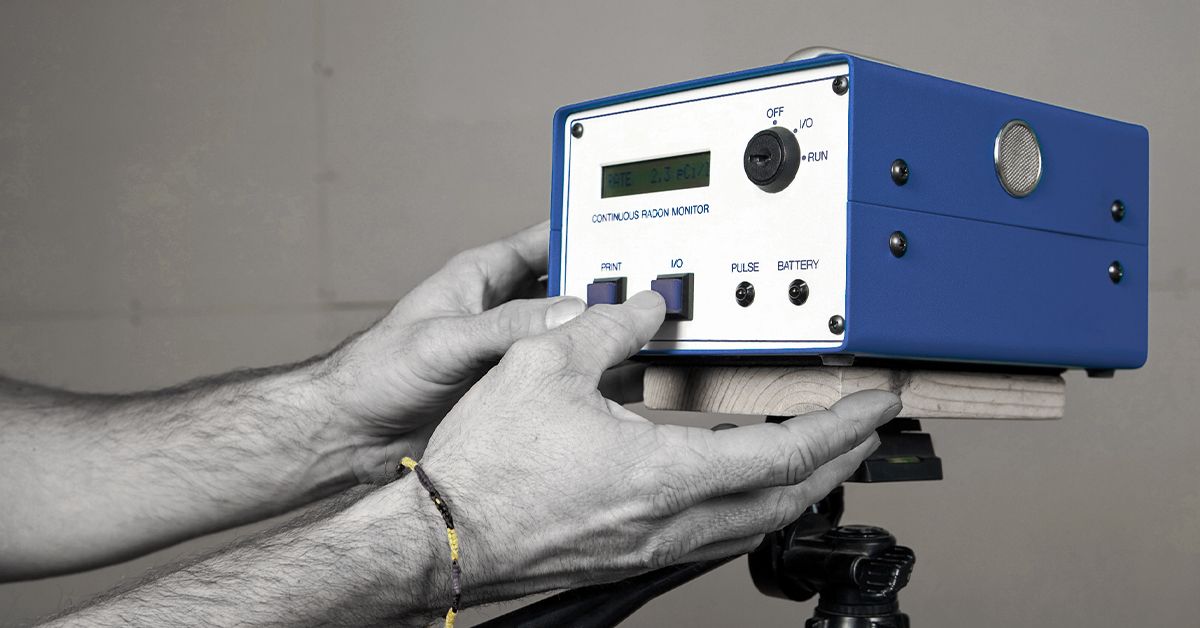
Home radon tests are widely available, and they generally come in two categories: short-term and long-term. A short-term test gives a faster snapshot. A long-term test provides a better estimate of the home’s year-round average radon level because radon can vary from day to day and season to season.
If your first short-term test is elevated, follow-up testing is usually recommended. In general, the higher the initial result, the faster you should move. Testing should be done in the lowest lived-in level of the home, following the kit instructions carefully. That last part matters. A test placed in the wrong spot or used incorrectly is about as helpful as a bathroom scale that only weighs your optimism.
What Radon Levels Mean
Radon in air is commonly reported in picocuries per liter, or pCi/L. The U.S. Environmental Protection Agency recommends taking action if a home tests at 4 pCi/L or higher. The agency also advises considering action for levels between 2 and 4 pCi/L, because there is no known completely safe level of radon exposure.
That point is important. A result below 4 pCi/L does not mean “perfectly safe forever.” It means the level is lower than the main EPA action threshold. If your home falls into the 2 to 4 range, many professionals still recommend thinking seriously about reduction, especially if someone in the household smokes, has smoked, or spends a lot of time in the tested area.
Another thing people often miss: a single low reading does not mean you never need to test again. Re-testing can be wise after major renovations, after installing mitigation, when converting a basement into living space, or periodically over time.
How Radon Mitigation Works
If test results come back high, do not panic. Elevated radon is a serious problem, but it is also one that can often be fixed effectively. The most common mitigation approach in homes is some form of active soil depressurization, often called sub-slab depressurization. This system uses a vent pipe and fan to pull radon from beneath the home and safely vent it above the roofline before it enters the living space.
Other improvements may include sealing certain openings, improving crawl space treatment, and making adjustments that support the primary mitigation system. The exact design depends on the house, foundation type, and how radon is entering. A qualified mitigation professional can determine what makes sense for the structure instead of relying on the wildly popular home-repair method known as “I watched half a video and now I feel powerful.”
After mitigation is installed, the home should be re-tested to confirm that radon levels have dropped. This is not the moment for blind faith. It is the moment for verification.
How to Lower Your Radon Risk
If you want a practical game plan, it looks like this:
Test your home. Especially if you have never tested before, live below the third floor, use a basement often, or are buying or selling a home.
Follow up on elevated results. One test is the start of the conversation, not always the final verdict.
Mitigate if needed. High radon should be addressed, not filed under “future me will handle it.”
Re-test after changes. Renovations, new HVAC patterns, or mitigation installation can change air movement and exposure levels.
Do not smoke. Or if you do, seek help to quit. Radon and smoking together are especially dangerous.
Ask about radon during real estate transactions. A fresh coat of paint tells you nothing about what is under the slab.
When to Talk to a Doctor
Testing the building is the first step. A doctor does not have a routine blood test that can tell whether you have been living with elevated home radon. But if you have had long-term exposure, especially if you also smoke or used to smoke, it is reasonable to discuss your lung health with a healthcare professional. If you have symptoms such as a chronic cough, coughing up blood, chest pain, shortness of breath, or unexplained weight loss, seek medical evaluation promptly.
That conversation may not be about “radon poisoning” as a diagnosis. It may be about cancer risk, respiratory symptoms, and what screening or follow-up makes sense for your medical history.
Common Myths About Radon
“If I cannot smell it, it cannot be that bad.”
Unfortunately, radon has no smell. That is exactly why it gets away with so much.
“My house is new, so I am safe.”
New homes can have radon too. In some cases, tighter construction can even help trap it indoors.
“I do not have a basement, so it is not my problem.”
Basements are common trouble spots, but radon can affect slab-on-grade homes, crawl-space homes, and multi-level structures as well.
“I feel fine, so the air must be fine.”
That is the most misleading myth of all. Radon exposure usually does not make people feel sick right away.
Experience Section: What Living With a Radon Problem Often Feels Like
People rarely discover radon in a dramatic moment. More often, it enters life through a side door. A family buys a home, completes the inspection checklist, argues over paint colors, and settles in. Months later, a neighbor casually mentions a high radon result. Suddenly the family is ordering a test kit at the kitchen table, half curious and half uneasy. The result comes back elevated, and the mood shifts. No one is coughing. No one feels sick. That is what makes radon so psychologically strange. The danger feels both real and unreal at the same time.
Another common experience happens during a basement remodel. A homeowner turns a lower level into a guest room, office, or playroom. The space looks great. It smells like fresh paint and new flooring. Then someone asks the annoying but excellent question: “Did we test for radon?” The test shows that the nicest room in the house may also be the room with the highest long-term risk. People often describe this moment as unsettling, not because radon creates immediate symptoms, but because it changes how they view the space. The cozy basement suddenly has a hidden asterisk.
For smokers or former smokers, the emotional impact can be even heavier. Learning that radon and smoking work together to raise lung cancer risk tends to hit hard. Some people feel guilt. Others feel anger that they never heard much about radon before. Many describe a mix of relief and frustration: relief that the problem can often be reduced, frustration that the issue stayed invisible for so long.
Parents often react differently. Their first thought is usually not about geology, building science, or action levels. It is about where the kids play, sleep, study, and sprawl across the floor with snacks they promised not to spill. If the elevated reading comes from a playroom or bedroom, the concern becomes immediate even though the health risk is still long-term. Parents do not love the phrase “chronic exposure.” It sounds clinical. What they hear is, “This is where my child spends time.”
Then comes the mitigation stage, which many people say feels surprisingly reassuring. Once a qualified professional explains the fix, the problem becomes concrete instead of mysterious. A fan, a pipe, a pressure change, a re-test. It is no longer a vague invisible threat floating around in the imagination. It is an identified hazard with a plan. That shift matters. People often sleep better once they move from worrying to doing.
After mitigation, re-testing brings another emotional turn. When the numbers drop, the relief is real. It is the kind of relief that comes from finally being able to measure progress instead of guessing. Some homeowners even say the whole experience permanently changed how they think about indoor health. They start paying more attention to ventilation, moisture, filtration, and home maintenance in general. Radon becomes the wake-up call that makes invisible air quality feel worth taking seriously.
In that way, the lived experience of radon is not really about poisoning in the dramatic sense. It is about discovery, uncertainty, and control. First you learn the risk exists. Then you learn it can be measured. Then, if needed, you learn it can often be reduced. That arc matters because fear without action is exhausting. Information, testing, and mitigation turn an invisible problem into a manageable one.
Conclusion
Radon is not a myth, a fad hazard, or a niche problem that only affects old houses in scary movies. It is a real environmental health risk tied to long-term lung cancer risk, and it deserves more attention than it usually gets. The tricky part is that radon exposure rarely announces itself with symptoms. That means the smartest response is not waiting to feel sick. It is testing, understanding the numbers, and taking action when needed.
If there is one takeaway worth taping to the fridge, it is this: you cannot manage what you never measure. Radon may be invisible, but ignoring it does not make it smaller. Testing and mitigation do.

