
Makeup
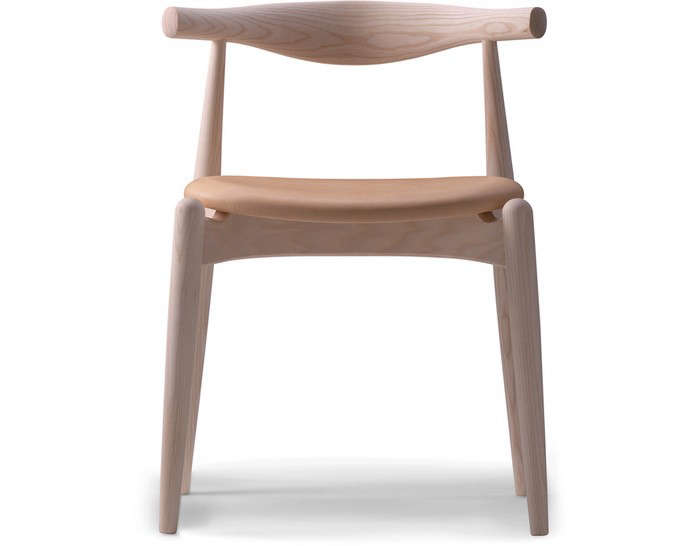
ch20 – Elbow Chairs
Aug
The CH20 Elbow Chair looks almost too simple to have a dramatic backstory. Four tapered legs, a padded seat, and one graceful sweep of wood across the backwhat could possibly be complicated? Quite a lot, as it turns out. Hans J. Wegner designed the chair in 1956, but its demanding construction kept it out of regular production for nearly half a century.
When Carl Hansen & Søn finally introduced the design in 2005, the once-forgotten chair promptly won an ICFF Editors Award. Apparently, being fashionably late works when you arrive with excellent joinery.
Today, the CH20 Elbow Chair is admired as a compact Danish dining chair that combines sculptural craftsmanship, practical comfort, and visual lightness. This guide explores its history, construction, dimensions, comfort, styling potential, care requirements, and the everyday experience of living with it.
What Is the CH20 Elbow Chair?
The CH20 Elbow Chair is a stackable wooden dining and occasional chair designed by Danish furniture master Hans J. Wegner. It is manufactured by Carl Hansen & Søn, the company responsible for producing many of Wegner’s best-known designs.
Its defining feature is the low, curved backrest. Steam-bent from a single piece of solid wood, this horizontal rail supports the lower back while creating convenient resting points for the elbows. That supportive curve inspired the chair’s friendly nickname.
Unlike a conventional armchair, the CH20 does not surround the sitter with full-length arms. Its backrest provides some of the relaxed support of an armchair while retaining the compact footprint and easy movement of a dining chair. It can slide under many tables more neatly than chairs with tall arms, although table-clearance measurements should always be checked before buying.
CH20 Elbow Chair dimensions
Exact measurements can vary slightly by market or configuration, but the chair is approximately 21.3 inches wide, 18.5 inches deep, and 28.7 inches high. Its seat height is about 18.1 inches, placing it within the normal range for residential dining chairs.
The relatively low overall height helps the CH20 preserve open sightlines across a room. Around a dining table, the chairs contribute shape and texture without forming a wooden fence around dinner.
A 1956 Design That Had to Wait Until 2005
Wegner developed the CH20 in 1956, during a highly productive period in Danish modern furniture design. He was already known for treating the chair as a serious architectural object rather than a four-legged household afterthought.
Prototype versions demonstrated the idea, but the chair’s complex combination of steam bending, shaped solid wood, molded veneer, and precise joinery made efficient production difficult with the available methods. The design was placed in the Wegner archive instead of entering a standard manufacturing run.
Carl Hansen & Søn revisited the archived design decades later. Advances in production technology allowed the company to manufacture its difficult components consistently while preserving the craftsmanship and material character central to Wegner’s concept. The CH20 entered production in 2005 and received an ICFF Editors Award in New York that same year.
The story explains why the chair feels both authentically midcentury and surprisingly contemporary. Its form originated in the 1950s, but its successful production depended on later manufacturing capabilities. It is less a reissue than a patient piece of furniture that waited for the factory to catch up.
Why the Construction Is More Sophisticated Than It Looks
A steam-bent solid-wood backrest
The curved back rail is the visual signature of the CH20 Elbow Chair. Forming it from one piece of solid wood creates a continuous line with no distracting interruption at the center. The grain follows the curve, making the chair pleasant to view from behindan important quality for furniture placed around an open dining table.
The backrest is sculpted and smoothed so it feels comfortable beneath the hands and elbows. This tactile quality is characteristic of Wegner’s furniture. The wood is not merely structural decoration; it is the part people repeatedly touch.
An 11-ply molded seat base
Beneath the upholstery is a form-pressed veneer seat base made from multiple laminated layers. This molded construction supplies strength and stability while reducing the need for visually heavy crosspieces below the seat.
The resulting seat appears to float between the legs. That small shadow line is one reason the chair looks lighter than its sturdy construction suggests. It is a clever visual trick, except the trick is engineering.
A padded upholstered seat
The seat combines the shaped veneer base with foam and upholstery. Depending on the current collection and dealer options, buyers may find leather or fabric seats paired with different wood finishes.
Leather emphasizes the chair’s tailored, architectural personality and typically develops character with use. Fabric introduces color, softness, and additional texture. Neither choice is universally better; the right option depends on cleaning needs, climate, household habits, and whether someone at the table treats tomato sauce as an interactive sport.
Comfort: What the Elbow Chair Does Well
The CH20 is primarily an upright dining or work chair rather than a deep lounge chair. Its horizontal seat, moderate padding, and low back encourage a composed posture without feeling excessively rigid.
The curved backrest contacts the lower back and allows the sitter to shift position. A person can face forward, rotate slightly during conversation, or rest an elbow on one end of the rail. This freedom is particularly useful at long meals, where everyone eventually abandons perfect posture somewhere between the main course and the second story about a neighbor’s renovation.
Its upholstered seat makes it more forgiving than an all-wood dining chair. Nevertheless, comfort is personal. Taller users may appreciate the open upper back, while someone who wants shoulder-height support may prefer a taller chair. People with mobility concerns should also test how easily they can stand from the seat and whether the short backrest offers enough assistance.
For desk use, the CH20 can be comfortable for focused sessions and visually refined in a home office. It is not an adjustable ergonomic task chair, however. Anyone working at a computer for eight hours should prioritize adjustable lumbar support, seat depth, and arm positioning over photogenic Danish charm.
Where CH20 Elbow Chairs Work Best
Around a dining table
The dining room is the chair’s natural habitat. Its 21-inch-plus width provides personal space without consuming the acreage of a full armchair. Because the back is low, a set of CH20 chairs can make a modest dining area feel calmer and less crowded.
Before ordering several chairs, calculate usable table space rather than relying on the table’s total length. Allow room for table legs, aprons, and comfortable gaps between diners. A paper template on the floor can prevent an expensive game of designer-chair Tetris.
At a writing desk
The chair’s flat sitting position and lower-back support suit occasional desk work, journaling, or a bedroom writing table. Its sculptural back also looks attractive when the chair is pushed in, which matters in multipurpose rooms where office furniture is always on display.
As a standalone accent chair
One CH20 can work beside a console, in an entry, or near a bookcase. It occupies less visual space than a lounge chair while offering a useful place to sit, put on shoes, or temporarily hold the clothes that are “not dirty enough for laundry.”
In hospitality and meeting spaces
Its compact form, durable frame, and stackable design also suit refined restaurants, conference rooms, and boutique hospitality settings. The chairs can reportedly be stacked up to four high. Long-term stacking is not recommended because continuous pressure may affect the upholstery.
Choosing Wood Finishes and Upholstery
Authentic CH20 Elbow Chairs are offered in manufacturer-approved combinations that may include FSC-certified oak with soap, oil, white oil, lacquer, stain, or painted finishes. Availability changes, so buyers should confirm current combinations with Carl Hansen & Søn or an authorized dealer.
A soaped oak finish produces a pale, natural Scandinavian appearance. It showcases the grain but generally requires attentive maintenance. Oiled oak appears warmer and richer, emphasizing the wood’s pattern. White oil helps preserve a lighter color, while lacquered or painted finishes can be more resistant to routine handling and create a sharper graphic effect.
For a quiet interior, pair pale oak with neutral fabric or light leather. Oiled oak and cognac-colored leather create a warmer midcentury mood. Black-painted wood with black leather gives the chair a crisp silhouette that works well in contemporary rooms.
A coordinated set is not the only answer. The CH20 can be mixed with a bench, simpler side chairs, or another Wegner design. Repeating one materialsuch as oak, black leather, or a shared upholstery colorusually keeps the arrangement intentional rather than resembling a furniture-store evacuation.
How to Identify and Buy an Authentic CH20
The popularity of Danish modern furniture has generated many “inspired by” chairs. Some are clearly presented as reproductions; others use vague wording that encourages buyers to assume more than the seller actually promises.
An authentic new CH20 is manufactured by Carl Hansen & Søn. Purchase through the company or an authorized retailer, and request written confirmation of the model, wood species, finish, upholstery, warranty, and expected delivery schedule.
For a preowned chair, evaluate the seller’s documentation and reputation. Ask for clear photographs of manufacturer markings, labels, the underside of the seat, joints, upholstery, and all four legs. Compare proportions and construction details with official product information. A low price alone does not prove an item is fake, but an implausibly low price combined with fuzzy photographs and a mysterious life story deserves healthy skepticism.
Because wood grain and leather markings naturally vary, small visual differences between chairs are normal. Variation is not automatically a defect; it is part of using natural materials. Buyers assembling a large set may still want to view finish samples and ask how closely the pieces can be matched.
Cleaning and Maintenance
Care should always match the specific finish. Soap-treated, oiled, lacquered, and painted wood require different products and maintenance schedules. Using a generic furniture polish on every surface can change the sheen, attract residue, or interfere with future treatment.
For routine cleaning, remove loose dust with a soft cloth. Address spills promptly with the least aggressive method approved by the manufacturer. Avoid soaking the wood, using abrasive pads, or placing the chair beside intense heat sources that may dry natural materials unevenly.
Blot upholstery spills rather than rubbing them deeper into the surface. Leather and fabric each have specialized care requirements, so identify the exact upholstery before applying a cleaner. Test any approved product in an inconspicuous area first.
Periodically inspect the chair for unusual movement, damaged floor glides, or wear around frequently handled areas. Do not attempt to tighten, refinish, or reupholster a valuable chair without understanding its construction. Professional service may preserve both appearance and long-term value more effectively than enthusiastic weekend surgery.
Is the CH20 Elbow Chair Worth It?
The CH20 sits in the premium designer-furniture category. Its cost reflects licensed production, complicated woodworking, upholstery, material selection, and association with one of the most influential furniture designers of the twentieth century.
It makes the strongest case for itself when a buyer values craftsmanship, intends to keep furniture for many years, and appreciates an object from every angle. The chair is especially compelling in open-plan homes because its curved back is often the side most visible from the living area.
It may be less suitable for households seeking the lowest possible dining-chair price, tall upper-back support, outdoor furniture, or an adjustable full-time office chair. A reproduction may mimic the outline, but it should be evaluated on its own materials, comfort, safety, and construction rather than treated as equivalent to the licensed original.
Living With CH20 Elbow Chairs: Everyday Experiences
The first real-life surprise is usually scale. Product photographs make the curved backrest look broad and dramatic, yet the chair feels comparatively compact in a room. It does not tower above the table or block the view into an adjoining kitchen. In a smaller dining area, that visual openness can matter almost as much as the chair’s physical footprint.
The second surprise is how often people touch the back rail. Guests tend to run a hand across its curve while pulling out the chair. During a long conversation, they naturally rest an elbow on one side or turn slightly toward another person. These small interactions reveal why the chair’s name is more than marketing. The backrest becomes a functional handle, lumbar support, abbreviated armrest, and beautifully finished piece of sculpture.
At meals, the padded seat provides welcome comfort without the sinking sensation of a heavily cushioned chair. The posture remains upright enough for eating, writing, or working on a laptop. After several hours, however, people who prefer a tall back may begin wanting more support near the shoulder blades. Trying the chair in person is therefore valuable, particularly when purchasing a full set.
Finish choice has an obvious impact on daily ownership. Pale soaped oak looks wonderfully airy but makes some owners more conscious of fingerprints, spills, and maintenance. Oiled oak has a warmer, more forgiving presence and tends to pair easily with wood floors and traditional tables. Dark-painted versions create sharper contrast, although dust may be easier to spot. The chair has excellent taste; unfortunately, it has not volunteered to clean itself.
Leather seats are convenient in dining spaces because minor crumbs are easy to remove, but liquid spills still require quick attention. Fabric feels softer and offers more color possibilities, yet households with young children or enthusiastic pets may prefer a performance-oriented textile approved for the chair.
Moving the CH20 is easy because its low back acts as a natural grip. The chair can also be stacked temporarily when floor space is needed. Still, stacking should be done carefully, with attention to the upholstery and wood surfaces. Keeping chairs compressed in a stack for extended periods may leave pressure marks or deform the seat material.
Another practical experience emerges over time: the chair looks good when it is not being used. Many dining chairs disappear beneath a table or appear awkward from behind. The CH20’s continuous wooden curve, tapered legs, and floating seat construction give the rear view genuine presence. That makes it particularly effective in open rooms where the dining area is seen from several directions.
Owners may also notice that natural materials become more personal with age. Wood can deepen in tone, while leather develops creases and patina. These changes are appealing when wear is gradual and the chair is properly maintained. They are less charming when caused by direct sunlight, neglected spills, or a cat conducting unauthorized durability tests.
Ultimately, living with the CH20 is about quiet usefulness. It does not swivel, recline, charge a phone, or offer an app that needs updating. It simply supports the body, fits comfortably into varied interiors, and rewards close attention to craftsmanship. That restraint is precisely why the chair remains relevant decades after Wegner first drew it.
Conclusion
The CH20 Elbow Chair demonstrates how much design intelligence can be hidden inside a restrained silhouette. Its steam-bent backrest supports the elbows and lower back, its molded veneer seat base creates strength without visual heaviness, and its upholstered seat makes the chair practical for dining, conversation, and occasional desk work.
Its delayed journey from a 1956 design to a 2005 production model also gives it an unusual place in Danish furniture history. The CH20 is neither a trend-driven newcomer nor a familiar classic that has been continuously available for generations. It is an archived idea whose time finally arrivedand then stayed.
For buyers who appreciate authentic craftsmanship, compact proportions, and furniture that remains attractive from every direction, CH20 Elbow Chairs can be a thoughtful long-term investment. Measure the space, test the comfort when possible, choose a finish suited to your household, and buy through a trustworthy source. Your elbows may not write a thank-you note, but they will understand.

