
Beauty Unlocked
“Then Vs Now”: 23 Ways Life Changed Over The Years Are Splitting The Internet – Where Do You Stand?
Aug
There are two kinds of people online: the ones who say, “Life was better back then,” and the ones who reply, “Sure, Grandpa, enjoy folding your paper map in a thunderstorm.” The “then vs now” debate has become one of the internet’s favorite arguments because everyone has receipts: childhood memories, screenshots, family stories, old photos, abandoned landlines, and that one drawer full of mystery charging cables.
Life has changed dramatically over the years, especially in the United States. Technology became smaller, faster, and somehow more emotionally demanding. Work moved from office desks to kitchen tables. Dating went from “meet cute” to “swipe left because he said ‘your’ instead of ‘you’re.’” Shopping malls became nostalgia museums. Kids traded bike rides until sunset for group chats, tablets, and location sharing. Meanwhile, adults learned that “convenience” often arrives with a subscription fee.
So, where do you stand? Was life better then, simpler now, or are both sides just wearing rose-colored glasses with Wi-Fi?
Why “Then vs Now” Posts Go Viral
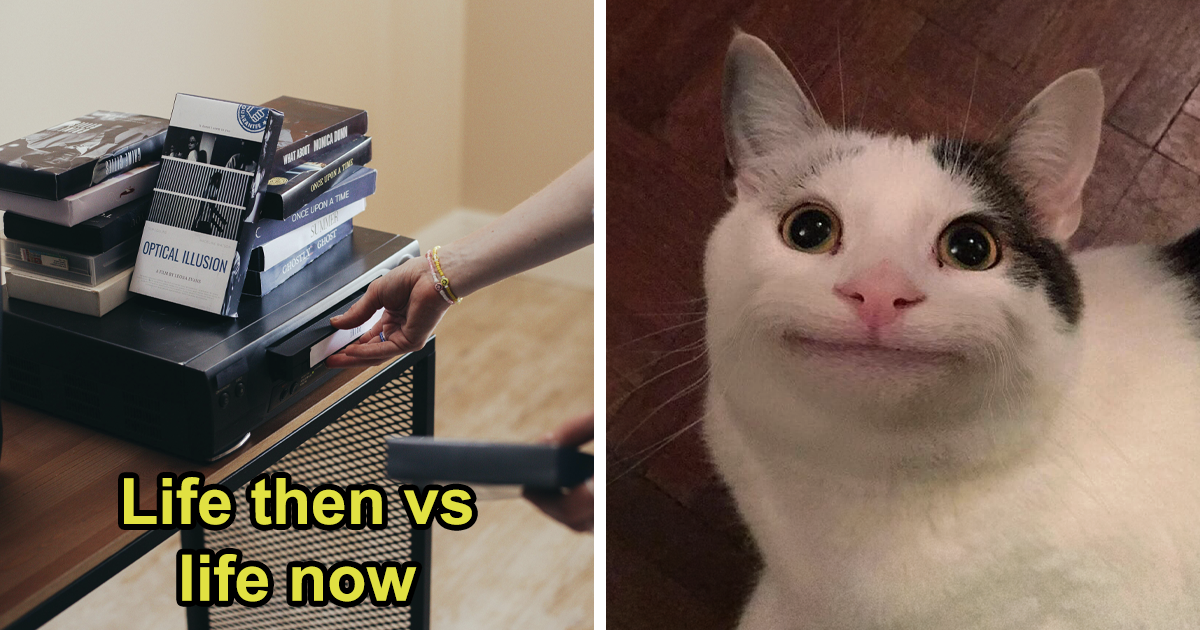
“Then vs now” content works because it pokes the most sensitive button on the human dashboard: nostalgia. People love comparing old routines with modern habits because the contrast is funny, emotional, and occasionally alarming. A single image of a 1990s living room can trigger a thousand comments: “I can smell the carpet,” “Where’s the giant TV cabinet?” and “We were happy with three channels and a VHS tape that chewed itself.”
But the conversation is deeper than jokes. These comparisons reveal real cultural shifts. They show how Americans communicate, work, eat, spend, learn, date, parent, travel, relax, and define success. Some changes made life safer and more convenient. Others made life faster, lonelier, pricier, or more complicated. The internet is split because the truth is split too.
23 Ways Life Changed Over the Years
1. Phones Went From “Where Are You?” to “I Know Exactly Where You Are”
Then, the family phone lived on the wall, had a curly cord, and turned every private conversation into a public performance. Now, smartphones are calendars, cameras, wallets, maps, entertainment systems, health trackers, flashlights, and tiny anxiety rectangles. The modern phone is powerful, but it also means people are reachable all the time. Convenient? Absolutely. Peaceful? Not always.
2. The Internet Went From Dial-Up Drama to Always-On Everything
Then, getting online sounded like a robot falling down stairs. You waited, prayed nobody picked up the phone, and considered one downloaded song a major achievement. Now, high-speed internet is central to work, school, shopping, banking, entertainment, and social life. The upside is instant access. The downside is that “offline” has become a luxury lifestyle choice.
3. News Went From Newspapers to Infinite Feeds
Then, families got news from newspapers, evening broadcasts, or the radio. Now, news arrives through apps, alerts, podcasts, social media, newsletters, search engines, and group chats where one uncle is very confident and very incorrect. Modern access is faster, but it also requires sharper media literacy. Today, the challenge is not finding information; it is surviving the avalanche.
4. Shopping Went From Malls to Doorsteps
Then, shopping meant going to the mall, walking past a fountain, and pretending you were “just browsing” for three hours. Now, e-commerce brings shoes, groceries, furniture, toothpaste, and regrettable late-night purchases to your door. Convenience has won, but many people miss the social ritual of shopping in person. The mall was not just retail; it was a weather-controlled ecosystem of teenage freedom.
5. Work Went From Office Culture to Hybrid Confusion
Then, work usually meant commuting, cubicles, packed lunches, and pretending to understand the printer. Now, many workers split time between home and office, while others remain fully in-person. Remote work gave people flexibility, but it also blurred the line between “at work” and “standing in the kitchen answering emails while the dog judges you.” The office did not disappear; it just became negotiable.
6. Dating Went From Local Chemistry to Algorithmic Possibility
Then, people met through friends, school, church, work, bars, or chance encounters that later became cute anniversary stories. Now, dating apps can introduce you to hundreds of people nearby, assuming you survive the bios, filters, ghosting, and photos with suspiciously cropped exes. Modern dating expands options, but it can also make romance feel like online shopping with emotional shipping delays.
7. Photos Went From Precious Prints to Cloud Chaos
Then, you took 24 pictures on vacation and hoped at least six were not blurry. Now, people take 24 photos of one sandwich. Digital photography made memory-making cheaper and easier, but it also created a new problem: thousands of images, almost no albums, and a phone storage warning that feels personally insulting.
8. Music Went From Mixtapes to Streaming Libraries
Then, music collections were physical: cassettes, CDs, burned discs, and carefully labeled mixes. Now, nearly every song is available instantly. That is magical, but the old rituals had personality. Making a mixtape required commitment. Making a playlist requires a title like “sad but make it productive” and a mild identity crisis.
9. TV Went From Appointment Viewing to Streaming Paralysis
Then, families gathered around the TV at a specific time because missing an episode meant waiting for reruns. Now, viewers can stream entire seasons anytime. The problem is choice overload. People have more entertainment than ever and still spend 22 minutes asking, “What should we watch?” before rewatching the same comfort show again.
10. Kids Went From “Be Home by Dark” to Location Sharing
Then, many children roamed neighborhoods, rode bikes, and solved playground disputes with questionable diplomacy. Now, parents can text, track, call, and monitor their children in ways previous generations could not imagine. This can improve safety and communication, but it also raises questions about independence. Childhood has become more supervised, more scheduled, and much harder to disappear into until dinner.
11. School Went From Chalkboards to AI-Assisted Everything
Then, students carried heavy textbooks, wrote reports from library encyclopedias, and feared overhead projectors. Now, digital learning platforms, online classes, tablets, and generative AI tools have changed education. Students can research faster and learn in flexible formats, but schools are also navigating plagiarism, screen fatigue, unequal access, and the timeless question: “Did you write this yourself?”
12. Money Went From Cash and Checks to Tap, Scan, Done
Then, people balanced checkbooks, carried cash, clipped coupons, and occasionally discovered forgotten money in coat pockets. Now, mobile wallets, buy-now-pay-later options, online banking, and automatic subscriptions make spending frictionless. That convenience is powerful, but it can also make money feel invisible until the monthly statement appears like a jump scare.
13. Food Went From Home Cooking Defaults to Delivery Decisions
Then, eating out was more of an event, and takeout often meant pizza, Chinese food, or whatever came with a paper menu on the fridge. Now, food delivery apps can bring almost anything, sometimes faster than you can find a clean pan. Dining is more flexible, but delivery fees have turned “I don’t feel like cooking” into a small financial strategy meeting.
14. Social Life Went From Doorbells to Group Chats
Then, people dropped by, called the house phone, or made plans face-to-face. Now, group chats coordinate birthdays, vacations, gossip, family logistics, and 73 unread messages about where to eat. Digital communication keeps people connected, but it can also create social fatigue. Somehow, it is possible to be constantly in touch and still feel oddly distant.
15. Privacy Went From “Nobody Knows” to “Everything Has a Setting”
Then, embarrassing moments usually stayed local. Now, a bad haircut, awkward dance, or poorly worded opinion can travel faster than common sense. Modern life brings cameras, data collection, facial recognition, location tracking, and permanent screenshots. The old world had fewer conveniences, but it also had fewer receipts.
16. Cars Went From Mechanical Machines to Rolling Computers
Then, cars had knobs, keys, and maybe a cassette deck if you were fancy. Now, vehicles include touchscreens, driver assistance, backup cameras, electric powertrains, connected services, and software updates. Safety and efficiency have improved in many ways, but some drivers miss the simplicity of buttons that did one job and never required a reboot.
17. Travel Went From Paper Tickets to App-Based Everything
Then, travelers printed directions, carried paper tickets, used travel agents, and hoped the hotel looked like the brochure. Now, apps handle bookings, boarding passes, reviews, maps, translation, rideshares, and restaurant recommendations. Travel is easier to customize, but it also means your vacation can become a second job of checking confirmations, alerts, ratings, and cancellation policies.
18. Fitness Went From Gym Class Trauma to Wearable Data
Then, fitness might have meant aerobics tapes, jogging, team sports, or pretending the Presidential Fitness Test never happened. Now, smartwatches track steps, sleep, heart rate, workouts, and reminders to stand up because apparently your wrist is your life coach. Health data can motivate people, but it can also make relaxation feel underachieving.
19. Homes Went From Simple Appliances to Smart Everything
Then, a light switch was a light switch. Now, homes can have smart speakers, connected thermostats, robot vacuums, video doorbells, app-controlled bulbs, and refrigerators that may or may not be judging your snack choices. Energy-efficient technology can save money and resources, but smart homes also create new problems, like arguing with a speaker that misunderstood “turn on the lamp.”
20. Entertainment Went From Shared Culture to Personalized Bubbles
Then, everyone watched many of the same shows, heard the same radio hits, and discussed the same big moments. Now, algorithms tailor entertainment to individual tastes. That is wonderful for niche interests, but shared culture has fragmented. Two people can live in the same house and have completely different media universes, both convinced the other is missing out.
21. Adult Milestones Got Delayed, Rewritten, or Rejected
Then, many Americans expected a fairly standard sequence: graduate, work, marry, buy a house, have kids, retire. Now, the timeline is more flexible and often more expensive. People marry later, live alone longer, rent longer, change careers, build nontraditional families, or skip old milestones entirely. Some call it freedom. Others call it inflation with better branding.
22. Health Conversations Became More Open
Then, many families avoided talking about mental health, therapy, burnout, chronic illness, or loneliness. Now, these topics are more public and less stigmatized, especially online. That openness helps people seek support, but it also comes with misinformation and overdiagnosis debates. Still, being able to say “I’m not okay” without whispering is a meaningful cultural shift.
23. The Pace of Life Went From Busy to Constantly Updating
Then, life was busy, but it had more natural pauses: waiting rooms, car rides, checkout lines, Sunday afternoons. Now, every pause can be filled with scrolling, streaming, texting, shopping, or checking notifications. Modern life is efficient, but it rarely feels finished. The biggest “then vs now” difference may be this: then, boredom happened by accident; now, boredom has to be protected.
So, Was Life Better Then or Now?
The honest answer is: yes. And also no. “Then” had more face-to-face moments, fewer digital interruptions, cheaper-feeling milestones, and a kind of simplicity people now crave. But “now” brings medical advances, instant communication, flexible work, better access to information, safer tools, more choices, and new opportunities for people who were often left out of older systems.
The internet splits over this debate because nostalgia is emotional, while progress is complicated. People do not only miss the past; they miss who they were, how time felt, and the people who were there. At the same time, many modern conveniences are so useful that few would truly give them up. People may complain about smartphones, but try taking away GPS on a road trip and watch society collapse in real time.
Experiences Related to “Then vs Now”: What It Feels Like in Real Life
The funniest part of the “then vs now” debate is that both sides often describe real experiences. Someone who grew up before smartphones may remember long summer days when friends appeared at the door without texting first. Plans were loose. You left the house, found people, and figured it out. There was no constant photo evidence, no location pin, no digital calendar reminder. A missed call was not a crisis; it was simply life saying, “Try again later.”
Now, daily life feels more organized but also more crowded. A typical morning can include checking the weather, reading headlines, answering messages, reviewing bank alerts, ordering coffee, tracking a package, and seeing three opinions about a celebrity breakup before breakfast. None of these things are terrible on their own. Together, they create a strange modern mood: informed, connected, slightly overstimulated, and already in need of a nap.
Family life shows the contrast clearly. In the past, parents might have taken photos on birthdays, holidays, and school events. Today, a child’s life can be documented in thousands of images before they can spell “privacy.” Grandparents once waited for printed photos in the mail; now they can see a baby’s first steps in a group chat before the baby has finished falling over. That is wonderful, hilarious, and a little strange.
Work has changed just as much. Older office life had structure: commute, desk, meetings, lunch, home. Modern work can be more flexible, but it can also follow people everywhere. The same laptop that lets someone work from home can also make the living room feel like a branch office. The old commute was exhausting, but at least it created a border. Today, many workers must build that border themselves, usually while sitting next to laundry that has entered its “decorative pile” era.
Shopping is another everyday example. People once spent Saturday comparing prices in stores, touching fabrics, trying things on, and buying snacks at the mall. Today, they compare 400 reviews, three influencer videos, and two discount codes before buying socks online. That is efficient, but it can turn even tiny purchases into research projects. Somehow, having endless choices has made decisions harder.
Even friendship feels different. Then, friendships often grew through repeated physical presence: school, neighborhoods, workplaces, churches, clubs, teams. Now, friendships can survive across distance through texts, memes, video calls, and social platforms. That is a gift. But digital connection can sometimes replace deeper contact with low-effort signals: a like, a reaction, a “we should catch up soon” message that ages like a banana.
The best way to stand in the “then vs now” debate may be to keep the wisdom of both. Bring back slower meals, real conversations, unrecorded fun, neighborhood kindness, and the ability to sit quietly without checking a screen. Keep the medical progress, online learning, safer tools, flexible work, navigation apps, and the ability to order soup when you are sick. The goal is not to live in the past or worship the present. The goal is to build a life where technology serves the human experience instead of swallowing it whole.
Conclusion: Where Do You Stand?
“Then vs now” is not really a fight between generations. It is a conversation about trade-offs. The past offered more simplicity, but not always more comfort, fairness, safety, or opportunity. The present offers more convenience, but not always more peace, patience, or connection. The smartest answer is not “then was better” or “now is better.” It is choosing what deserves to return and what deserves to stay retired next to the fax machine.
If you miss the old days, you are not wrong. If you love modern life, you are not wrong either. Life changed, people adapted, and the internet will continue arguing because that is what the internet does best. The real question is not whether then or now wins. The real question is: what kind of future are we building from both?

