
Beauty Tools & Accessories
6 Healthy Pizza Recipes So Tasty You’ll Ditch Delivery
Aug
Pizza has a reputation problem. It’s like that friend who’s fun at parties but somehow always convinces you to
“just have one more slice” and then you wake up thirstier than a cactus in July. The good news: pizza doesn’t have
to be a nutritional jump-scare. With a few smart swaps, you can keep everything you lovecrispy edges, melty cheese,
big flavorwhile dialing down the stuff that makes you feel like you need a nap and a gallon of water afterward.
This guide gives you six genuinely craveable healthy pizza recipes (not “healthy” like a sad desk salad wearing
pepperoni as a hat). We’ll focus on fiber-forward crusts, veggie-heavy toppings, and sauces that don’t secretly
double as a salt lick. The goal is simple: a homemade pizza night that tastes like a treat, eats like a meal, and
makes delivery apps wonder where you went.
The Healthy Pizza Formula (No Math Degree Required)
Healthy pizza isn’t about removing joyit’s about controlling the three levers that decide whether your pie feels
energizing or like a food coma with marinara:
-
Crust: Choose a base with more fiber and/or protein (whole wheat, Greek-yogurt dough, chickpea
socca, veggie “crusts,” or a quick pita). -
Sauce: Pick tomato-based sauces with minimal added sugar and watch the sodium. Bonus points for
adding garlic, herbs, and red pepper flakes for “big flavor” without “big salt.” -
Toppings: Treat cheese and cured meats as accents, not a blizzard. Load up on vegetables, add a
lean protein if you want staying power, and finish with fresh herbs for the restaurant vibe.
Small moves that make a big difference
- Go thin on sauce: too much moisture = soggy center (and heartbreak).
- Use part-skim mozzarella: still melts, usually less saturated fat than full-fat versions.
- Make veggies work for you: roast watery vegetables (zucchini, mushrooms) first if you’re piling them on.
- Finish smart: arugula, basil, lemon zest, or chili oil adds punch without heavy calories.
Pantry Prep for “I Can Make Pizza Tonight” Energy
If you want homemade pizza to beat delivery on convenience, set yourself up like a weeknight wizard:
- Keep dough options: whole-wheat dough balls in the fridge/freezer, plus pitas for emergency pizza.
- Stock flavor boosters: garlic, crushed red pepper, dried oregano, balsamic glaze, olives, capers.
- Have a veggie strategy: a bag of spinach, a bell pepper, and a red onion can carry you far.
- Use heat like a pro: preheat your oven and your sheet pan or pizza stone so the crust crisps fast.
6 Healthy Pizza Recipes So Tasty You’ll Ditch Delivery
Each recipe below is built around real-life constraints: you want it delicious, you want it doable, and you don’t
want a sink full of regret. Pick one, or rotate through all six and become the kind of person who casually says,
“We’ll just do homemade pizza,” like it’s no big deal.
1) Whole-Wheat Sheet-Pan Zucchini & Lemon-Basil Pizza
Why it works: Whole-wheat dough brings fiber and a nutty bite. Sheet-pan baking gives you crispy
edges with minimal fuss, and zucchini + lemon keeps things bright, not heavy.
Ingredients (serves 4–5):
- 1 lb whole-wheat pizza dough (store-bought or homemade)
- 2–3 small zucchini, thinly sliced (half-moons)
- 1–2 tsp olive oil
- 1–2 cloves garlic, thinly sliced
- 1 cup part-skim mozzarella (or a mix of mozzarella + a little feta)
- Zest of 1 lemon + a few thin lemon slices (optional but excellent)
- Fresh basil, black pepper
- Optional protein: shredded rotisserie chicken breast or chickpeas
How to make it:
- Heat oven to 450°F. Put an empty sheet pan in the oven while it preheats (hot pan = crisp crust).
- Toss zucchini with olive oil, garlic, and pepper. If your zucchini is very watery, lightly salt it and pat dry.
- Stretch dough onto parchment. Carefully slide parchment onto the hot sheet pan.
- Par-bake 5 minutes. Pull it out, add cheese, zucchini, lemon zest/slices, and optional protein.
- Bake 10–14 minutes more, until browned at the edges and bubbly.
- Finish with basil and a crack of black pepper. Slice, inhale, repeat responsibly.
Smart swaps: Use a light brush of olive oil + garlic as the “sauce” to keep it from getting soggy.
2) Two-Ingredient Greek Yogurt “Weeknight Miracle” Crust Pizza
Why it works: This no-yeast dough comes together fast and adds protein thanks to Greek yogurt.
It’s perfect for those nights when the idea of “proofing” makes you want to lie down.
Ingredients (makes 2 personal pizzas):
- 1 cup plain Greek yogurt (thick, not drinkable)
- 1 1/4 cups self-rising flour (or make your own with baking powder + salt)
- 1/2 cup no-salt-added or reduced-sodium marinara
- 1 to 1 1/2 cups part-skim mozzarella
- Toppings: spinach, mushrooms, bell pepper, red onion, fresh basil
- Optional protein: grilled chicken, turkey pepperoni, or white beans
How to make it:
- Heat oven to 475°F. Line a pan with parchment.
- Mix yogurt + flour until a shaggy dough forms. Knead lightly until smooth (add flour if sticky).
- Divide in two. Press each into a thin round (about 8–9 inches) on parchment.
- Par-bake 6–8 minutes. Add sauce, cheese, and toppings.
- Bake 6–8 minutes more until the cheese is melted and edges are golden.
- Finish with basil and a pinch of red pepper flakes.
Smart swaps: Try pesto as a drizzle (not a base) or stir chopped spinach into the sauce for stealth greens.
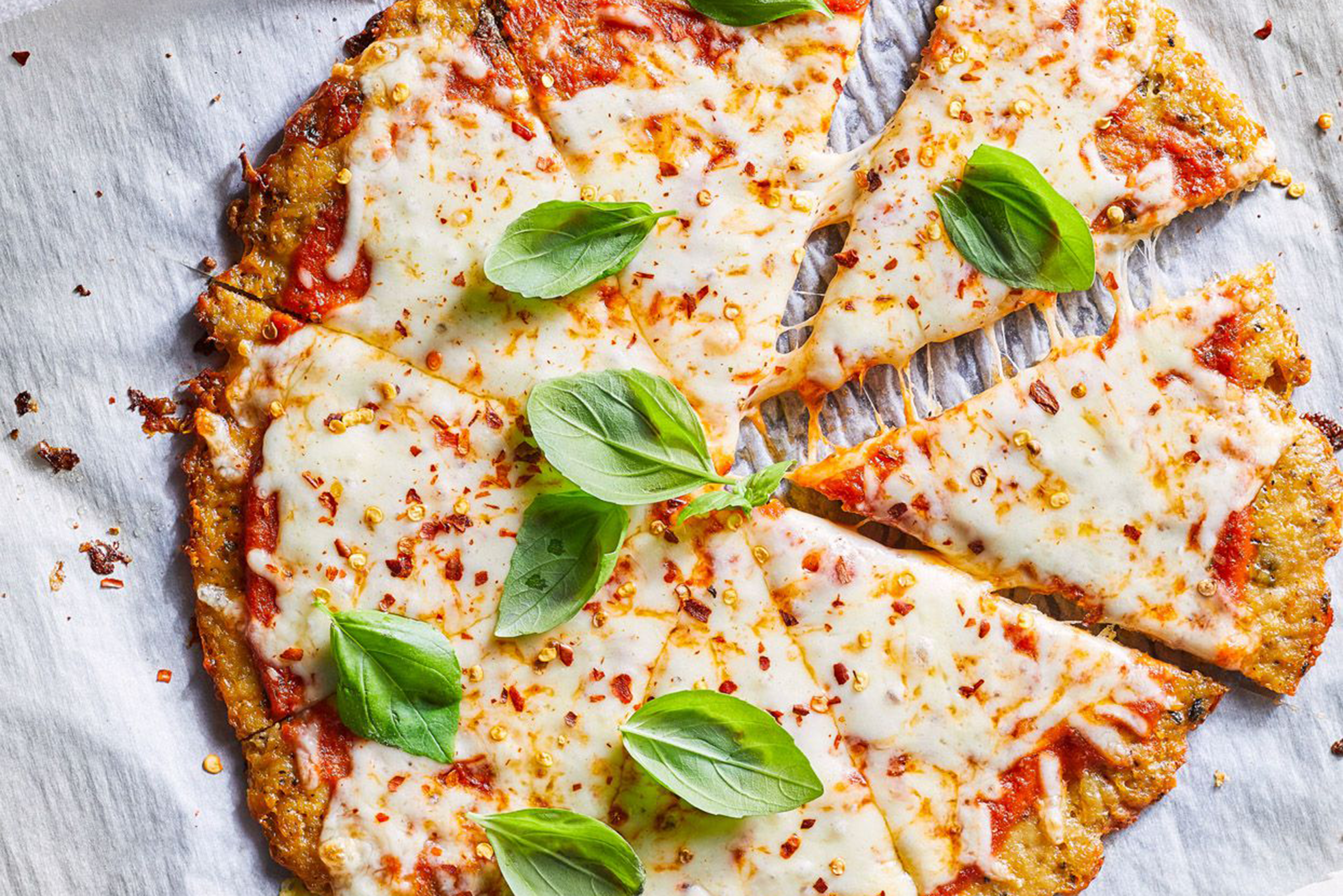
3) Crispy Cauliflower Crust Pizza That Doesn’t Taste Like a Compromise
Why it works: Cauliflower crust can be greatif you treat moisture like your sworn enemy. The key
is cooking the cauliflower and squeezing it dry before baking.
Ingredients (1 medium pizza):
- 1 large head cauliflower (or ~4 cups riced cauliflower)
- 1 egg (or egg whites)
- 3/4 cup shredded mozzarella
- 1/4 cup grated Parmesan (optional, for flavor and structure)
- Italian seasoning, garlic powder, black pepper
- 1/3–1/2 cup marinara (go light)
- Toppings: roasted peppers, onions, spinach, turkey pepperoni, mushrooms
How to make it (the crisp way):
- Heat oven to 425°F. Line a pan with parchment.
- Rice cauliflower, then microwave or sauté until soft. Cool slightly.
- Important: Wrap cauliflower in a clean towel and squeeze hard to remove as much water as possible.
- Mix cauliflower with egg, mozzarella, seasonings (and Parmesan if using).
- Press into a thin circle on parchment. Bake 15–20 minutes until golden.
- Flip carefully, bake 5 more minutes. Top lightly and bake 5–8 minutes more.
Smart swaps: Roast mushrooms or zucchini before topping to avoid turning your crust into a swamp.
4) Chickpea Socca Skillet Pizza (Gluten-Free, Protein-Friendly)
Why it works: Socca (a chickpea-flour flatbread) makes a naturally gluten-free crust with a savory,
almost nutty flavor. It’s also a skillet situationso crisp edges are basically guaranteed.
Ingredients (1 10-inch skillet pizza):
- 1 cup chickpea flour
- 1 cup water
- 1 tbsp olive oil + extra for the pan
- 1/2 tsp salt, black pepper
- 1/2 cup marinara (or crushed tomatoes + garlic)
- 3/4 cup mozzarella (or a light sprinkle of feta)
- Toppings: roasted red peppers, spinach, artichokes, olives
- Finisher: arugula, lemon juice, chili flakes
How to make it:
- Whisk chickpea flour, water, oil, salt, and pepper. Let rest 15–30 minutes (better texture).
- Heat oven to 450°F. Put a cast-iron skillet in the oven to heat for 5 minutes.
- Carefully remove skillet, oil it, pour in batter, and return to oven 10–12 minutes until set and browned.
- Add sauce, cheese, and toppings. Bake 5–7 minutes more.
- Finish with arugula and a squeeze of lemon.
Smart swaps: For extra protein, add shredded chicken or white beans and keep cheese moderate.
5) 15-Minute Mediterranean Pita Pizzas
Why it works: Pita is the fastest “crust” in the game. It’s thin, crisp, and portion-friendlyplus
it gets you from “hungry” to “eating pizza” in less time than delivery takes to find your building.
Ingredients (makes 2):
- 2 whole-wheat pitas
- 1/3 cup marinara or crushed tomatoes
- 3/4 cup mozzarella (or part-skim)
- Toppings: cherry tomatoes, spinach, red onion, bell pepper, olives
- Optional: a spoon of hummus (as a base or dolloped after baking)
- Finisher: oregano, basil, a drizzle of olive oil (optional)
How to make it:
- Heat oven to 450°F. Place pitas on a sheet pan.
- Spread a thin layer of sauce (or hummus). Add cheese and toppings.
- Bake 8–10 minutes until crisp and melty.
- Finish with herbs and eat immediatelypita pizza waits for no one.
Smart swaps: Use leftover roasted veggies. This is also a great “clean out the fridge” recipe.
6) Portobello Mushroom Cap Personal “Pizza” (Knife-and-Fork Approved)
Why it works: Portobello caps are naturally portioned, savory, and satisfying. You get the pizza
flavor profile with extra vegetables built right in.
Ingredients (serves 2):
- 2 large portobello mushroom caps, stems removed
- 2–4 tbsp marinara (thin layer)
- 1/2–3/4 cup mozzarella (or a lighter sprinkle of a stronger cheese)
- Toppings: chopped spinach, diced peppers, onions, turkey pepperoni, olives
- Optional: balsamic drizzle or fresh basil
How to make it:
- Heat oven to 425°F. Line a pan with parchment.
- Brush mushroom caps lightly with olive oil, roast 8 minutes gill-side up.
- Flip caps and blot excess moisture with a paper towel.
- Add sauce, cheese, toppings. Bake 8–10 minutes until melted and browned.
- Finish with basil (or a tiny balsamic drizzle if you want “fancy restaurant” energy).
Smart swaps: If you want more protein, add cooked chicken or a sprinkle of beans under the cheese.
Troubleshooting: How to Avoid Sad Homemade Pizza
Your dough keeps shrinking back
Dough fights you when gluten is tightespecially if it’s cold. Let it rest at room temperature before shaping, and
if it still snaps back, pause for 10–15 minutes and try again. Patience is a pizza ingredient.
Your pizza is soggy in the middle
- Use less sauce than you think you need.
- Preheat your pan/stone so the crust starts crisping immediately.
- Roast watery veggies first or blot them dry.
- Par-bake crusts (especially cauliflower and yogurt dough) before topping.
Your “healthy” pizza tastes bland
Add flavor where it counts: garlic, herbs, chili flakes, olives, capers, lemon zest, a sprinkle of Parmesan, or a
finishing drizzle (balsamic, chili oil). Healthy pizza should taste loud.
Kitchen Experiences That Make Healthy Pizza Stick (An Extra of Real-Life Wisdom)
Here’s the part nobody tells you when you decide to “make healthy pizza at home”: the first win isn’t the recipeit’s
the routine. The moment homemade pizza becomes a normal weeknight option, you stop treating delivery like the default.
And that shift happens through a bunch of tiny experiences that add up.
One common pattern in home kitchens is the “topping avalanche.” The logic feels innocent: more veggies must mean
healthier, so let’s pile on zucchini, mushrooms, tomatoes, and spinach like we’re building an edible terrarium.
The result? A beautiful pizza that eats like hot salad on wet bread. The fix is surprisingly empowering: you learn
to cook vegetables like a restaurant does. Roast mushrooms first. Pat tomatoes dry. Slice zucchini thin and give it
a quick salt-and-blot. Suddenly, your pizza tastes intentional instead of accidental.
Another experience that changes everything is discovering the joy of par-baking. The first time you par-bake
a crustespecially a Greek yogurt dough or cauliflower crustyou realize you’re not “making pizza,” you’re running
a controlled experiment in crispness. Par-bake is basically your insurance policy: it sets the structure, drives off
moisture, and gives you a head start so the toppings don’t bully your crust into submission. Once you’ve felt that
crunch under your teeth, it’s hard to go back.
Then there’s the sauce lesson. Delivery pizza has trained us to expect a thick, salty, sweet layer of sauce.
Homemade healthy pizza often starts with a lighter handjust enough to add brightness, not enough to soak the crust.
The first time you use less sauce and still feel satisfied, you understand that flavor doesn’t require flooding.
Garlic, oregano, chili flakes, and a little salt can make a modest amount of sauce taste bold. And if you’re watching
sodium, you start noticing how much of the “pizza after-feel” (thirst, bloating) is driven by sauce + processed meats
rather than the pizza concept itself.
Healthy pizza also teaches portion confidence. When you make pita pizzas or portobello cap pizzas, you get built-in
portioning without feeling deprived. Two pita pizzas with a mountain of veggies and a sensible amount of cheese can
feel more satisfying than three floppy delivery slices because the texture is crisp and the flavors are sharper.
The same goes for sheet-pan pizza: you can cut smaller squares, pair it with a quick salad, and still feel like you
had “real pizza night.”
Finally, there’s the social experience: healthy pizza is a sneaky crowd-pleaser. A DIY toppings setup turns dinner
into an event. Someone will inevitably make a chaotic masterpiece (pineapple, olives, and arugulabold choice),
and someone else will go classic. The point is, you stop thinking of healthy pizza as a restriction and start
seeing it as a customizable comfort food. That’s when delivery gets ditchednot because you swore an oath, but
because you honestly prefer what comes out of your own oven.
Conclusion
The secret to healthy pizza isn’t removing the best parts. It’s upgrading the foundation, keeping sauce and cheese
in their proper supporting roles, and letting vegetables and smart proteins carry the show. Try one recipe this week,
save your favorite crust option, and you’ll have a repeatable pizza night that’s faster than delivery and a whole
lot kinder to your energy levels.

