
Beauty Tools & Accessories
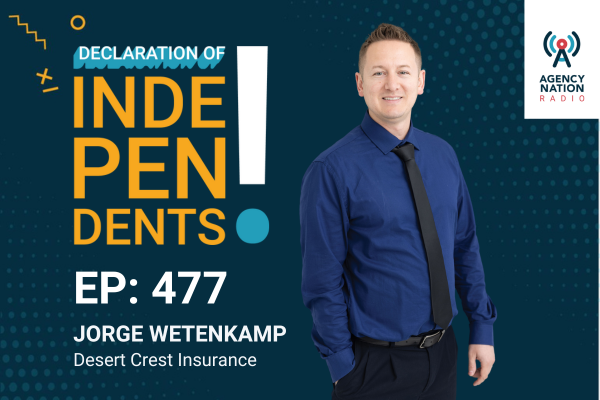
AN Radio: Switching from Hospitality to Insurance with Jorge Wetenkamp – IA Magazine
Aug
Some career changes begin with a carefully color-coded five-year plan. Others begin behind a fast-food counter, continue through a government office, and somehow lead to owning an independent insurance agency. Jorge Wetenkamp’s journey belongs firmly in the second categoryand that is precisely what makes it valuable.
Featured on Agency Nation Radio and in Independent Agent magazine, Wetenkamp is the owner of Desert Crest Insurance in St. George, Utah. His story illustrates how hospitality experience, bilingual communication, resilience, and a willingness to learn can become powerful assets in the insurance industry. It also challenges the idea that successful insurance agents must begin their careers dreaming about deductibles. Most children do not dress up as brokers for Halloween, after all.
Who Is Jorge Wetenkamp?
Before becoming an independent insurance agency owner, Wetenkamp worked at In-N-Out Burger, explored several construction trades, continued his education and spent time at the Utah Division of Motor Vehicles. He even helped open the restaurant chain’s first Utah location, an experience that demanded organization, stamina and the ability to serve large numbers of customers without visibly considering an escape through the drive-through window.
His route into insurance emerged through the DMV. In 2017, he joined AAA Insurance when the company began offering DMV-related services. The position introduced him to insurance sales, policy education and the long-term possibilities available in a relationship-based industry.
After several years as a captive agent, Wetenkamp opened Desert Crest Insurance in March 2021. The independent brokerage allowed him to represent multiple carriers instead of relying on one company’s products and underwriting appetite. It also allowed him to serve clients whose personal and commercial insurance needs had not fit comfortably within his former employer’s target market.
Why Hospitality Skills Translate So Well to Insurance
Hospitality and insurance may look like unrelated industries. One sells meals and experiences; the other sells financial protection wrapped in documents that few people voluntarily read on a relaxing Sunday afternoon. Beneath the surface, however, both fields depend heavily on trust, communication and problem-solving.
De-escalating Emotional Situations
Wetenkamp has described dealing with angry customers during his fast-food years, including people who shouted, cursed and occasionally threw food or drinks. While those moments were unpleasant, they taught him not to treat every emotional reaction as a personal attack.
That skill is directly useful in insurance. A policyholder calling about a premium increase, claim problem or cancellation notice is rarely excited to discuss the matter. Agents must listen, identify the real concern and explain the situation without becoming defensive. A calm tone can prevent a difficult conversation from turning into a customer-retention disaster.
Working Under Pressure
A busy restaurant teaches workers how to prioritize quickly. Orders keep arriving, customers want updates, coworkers need support and the clock refuses to show mercy. Independent insurance agencies experience a similar rhythm during renewal seasons, severe-weather events and periods of market disruption.
Hospitality workers already understand that urgency does not eliminate the need for accuracy. Giving the wrong order to table seven is inconvenient. Entering the wrong vehicle information or coverage limit on an insurance application can be considerably more serious.
Reading the Customer
Strong hospitality employees learn to adjust their communication style. One guest wants every ingredient explained; another wants lunch in four minutes and considers small talk a personal betrayal. Insurance clients also differ. Some want a detailed comparison of exclusions and limits, while others need a plain-language recommendation with the essential facts clearly summarized.
The Institutes identifies communication, customer service, problem-solving and emotional intelligence as valuable transferable skills in risk management and insurance. Technical insurance knowledge can be taught, but patience and situational awareness are often developed through experience.
Discovering a Career in Insurance
Wetenkamp’s move to AAA gave him an opportunity to combine service skills with a more consultative form of sales. Insurance is not simply a product transaction. A capable agent must understand a customer’s assets, liabilities, family situation, business operations and tolerance for risk before recommending appropriate protection.
For workers considering a similar transition, the industry offers several entry points, including producer, account manager, customer service representative, claims professional and underwriting assistant. Insurance producers must satisfy the licensing requirements of every state in which they sell, solicit or negotiate insurance. Requirements vary, but they commonly involve education, examinations, applications, fees and continuing education.
The career field also continues to need new talent. The U.S. Bureau of Labor Statistics projects approximately 47,000 openings for insurance sales agents each year, on average, from 2024 through 2034. Many will result from experienced workers retiring or moving into other occupations. That creates opportunities for career changers who bring mature customer-service skills rather than a traditional insurance résumé.
Why Wetenkamp Chose the Independent Agency Model
Captive agents generally represent a single insurance company. That structure can provide strong brand recognition, established systems and focused training, but product selection is limited to what that carrier offers.
An independent agent can work with multiple insurance companies. This gives the agency more flexibility to compare coverage, eligibility and price. It does not mean every client will magically receive a lower premium; insurance has yet to introduce a universal “make everything cheaper” button. It does mean the agent can explore a broader market when a carrier’s appetite, rates or underwriting rules change.
Wetenkamp saw the limitation of the captive model when Hispanic business ownersmany working in constructionasked him about general liability and commercial auto insurance. His available products were largely focused on preferred personal-lines customers, so he sometimes had to turn those prospects away.
Opening Desert Crest Insurance gave him the ability to address both personal and commercial risks. The agency now describes itself as a bilingual independent brokerage serving Utah and Arizona and comparing options from more than 20 carrier partners. The broader independent-channel value proposition is based on choice, personalized guidance and local knowledge.
Serving the Hispanic Community Through Education
Spanish is Wetenkamp’s first language. His mother is from Mexico, his wife’s parents are from Mexico and his family speaks Spanish at home. When he opened his agency, he recognized that many Spanish-speaking customers in his community had purchased policies without receiving clear explanations of liability limits, deductibles or coverage gaps.
His response was not merely to translate insurance vocabulary. Effective bilingual service requires explaining the meaning and financial consequences of a policy in culturally comfortable, understandable language. A translated term is useful; a customer who knows how that term affects a future claim is far better protected.
Wetenkamp reported that customers sometimes arrived with low liability limits because no one had carefully reviewed their alternatives. After discussing the risks, some willingly selected higher limits and paid a larger premium. This is an important sales lesson: customers do not always want the cheapest policy. Many want confidence that the recommendation makes sense.
The opportunity for culturally responsive service is substantial. U.S. Census Bureau estimates show that Hispanic or Latino residents represent roughly one-fifth of the national population, while Spanish remains the most common non-English language spoken in American homes. Agencies that communicate clearly in Spanish can strengthen access to insurance education while building relationships in a large and growing market.
Handling Premium Increases Without Hiding Behind Jargon
Wetenkamp’s hospitality background became especially helpful during the difficult property and casualty insurance market. Clients receiving large home or auto renewal increases naturally called the agency for answers. To the customer, the agent is often the visible face of a pricing decision made elsewhere.
Successful agents cannot control every carrier rate filing, claims trend or underwriting decision. They can control how they communicate. Instead of responding with a vague statement about inflation, Wetenkamp emphasizes direct conversations explaining the factors that may influence insurance costs and reviewing realistic alternatives.
This approach helps separate empathy from false promises. An agent can acknowledge that a 25% renewal increase is frustrating without pretending that a cheaper policy with identical coverage is always available. The conversation may include adjusting deductibles, reviewing discounts, correcting inaccurate policy information, remarketing the account or explaining why keeping the current coverage is still the safest choice.
Research on insurance customer relationships consistently emphasizes the value of proactive, personalized communication. Customers are more likely to trust an agent who contacts them regularly and explains recommendations than one who appears only when it is time to collect a premium.
From Solo Producer to Agency Leader
Starting an independent insurance agency required Wetenkamp to handle prospecting, quoting, servicing, carrier relationships and administration. During the early stage, long days were not an inspirational slogan printed on a coffee mug. They were the operating system.
By January 2024, he had hired his first employee. When the AN Radio episode was published in May 2025, he was onboarding two additional agents. His goal was to route more new leads to the growing team while spending additional time supporting existing clients and managing the agency.
This shift represents an important stage in small-business development. The founder must gradually stop being the only person capable of completing every task. Otherwise, growth simply creates a more exhausting job. Hiring and delegation allow an owner to protect service quality, develop future producers and reclaim time for strategic work.
Wetenkamp’s referral volume suggests that his educational approach has created strong customer advocacy. Rather than relying heavily on radio or paid advertising, the agency’s growth was driven largely by clients recommending him to relatives, friends and coworkers. In insurance, a referral is more than a lead. It is borrowed trust, and mishandling it is a remarkably efficient way to make two people unhappy at once.
Lessons for Anyone Switching from Hospitality to Insurance
Value Your Transferable Skills
Do not describe hospitality experience as “just restaurant work” or “just customer service.” Highlight conflict resolution, team coordination, sales conversations, cash handling, training, quality control and performance under pressure. Those are business skills with different uniforms.
Prepare for Technical Learning
Insurance requires precision. New professionals must learn policy language, underwriting rules, state regulations, documentation standards and ethical sales practices. Confidence with people is valuable, but friendliness cannot replace correct coverage advice.
Learn to Educate Instead of Pitch
A product-focused salesperson asks, “How can I close this policy?” A trusted adviser asks, “What problem does this client need to solve?” The second question generally produces stronger retention and more referrals.
Choose the Right Agency Environment
Some career changers thrive in a captive agency with a defined product set and established brand. Others prefer an independent agency offering access to multiple carriers. Candidates should ask about training, compensation, lead sources, service support, carrier access and expectations for building a book of business.
Use Technology Without Becoming Robotic
Modern agencies use comparative raters, customer relationship management systems, agency management platforms, automated reminders and artificial intelligence tools. These technologies can reduce repetitive work and help agents prepare for conversations. However, complicated coverage decisions and emotionally charged situations still benefit from human judgment.
Industry research suggests that automation will continue changing insurance workflows, but the strongest organizations will combine efficient technology with personalized advice. The future agent may have better digital tools, yet still needs the ancient professional skill of returning a phone call.
Experience-Based Scenarios: What the Transition Feels Like in Practice
Consider a restaurant shift manager moving into a personal-lines insurance role. During the first weeks, the technical vocabulary can feel overwhelming. Replacement cost, actual cash value, bodily injury liability, endorsements and underwriting reports arrive in rapid succession. The new producer may wonder whether the industry deliberately chose complicated terms to keep ordinary people alert.
Then the transferable skills begin to appear. A customer calls because a youthful driver was added to an auto policy and the premium increased sharply. The former restaurant manager recognizes the emotional pattern immediately. The client is not merely asking for a number; the client feels surprised and financially cornered. Instead of arguing, the producer acknowledges the concern, gathers information, reviews available discounts and explains why inexperienced drivers affect pricing.
Another common experience involves time management. Hospitality workers are accustomed to visible queues: customers are standing at the counter, tables need attention and meals are waiting under heat lamps. Insurance queues are less obvious. An unanswered email, incomplete application or renewal review may sit quietly inside a system until it becomes urgent. New agents must build routines for follow-ups, documentation and calendar management rather than responding only to whoever is currently the loudest.
Career changers also discover that insurance sales can be slower and more educational than hospitality upselling. Suggesting an appetizer takes seconds. Recommending higher liability limits requires discussing assets, accident scenarios and potential legal exposure. The client may not decide immediately. Patience matters because pressure can damage trust, while a clear explanation may produce a better decision and a long-term relationship.
Bilingual professionals often experience an additional shift. Customers who begin a conversation cautiously may become noticeably more comfortable when complex insurance concepts are explained in their preferred language. The agent may hear that a previous policy was purchased solely by comparing monthly prices. Reviewing exclusions, deductibles and limits can reveal that the customer never received enough information to evaluate the coverage.
Agency ownership creates another layer of experience. At first, the owner may quote policies during the day, answer service requests in the evening and reconcile business records at night. Every new referral feels exciting until the calendar resembles a game of Tetris designed by an underwriter. Eventually, hiring becomes necessarynot simply to increase sales, but to protect responsiveness and prevent burnout.
The most important experience is realizing that expertise and empathy reinforce each other. Technical knowledge allows an agent to identify risks accurately. Hospitality experience helps the agent communicate that knowledge without sounding cold or condescending. When the two are combined, customers are more likely to understand their options, accept thoughtful recommendations and return when their lives or businesses change.
That is why Wetenkamp’s career path resonates beyond one Utah agency. It demonstrates that a nonlinear résumé can become a competitive advantage. The demanding customer, the chaotic shift, the government-office line and the uncomfortable conversation were not wasted years. They were trainingjust without the insurance-industry name badge.
Conclusion
Jorge Wetenkamp’s appearance on Agency Nation Radio offers more than an interesting career-change story. It shows how hospitality skills can support insurance sales, customer retention, bilingual education and agency leadership.
His progression from In-N-Out Burger and the DMV to AAA and finally Desert Crest Insurance demonstrates that insurance careers are not reserved for people who entered the industry directly after school. Resilience, curiosity, honesty and service experience can provide an excellent foundation.
The larger lesson is simple: customers remember agents who take time to explain, remain calm during difficult conversations and treat them as people rather than policy numbers. Coverage may be the product, but trust is the part that keeps the relationship from expiring.
Note: This article is an independent editorial synthesis of Jorge Wetenkamp’s publicly documented career story and broader U.S. insurance-industry information. It is not an official transcript of the Agency Nation Radio episode.

