
Makeup
Should I Get a Video Doorbell or a Security Camera?
May
If you have ever stood in your hallway whispering, “Who is that?” while pretending not to be home, congratulations: you are exactly the kind of person smart security gadgets were invented for. The real question is not whether home monitoring is useful. It is whether a video doorbell or a security camera makes more sense for your home, your budget, and your tolerance for app notifications that scream “MOTION DETECTED” every time a squirrel gets ambitious.
Here is the short answer: a video doorbell is best if your main concern is the front door, visitors, packages, and quick two-way conversations. A security camera is better if you want broader coverage of a driveway, backyard, side gate, garage, or indoor space. And if you own a larger home or want fuller protection, the most practical answer is often not “either/or,” but “start with one and expand wisely.”
This guide breaks down the pros, cons, costs, and real-world use cases so you can decide without getting hypnotized by glossy ads full of suspiciously cheerful package deliveries.
The Quick Answer: Which One Should You Buy?
Choose a video doorbell if:
- You mainly want to monitor your front porch or front door.
- You receive lots of deliveries and want to check on packages.
- You want to speak to visitors, delivery drivers, or unexpected salespeople without opening the door.
- You live in an apartment, condo, or townhouse where the front entry is your biggest concern.
Choose a security camera if:
- You need to watch a wider area like a driveway, backyard, garage, or side entrance.
- You want indoor monitoring for pets, kids, or general peace of mind.
- You want a system that can scale to multiple angles around your property.
- You care more about broad visibility than doorbell-style interaction.
Choose both if:
- You own a single-family home and want full entry-point coverage.
- Your front porch, driveway, and back yard all matter.
- You are tired of guessing whether that noise was a package, a raccoon, or your neighbor’s teen learning to skateboard badly.
What a Video Doorbell Does Best
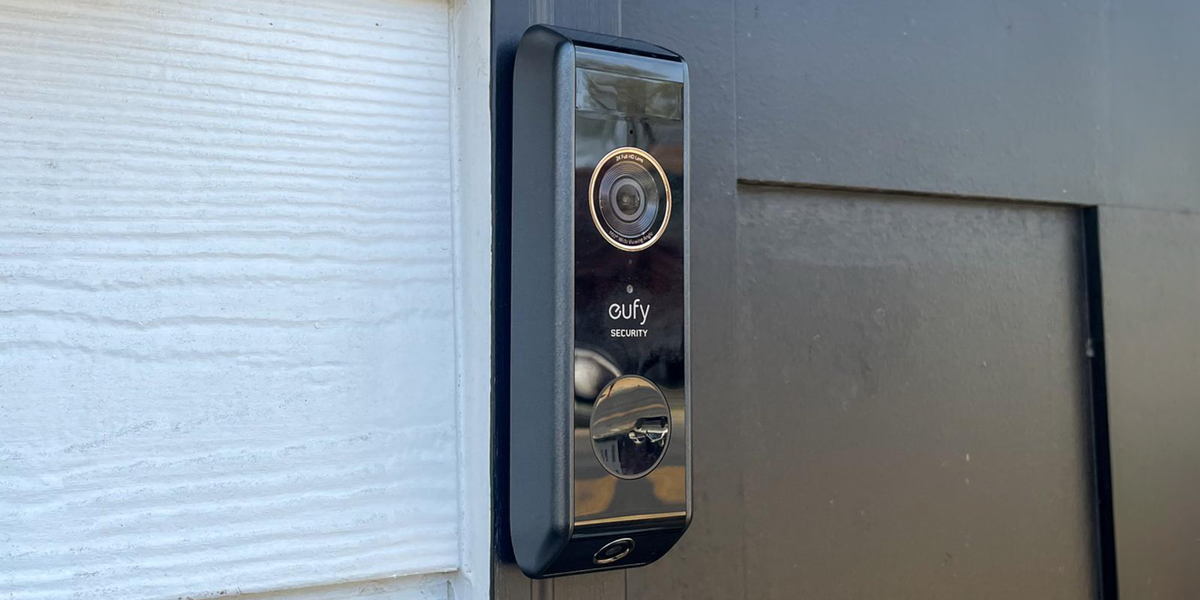
A video doorbell is basically a front-door specialist. It is designed for one very specific mission: show you who is at the door and let you react fast. That focused job description is exactly why it works so well.
1. It is built for doorstep moments
Video doorbells are placed right where interaction happens. That means they are excellent for catching faces, packages, and those awkward few seconds when someone looks around your porch pretending they are “just checking the address.” Many current models also use a more vertical, head-to-toe view, which helps you see visitors and deliveries near the ground instead of just getting a dramatic close-up of someone’s forehead.
2. Two-way audio is the star feature
Yes, many security cameras also offer two-way audio. But with a video doorbell, that feature is not a side dish. It is the main course. You can tell the delivery driver to leave the package behind the planter, let your cousin know you are five minutes away, or politely ignore a solicitor from the safety of your couch while clutching a snack.
3. It is often the easiest first step
For many households, especially renters and apartment dwellers, a video doorbell is the easiest entry point into smart security. It gives you alerts, live video, motion detection, and remote answering without requiring a full-blown camera network around the property.
4. It is ideal for package concerns
If porch theft is your main worry, the video doorbell has a home-field advantage. Its position, angle, and app alerts are typically optimized for front-porch activity, so it is better at capturing the exact moment a package arrives, sits, or mysteriously grows legs and walks away.
Where a Security Camera Wins
If the video doorbell is a specialist, the security camera is the versatile all-rounder. It does not care whether the action happens at the front door, side gate, garage, baby’s room, patio, or backyard fence. It just wants a good view and a decent Wi-Fi signal.
1. Wider coverage
This is the biggest advantage, and it is not close. A security camera can monitor wide zones that a doorbell simply cannot. Driveways, garages, detached sheds, back patios, and side entrances are all camera territory. If someone avoids your front porch entirely, a video doorbell may never see them. A well-placed outdoor camera can.
2. Better placement flexibility
Doorbells go by the door. Cameras can go almost anywhere practical and legal: above a garage, under eaves, near a gate, inside the living room, or facing a backyard. That flexibility is huge because camera placement is what really determines how useful your setup becomes. A mediocre camera in the right location can outperform a fancier device placed badly.
3. More options for indoor and outdoor use
A video doorbell is almost always an outdoor entryway device. A security camera can be indoor, outdoor, wired, battery-powered, solar-assisted, plug-in, or part of a multi-camera system. If your goal includes checking on pets, watching the nursery, or seeing whether the garage door is closed for the 14th time today, you are firmly in security camera country.
4. Easier to build into a larger system
When people start taking home security more seriously, they usually end up adding more angles, not fewer. That is where cameras shine. You can begin with one outdoor cam and eventually add others to cover the blind spots. Video doorbells do one job very well, but cameras are better for building a layered setup.
The Biggest Differences That Actually Matter
Marketing pages love to throw around terms like AI detection, HDR, radar motion zones, and “crystal-clear ultra-whatever vision.” Those features can matter, sure. But for most buyers, the smartest choice comes down to a handful of practical differences.
Field of view
A video doorbell is usually designed to show people approaching the door and packages at the threshold. A security camera is usually better for horizontal coverage across a yard or driveway. In plain English: a doorbell is better at your porch; a camera is better at your property.
Interaction vs observation
Video doorbells are built around interaction. Security cameras are built around observation. That may sound obvious, but it helps cut through the confusion. Ask yourself whether you mostly want to answer the front door remotely or watch a larger area over time.
Power and reliability
Battery-powered models are easier to install, but they are also another thing to recharge in a world already ruled by low-battery anxiety. Wired units tend to offer steadier performance and often unlock more advanced features like longer recording windows or continuous power. If you hate maintenance, wired can be a beautiful thing.
Storage and subscriptions
This is where shoppers often get surprised. The device price is only part of the story. Many smart doorbells and cameras work without a subscription for live viewing and alerts, but cloud storage, longer video history, advanced AI detection, or professional monitoring may cost extra. If you are allergic to monthly fees, look carefully at devices with local storage, built-in memory, or microSD support.
Privacy and cybersecurity
Both video doorbells and security cameras are internet-connected devices, which means both carry privacy and security responsibilities. In other words, if your password is still “123456” or “password,” your camera is not the weak point. You are. Look for strong account security, software updates, encryption, and two-factor authentication. Also be thoughtful about placement, especially if your device records audio. Smart home convenience should not become accidental neighborhood theater.
What Should You Buy Based on Your Home?
Apartment or condo
A video doorbell often makes the most sense here. Your front entry is usually the main concern, installation is simpler, and broader outdoor coverage may not even be possible. If you are on a ground floor or have windows facing a vulnerable area, an additional indoor camera can be helpful.
Townhouse
This is a toss-up, but many townhouse owners do best starting with a video doorbell. Add an outdoor camera only if you have a garage, rear access, or a side path that matters.
Single-family home
A security camera becomes much more valuable here because you likely have multiple access points. A front-door video doorbell is still great, but it will not tell you much about the side gate, driveway, or backyard. If you own a detached home, a layered setup usually wins.
Families with kids or pets
Go with a security camera if your goal is to check in on the dog, see when the kids get home, or monitor indoor activity. A video doorbell will not help much when the drama is happening in the kitchen, playroom, or living room.
Frequent deliveries
A video doorbell is your best first purchase. It is designed for front-porch awareness, and that matters more than any flashy spec sheet if your daily routine involves boxes, groceries, meal kits, or the occasional online shopping choice you refuse to discuss publicly.
The Cost Question: Which Is Better for Your Budget?
In broad terms, a video doorbell is often the cheaper and simpler starting point. On major U.S. retail sites, video doorbells commonly sit in a lower entry range than full multi-camera setups, while standalone security cameras range from very affordable indoor models to premium outdoor and 4K options that climb much higher.
But the more important number is the total cost of ownership. Ask these questions before you buy:
- Do I need a subscription for saved clips?
- Will I need one camera or three?
- Does the battery need frequent charging?
- Will I want AI alerts for people, packages, vehicles, or animals?
- Do I need professional monitoring, or am I fine with self-monitoring?
A single doorbell can be budget-friendly. A camera system can become more expensive faster. But a badly chosen cheap device that annoys you every day is not really a bargain. That is just a discounted headache.
Common Buying Mistakes to Avoid
Buying a doorbell when you really need yard coverage
If you want to see the driveway, the side gate, and the back fence, a video doorbell alone will leave you with blind spots and regret.
Buying a camera when your real problem is the porch
If stolen packages and front-door interactions are your biggest issues, a camera mounted over the garage may not capture the detail you actually need.
Ignoring Wi-Fi strength
The fanciest device in the world is still useless if your connection near the front door or backyard is shaky. Check signal strength before committing.
Forgetting nighttime performance
Many incidents happen in low light. Good night vision, proper lighting, and smart placement matter more than sexy marketing words.
Not thinking about privacy
A camera should make you feel safer, not create a new set of concerns. Use strong passwords, enable two-factor authentication, keep software updated, and place devices responsibly.
So, Which One Is Better?
The better question is not “Which one is better?” It is “Better for what?”
If your world revolves around the front door, visitors, and package deliveries, a video doorbell is the smarter first buy. It is simple, practical, and designed for the exact spot where most people want quick visibility.
If you need broader surveillance, more flexible placement, or indoor-outdoor coverage, a security camera is the stronger choice. It gives you more control over angles, more room to scale, and more usefulness beyond the porch.
If you own a detached home and want the most complete setup, the honest answer is this: get a video doorbell for the front door and at least one security camera for a wider exterior area. One handles the welcome mat. The other watches the rest of the map.
Experiences From Real-World Home Security Decisions
When people talk about buying a video doorbell or security camera, they often act like it is a giant tech decision. In real life, it is usually much less dramatic. It often starts with one small, very human moment. A package disappears. Someone rings the bell at an odd hour. A dog starts barking at the driveway like it has spotted a secret agent. Suddenly, home security feels less like a luxury and more like a sanity-saving tool.
One common experience is that buyers who choose a video doorbell first are usually happiest when their concern is simple and specific. They want to know who came to the door. They want to speak to delivery drivers. They want to stop doing that weird frozen pose in the hallway while deciding whether to answer. For those people, a doorbell feels immediately useful. It solves a clear daily problem, and it starts paying off right away in convenience.
Another common experience is that homeowners who skip straight to an outdoor security camera often do so because the front door is not the whole story. Maybe the driveway is long. Maybe the backyard opens to an alley. Maybe there is a side gate that nobody uses except, apparently, every suspicious raccoon in the county. In those cases, a wider camera view feels more satisfying because it gives context. Instead of only seeing who arrived at the porch, you see where they came from, where they went, and whether they were actually a problem or just someone trying to turn around in the driveway.
There is also a pattern people rarely mention until after they buy: the first device teaches you what you really needed all along. Someone installs a video doorbell and realizes, “This is great, but I still cannot see the garage.” Another person installs a camera over the driveway and realizes, “Nice, but I still want to talk to the person standing at the front step.” That is why so many shoppers eventually end up with both. The first purchase answers one question and reveals the next one.
Budget plays a big role in experience too. A lot of buyers are perfectly happy with a single smart doorbell because it is manageable. One app. One angle. One obvious purpose. A full camera setup can feel more powerful, but it can also feel like adopting a part-time job if it involves multiple batteries, subscription decisions, motion-zone tweaking, and enough notifications to make your phone sound like mission control. For busy households, simplicity is not boring. It is a feature.
Privacy is another part of the experience that becomes real only after setup. People often discover they do not just want a camera that records; they want one they trust. That means secure login settings, clear footage control, and placement that feels responsible rather than intrusive. A device that makes you wonder who else can see the feed is not giving peace of mind. It is giving side-eye.
In the end, the best experiences usually come from choosing the device that matches your daily life, not the one with the flashiest box. If your stress lives at the front porch, buy the tool built for the front porch. If your concerns are spread around the property, buy the tool built to watch more ground. And if you start with one and eventually add the other, that is not a mistake. That is just your home security setup growing up.
Final Verdict
If you want the clearest recommendation possible, here it is:
Get a video doorbell if your biggest priorities are front-door awareness, package monitoring, and remote conversations with visitors.
Get a security camera if your biggest priorities are wider coverage, flexible placement, indoor monitoring, or watching multiple exterior zones.
Get both if you want the most complete protection for a detached home.
Home security does not have to begin with a giant system and a dramatic soundtrack. It can start with one smart device in the right place. Pick the one that solves your most annoying real-life problem first, and your future self will thank you every time the app answers the question before you even get up from the couch.

