
Body Care
How Many Units of Botox for Forehead?
Aug
If your forehead has started folding like an accordion every time you raise your eyebrows, you are definitely not alone. One of the most common questions people ask before booking an appointment is simple: How many units of Botox for forehead? The tricky part is that the answer is both wonderfully straightforward and annoyingly personal. There is an official answer, a practical answer, and a “please do not copy your friend’s dose” answer.
Here is the big picture: for BOTOX Cosmetic, the FDA-approved dose for forehead lines is 20 units in the frontalis muscle. But forehead treatment is usually not handled in isolation. In official labeling, forehead lines are treated together with glabellar linesthe vertical “11” lines between the browswith 20 more units, bringing the standard combined total to 40 units. That is the number many people are really asking about when they say “forehead Botox,” even if they do not realize it yet.
This article breaks down what that number means, why it changes from person to person, what first-timers should expect, and how real experiences with forehead Botox often play out in everyday life. The goal is clarity, not salesy fluff, because your forehead deserves better than mystery math.
Note: This article is for educational purposes only and does not replace a consultation with a qualified medical professional.
The Short Answer: How Many Units of Botox for Forehead?
If you want the cleanest answer possible, here it is:
- Forehead lines alone: the FDA-approved BOTOX Cosmetic dose is 20 units.
- Forehead lines + glabellar lines: the standard labeled total is 40 units.
- Forehead + glabellar lines + crow’s feet: the labeled full upper-face total is 64 units.
So when someone says, “I got 20 units in my forehead,” they may mean only the frontalis area. When someone else says, “I get 40 units for my forehead,” they may be talking about the forehead and the frown lines between the brows. Same conversation, different math, instant confusion.
Why the Number Is Not the Same for Everyone
Even though 20 units is the official reference point for forehead lines, the actual treatment plan still depends on your anatomy, facial movement, and cosmetic goals. In other words, your forehead is not a copy-paste template.
1. Forehead Size Matters
A larger forehead generally gives the injector more treatment space than a shorter one. That does not automatically mean a dramatically higher number of units, but it does mean placement matters more. A skilled injector maps the muscle movement, not just the wrinkles, because Botox is treating motion patterns, not drawing over lines like a highlighter.
2. Muscle Strength Changes the Plan
Some people have strong frontalis activity and can raise their brows like they are auditioning for silent film. Others have softer movement and lighter lines. Stronger muscles often need more thoughtful dosing to create a smooth result without leaving the forehead too stiff or heavy.
3. Your Goal May Be “Smooth,” Not “Frozen”
Not everyone wants a completely motionless forehead. Some patients want softening while still keeping natural expression. Others want maximum smoothing because their horizontal forehead lines are deep and bothersome. More movement left behind can mean a lighter look, while more aggressive relaxing can create a flatter, more polished result. The right choice is a preference call, not a moral achievement.
4. Deep Static Lines Do Not Behave Like Fresh Dynamic Lines
Botox works best on dynamic lines, the wrinkles created by muscle movement. If your forehead lines are visible even when your face is totally at rest, Botox can still help by relaxing the repeated movement that deepens them. But it may not erase every etched line immediately. Sometimes the treatment softens the pattern rather than making the forehead look like brand-new printer paper.
The Forehead vs. the “11” Lines Problem
This is where a lot of people get tripped up. The forehead and the glabella are neighboring areas, but they do different jobs.
- Frontalis: lifts the brows and creates horizontal forehead lines.
- Glabellar complex: pulls the brows downward and inward, creating the vertical “11” lines.
Because these muscle groups balance each other, treating the forehead without considering the glabella can produce a less-than-ideal result. If you relax the lifting muscle without properly balancing the downward-pulling muscles, the brows can feel heavy or appear lower. That is why official guidance treats forehead lines in conjunction with glabellar lines to reduce the risk of brow ptosis.
So yes, the question “How many units of Botox for forehead?” is technically about the forehead. But in real cosmetic practice, it often becomes a question about upper-face balance.
What “20 Units” Actually Looks Like
On paper, 20 units sounds oddly abstract, like a tiny dose from a lab and a giant dose from a coffee shop. In actual treatment, the labeled forehead dose is placed across five injection sites in the frontalis, typically 4 units per site. The goal is not to nuke the forehead into stillness. The goal is to distribute the product in a way that softens lines while preserving natural brow position.
That is why a good injector studies your forehead at rest and in motion. You may be asked to raise your brows, frown, and relax several times so the injector can see where the muscle is most active. This is not Botox theater. It is how the dose becomes precise.
How Long Does Forehead Botox Take to Work?
Botox is not instant, which is probably for the best because most people would stare in a mirror all afternoon if it were. In general, the treatment starts to kick in within a few days. The effect usually builds through the first week, and the full visible result is often seen around 10 to 14 days.
That timeline matters because people often judge their result too early. Day one is mostly just “tiny injection marks and big curiosity.” Day three might show the first softening. Day seven looks more promising. Day fourteen is when you can really assess whether the dose and placement hit the target.
How Long Does It Last?
Forehead Botox is temporary. For most people, the effect lasts about three to four months, though some sources describe an overall range closer to three to six months. A few things influence the duration, including your metabolism, the dose used, your muscle activity, and whether you have been treated before.
In plain English: if you are very expressive, very active, or brand new to treatment, your results may fade a bit sooner than someone whose muscles are already used to being told to calm down.
Can You Get Too Many Units in the Forehead?
Yes. More is not always better. Too much Botox in the wrong pattern can create a heavy forehead, over-flattened expression, or brows that seem lower than expected. And too little can leave the lines barely changed, which is equally frustrating in a different, more expensive way.
That is why the best dose is not “the highest you can afford.” It is the dose that matches your forehead anatomy and your desired look.
Another important detail: Botox units are brand-specific. BOTOX Cosmetic units are not interchangeable with units from other botulinum toxin products. So if one clinic talks about another neurotoxin brand and throws out a number that sounds higher or lower, do not compare it unit-for-unit like gas prices. Different product, different measurement system.
Common Side Effects and Safety Basics
Most side effects from cosmetic Botox are mild and temporary. The common short-term annoyances include:
- redness
- swelling
- soreness
- bruising
- mild headache
In forehead-line studies, reported side effects that occurred more often than placebo included headache, eyelid ptosis, brow ptosis, and skin tightness. That does not mean these will happen to you. It means this is a medical treatment, not a magic wand in a cute waiting room.
There is usually little to no downtime, and many people go right back to normal activities. But one classic piece of post-treatment advice is worth remembering: do not rub or massage the treated area right afterward. Product migration is not a party trick you want.
Rare but serious symptoms can occur if toxin effects spread beyond the intended area. If someone develops trouble swallowing, trouble speaking, breathing difficulty, or generalized weakness after treatment, that needs prompt medical attention. Cosmetic Botox should always be done by a qualified, licensed professional.
What Happens at a Typical Forehead Botox Appointment?
A forehead Botox appointment is usually quick. The consultation, however, is where the real value lives.
Before the Injections
Your injector should review your goals, medical history, and facial movement. They may ask what bothers you most: horizontal lines, angry-looking “11” lines, brow heaviness, or a shiny overworked forehead that makes every Zoom call look like you are reacting to bad news.
During the Injections
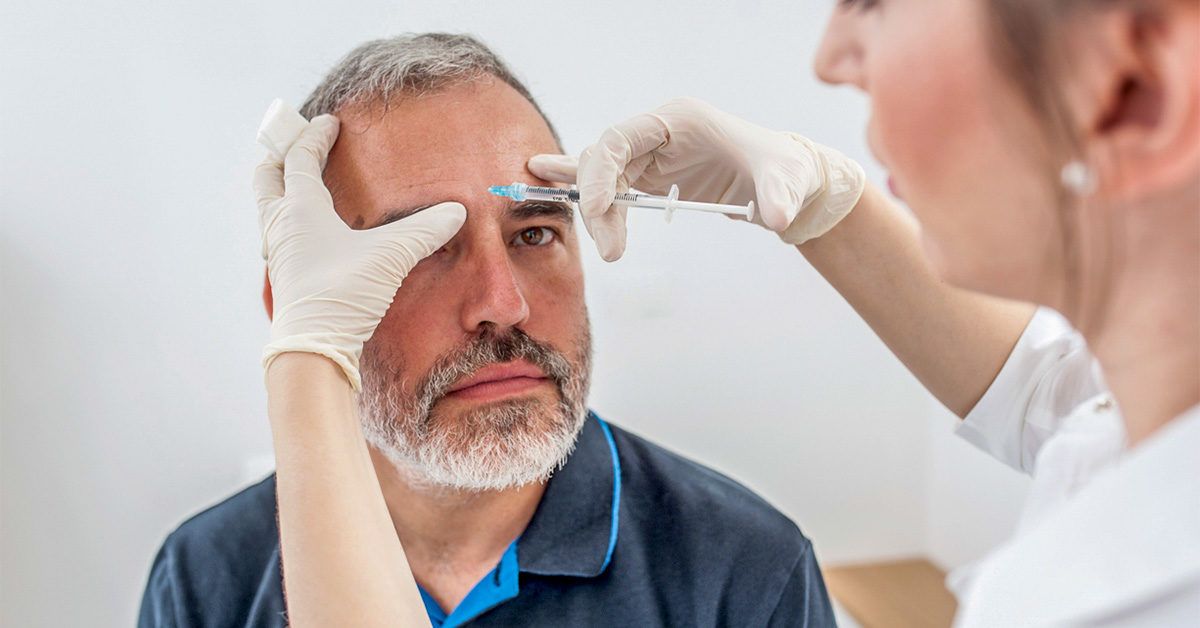
The actual injections are fast. Most patients describe them as tiny pinches rather than real pain. The forehead portion may involve five small injection points. If the glabella is treated too, there will be several more points between the brows.
Afterward
You may notice small bumps or pink marks for a short time. Some people bruise a little; many do not. The result is not immediate, so the main aftercare activity is patience, which is deeply inconvenient but medically on brand.
Questions to Ask Before You Commit
If you are considering treatment, ask smart questions instead of chasing the lowest advertised number. A better consultation includes questions like:
- Are you treating only the forehead, or the forehead and glabella together?
- How many units are you recommending, and why?
- What result should I expect: softer movement or very little movement?
- What are the risks of brow heaviness or drooping in my case?
- Is this BOTOX Cosmetic specifically, or another neuromodulator brand?
- When should I expect the final result to settle in?
Those questions do two useful things. First, they make you a better-informed patient. Second, they make it very clear that you are not about to say yes to mystery forehead arithmetic.
So, How Many Units of Botox for Forehead Is “Normal”?
If you want the most practical answer, this is it: 20 units is the official BOTOX Cosmetic dose for forehead lines. But because forehead movement and brow position are tightly linked to the frown muscles between the brows, many patients are really treated with 20 units in the forehead plus 20 units in the glabella, for a combined total of 40 units.
That is why there is no single “normal” number that applies to every face, every clinic, and every goal. The smartest way to think about it is not “How many units can I fit into my forehead?” but rather “What dose creates a balanced, natural result on my face?”
That shift in mindset makes a huge difference. Botox is not just about smoothing lines. It is about respecting facial mechanics so you still look like yourselfjust a version of yourself that seems a little more rested and a little less surprised by email.
Experiences Related to “How Many Units of Botox for Forehead?”
Real-life experiences with forehead Botox tend to follow a surprisingly similar pattern, even when the exact number of units varies. The first experience many people talk about is not the result at allit is the anxiety before the appointment. They walk in wondering whether 20 units will be enough, whether 40 sounds excessive, and whether they are about to come out looking wonderfully refreshed or permanently skeptical. That nervous energy is common because most people do not actually visualize units. They visualize outcomes.
Then comes the appointment itself, which often feels much less dramatic than expected. Many people are surprised by how fast it is. The injector studies the face, asks the patient to raise the brows and frown, marks a few spots, and the injections are over before the brain has finished its full panic monologue. Patients often say the anticipation was worse than the injections. A lot worse.
Over the next few days, the second common experience shows up: watching and waiting. People keep checking the mirror, lifting their eyebrows every few hours like they are testing a garage door. At first, nothing major seems different. Then the forehead starts to feel slightly quieter. Not numb, exactly. Just less eager to form deep lines. For many first-time patients, this stage is oddly fascinating because they can still move their face, but the movement begins to look softer and less forceful.
By the one- to two-week mark, most people finally understand what their injector meant by “let it settle.” This is when experiences start splitting into two broad camps. One group says the result looks subtle, natural, and polishedthe kind of change that makes them look rested without screaming, “I have made a cosmetic decision.” The other group may feel the forehead is heavier than expected or that there is still more movement than they wanted. Neither response automatically means something went wrong. It usually means the dose, the pattern, or the patient’s expectations need to be reviewed together.
Another very common experience is discovering that “forehead Botox” was really about the whole upper face all along. Some people initially ask for forehead treatment only because the horizontal lines bother them most. Later, they understand why the injector recommended balancing the glabella too. Once they see how the brow position and forehead movement interact, the math makes more sense. Suddenly 40 units does not sound random. It sounds anatomical.
Longer term, many patients describe a learning curve. Their first treatment teaches them what they like. Some decide they want a softer, more expressive look next time. Others decide they would prefer a stronger smoothing effect. Many say the best experience is not getting a specific number of units. It is finding an injector who explains the plan clearly, watches how their face moves, and treats the forehead like part of a system instead of a flat sheet of skin. That is usually the difference between a result that feels awkward and one that simply feels right.
SEO Tags

