
Beauty Tools & Accessories
Artist Shows What Women Have To Go Through Almost Everyday And How To Deal With It In 115 Illustrations
Aug
Some social problems arrive with flashing lights and dramatic speeches. Others slip quietly into an ordinary Tuesday: an unwanted comment on the train, a coworker repeating a woman’s idea and receiving the applause, a relative inspecting her body as though conducting a surprise health audit, or a stranger insisting she would look prettier if she smiled.
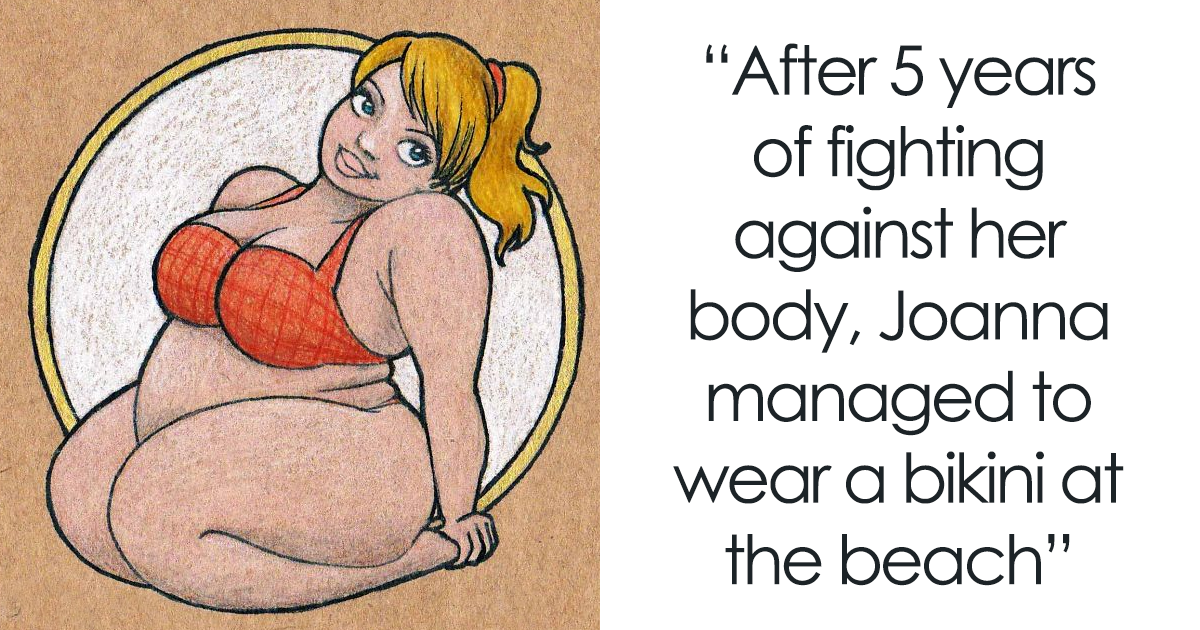
Brazilian illustrator Carol Rossetti transforms these familiar frustrations into something difficult to ignore. Her Women Project, widely shared through a collection of 115 illustrations, pairs portraits of individual women with short stories about body image, identity, discrimination, sexuality, disability, relationships, aging, harassment, and personal choice.
The drawings are colorful and approachable, but their message has teeth: women do not exist for public inspection, approval, correction, or control. The project uses empathy rather than a lecture, humor rather than hopelessness, and encouragement rather than the motivational equivalent of a decorative office poster telling everyone to “dream bigger.”
Meet Carol Rossetti and the Women Project
Rossetti began the project while posting frequent drawings online to strengthen her illustration portfolio. What started as a personal creative exercise quickly developed into an international conversation. Her early characters drew inspiration from people she knew, while later illustrations incorporated experiences submitted by women around the world.
The artist has explained that she was troubled by society’s persistent attempts to regulate women’s bodies, behavior, and identities. She also wanted the project to acknowledge that sexism does not operate alone. Racism, homophobia, transphobia, classism, xenophobia, and ableism can overlap with gender discrimination, making one woman’s experience significantly different from another’s.
That inclusive approach is one reason the illustrations traveled so widely. The series was translated into numerous languages with help from supporters, creating an informal international network built around recognition and solidarity. The central message was simple enough to cross cultural boundaries: people deserve the freedom to be honest about who they are.
Why 115 Simple Illustrations Can Feel So Powerful
Each illustration usually focuses on one named character and one specific situation. This structure matters. Large concepts such as gender inequality can feel distant or academic, but an individual story creates an immediate emotional connection.
A statistic may explain that a problem is widespread. A portrait helps readers imagine how it feels.
Rossetti’s characters are not presented as symbols of perfection. They are complicated human beings. Some want children; others do not. Some enjoy makeup; others avoid it. Some dress modestly, while others proudly wear clothing that attracts attention. Some are recovering from trauma, managing disabilities, exploring their identities, aging, dating, working, studying, or simply asking the world to stop treating their private decisions like a community group project.
The illustrations do not argue that every woman should make the same choices. They argue that women should be permitted to make their own choices without facing humiliation, coercion, or punishment.
The Everyday Challenges Reflected in the Illustrations
Body Policing and Impossible Beauty Rules
Women regularly receive contradictory instructions about appearance. Be thin, but not “obsessed.” Be attractive, but do not look as though you tried. Age naturally, but somehow remain 27 forever. Wear makeup, but make it invisible. Love your body, provided your body already resembles the approved template.
Rossetti’s illustrations reject the idea that a woman’s worth can be measured by her clothing size, body hair, skin, scars, breasts, hairstyle, age, or conformity to a fashionable silhouette. A body is not a public suggestion box.
This message has genuine health relevance. The U.S. Office on Women’s Health explains that negative body image can affect self-esteem and increase the risk of depression and eating disorders. Body dissatisfaction is also not limited to people of a particular weight or size.
Social media can amplify the pressure by turning comparison into a 24-hour activity. Research summarized by the American Psychological Association links appearance-focused social comparison and excessive attention to photo feedback with poorer body image, disordered eating, and depressive symptoms, especially among girls.
Workplace Double Standards
At work, women may be expected to appear confident without being called aggressive, ambitious without seeming selfish, friendly without inviting attention, and decisive without making anyone uncomfortable. Apparently, the ideal professional woman is a highly competent mind reader who leads boldly while ensuring nobody notices she is leading.
Rossetti’s characters challenge stereotypes about women in science, engineering, leadership, physical labor, and other traditionally male-dominated spaces. Their message is not that women require special applause for doing ordinary jobs. It is that their qualifications should not be treated as surprising plot twists.
The underlying concerns remain measurable. In 2024, the median weekly earnings of full-time female wage and salary workers were approximately 83% of men’s median earnings. That comparison does not prove discrimination in every individual workplace, but it does reveal a persistent national earnings difference shaped by occupation, caregiving, work experience, hours, promotion patterns, and unequal treatment.
Harassment is another part of the picture. Women submitted more than three-quarters of the sexual-harassment charges received by the U.S. Equal Employment Opportunity Commission between fiscal years 2018 and 2021. Nearly half of those charges were filed alongside retaliation allegations, illustrating why “just report it” is often more complicated than it sounds.
The Invisible Labor Nobody Sees Until It Stops
Many women are expected to remember birthdays, schedule appointments, notice that the toothpaste is running out, monitor school messages, buy gifts, soothe family conflicts, plan meals, organize holidays, and know where everyone left everything.
This is sometimes called the mental load: the ongoing work of anticipating needs, tracking responsibilities, and coordinating daily life. It is labor performed in the brain, which unfortunately does not issue invoices.
Research on American couples has repeatedly found that women tend to perform more caregiving and housework, even in marriages where husbands and wives earn similar amounts. Pew Research Center reported that wives in such marriages spent more weekly time on caregiving and housework, while husbands averaged more leisure time.
The solution is not for a partner to announce, “You should have asked me to help.” Sharing responsibility means noticing, planning, and completing tasks without appointing one person as the unpaid household project manager.
Harassment and the Daily Safety Calculation
For many women, moving through public space involves constant micro-decisions: Which street is better lit? Should I change train cars? Is that person following me? Should I pretend to call someone? Can I reject this stranger without making him angry?
These calculations are exhausting because they require women to prepare for harm while continuing to live normal lives. The problem is not that women have failed to discover the perfect safety trick. The problem is that harassment and violence restrict their freedom.
Current U.S. public-health data show that nearly one-third of women have experienced verbal sexual harassment in a workplace or public setting, while nearly half have experienced some form of contact sexual violence during their lifetimes. These numbers include a wide range of experiences and should not be used to imply that victimization is inevitable. They demonstrate why the fear reflected in Rossetti’s work cannot be dismissed as oversensitivity.
Intimate relationships can also become dangerous. The Centers for Disease Control and Prevention reports that more than one in three U.S. women have experienced contact sexual violence, physical violence, or stalking by an intimate partner during their lifetimes. Abuse is never caused by a survivor’s clothes, personality, decisions, or failure to leave quickly enough. Responsibility belongs to the person choosing abusive behavior.
Judgment Surrounding Personal Choices
Rossetti’s illustrations repeatedly return to autonomy. Women are judged for having children, not having children, marrying, remaining single, enjoying sex, avoiding sex, dressing conservatively, showing skin, shaving, not shaving, gaining weight, losing weight, aging, getting tattoos, choosing surgery, refusing surgery, or eating lunch without first consulting the International Committee on Acceptable Female Behavior.
The contradiction reveals the real issue. Judgment is often not about the specific choice. It is about the expectation that women should make decisions primarily to satisfy other people.
Respecting autonomy does not require agreeing with every decision. It requires recognizing that disagreement is not ownership. Advice may be offered when requested. Concern may be expressed with care. But pressure, humiliation, threats, and coercion are not concern wearing a helpful hat.
How to Deal With These Challenges Without Blaming Women
1. Name the Behavior Clearly
Sexism thrives in vagueness. Calling a discriminatory joke “just awkward” or describing harassment as “a misunderstanding” can protect the person responsible while making the target question her own perception.
Use accurate language: interruption, body shaming, coercion, retaliation, stalking, harassment, discrimination, or abuse. Naming a behavior does not automatically solve it, but it prevents the problem from hiding behind polite confusion.
2. Practice Short, Direct Boundaries
A boundary does not need a courtroom-length closing statement. Depending on the situation, useful phrases may include:
- “Do not comment on my body.”
- “I had not finished speaking.”
- “That joke is inappropriate.”
- “My medical decisions are private.”
- “No. I am leaving now.”
Direct confrontation is not always safe, particularly when there is a power imbalance or threat of violence. Silence, delay, escape, or seeking assistance can also be intelligent responses. Survival does not need to look cinematic to be valid.
3. Document Workplace Problems
When discrimination or harassment occurs at work, keep factual records when it is safe and lawful to do so. Write down dates, locations, exact statements, witnesses, and actions taken. Preserve relevant emails, messages, schedules, performance reviews, and policy documents.
Reports should focus on specific behavior and its effect on work rather than trying to diagnose someone’s personality. Federal law prohibits certain forms of sex-based discrimination and harassment, although legal coverage and filing deadlines depend on the employer and circumstances.
4. Make Bystanders Part of the Solution
Women should not have to defeat every sexist situation alone. Coworkers, friends, relatives, supervisors, and strangers can interrupt harmful behavior.
Right To Be teaches five bystander strategies: distract, delegate, document, delay, and direct. A witness might interrupt with an unrelated question, ask a manager or transit employee for help, record an incident when appropriate, check on the targeted person afterward, or directly tell the harasser to stop when doing so is reasonably safe.
A small intervention can change the emotional meaning of an event. It tells the targeted person, “You are not imagining this, and you are not alone.”
5. Build a Safety Plan for Threatening Situations
When someone is dealing with stalking, domestic abuse, or credible threats, generic encouragement is not enough. A personalized safety plan may include identifying safe locations, memorizing important routes, preparing essential documents, adjusting digital security, speaking with trusted people, and creating a code word that signals a need for immediate help.
Safety planning should be flexible because leaving or confronting an abusive person can increase danger in some circumstances. Specialized advocates can help survivors evaluate options without ordering them to follow a one-size-fits-all escape script.
6. Replace Self-Criticism With Self-Respect
Women often internalize the standards used against them. After hearing enough criticism, the outside voice moves into the brain, rearranges the furniture, and begins commenting rent-free.
Challenge that voice by asking whether the same standard would be applied to a friend. Curate social-media feeds. Unfollow accounts that reliably trigger shame. Appreciate the body for what it does, not only how it appears. Seek professional support when body dissatisfaction, anxiety, trauma, or disordered eating interferes with daily life.
Self-compassion does not mean pretending every day feels wonderful. It means refusing to turn pain into evidence that you are defective.
What the Illustrations Get Rightand What Art Cannot Do Alone
Rossetti’s work succeeds because it provides recognition. A reader may see one character and think, “That happened to me.” Another may realize, “I have said something like that to someone else.” Both reactions can begin a useful conversation.
However, empowerment cannot depend entirely on individual confidence. A woman can set excellent boundaries and still face retaliation. She can love her body and still encounter medical bias. She can carefully plan her route and still be harassed. Personal resilience matters, but fair workplaces, responsive institutions, accessible health care, safe transportation, effective laws, and accountable communities matter too.
The best interpretation of the 115 illustrations is therefore not “Women should become tougher.” It is “Everyone should help build a world in which women do not need armor for ordinary life.”
Experiences Behind the Illustrations: When the Ordinary Becomes Exhausting
Imagine a woman beginning her day with a meeting. She presents an idea and receives polite silence. Ten minutes later, a male colleague repeats the same suggestion and the room suddenly behaves as though electricity has been invented. She has several possible responses. She can stay quiet and feel invisible. She can reclaim the idea and risk being labeled difficult. She can joke about it, document it, or ask an ally to credit her contribution. None of these options is effortless because she is managing both the work and the social consequences of defending her work.
At lunch, someone comments on what she is eating. If the meal is a salad, she is “trying too hard.” If it is a burger, somebody performs an amateur nutritional consultation. The food has barely reached the table, yet it has already become a referendum on her health, discipline, attractiveness, and moral character. She may laugh to avoid conflict, but the joke follows her into the afternoon.
On the trip home, a stranger tells her to smile. Another stands too close. She changes seats and sends her location to a friend, not because a crime has definitely occurred but because experience has taught her to notice early warning signs. She arrives home safely, which does not erase the energy spent preparing for the possibility that she might not.
Later, family members ask when she will marry, have children, lose weight, gain weight, dress differently, earn more, work less, work more, or become less intimidating while simultaneously becoming more successful. Each question may appear small. Together, they communicate that her current life remains under review.
These experiences are not identical for every woman. Race, disability, income, age, sexuality, immigration status, religion, gender identity, appearance, and geography affect which pressures a person encounters and what resources are available. A wealthy professional and a low-wage worker may both experience harassment, but their ability to report it without losing income can differ dramatically. A disabled woman may face both gender-based judgment and assumptions that she cannot make decisions about her own body. A woman of color may encounter sexism and racism in the same interaction, making it impossible to separate one form of discrimination neatly from the other.
What helps in these moments is rarely one heroic speech. More often, progress comes through accumulated acts: a friend who believes her, a coworker who gives credit, a partner who notices household tasks, a manager who responds appropriately, a stranger who interrupts harassment, a therapist who understands trauma, or a community that refuses to treat disrespect as normal.
Rossetti’s illustrations offer that kind of small but meaningful intervention. They do not solve the problem for the woman in the picture. They stand beside her. They remind her that discomfort is not always insecurity, anger is not automatically irrational, and refusing unfair expectations is not selfish. Sometimes the first step toward dealing with an everyday injustice is realizing that it should never have been considered ordinary.
Conclusion
Carol Rossetti’s 115 illustrations turn private frustrations into public conversations. Through recognizable characters and compassionate messages, the Women Project explores body shaming, workplace discrimination, harassment, invisible labor, identity, trauma, and the right to make personal choices.
The drawings remain powerful because they do not demand one approved version of womanhood. They celebrate difference while insisting on a shared principle: every person deserves dignity, safety, autonomy, and the freedom to live without constantly auditioning for society’s approval.
Note: Anyone facing immediate danger should contact local emergency services. People experiencing sexual violence, stalking, domestic abuse, severe body-image distress, or workplace harassment may benefit from confidential support from a qualified advocate, health professional, counselor, union representative, or attorney familiar with local resources and laws.

