
Beauty Unlocked
30 ‘Old Me vs. New Me’ Memes That Might Help You Reduce Waste (New Posts)
Jul
If you’ve ever looked into your trash can and thought, “Wow, we really do be throwing things away like it’s an Olympic sport,” you’re not alone.
In the U.S., food is the single biggest category going to landfills by weight (yes, bigger than plastics), and that’s before we even count all the packaging and “oops-I-forgot-I-owned-this” purchases.
The hard part isn’t learning what to do. The hard part is remembering to do it when you’re tired, busy, hungry, or standing in a checkout line with one arm full of impulse purchases
and the other arm pretending you didn’t forget your reusable bag again.
That’s where memes come in. Not because memes magically fix the planet (sadly), but because they’re tiny, sticky reminders. And the “Old Me vs. New Me” format is basically a habit makeover
in two lines: one line to roast your past choices, and one line to hype your new, lower-waste self.
Why “Old Me vs. New Me” Memes Actually Work for Waste Reduction
Most waste habits aren’t about bad intentionsthey’re about autopilot. You buy what’s convenient, toss what’s confusing, and replace what’s slightly annoying to fix.
“Old Me vs. New Me” memes interrupt autopilot with a quick contrast: the old behavior (easy, familiar) vs. the new behavior (still easy… just smarter).
Also, humor helps. When you can laugh at your own “old me” behavior, you’re more likely to change it without the guilt spiral.
And guilt is the least effective recycling bin of all time.
30 “Old Me vs. New Me” Memes to Help You Reduce Waste
Kitchen & Food Waste (Because the Fridge Is a Time Machine)
-
Old me: Buys produce with “main character energy,” lets it die in the crisper.
New me: Plans two “use-it-up” meals before shopping.Why it helps: A simple meal plan and a quick fridge scan can prevent those sad, wilted “intentions.” Buying what you’ll actually use is the easiest waste cut.
-
Old me: Treats leftovers like a museum exhibit: “Look, don’t touch.”
New me: Schedules a “Leftovers Night” like it’s a TV premiere.Why it helps: Leftovers aren’t punishmentleftovers are future-you getting a free meal. Portion them, label them, and make them the plan, not the backup.
-
Old me: Confuses “Best By” with “Absolutely Not.”
New me: Uses senses + safe storage to decide what’s still good.Why it helps: Date labels often relate to quality, not safety, and confusion can drive a meaningful chunk of consumer food waste.
-
Old me: Opens a new jar because “the old one is somewhere.”
New me: Keeps older items up front like a grocery store display.Why it helps: “First in, first out” (FIFO) makes it harder to forget what you already ownand easier to finish it before it expires.
-
Old me: Buys a family-size item for a one-person mood.
New me: Freezes extras immediately in meal-sized portions.Why it helps: Your freezer is basically a pause button for food. If you won’t finish it in time, freeze it nownot later, not “tomorrow.”
-
Old me: Tosses scraps because “ew.”
New me: Composting like a backyard wizard.Why it helps: Composting turns food scraps and yard trimmings into a soil amendment and keeps organics out of landfills or incinerators.
-
Old me: Makes too much pasta like I’m feeding a small village.
New me: Measures portions (and still eats well).Why it helps: Cooking the right amount reduces plate waste, saves money, and lowers the “mystery container” backlog in your fridge.
-
Old me: Buys bottled water because “I forgot my bottle.”
New me: Keeps a reusable bottle in the car/bag like it’s a phone charger.Why it helps: Convenience wins. Make reuse convenient by placing backups where you actually need them.
-
Old me: Uses paper towels for everything, including emotions.
New me: Cloth towels + napkins, washed and reused.Why it helps: Reusables reduce single-use paper waste and usually cost less over time. Keep a small stack within arm’s reach to make it effortless.
-
Old me: Throws away “extra” pantry items after they’ve been ignored for months.
New me: Donates unopened extras to a local pantry.Why it helps: If you truly won’t use it, someone else can. Donation beats landfill (and beats the guilt of finding it a year later).
Shopping & Packaging (Because Every Purchase Is a Vote… and Also a Receipt)
-
Old me: Accepts every plastic bag like it’s a free gift.
New me: Carries reusable totes like a functional adult.Why it helps: Reusable bags can slash the endless flow of single-use packaging. Keep them by the door or in your trunk so you can’t “forget.”
-
Old me: Buys single-serve snacks because “portion control.”
New me: Buys larger sizes + uses reusable containers.Why it helps: Many single-serve items generate more packaging per ounce. Batch your snacks into containers and you get portion control without the wrapper pile.
-
Old me: Gets takeout and collects plastic cutlery like it’s a hobby.
New me: Keeps a “utensil kit” in the car/bag.Why it helps: One small kit (fork/spoon/napkin/straw if you use one) can prevent dozens of single-use items from being handed out “just in case.”
-
Old me: Buys the “new improved” version because marketing yelled louder.
New me: Uses what I have first, then replaces intentionally.Why it helps: The greenest product is often the one you already own. Use it fully before upgradingespecially for items that still work.
-
Old me: Orders random stuff online at 11:58 p.m.
New me: Waits 24 hours (and 60% of the time… doesn’t buy it).Why it helps: “Delay purchasing” reduces clutter and packaging. If it’s truly needed, it’ll still be needed tomorrow.
-
Old me: Shops without a list, leaves with “surprises.”
New me: Shops with a list, leaves with dinner plans.Why it helps: Planning prevents overbuying and reduces the chance that perishables become science experiments.
Plastic & Reuse (Because Single-Use Is a Scam)
-
Old me: Uses cling wrap like it’s wallpaper.
New me: Glass containers / reusable wraps / lids.Why it helps: Reusable containers reduce repeated purchases and can keep food fresher (which also reduces food waste).
-
Old me: Sees “free” condiment packets and takes 12.
New me: Takes zero unless I truly need them.Why it helps: The packet drawer is where good intentions go to die. Only take what you’ll actually use.
-
Old me: Grabs plastic produce bags for one banana.
New me: Skips the bag or uses a reusable mesh bag.Why it helps: Many fruits and veggies come with built-in packaging (hello, peels). Reduce extra plastic where it adds no value.
-
Old me: Thinks “recycling” = “problem solved.”
New me: Reduces first, then recycles right.Why it helps: Recycling is important, but preventing waste is even better. Start with fewer disposables, then handle what remains responsibly.
-
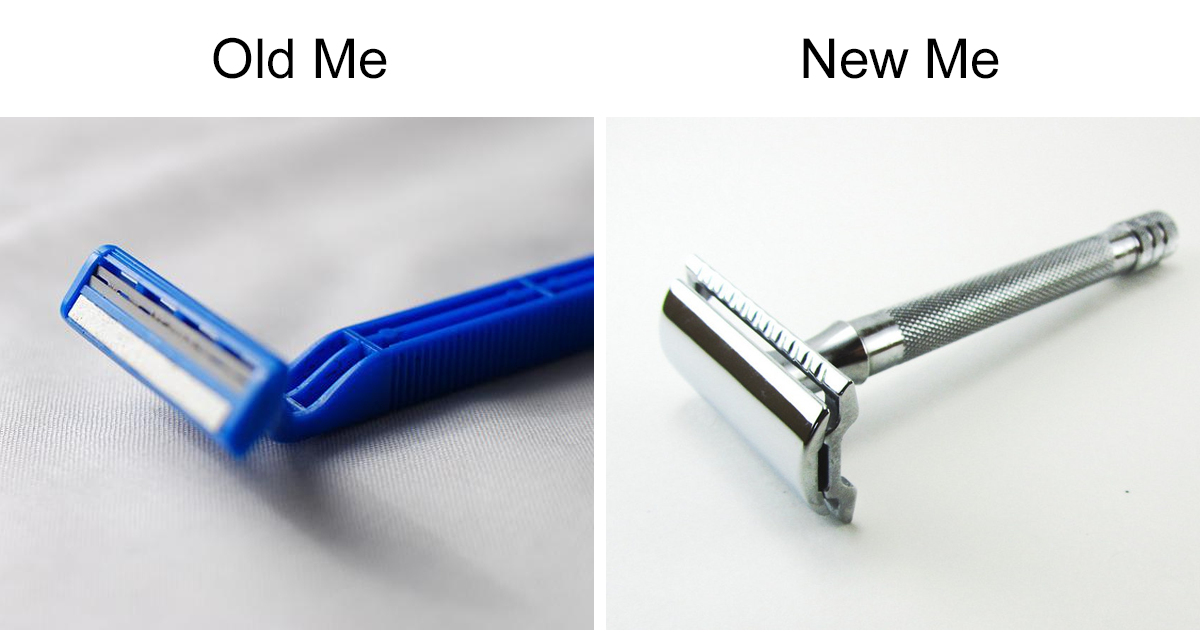
Old me: Uses disposable razors and calls it “simple.”
New me: Uses refillable or longer-life options.Why it helps: Switching to longer-lasting personal care items cuts packaging and reduces the constant “buy-throw-buy” cycle.
Recycling Smarter (Because Wish-Cycling Is Just Trash With Hope)
-
Old me: Throws anything “plastic-ish” into recycling like a prayer.
New me: Checks local rules and keeps recycling clean.Why it helps: Contamination can make recycling less effective and more expensive to processso “recycle right” beats “recycle everything.”
-
Old me: Tosses greasy pizza boxes into recycling with full confidence.
New me: Compost the greasy parts, recycle clean cardboard only.Why it helps: Food residue can contaminate paper recycling. When in doubt, follow local guidanceclean paper is the recycling MVP.
-
Old me: Puts batteries in the trash because “tiny = harmless.”
New me: Recycles batteries through approved drop-offs.Why it helps: Batteries can cause fires and should be recycled safely through proper programsnot in trash or curbside bins.
-
Old me: Hoards old electronics in a drawer forever.
New me: Donates usable devices, recycles the rest.Why it helps: Reuse extends product life; recycling recovers materials. Either way, your “tech graveyard” doesn’t need to live in your closet.
Repair, Reuse, Donate (Because “Broken” Is Often a Negotiation)
-
Old me: Replaces stuff the moment it gets annoying.
New me: Tries a basic repair first (or finds a repair shop).Why it helps: Repair keeps products in use longer and reduces waste. Policy and consumer advocacy also push for easier repair options.
-
Old me: Buys new clothes because of one missing button.
New me: Learns the 10-minute fix (button, hem, small tear).Why it helps: Simple mending extends clothing life dramatically. Bonus: you get to feel like a wizard who controls fabric.
-
Old me: Declutters by throwing everything into trash bags.
New me: Sorts into donate / sell / recycle / trash.Why it helps: Donation and resale keep usable items circulating. Many donation centers accept far more than just clothing (housewares, small appliances, and more).
-
Old me: Keeps “just in case” stuff until it becomes “just junk.”
New me: Uses the “one-in, one-out” rule for common items.Why it helps: This prevents accumulation, reduces future disposal, and makes you more intentional about purchases.
-
Old me: Prints everything because “paper feels official.”
New me: Goes digital by default and prints only what’s needed.Why it helps: Less paper used means less paper wasted. Double-sided printing and digital storage are small changes with big impact.
A Simple “New Me” Starter Plan (So This Doesn’t Stay a Meme)
Day 1–2: Stop the easy waste
- Put reusable bags in your car or by the door.
- Start carrying a reusable water bottle.
- Set up a “Leftovers First” shelf in your fridge.
Day 3–4: Fix food waste
- Do a quick pantry + fridge inventory before shopping.
- Plan two “use-it-up” meals.
- Freeze anything you won’t finish in time.
Day 5–7: Level up the system
- Label a donation box and add one item a day.
- Learn your local recycling rules and remove the “wish-cycling” habits.
- If possible, start composting (or find a drop-off option).
Real-Life “New Me” Moments (500+ Words of Relatable Experience)
The funniest part of trying to reduce waste is that it rarely starts with a grand, cinematic lifestyle overhaul.
It usually starts with something small and slightly humiliatinglike proudly bringing your reusable bags to the store…
and then realizing they’re still sitting in your trunk while you’re already inside holding five items and a questionable amount of confidence.
The “new me” move isn’t perfection. It’s setting up tiny systems so you mess up less often.
A lot of people find that food waste is the first place they notice quick wins. Not because they suddenly become meal-planning superheroes,
but because they start seeing patterns. The same bunch of herbs gets sacrificed every week. The same container of leftovers gets “saved”
until it becomes a biohazard. The first time you reorganize your fridge so older items are visible, it can feel almost too easy
like you found a cheat code that was sitting there the whole time. And when you freeze leftover soup in single portions and actually eat it later,
you get this oddly satisfying feeling of outsmarting your past self. (Old me made soup. New me made Tuesday effortless.)
Composting is another classic “new me” storylineusually with a plot twist. Many beginners start out wildly optimistic, tossing scraps in like
they’re feeding a pet dragon. Then there’s a learning curve: balancing “greens” (food scraps) with “browns” (dry leaves, paper, cardboard),
keeping it from turning into a soggy mess, and figuring out what should not go in (because nobody wants a compost pile that smells like regret).
But once you get the rhythm, it becomes weirdly routinelike taking out the trash, except your trash is becoming something useful.
Shopping changes can be the most identity-shifting. At first, bringing a reusable bottle or a coffee mug feels like a chore you might forget.
Then it becomes muscle memorylike grabbing your keys. Some folks keep a “reusables kit” near the door: tote bags, a small container, utensils,
and a napkin. That kit becomes the silent hero of busy days. You’ll still have moments where convenience winslike accepting a takeout bag with
plastic cutlery you didn’t ask forbut you’ll also have more moments where you catch yourself and say, “Wait, I’ve got my own.”
The most unexpectedly empowering experience, though, is repair and reuse. The first time you stitch a small tear instead of tossing a shirt,
or replace a simple part on a cheap appliance, you start seeing “broken” differently. It stops being a dead end and becomes a question:
“Can this be fixed? Can this be repurposed? Can someone else use it?” Even donating gets easier once you know what local organizations accept.
The “new me” version of decluttering isn’t trash bagsit’s a quick sort that keeps usable stuff circulating.
Over time, reducing waste feels less like restriction and more like competence. You spend less on things you don’t need, you waste less of what you buy,
and you build small habits that stack. The memes are funny, but the real punchline is that “new me” usually ends up with a cleaner home,
fewer chaotic purchases, and a trash can that doesn’t fill up quite so fast. And honestly? That’s a glow-up.
Conclusion: Your “New Me” Doesn’t Have to Be PerfectJust Consistent
The goal isn’t to become a zero-waste monk who owns one spoon and never experiences joy.
The goal is to reduce the stuff you throw away by making the better option the easier option:
plan a little, reuse a lot, recycle correctly, and repair when you can.
Pick three memes from this list and act them out this week. If your trash can gets even slightly lighter, congratulations:
your “New Me” era has officially begun.

