
Beauty Unlocked
Clever Home Organizing Tips for Every Room – Expert Advice
Jul
A well-organized home does not require military discip every individual pretzel. It requires practical systems that fit the way you actually live.
The best home organization ideas reduce daily friction. Keys are easy to find, towels fit in theform its original function instead of serving as a long-term habitat for unopened mail.
This room-by-room guide combines expert organizing principles with realistic strategies for busy households, small spaces, families, renters, and anyone who has ever opened a closet and immediately closed it again.
Start With a Simple Home Organization Strategy
Before organizing individual rooms, establish a process you can repeat throughout the house. Randomly moving objects between closets may create the illusion of progress, but it usually produces several smaller mysteries instead of one obvious mess.
Declutter Before Buying Storage Products
Professional organizers commonly recommend editing your possessions before shopping for bins, baskets, shelves, or drawer dividers. Otherwise, you may spend money creating attractive accommodations for objects you neither use nor like.
Work in a small, clearly defined area, such as one drawer, shelf, cabinet, or corner. Sort everything into four practical categories:
- Keep: Items that are useful, meaningful, or regularly enjoyed.
- Relocate: Items that belong in another room.
- Donate or sell: Usable belongings that no longer support your lifestyle.
- Discard or recycle: Broken, expired, incomplete, or unusable items.
Remove donation bags and trash promptly. A donation box that sits in the hallway for six months has not technically left your home. It has simply changed departments.
Create Homes Based on Where Items Are Used
Store belongings near the location where you naturally reach for them. Scissors used for opening packages may belong near the entryway rather than in a distant craft cabinet. Extra sheets should be close to the bedrooms they serve, not hidden behind holiday decorations in the garage.
The right storage location is not necessarily the traditional one. It is the place that makes the item easy to retrieve and equally easy to return.
Leave Breathing Room
A cabinet packed to its hinges may technically hold more, but it functions poorly. Leave some open space in drawers, closets, shelves, and cabinets so items can be removed without triggering a minor avalanche. Empty space is not wasted space. It is what makes an organizing system usable.
Entryway and Mudroom Organization
The entryway is the border crossing between your home and the outside world. Shoes, bags, packages, keys, jackets, receipts, and mail all arrive here, often without proper documentation.
Build a Practical Drop Zone
Create designated landing spots for the items household members carry every day. Use a small tray for keys and wallets, hooks for frequently worn coats, a basket for reusable shopping bags, and a vertical organizer for mail.
Families can assign one hook, basket, or cubby to each person. Labels or color coding make the system obvious, particularly for children who may otherwise believe the floor is an officially approved backpack shelf.
Limit What Lives Near the Door
Only in-season and regularly used items should occupy premium entryway space. Move heavy coats, sports equipment, and rarely worn shoes elsewhere when they are out of season. A five-minute weekly reset prevents the drop zone from becoming a permanent archaeological site.
Living Room Organization Ideas
The living room must often support conversation, television, reading, gaming, homework, pets, and occasional naps disguised as “resting my eyes.” Flexible storage is therefore essential.
Choose Furniture That Works Overtime
Storage ottomans, lift-top coffee tables, benches with compartments, and media cabinets hide frequently used items without making them difficult to access. These pieces are especially valuable in apartments and small homes where every square foot needs a résumé.
Use baskets to group categories such as toys, blankets, games, or electronics. Avoid creating a giant miscellaneous basket unless you enjoy digging through charging cables, dog toys, and a puzzle piece from 2019 every evening.
Control Surface Clutter
Coffee tables and side tables quickly collect cups, remotes, mail, and objects that are “just here for now.” Use a tray to define a limited area for remotes and small accessories. Keep the rest of the surface relatively clear so clutter becomes noticeable before it spreads.
Use Vertical Space
Wall-mounted shelves, tall bookcases, and cabinets use height without consuming additional floor space. Store attractive or frequently used items at eye level. Place less-used belongings higher up in labeled containers.
Kitchen and Pantry Organization
A functional kitchen reduces unnecessary movement. The goal is not to create a showroom pantry where every bean poses for a photograph. The goal is to make cooking, cleaning, and grocery planning easier.
Organize the Kitchen Into Activity Zones
Group items according to tasks. Keep knives, cutting boards, and mixing bowls near the food preparation area. Store pots, pans, and cooking utensils close to the range. Place dishes and glasses near the dishwasher when possible so unloading requires fewer steps.
Everyday objects deserve the easiest locations. Holiday platters and specialty gadgets can occupy higher shelves or deeper cabinets.
Make Pantry Inventory Visible
Group pantry food into categories such as breakfast, baking, snacks, grains, canned goods, and dinner ingredients. Clear containers or open-front bins help you see what is available, while labels make opaque baskets easier to maintain.
Use shelf risers for canned goods and turntables for condiments, oils, or spices. Place newer purchases behind older products so food gets used before it expires. This simple rotation method can reduce waste and prevent the discovery of three unopened jars of cumin.
Tame Drawers and Food Containers
Drawer dividers prevent utensils from tangling together. Keep only the cooking tools you genuinely use and remove duplicates that add bulk without adding value.
Match food-storage containers with their lids. Recycle warped, cracked, or incomplete pieces. Store lids upright in a divider or narrow bin so they remain visible instead of forming an unstable plastic mountain.
Bedroom and Closet Organization
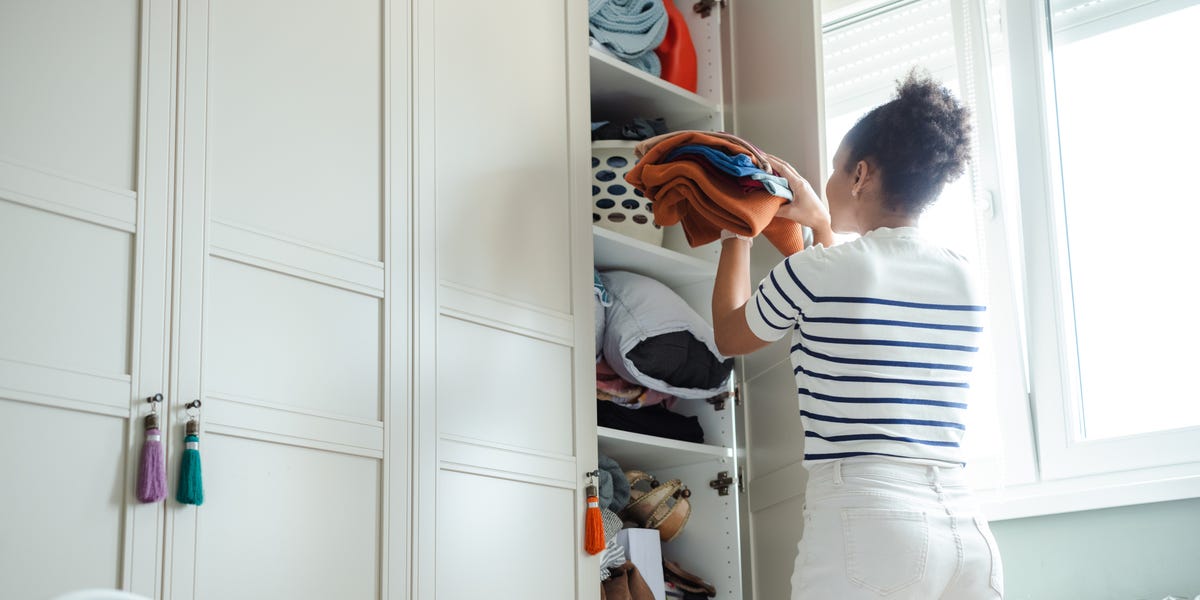
The bedroom should support rest, but visual clutter can make it feel like an unfinished to-do list. Focus on clear surfaces, accessible clothing storage, and simple evening routines.
Give Every Clothing Category a Defined Place
Sort clothing into practical categories such as workwear, casual shirts, exercise clothes, pajamas, and accessories. Use drawer dividers for smaller items and consistent hangers to reduce visual noise.
Keep frequently worn clothing between waist and eye level. Store formalwear and off-season garments higher up or in protected under-bed containers. Do not use under-bed space for random objects you hope never to encounter again.
Create a Home for “Not Clean, Not Dirty” Clothes
A chair often becomes a clothing storage system by accident. Replace that habit with a shallow basket, a few hooks, or a dedicated section of the closet for garments that can be worn again.
Keep the Nightstand Calm
Limit the nightstand to genuine bedtime essentials. A lamp, book, water glass, and charging station may be enough. Move receipts, medications, jewelry, and loose cables into small divided containers or nearby drawers.
Bathroom and Linen Closet Organization
Bathrooms contain many small products, which means clutter can multiply faster than anyone can explain why there are six nearly empty shampoo bottles in the shower.
Store Daily and Backup Products Separately
Keep everyday toiletries within easy reach and place backups in a labeled cabinet or bin. This prevents the vanity from becoming crowded while still making it easy to check inventory before shopping.
Use drawer organizers for cosmetics, dental supplies, grooming tools, and first-aid items. A turntable can improve access inside deep cabinets, while stackable drawers make use of vertical space beneath the sink.
Organize Linens by Room or Set
Assign shelves to categories such as bath towels, hand towels, guest linens, and bedding. One useful technique is storing each folded sheet set inside one of its pillowcases. The set stays together, and the linen closet no longer resembles a fabric storm.
Keep regularly used linens at eye level. Store bulky blankets and less-used guest items on higher or lower shelves.
Home Office Organization
A productive office should make active work visible while keeping inactive material contained. When every paper is displayed “so I remember it,” the desk becomes a very stressful bulletin board.
Separate Action Papers From Reference Files
Use a small desktop organizer for documents that require action, such as bills, forms, or current project notes. Archive completed material in labeled folders or scan it when a digital copy is appropriate.
Create a simple processing routine for incoming paper: open it, decide what it requires, schedule the action, file what matters, and recycle the rest.
Manage Cords and Technology
Label charging cables, bundle excess length, and remove obsolete electronics. Store occasional accessories by device or function. A small container labeled “computer adapters” is more useful than a drawer filled with unidentified black cords awaiting expert investigation.
Kids’ Rooms and Playroom Organization
Children are more likely to maintain systems they can understand and reach. Complicated storage may look beautiful for one afternoon, but simple categories usually survive real family life.
Use Broad, Child-Friendly Categories
Try categories such as blocks, vehicles, dolls, art supplies, costumes, and stuffed animals. Use pictures alongside words for younger children. Open bins work well for frequently used toys because cleanup requires only one step.
Rotate toys instead of keeping everything available at once. A smaller selection can reduce visual clutter and make old toys feel new when they return.
Set Physical Limits
Let the size of a bin determine how many toys remain in a category. When the bin overflows, choose what to keep rather than adding another container. Storage boundaries help prevent collections from expanding indefinitely.
Laundry Room Organization
The laundry room works best when sorting, treating, washing, drying, folding, and returning clothes form one continuous process.
Use divided hampers to presort laundry by color, fabric, or household member. Store detergent, stain removers, and garment-care tools together. Add a hanging rod or wall-mounted drying rack if space permits.
Keep a small container for objects found in pockets. Coins, buttons, hair ties, and mysterious screws can wait there until someone claims them or they become part of the laundry room’s permanent museum collection.
Garage, Utility Area, and Seasonal Storage
Garages often become storage areas for everything that lacks a clear indoor destination. Reclaim the floor first, then organize upward.
Create Functional Zones
Divide the space into categories such as tools, automotive supplies, gardening equipment, sports gear, household overflow, and seasonal decorations. Use sturdy shelves for labeled bins and pegboards or wall tracks for frequently used tools.
Store heavy objects on lower shelves and lighter seasonal items higher up. Keep hazardous products away from children, pets, heat sources, and food-storage areas. Follow product labels for safe storage and disposal.
Protect Seasonal Items
Use containers appropriate for the environment, particularly in areas affected by moisture, dust, or pests. Label at least two visible sides of each bin so you can identify it without rotating an entire stack.
How to Keep Your Home Organized
Organization is not a one-time performance. It is a collection of small resets that prevent clutter from regaining control.
Practice a Daily Reset
Spend five to ten minutes returning items to their assigned homes. Focus on high-traffic areas such as the entryway, kitchen counters, living room, and bathroom vanity.
Use the One-In, One-Out Rule
When a new item replaces an old one, complete the exchange by donating, recycling, or discarding the original. This is particularly useful for clothing, kitchen appliances, toys, and electronics.
Schedule Seasonal Reviews
Review closets, pantry supplies, children’s belongings, paperwork, and seasonal storage several times a year. Short, regular sessions are easier than waiting until every cabinet simultaneously declares independence.
Design for the Least Organized Person
A household system must be simple enough for everyone who uses it. Reduce unnecessary lids, complicated folding methods, and overly specific categories. The fewer steps required, the more likely the system will last.
Real-Life Experiences: What Actually Makes Organizing Stick
After testing different home organizing strategies, one lesson becomes obvious: the most attractive system is not always the most successful one. A row of identical baskets can look wonderful, but if nobody knows what is inside them, those baskets become decorative guessing games.
In one busy household, the entryway repeatedly became covered with backpacks, jackets, shoes, and unopened mail. The family initially installed a large cabinet with doors, expecting everyone to place belongings neatly inside. It failed almost immediately. Opening the doors, finding the correct shelf, and arranging each item required too many steps during the morning rush.
The solution was surprisingly simple: open hooks for jackets and backpacks, one shoe basket per person, a tray for keys, and a narrow wall file for mail. The new system was not as visually perfect as the closed cabinet, but it matched the family’s behavior. Cleanup became faster because every item could be put away in one motion.
A similar lesson emerged in the kitchen. Organizing every pantry ingredient into matching containers created a polished appearance, but transferring groceries after every shopping trip became another chore. The practical compromise was to decant only frequently used staples such as flour, sugar, rice, cereal, and pasta. Packaged foods remained in labeled category bins. The pantry still looked orderly, yet maintaining it no longer required a weekly television makeover crew.
Closet organization produced another useful discovery. Folding every garment into an elaborate vertical display worked beautifully when time was abundant. During hectic weeks, however, unfolded laundry accumulated because putting it away felt too demanding. Broad drawer categories and simple folding proved more sustainable. The closet became slightly less photogenic but considerably more functional.
Starting small also mattered. Attempting to organize an entire home in one weekend usually created decision fatigue, half-finished rooms, and several boxes that migrated from one corner to another. Tackling one contained area produced better results. A single completed junk drawer created enough momentum to address a kitchen cabinet the next day.
The most successful maintenance habit was a brief evening reset. Setting a timer for ten minutes encouraged everyone to return visible clutter to its home. The timer prevented the task from feeling endless, and the household woke up to clearer counters and floors. Missing the reset occasionally did not ruin the system; it simply made the next session more important.
These experiences show that lasting home organization depends less on perfection than on convenience. A useful system respects the available space, the household’s routines, and the amount of effort people can realistically provide. When an area repeatedly becomes messy, the answer is not always greater discipline. Often, the storage location is inconvenient, the category is too complicated, or the container is difficult to use.
The best organizing question is therefore not, “How can I make this room look perfect?” It is, “How can I make the right action easier?” When putting something away takes less effort than dropping it on a chair, counter, or floor, organization begins to feel natural. That is when a tidy home stops being a special project and becomes part of everyday life.
Conclusion
Clever home organization is not about forcing every possession into a matching container. It is about reducing clutter, assigning practical homes to belongings, using available space intelligently, and creating systems that can survive an ordinary Tuesday.
Begin with one small area, remove what no longer belongs, and organize what remains according to how it is used. Add labels, dividers, hooks, shelves, or containers only when they solve a specific problem. Then protect your progress with quick daily resets and seasonal reviews.
A well-organized home will not eliminate every misplaced sock or mysterious kitchen gadget. It will, however, make daily routines smoother, rooms calmer, and missing keys far less dramatic.

