
Makeup
18 Photos From The Life Of Prince Philip Who Passed Away This Morning At The Age Of 99
May
Some headlines arrive with the subtlety of a church bell. This was one of them. On April 9, 2021, Buckingham Palace announced that Prince Philip, Duke of Edinburgh, had died at age 99, and the world instantly did what the world always does at moments like this: it went looking for the pictures. Not just the official portraits with medals and immaculate posture, but the whole visual trail of a life that stretched from the aftermath of World War I to the smartphone era.
That is what makes a photo-led look back at Prince Philip so compelling. The images do not simply show a royal husband standing three steps behind Queen Elizabeth II. They show a boy born into turmoil, a naval officer shaped by war, a husband adjusting to history’s strangest job description, and an elderly royal who somehow managed to look both stern and mischievous at the same time. Prince Philip’s life was packed with ceremony, but the best photos also catch the human details: the quick grin, the impatient stride, the family moment, the side-eye that could probably slice toast.
Below is a photo-by-photo style tribute to the life of Prince Philip, written for readers who want more than a timeline. These 18 moments help explain why the Duke of Edinburgh remained one of the most talked-about figures in the royal family for more than seven decades. If you want Prince Philip photos with context, royal family history with personality, and a deeper look at the life of Prince Philip beyond the usual polished summary, you are in the right place.
Prince Philip in 18 Photos: A Life in Motion
1. The baby prince in Corfu
The first photo in any Prince Philip retrospective usually begins where all epic royal stories begin: with a baby who had absolutely no clue he was about to become a walking footnote in half of Europe’s history books. Born on the Greek island of Corfu in 1921 as Prince Philip of Greece and Denmark, he entered a world of royal titles, family complexity, and political instability. In childhood images, he looks almost too neat for the amount of chaos swirling around his early life.
2. The child of exile
One of the most striking images from Philip’s early years is not glamorous at all. It is the idea of displacement that gives those photos their weight. His family fled Greece when he was still an infant, and his upbringing was shaped by movement, separation, and uncertainty. That backstory matters because it helps explain the hard edges people later associated with him. Before he was the Duke of Edinburgh, he was a child learning very early that stability is not always included with a fancy surname.
3. The schoolboy learning toughness
Photos from Philip’s school years often show a lean, athletic young man who already looked as if he had opinions about how things should be organized. At schools such as Gordonstoun, he was trained in discipline, endurance, and the kind of stiff-upper-lip resilience that sounds exhausting just to describe. These images matter because they show the making of his public persona: energetic, unsentimental, and very much allergic to fuss.
4. The cadet at Dartmouth
In photos from the late 1930s, Prince Philip appears in naval training mode, and you can practically see the future locking into place. He joined Dartmouth in 1939, excelled there, and famously met Princess Elizabeth again during a royal visit that year. If this were a movie, the camera would linger right here. He is in uniform, she is a teenage princess, and history quietly clears its throat in the background.
5. The wartime officer
Some of the most important Prince Philip photos are the wartime ones. During World War II, he served with the Royal Navy in the Mediterranean and the Pacific, and those images strip away the palace setting completely. Here, he is not primarily a royal fixture. He is a naval officer in a global conflict. It is easy to forget that behind the royal pageantry was someone whose adulthood was forged during wartime service rather than ceremonial ribbon-cutting.
6. The young man becoming Philip Mountbatten
One transitional photo says almost everything: Philip as a handsome young officer on the brink of marriage, on the threshold between one identity and another. Before marrying Elizabeth in 1947, he renounced his Greek and Danish royal titles, became a British subject, and adopted the surname Mountbatten. The image is bigger than a wardrobe change or a paperwork update. It captures a man stepping toward a future that would require enormous adaptation, compromise, and patience.
7. The 1947 royal wedding
No Prince Philip photo collection skips the wedding, and for good reason. The Westminster Abbey images are pure postwar history: Princess Elizabeth radiant in white, Philip in naval uniform, and Britain eager for a little hope after years of rationing and recovery. In those photographs, he looks confident, almost movie-star polished. The moment is romantic, yes, but it is also politically symbolic. The marriage gave the public a grand celebration at a time when grand celebrations had been in short supply.
8. The Malta years
If royal fans had a favorite “what if” chapter, it might be Malta. Photos from the early married years, when Philip pursued his naval career and the couple lived a comparatively more normal life, feel unusually relaxed. These are not throne-room pictures. They are the closest the pair got to something like ordinary adulthood. You can sense in these images a version of life Philip may have genuinely enjoyed: active service, a young family, and fewer layers of ceremony.
9. The young father
Family photos with Charles and Anne soften the public image. The stern jaw is still there, of course, but so is a lighter expression. In these images, Philip seems less like a symbol and more like a father figuring things out inside a family that just happened to live under a microscope. As the years passed, those family photos expanded to include Andrew, Edward, grandchildren, and eventually great-grandchildren, turning Philip into one of the visual constants in generations of royal snapshots.
10. The man behind the new queen
When Elizabeth became queen in 1952, the photographs changed. Suddenly, Philip was no longer simply a decorated young husband. He was the consort to a monarch, a role with prestige but very little room for ego. Images from the coronation era and its aftermath often show him close at hand but never at center stage. That visual pattern became the story of his life: present everywhere, leading almost nowhere publicly, and yet essential to the machinery of the monarchy.
11. The globe-trotting royal workhorse
One reason Prince Philip remained visually familiar for so long is simple: he was always somewhere. Photographs from tours, ceremonies, openings, speeches, and official visits stack up into a portrait of relentless duty. By the time he retired from public engagements in 2017, he had carried out more than 22,000 solo engagements. That number is so large it almost stops feeling real, but the photos make it real again. Airports, crowds, handshakes, uniforms, overcoats, waving from cars, smiling just enough.
12. The man who helped modernize the royal image
Philip could appear deeply traditional in photos, yet part of his legacy involved pushing a famously tradition-bound institution to loosen its collar a little. He encouraged modernization in the royal household and became the first member of the British royal family to give a televised interview in 1961. Images from the television age show how much the monarchy was changing. The camera no longer belonged only to official portraitists. It belonged to the public, and Philip understood that earlier than many people give him credit for.
13. The champion of young people
A different kind of Prince Philip photo shows up in Duke of Edinburgh’s Award events: less pomp, more practical energy. He founded the award in 1956, and that initiative became one of the defining projects of his life. In pictures from presentations and youth events, Philip often looks especially engaged. There is something telling in that. For all the royal grandeur around him, one of his biggest achievements centered on giving ordinary young people structure, challenge, confidence, and a reason to test themselves.
14. The outdoorsman
Not every memorable image of Prince Philip involves medals and palaces. Many of the best show him outside, doing what he plainly enjoyed: carriage driving, watching horses, walking country grounds, or standing in weather that would send most people sprinting toward a heated car. These photos reveal the practical side of his personality. He often looked most comfortable when things were a bit muddy, brisk, or gloriously unglamorous. It was as if he tolerated pomp but preferred motion.
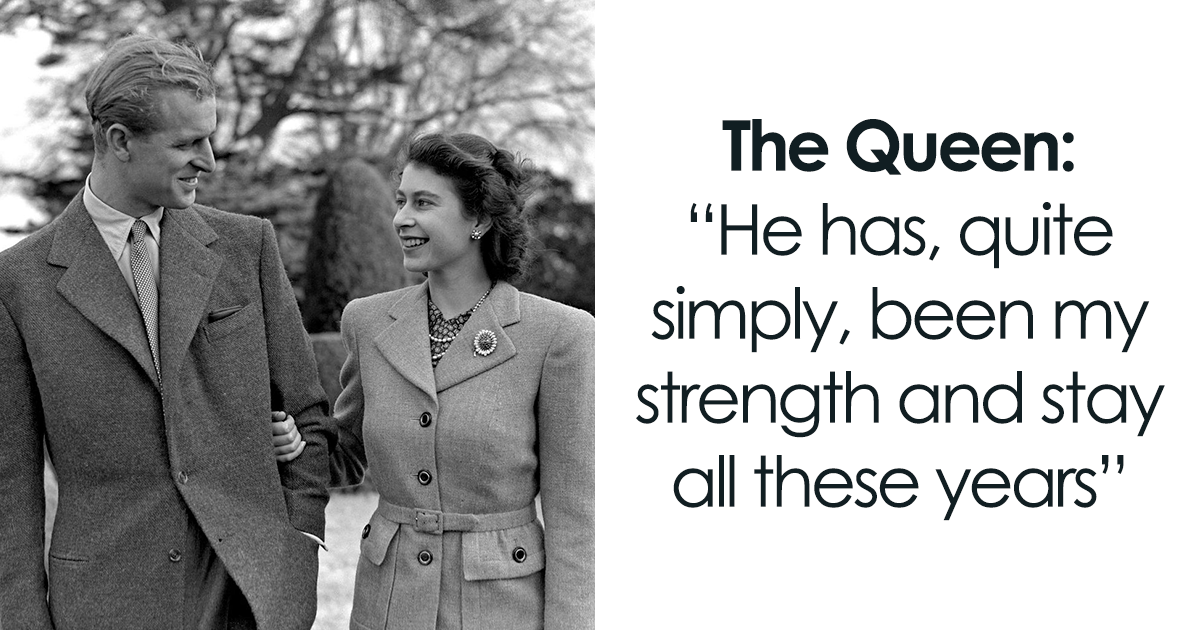
15. The husband with the dry wit
Some images of Philip and the queen together tell a quieter story than any speech could. They are not always romantic in the cinematic sense. They are companionable. Familiar. Sometimes gently amused. Over decades of public appearances, the photographs build an argument that their marriage was rooted not just in duty but in rhythm. He was the one keeping pace beside her, half a step back when protocol required it, but often emotionally legible in a glance, a smile, or a shared private joke.
16. The royal grandfather in a changing family
Later family photographs are fascinating because Philip remains visually unmistakable even as the institution around him changes. Here he is at weddings, anniversaries, balcony appearances, holiday portraits, and family gatherings that span an astonishing range of eras. One moment he is beside young grandchildren; the next he is the elderly patriarch in a family photo shaped by a very different century. These images make royal history feel less abstract. You are not just watching events. You are watching time itself rearrange the furniture.
17. The retirement image
There is something especially poignant about the photos from Philip’s retirement in 2017. After decades of public life, he stepped back with characteristic brevity and very little sentimentality. Fittingly, one of his last major solo appearances was linked to the Royal Marines, a nod to the naval world that had shaped him long before crowns and court circulars became daily business. In these images, he looks older, naturally, but still unmistakably himself: upright, direct, and determined not to make a theatrical fuss about leaving the stage.
18. The final public chapter
The last photographs from Prince Philip’s life carry the weight of age without erasing the force of character. By then, he had become one of those rare public figures who seemed almost built into the background of national life. When news of his death broke at Windsor Castle in April 2021, photo galleries around the world turned into instant memory books. The closing images do not just show an elderly duke. They show the end of a remarkably long chapter in royal family history, one defined by service, stubbornness, loyalty, and a personality too sharp to ever become wallpaper.
Why These Prince Philip Photos Still Hit So Hard
Looking through these 18 photos is a strange and surprisingly emotional experience, even for readers who do not spend their weekends ranking tiaras or debating palace protocol. Part of the power comes from scale. Prince Philip lived so long, and in such a public way, that his photographs almost function as a moving timeline of the 20th and early 21st centuries. One image looks like old Europe. The next looks like wartime Britain. Then suddenly there is television, mass media, state visits, color photography, modern family portraits, and finally the spare, subdued imagery of a man in extreme old age.
Another reason the images stay with you is that Philip never looked like a cardboard royal. He could appear formal, certainly, and there are plenty of photos where he resembles a human exclamation point in uniform. But even in the most official portraits, there is usually a hint of personality pushing through. Sometimes it is impatience. Sometimes amusement. Sometimes the expression of a man who clearly understood the pageant but did not intend to melt into it. For a public figure surrounded by ceremony, he often came across as unusually unvarnished.
There is also something undeniably compelling about the visual contrast in his life. In one set of images, he is the glamorous postwar bridegroom marrying a future queen. In another, he is a grandfather at ease with children. In another, he is attending yet another engagement in a line of thousands, carrying out duty with clockwork consistency. Those shifts make the “life of Prince Philip” more than a royal biography keyword. They make it a story about adaptation. He was born into one world and spent his adulthood helping another one hold together.
And then there is the emotional trick photographs play on all of us: they compress complexity. A single image can make a famously blunt man seem tender, or a ceremonial moment feel intimate. You do not need to be a monarchist to respond to that. You just need to recognize what it means to watch someone age in public over decades. The young cadet becomes the wartime officer. The officer becomes the husband. The husband becomes the consort. The consort becomes the grandfather. The grandfather becomes the national fixture whose absence suddenly feels enormous.
That is why photo tributes after Prince Philip’s death spread so quickly. People were not only looking at a royal life. They were looking at a visual archive of endurance. The clothes changed. The cameras improved. The world grew louder and faster. Yet there he was, again and again, in frame. Sometimes smiling. Sometimes grim. Often marching. Occasionally looking as though he had somewhere better to be, which, oddly enough, only made him more recognizable.
In the end, the experience of viewing Prince Philip photos is less about glamour than continuity. You come away feeling that you have seen not just the life of one man, but the long shadow he cast across an era. And that may be the most remarkable thing of all. Royal images are supposed to preserve legend. These ones do something better: they preserve a personality.
Final Thoughts on the Life and Legacy of Prince Philip
Prince Philip’s public image was never simple, and that is precisely why the strongest photos from his life remain so memorable. They show discipline without softness disappearing, duty without personality being erased, and age without dignity becoming performance. For readers searching for Prince Philip photos, Prince Philip obituary context, or a more human look at the Duke of Edinburgh’s legacy, the picture that emerges is clear: he was one of the defining royal figures of the modern age, not because he was flawless, but because he was impossible to mistake for anyone else.
Seen together, these 18 images tell a story of survival, service, marriage, adaptation, and longevity. That is a lot for any life to hold. Prince Philip managed it while doing most of it under a global spotlight. No wonder the photographs still do so much work. They are not just pictures. They are visual evidence of history behaving like a person.
SEO Tags

