
Beauty Tools & Accessories
Top 10 Tired Franchises Hollywood Refuses To Let Die
Jul
Some movie franchises age like fine wine. Others age like milk left in a studio conference room during a budget meeting. Hollywood loves a familiar logo, a famous theme song, and a character who can be placed on lunch boxes, streaming banners, Halloween costumes, and theme-park rides. That is not always a bad thing. A great sequel can deepen a story, revive a beloved world, and make audiences feel like they are visiting an old friend.
But then there are the franchises that keep returning with the determination of a villain who definitely fell off a cliff in the previous film. These are the tired Hollywood franchises that studios refuse to let dienot because every new chapter is essential, but because recognizable intellectual property still looks safer than betting $200 million on something nobody has heard of.
This list is not about hating popular movies. It is about franchise fatigue, sequel overload, reboot culture, and Hollywood’s eternal belief that if audiences liked something once, they may enjoy it again with younger actors, louder trailers, and a suspiciously familiar plot.
Why Hollywood Keeps Reviving Tired Franchises
The modern movie business is expensive, global, and nervous. Marketing a blockbuster can cost almost as much as making one, so studios gravitate toward brands that already have awareness. A known franchise gives executives a head start: built-in fans, social media conversation, merchandising potential, international recognition, and a trailer that does not need to explain the entire universe in two minutes.
The problem is that familiarity can turn into homework. When every summer offers another sequel, prequel, legacy sequel, spin-off, reboot, requel, side-quel, and “from the world of” experiment, audiences start to feel less like fans and more like unpaid archivists. The best franchises evolve. The weakest ones simply change the subtitle and hope nostalgia does the heavy lifting.
The Top 10 Tired Franchises Hollywood Refuses To Let Die
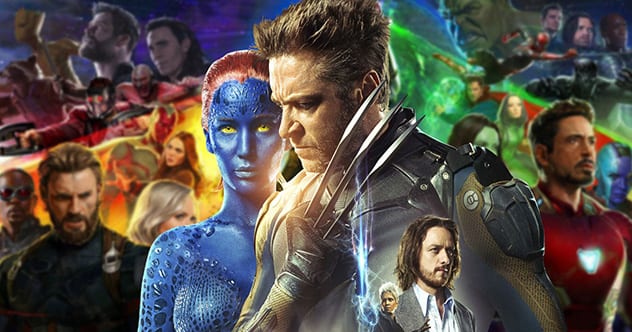
1. The Marvel Cinematic Universe
The Marvel Cinematic Universe changed Hollywood. It turned interconnected storytelling into the dominant blockbuster model, made post-credit scenes feel like civic obligations, and convinced millions of people to learn the difference between a multiverse and a migraine.
At its peak, Marvel felt unstoppable. Avengers: Endgame became a global cultural event, and characters once considered risky became household names. But after years of movies and Disney+ series, the MCU began to feel overcrowded. Recent box office results have been uneven, with hits like Deadpool & Wolverine proving the brand still has power, while other titles showed that the Marvel logo alone no longer guarantees thunderous enthusiasm.
The fatigue comes from volume. Too many storylines, timelines, variants, cameos, and cosmic MacGuffins have made casual viewing harder. Marvel is not dead, but it has reached the stage where every new film must justify its existence beyond “another portal opened.”
2. Star Wars
Star Wars is one of cinema’s greatest mythologies, but it has also become one of Hollywood’s most over-managed treasure chests. The original trilogy felt like lightning in a bottle. Since then, the franchise has been expanded, debated, defended, attacked, memed, streamed, animated, prequelized, sequelized, and merchandised into a galaxy-sized brand.
The issue is not that audiences are tired of lightsabers, space battles, or adorable creatures with merchandising potential. The issue is that the franchise often seems trapped between reverence and repetition. It wants new stories, but it keeps circling familiar family lines, familiar planets, familiar helmets, and familiar musical cues.
The Mandalorian showed that fresh angles can work when the story feels character-driven rather than museum-guided. Still, the larger franchise often feels afraid to leave its own mythology behind. For a galaxy far, far away, it spends a lot of time in the same neighborhood.
3. DC Superhero Movies
DC has some of the most iconic characters ever created: Superman, Batman, Wonder Woman, the Joker, Harley Quinn, Aquaman, and more. Yet the modern DC film universe has often felt less like a grand plan and more like someone rebuilding an airplane while it is already in the air.
The old DC Extended Universe produced successes, but it also suffered from tonal whiplash, leadership changes, continuity confusion, and public uncertainty about what counted anymore. Films like The Flash and Aquaman and the Lost Kingdom arrived during a period when superhero audiences were already becoming more selective.
The new DC era may still deliver excellent films. The characters are too strong to dismiss. But audience patience is not infinite. If every reboot promises that this time the universe will finally make sense, viewers may start asking for a map, a refund, and perhaps a quiet drama about people eating soup.
4. Jurassic World
The original Jurassic Park remains a near-perfect blockbuster: awe, terror, wonder, science gone wrong, and one of the best “maybe don’t monetize everything” messages ever ignored by every sequel that followed.
The newer Jurassic World films have made enormous money, which explains why Hollywood keeps returning to the dinosaur paddock. But the franchise has a recurring problem: the lesson is always “do not create a dinosaur disaster attraction,” and the next movie usually begins with someone creating another dinosaur disaster attraction. At a certain point, the humans are not characters; they are safety violations in khaki pants.
The franchise still has visual appeal. Dinosaurs on a big screen will always have some magic. But the stories need new moral tension, better human drama, and fewer plots that depend on billionaires having the survival instincts of a breadstick.
5. Fast & Furious
The Fast & Furious franchise began as a street-racing action series and gradually became a superhero saga where cars are powered by gravity-defying confidence and emotional speeches about family.
To be fair, the franchise knows exactly what it is. It delivers impossible stunts, global locations, muscle cars, betrayals, reunions, and Vin Diesel saying “family” with the seriousness of a constitutional amendment. That self-awareness is part of the charm.
But even charming excess can become exhausting. By the time a franchise has gone from drag races to espionage, submarines, satellites, and increasingly operatic revenge plots, the only remaining escalation may be a barbecue on Mars. The series still has loyal fans, but it must eventually choose between emotional closure and becoming an action-movie treadmill with nitrous.
6. Transformers
Transformers should be easy to love: giant robots, personality-driven machines, human friendships, and toy-box chaos on a blockbuster scale. The franchise has delivered major box office hits, especially during its early live-action run, but it has also become a symbol of sensory overload.
The best entries understand that audiences need more than metal crashing into metal. Bumblebee worked for many viewers because it scaled down the noise and focused on character. Later entries tried to refresh the mythology, but the brand still struggles with the same question: are we watching a story, or are we trapped inside a washing machine full of robot parts?
Hollywood refuses to abandon Transformers because the brand is globally recognizable and endlessly toyetic. But if the franchise wants to feel alive again, it needs emotion, clarity, and action scenes where viewers can tell which robot is having a bad day.
7. Terminator
The Terminator franchise has been trying to terminate its own decline for decades. The first two films are classics: lean, smart, intense, and emotionally memorable. After that, Hollywood kept trying to restart the timeline, rewrite the future, bring back familiar faces, and convince audiences that the real judgment day was simply the next opening weekend.
The problem is structural. Terminator 2: Judgment Day already delivered a powerful emotional and thematic conclusion. Every sequel after it has had to explain why the supposedly changed future was not really changed, which makes the entire saga feel like a printer error in time-travel form.
The concept remains strong. Artificial intelligence, fate, automation, and human survival are more relevant than ever. But the franchise needs a bold reinvention, not another remix of “a machine arrives from the future, and someone must run.” Even the robots may be tired.
8. Ghostbusters
Ghostbusters is one of the strangest franchise cases in Hollywood. The 1984 original was a supernatural comedy with a specific comic rhythm, a perfect cast dynamic, and an oddball New York flavor. It was not just about ghosts. It was about attitude.
Recent installments have leaned heavily into legacy nostalgia, family connections, callbacks, familiar equipment, and reverence for the original team. That approach can be sweet, but it can also make the franchise feel like it is carefully dusting a museum exhibit instead of inventing new comedy.
The challenge is simple: Ghostbusters works best when it is funny first and mythological second. When the proton packs become sacred relics and every reference arrives with sentimental lighting, the mischievous spirit disappears. A franchise about catching ghosts should not be haunted by its own first movie forever.
9. Pirates of the Caribbean
Pirates of the Caribbean turned a theme-park ride into a billion-dollar swashbuckling phenomenon, which is still one of Hollywood’s weirdest and most impressive magic tricks. The first film had wit, atmosphere, adventure, and Johnny Depp’s instantly iconic Captain Jack Sparrow.
Then the series got bigger, longer, louder, and more tangled. Sea curses piled on top of other sea curses. Mythology expanded. Side characters returned. The plots became so complicated that viewers needed a treasure map just to understand who owed which ghost ship a favor.
Disney has continued exploring ways to revive or reboot the franchise, which makes sense commercially. Pirates, fantasy, action, and comedy are a valuable mix. But the next version needs more than a familiar title. It needs a fresh reason to sail. Otherwise, it risks becoming the cinematic equivalent of a pirate still yelling “land ho” in a parking lot.
10. Legacy Horror Franchises
Horror franchises are uniquely hard to kill, which is thematically appropriate and financially convenient. Scream, Halloween, The Exorcist, Saw, Alien, and Predator have all returned in different forms, from legacy sequels to soft reboots to fresh side stories.
Horror is cheaper than superhero spectacle, so even modest hits can be profitable. That is why studios keep opening old crypts and checking whether any recognizable mask, monster, or title still has box office life. Sometimes it works. Alien: Romulus showed that returning to a franchise’s core strengths can attract audiences. Scream VI proved that a smart horror brand can still connect when it understands its own rules.
But legacy horror can also feel like a treadmill: new town, new victims, same poster logic. The best horror reinventions bring a new fear to the old formula. The weakest ones simply polish the mask and hope nostalgia screams loudly enough.
What Makes a Franchise Feel Truly Tired?
A tired franchise is not simply an old franchise. James Bond is old. Godzilla is old. Planet of the Apes is old. Age is not the enemy. Repetition is.
A franchise feels tired when it keeps recycling the same emotional beats without adding insight. It feels tired when every new installment depends on cameos instead of character. It feels tired when the trailer is more exciting than the movie because the trailer only has to remind us of what we used to love.
The most common symptoms of franchise fatigue include multiverse confusion, overstuffed casts, legacy characters used as applause buttons, villains with recycled motives, plots that undo previous endings, and dialogue that sounds like it was assembled from fan-service magnets on a studio refrigerator.
Still, there is hope. A franchise can recover when filmmakers treat it as a story world rather than a brand warehouse. Creed refreshed Rocky by shifting the emotional center. Top Gun: Maverick succeeded by respecting nostalgia while giving audiences a clean, emotionally satisfying movie. Prey found new energy for Predator by changing the setting and perspective. Reinvention is possible. Laziness is optional.
The Viewer Experience: When Franchise Comfort Turns Into Homework
There is a very specific feeling that comes with watching a tired franchise. At first, it is comfort. The logo appears. The music swells. A familiar character walks into frame, and the audience gets that little spark of recognition. It is the cinematic version of finding fries at the bottom of the bag. Unexpected? Not really. Welcome? Absolutely.
Then the movie starts asking for emotional investment it has not earned. A character says something dramatic about destiny, family, balance, legacy, sacrifice, or “the old ways,” and you realize you have heard this speech beforepossibly from the same actor, possibly while standing in the same green-screen cave. The franchise is no longer inviting you into a story. It is asking you to applaud your own memory.
For many moviegoers, the problem is not sequels themselves. People like returning to fictional worlds. They like familiar heroes. They like long-running mythology when it grows with them. The frustration comes when a franchise mistakes recognition for storytelling. Seeing an old prop is fun for five seconds. Watching a full movie orbit that prop like it is a sacred moon is less fun.
The modern audience also has more entertainment choices than ever. A viewer can spend money on a theater ticket, stay home with streaming, watch a limited series, play a story-driven video game, scroll short-form videos, or revisit older classics. That competition makes laziness more obvious. If a sequel expects attention simply because the title is famous, it risks sounding like a rich uncle demanding applause for buying another boat.
There is also emotional fatigue. Fans want to care, but endless continuity can make caring feel like homework. Before watching the new superhero movie, do you need to remember three shows, two post-credit scenes, one alternate timeline, and a character who died but is technically alive in another reality? Before watching a space saga, do you need to understand which animated arc explains the villain’s cousin’s former mentor? That kind of density can reward loyal fans, but it can also scare away normal humans who simply wanted popcorn and a two-hour escape.
The best franchise experiences happen when the movie works on its own. A newcomer should understand the emotional stakes. A longtime fan should enjoy the deeper layers. A great sequel says, “Welcome back.” A tired sequel says, “Please review chapters 14 through 39 before the opening scene.”
Moviegoers are not anti-franchise. They are anti-boredom. They will show up for dinosaurs, superheroes, ghosts, pirates, robots, and masked villains if the story feels alive. But audiences can sense when a studio is reviving a brand because someone found an old spreadsheet labeled “still profitable.” The magic returns only when filmmakers remember that nostalgia is seasoning, not the entire meal.
Conclusion: Hollywood Needs Franchises, But Franchises Need Fresh Blood
Hollywood will never fully abandon franchises. They are too valuable, too marketable, and too deeply wired into the global entertainment economy. A strong franchise can support theaters, streaming platforms, toys, games, theme parks, and generations of fans. The goal should not be to bury every familiar brand under the Hollywood sign.
The goal should be higher standards. Audiences deserve sequels that expand, not repeat. Reboots that rethink, not repaint. Legacy returns that honor the past without dragging it around like emotional luggage. The top tired franchises Hollywood refuses to let die all have one thing in common: they contain ideas that once felt fresh. Some can feel fresh again, but only if studios stop treating recognition as a substitute for imagination.
Because in the end, the real villain is not the sequel. It is creative autopilot. And unlike most franchise villains, that one does not need a post-credit scene.
Note
This article is based on public box office records, recent entertainment-industry reporting, and widely documented franchise release histories from reputable U.S. film and business sources. Financial figures and industry examples are summarized for editorial analysis without embedded source links.
SEO Tags

