
Hair Care
80 Breathtaking Old Things That These People Have The Pleasure Of Owning
Jul
Some old things whisper. Others practically kick down the door wearing a velvet waistcoat and announce, “I have seen empires fall, and I still work better than your printer.” That is the magic behind breathtaking old things: they are not just objects. They are time travelers with scratches, patina, family gossip, and occasionally a drawer that smells faintly of cedar, dust, and mystery.
From antique furniture and vintage jewelry to handwritten letters, century-old kitchen tools, inherited quilts, and strange little gadgets nobody can identify without three relatives arguing in the background, old objects have a way of making the past feel touchable. They remind us that history is not only stored in museums. Sometimes it is sitting on a shelf, tucked in a cigar box, hanging above a mantel, or hiding in Grandma’s attic like a dramatic supporting character.
This article celebrates 80 breathtaking old things that people have the pleasure of owning, while also exploring why antique items, family heirlooms, vintage collectibles, and historical objects matter. We will look at what makes them valuable, how to care for them, and why their stories can be even richer than their price tags. Spoiler: not every treasure needs to be worth a fortune. Sometimes the real value is the sentence, “Your great-grandfather carried this,” which instantly makes a rusty pocketknife more powerful than a luxury watch commercial.
Why Old Things Still Take Our Breath Away
Old objects are powerful because they carry evidence of human life. A worn wooden table shows where elbows rested during decades of meals. A silver spoon may have survived holidays, moves, marriages, arguments, and at least one questionable casserole. A vintage camera may no longer compete with a smartphone, but it has the kind of charm no software update can fake.
Collectors, historians, and everyday families often value old things for four main reasons: craftsmanship, rarity, condition, and provenance. Craftsmanship tells us how something was made. Rarity shows how difficult it is to find another one like it. Condition affects both beauty and market value. Provenance, the documented history of ownership, can transform an interesting object into a meaningful artifact.
But breathtaking old things do not always need formal museum importance. A cracked teacup from 1910 may not impress an auction house, but if it belonged to the person who started your family’s Sunday breakfast tradition, it deserves a spotlight. Preferably not direct sunlight, because preservation experts everywhere just felt a chill.
80 Breathtaking Old Things People Are Lucky to Own
1–20: Everyday Objects That Became Tiny Time Machines
1. A cast-iron skillet passed down for generations Seasoned with oil, patience, and possibly 700 pancakes, a family skillet is practical history.
2. A hand-cranked coffee grinder Before coffee pods, people had biceps and commitment.
3. A 1920s sewing machine Heavy enough to anchor a ship, but often still beautifully functional.
4. A wooden rolling pin with worn handles The quiet hero of pies, biscuits, and flour-covered counters.
5. A vintage recipe box Especially magical when the cards include notes like “a pinch” and “bake until done,” which is less a recipe and more a family trust exercise.
6. An old milk bottle A reminder of local dairies, front porch deliveries, and a world before grocery apps.
7. A manual typewriter Clickety-clack proof that writing once required both creativity and finger strength.
8. A rotary telephone A beautiful device that makes younger visitors ask, “How do you text on it?”
9. A brass candlestick Simple, elegant, and ready to make any dinner feel like a gothic novel.
10. A school desk with an inkwell A charming reminder that students have been doodling instead of listening for centuries.
11. A pocket compass Useful, handsome, and far less likely to lose signal than a phone.
12. A wooden butter mold Because once upon a time, even butter dressed for company.
13. A vintage lunch pail Scratched, dented, and full of working-class character.
14. A 1930s alarm clock Loud enough to wake the household and possibly several neighboring counties.
15. A porcelain wash basin A graceful artifact from the daily rituals of earlier homes.
16. A handwoven basket Practical art with texture, skill, and regional tradition woven into every strand.
17. A glass medicine bottle Often embossed, oddly shaped, and fascinating even when the original contents sound medically suspicious.
18. A wooden tool chest The kind with dovetail joints, oil stains, and a proud lack of plastic.
19. A fountain pen Elegant, refillable, and capable of making a grocery list look like a treaty.
20. A vintage wall map Equal parts geography, history, and “Wait, that border changed.”
21–40: Heirlooms With Heart
21. A wedding dress from a previous generation Lace, satin, and a whole family album in fabric form.
22. A military uniform A deeply personal object that deserves careful storage and respectful handling.
23. A box of handwritten letters Love, worry, jokes, news, and handwriting that actually had personality.
24. A family Bible with recorded births Often a rich genealogical record as well as a spiritual object.
25. A christening gown Delicate fabric carrying decades of ceremonies and photographs.
26. A mourning brooch A reminder of Victorian-era memory culture and the way jewelry preserved grief.
27. A grandfather’s pocket watch A small machine with emotional weight far larger than its size.
28. A grandmother’s pearl necklace Classic, quiet, and usually accompanied by a very specific instruction: “Don’t lose this.”
29. A family quilt Fabric history stitched from clothing, skill, warmth, and patience.
30. A child’s silver cup A traditional keepsake often engraved with names or dates.
31. A lock of hair in a locket Intimate, strange to modern eyes, but historically common as a keepsake.
32. A photo album with black paper pages Beautiful, fragile, and best handled with clean hands and care.
33. A handwritten diary One of the most personal old things anyone can inherit.
34. A war-era ration book A small paper object that tells a large story about sacrifice and daily life.
35. A wooden rocking chair Especially powerful when generations of babies were soothed in it.
36. A recipe handwritten by a loved one Food history with fingerprints.
37. A family immigration document A paper bridge between one homeland and another.
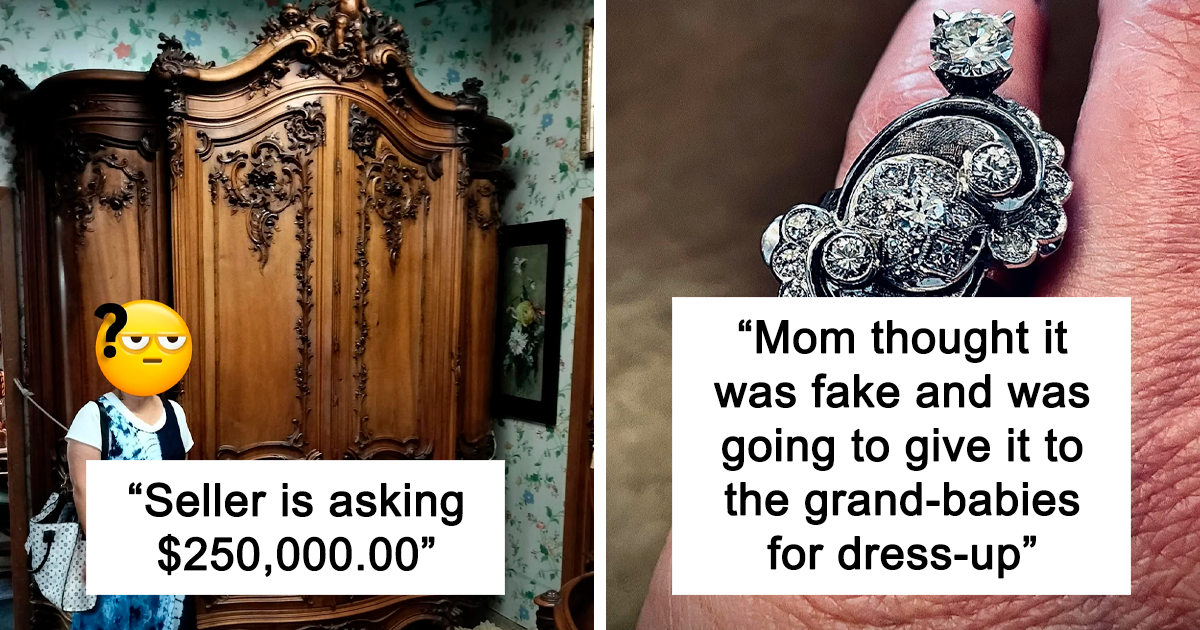
38. A vintage engagement ring Romance, design history, and a tiny sparkle of survival.
39. A cedar hope chest Part storage, part tradition, part aromatic time capsule.
40. A set of inherited china Too often hidden away, though many pieces are happiest when used with care.
41–60: Collectibles That Make History Feel Fun
41. A tin wind-up toy Mechanical joy from before batteries took over the universe.
42. A first-edition book The literary equivalent of meeting a story in its original suit.
43. A vintage baseball glove Soft leather, old stitching, and summer memories.
44. A 1950s radio A beautiful cabinet that once pulled voices from the air like magic.
45. A vinyl record collection Warm sound, great cover art, and the ritual of turning the record over.
46. A movie poster from the golden age of cinema Graphic design, pop culture, and wall-sized nostalgia.
47. A carnival prize from decades ago Slightly odd, wonderfully specific, and probably impossible to replace.
48. A vintage board game Proof that families argued over rules long before video games.
49. A set of old marbles Small glass planets with surprising beauty.
50. A comic book from the 1940s or 1950s Fragile paper carrying bold art and cultural memory.
51. A train conductor’s lantern Industrial design with atmosphere for days.
52. A railroad pocket timetable A paper artifact from the age when trains shaped American life.
53. A vintage postcard collection Travel, handwriting, stamps, and tiny windows into vanished places.
54. A souvenir spoon rack The most specific possible proof that someone traveled and wanted everyone to know.
55. A 1960s camera Metal, glass, leather, and a slower way of seeing.
56. A slide projector The original family slideshow, complete with mandatory living-room attendance.
57. A mid-century lamp Sculptural, stylish, and sometimes shaped like the future imagined by 1962.
58. A vintage perfume bottle Fragrance history captured in miniature glass architecture.
59. An old hotel key tag From the era when keys were not cards and lobby desks had personality.
60. A porcelain figurine Sentimental, decorative, and always watching from the shelf.
61–80: Rare, Useful, or Beautiful Survivors
61. A carved wooden armoire Furniture that announces itself before you enter the room.
62. A handmade rug Wear patterns and dyes can reveal age, origin, and use.
63. A stained-glass window panel Sunlight turns it into a daily performance.
64. A silver tea service Elegant, high-maintenance, and absolutely worth polishing once in a while.
65. A ceramic mixing bowl Especially the heavy kind that has survived more kitchen drama than a reality show.
66. A carved walking cane Functional art with personality.
67. A vintage steamer trunk Travel history with leather straps, stickers, and cinematic energy.
68. A 19th-century mirror Silvered glass that reflects both faces and craftsmanship.
69. A hand-painted fan Delicate, decorative, and often linked to fashion and social custom.
70. A copper kettle Warm color, honest wear, and old kitchen beauty.
71. A pharmacist’s scale Scientific precision turned decorative object.
72. A pair of opera glasses Tiny binoculars for big drama.
73. A Victorian photo pendant Jewelry with a secret face inside.
74. An antique writing slope A portable desk from the days when correspondence had ceremony.
75. A wooden spinning wheel A striking reminder of textile labor and domestic skill.
76. A glass fishing float Maritime history that glows beautifully in a window.
77. A blacksmith-made hinge or latch Hardware that proves even practical objects can be art.
78. A vintage shop sign Typography, commerce, and street history in one object.
79. An old musical instrument Even silent, it carries rhythm, performance, and hands that once played it.
80. A mysterious object nobody can identify Every family has one. It might be farm equipment. It might be a kitchen gadget. It might be proof that ancestors enjoyed confusing us.
What Makes an Old Thing Truly Valuable?
Value is not only about age. A broken chair from 1890 is old, but that does not automatically make it priceless. Appraisers usually look at authenticity, condition, maker, materials, rarity, craftsmanship, provenance, and current market demand. In plain English: Who made it? Is it real? Is it damaged? Can its story be proven? Does anyone want to buy it right now?
This is why two similar objects can have very different values. A plain old vase may be charming but modest. A similar vase with a known maker’s mark, original condition, documented ownership, and strong collector interest may be valuable. The difference is not always visible at first glance, which is why serious collectors rely on research, expert opinions, comparable sales, and documentation.
Sentimental value is different, and sometimes stronger. A family quilt may not bring a spectacular auction price, but it can hold generations of names, fabric scraps, and memory. That kind of value does not fit neatly into a spreadsheet. It belongs in stories, traditions, and the careful way someone says, “Please don’t put your coffee on that.”
How to Care for Antique Items and Family Heirlooms
Keep Them Away From Attics, Basements, and Drama
Many old things suffer not from age alone, but from bad storage. Attics can become too hot. Basements can become too damp. Both places can invite pests, mold, rust, warping, fading, and other forms of heartbreak. A stable interior closet or display area is usually kinder to paper, textiles, photographs, wood, and metal.
Use Archival Materials When Possible
For documents, photographs, letters, and textiles, acid-free folders, archival boxes, and stable storage materials can slow damage. Plastic bags, ordinary cardboard, and adhesive tape may seem harmless, but they can discolor, trap moisture, or leave residue over time. Future generations will thank you for not laminating Great-Grandma’s marriage certificate in a moment of office-supply enthusiasm.
Handle Less, Handle Better
Clean hands, careful support, and minimal handling matter. Fragile books should not be forced open flat. old photographs should be handled by the edges. Textiles should be supported, not dangled. Heavy objects should be lifted from their strongest points, not from delicate handles or decorative trim.
Document the Story
One of the simplest ways to increase the meaning of an old object is to write down what is known about it. Include names, dates, locations, previous owners, how it entered the family, and any memorable stories. A small provenance card or digital record can prevent an heirloom from becoming “that thing in the box no one understands.” Documentation turns mystery into legacy.
How to Display Old Things Without Turning Your Home Into a Dusty Museum
The best homes do not treat heirlooms as frozen relics. They allow old objects to live alongside modern pieces. A vintage mirror above a clean-lined console can look stunning. A handmade quilt folded at the end of a bed adds warmth. A silver tray can hold bar tools, perfume bottles, keys, or mail. Old things do not need to be locked away forever; they simply need thoughtful placement.
The trick is balance. Too many antiques in one room can make a home feel like a period drama where everyone is waiting for a butler. Too few, and the space can feel generic. Mix old and new materials, use display cases for fragile items, avoid direct sunlight for delicate pieces, and rotate objects if you own many. This gives heirlooms a chance to be seen without being overexposed.
Experiences Related to Owning Breathtaking Old Things
Owning old things can be surprisingly emotional. At first, an antique may seem like just a possession. Then someone tells you where it came from, who used it, why it mattered, and suddenly the object changes. A chipped bowl becomes the bowl used every Thanksgiving. A plain wooden chair becomes the chair a grandfather repaired during hard times. A faded photograph becomes the only known image of a person whose name still appears in family stories.
One of the most memorable experiences many people have with old objects is discovery. It might happen while cleaning a closet, sorting an estate, visiting a flea market, or opening a box labeled “miscellaneous,” which is the official Latin term for “prepare to lose three hours.” Inside could be postcards, medals, tools, jewelry, receipts, old toys, or letters tied with ribbon. The excitement is not only in finding something beautiful. It is in realizing that ordinary lives leave extraordinary traces.
Another powerful experience is research. Once people inherit or purchase an old item, curiosity takes over. A maker’s mark on the bottom of a plate leads to a search. A stamp on a letter reveals a date. A furniture label points to a city. A military patch opens a door to service records and family history. Research can feel like detective work, except the suspects are usually teacups and the evidence smells faintly of cedar.
There is also the experience of deciding what to keep. Not every old item can or should remain in a home forever. Some pieces are too damaged, too large, or disconnected from personal meaning. That decision can be difficult, especially when guilt arrives wearing sensible shoes and saying, “But it belonged to someone.” A helpful approach is to keep the items that are beautiful, useful, well-documented, emotionally meaningful, or historically interesting. Photographing and recording the story of other items can preserve the memory even if the object itself moves on.
Using old things can create new memories. Serving cake on inherited china, writing with a restored fountain pen, hanging a vintage map in an office, or wearing a grandmother’s brooch gives the object another chapter. Many heirlooms become more meaningful when they participate in daily life instead of sleeping forever in storage. Of course, fragile or rare items deserve extra care, but many sturdy pieces were made to be used. A cast-iron skillet does not want to retire. It wants cornbread.
Finally, old things create connection. They invite questions from children, guests, and relatives. They help families talk about people who are gone. They turn rooms into personal landscapes rather than showroom displays. In a world that constantly pushes the newest version, fastest upgrade, and shiniest replacement, breathtaking old things remind us that beauty can deepen with age. A scratch is not always damage. Sometimes it is a sentence in a long story.
Conclusion: The Past Looks Good on a Shelf
The pleasure of owning breathtaking old things comes from more than possession. It comes from stewardship. Whether you own a valuable antique, a modest vintage find, or a family heirloom with more emotional value than market value, you are caring for a small piece of history. These objects survived years of use, storage, travel, fashion changes, and possibly a few questionable decorating trends. They deserve attention, documentation, and a little respect.
Old things teach us that beauty is not always flawless. Patina, wear, repairs, and faded edges can make an object more interesting, not less. They remind us that people before us cooked, wrote, worked, celebrated, grieved, traveled, listened to music, played games, fixed tools, and saved keepsakes. In other words, they were just like us, only with fewer charging cables.
So if you own something old and wonderful, learn its story. Store it wisely. Display it proudly. Use it when appropriate. Write down what you know. The next person who inherits it should not have to guess why it mattered. Let them know. Because a breathtaking old thing is not just an object from the past. It is an invitation to remember, preserve, and pass the story forward.
SEO Metadata

