
Skincare
25 New Hilariously Relatable Comics About Being A Parent, By Yehuda And Maya Devir
Jul
Parenthood is beautiful, magical, life-changing, and occasionally the reason you find a pacifier in your shoe, a snack in your pocket, and a suspicious crayon mural on the living room wall. That is exactly the kind of chaotic honesty Yehuda and Maya Devir capture so well in their beloved comic series One of Those Days. Their parenting comics do not pretend family life is a perfectly filtered breakfast commercial. Instead, they celebrate the messy, loud, sleepy, snack-covered reality of raising childrenand somehow make it look heroic.
The title “25 New Hilariously Relatable Comics About Being A Parent, By Yehuda And Maya Devir” speaks directly to why their work keeps going viral. These comics are not just funny drawings. They are tiny, exaggerated mirrors held up to modern family life. Parents see the sleepless nights, the toddler negotiations, the overloaded laundry piles, the emotional whiplash, and the strange joy of loving small people who can turn a normal Tuesday into a full-contact sport.
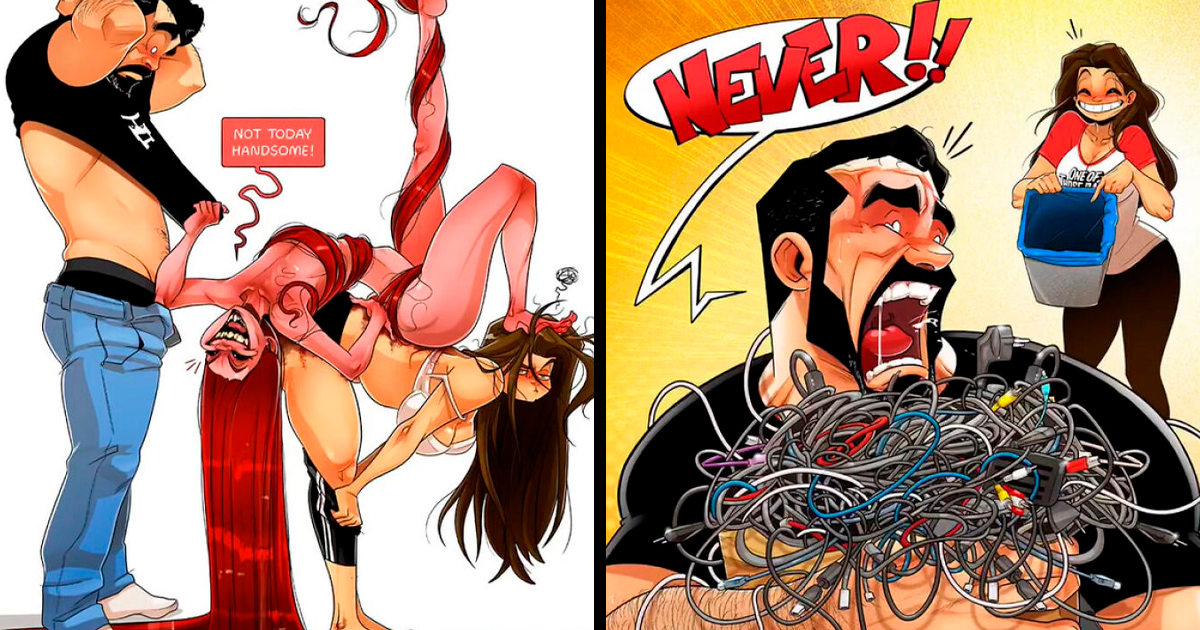
Yehuda and Maya Devir are married Israeli comic artists and the creators of One of Those Days, a popular webcomic built around their real relationship, daily routines, and growing family. Their style is bold, expressive, and cinematic, often turning ordinary domestic scenes into superhero-level drama. A spilled drink becomes an action sequence. A child’s tantrum becomes a boss battle. A tired parent reaching for coffee looks like a warrior preparing for one final mission. In other words, it is parentingbut with better lighting.
Who Are Yehuda And Maya Devir?
Yehuda and Maya Devir are best known for transforming everyday married life and parenthood into energetic one-panel comics. Their work first gained attention because it made couple life feel funny, warm, and instantly recognizable. Over time, their family expanded, and so did the world of their comics. Their children, Ariel and Ethan, became part of the visual universe, bringing a new layer of emotional truth, comedy, and adorable destruction.
Both artists studied at Bezalel Academy of Arts and Design in Jerusalem, and that professional art background shows. Their panels are not simple doodles tossed together between diaper changes. They are carefully composed illustrations with dynamic poses, strong facial expressions, and a comic-book sense of scale. Yehuda often appears as an exaggerated version of himself, complete with dramatic eyebrows and a larger-than-life physical presence. Maya is equally expressive, often shown as powerful, funny, exhausted, loving, and absolutely not here for nonsense.
Why Their Parenting Comics Feel So Relatable
The secret ingredient in One of Those Days is not just humor. It is recognition. Parents relate because the comics focus on situations that feel oddly specific and universally familiar at the same time. You may not have the same sofa, the same baby bottle, or the same dramatic comic-book eyebrows, but you probably know the feeling of trying to leave the house with children and realizing you have packed everything except your own sanity.
These comics often turn small family moments into visual comedy. A parent being buried under toys, a child rejecting food with the authority of a Michelin critic, or a couple trying to steal five quiet minutes together can become a full theatrical event. That exaggeration works because parenting itself often feels exaggerated. The emotions are huge. The mess is huge. The love is huge. The laundry, unfortunately, is also huge.
The Big Themes In These 25 New Parenting Comics
While every comic has its own punchline, the broader themes are easy to spot. Yehuda and Maya Devir keep returning to the same emotional territory that real parents navigate every day: exhaustion, teamwork, patience, identity, love, and the ongoing mystery of why children ask for snacks immediately after refusing dinner.
1. Sleep Deprivation As A Family Tradition
Many parents discover that “sleeping like a baby” is a deeply misleading phrase. Babies wake up. Toddlers wake up. Sometimes children wake up because a sock feels “too socky.” The Devirs’ comics understand this level of fatigue. Their parenting humor often captures the zombie-like state of adults who love their children deeply but would also happily accept eight uninterrupted hours of sleep as a luxury vacation.
The comedy lands because it does not shame parents for being tired. It says, “Yes, this is hard. Yes, you are still doing it. Yes, coffee deserves its own national holiday.”
2. The Beautiful Disaster Of Daily Routines
Before kids, getting ready might mean choosing an outfit and leaving the house. After kids, getting ready can involve packing wipes, snacks, extra clothes, water bottles, toys, emotional support crackers, backup emotional support crackers, and possibly a small rescue team. The Devirs turn these everyday routines into visual adventures, showing how ordinary parent tasks can feel absurdly complicated.
That is one reason the comics work so well online. They turn the invisible work of parenting into something visible, funny, and shareable. A parent who has spent twenty minutes looking for one missing shoe can see a panel and think, “Finally, art understands me.”
3. Children As Tiny Agents Of Chaos
Children are wonderful. Children are also unpredictable. They may hug you with angelic sweetness one minute and pour cereal onto the floor the next, just to see what happens. Yehuda and Maya Devir’s comics lean into that unpredictability. Their children are not portrayed as villains, but as energetic little forces of nature who keep the household interesting, loud, and slightly sticky.
This is where the humor becomes affectionate rather than cynical. The jokes are not “kids are terrible.” The joke is “kids are tiny humans learning the world at full volume, and parents are trying to survive with love, patience, and maybe a hidden chocolate bar.”
4. Marriage After Children
One of the most interesting parts of the Devirs’ work is how it continues to focus on the couple, even after parenthood becomes central. Many parenting comics focus only on children, but One of Those Days often shows the relationship between the adults as well. The romance changes. The schedule changes. Quiet dinners may become rare mythical creatures. But the partnership remains the emotional engine of the story.
The comics highlight teamwork: one parent holding the baby, the other cleaning the mess; one parent collapsing from exhaustion, the other offering backup; both parents laughing because sometimes laughter is the only tool left in the drawer. This is a deeply relatable part of family life. Parenthood can test a relationship, but it can also create a new kind of intimacy built on shared chaos and inside jokes.
5. The Emotional Roller Coaster Of Raising Kids
Parenthood can move from frustration to joy in seconds. A child may scream because the banana broke, then fall asleep on your shoulder like a tiny angel with crumbs on their face. The Devirs capture this emotional whiplash beautifully. Their comics are not funny because they ignore the difficult parts of parenting. They are funny because they include them and still find warmth underneath.
That balance matters. Modern parents are often surrounded by impossible expectations: be calm, be productive, be present, be financially stable, keep the house clean, make memories, limit screen time, encourage creativity, prepare healthy meals, and somehow drink water. Comics like these offer relief by admitting that no one is doing all of that perfectly.
Why The Art Style Makes The Humor Stronger
Yehuda and Maya Devir’s art style is instantly recognizable. Their characters are highly expressive, with exaggerated body language, bright colors, and dramatic action-comic energy. The humor is not only in the idea of each panel, but in the way the scene is staged. A tired parent is not merely tired; they look like they have survived a cinematic battle. A child’s innocent mess becomes a visual explosion. A family hug becomes a grand emotional finale.
This visual intensity makes tiny domestic moments feel epic, which is exactly how they often feel to parents. Changing a diaper at 3 a.m. can feel like a military operation. Getting a toddler into pajamas can feel like negotiating an international treaty. Convincing a child to eat one vegetable can feel like climbing a mountain while someone throws peas at you.
The Devirs’ Parenting Comics And Modern Family Culture
Part of the reason these comics spread so widely is that modern parents are hungry for honest representation. Social media often shows polished family moments: matching outfits, smiling children, spotless kitchens, and captions about gratitude. Those moments can be real, but they are not the whole story. The Devirs offer the other half: the mess, the fatigue, the overstimulation, the ridiculous arguments, and the strange comedy that appears when life does not go according to plan.
Their work also fits into a bigger cultural conversation about parental stress and support. Parenting is rewarding, but it can also be tiring and emotionally demanding. Many families juggle work, childcare, money worries, household tasks, and the pressure to parent “correctly” in front of an invisible online audience. A funny comic cannot solve those pressures, but it can give parents a moment of recognition. Sometimes feeling seen is the first deep breath of the day.
25 Parenting Moments That Make These Comics So Easy To Love
Although the exact panels vary, the appeal of “25 new hilariously relatable comics” can be understood through the kinds of moments Yehuda and Maya Devir portray. These are the little family scenes that become big memories later, even if they feel like disasters in the moment.
Morning Madness
Getting everyone ready in the morning is a parenting Olympics event. Someone cannot find a shoe. Someone needs a snack. Someone suddenly remembers a school item that should have been prepared yesterday. The Devirs understand that mornings with kids are not a routine; they are a live-action puzzle with moving pieces.
Mealtime Negotiations
Parents everywhere know the pain of preparing food that a child specifically requested, only for that same child to look at it like it has personally betrayed them. These comics often reflect the comic absurdity of feeding children, where one day pasta is beloved and the next day pasta is apparently illegal.
Bathroom Adventures
Privacy becomes a distant memory when children enter the picture. Parents learn that closed doors are merely suggestions. The Devirs often capture this kind of boundary-free family life with humor that feels painfully accurate.
The Toy Takeover
Children’s toys reproduce mysteriously. One day there are three blocks on the floor; the next day the living room looks like a colorful plastic storm passed through. In the Devir universe, this kind of mess becomes a full visual event, complete with dramatic expressions and heroic parental endurance.
Rare Couple Time
When parents finally get a quiet moment together, it can feel like winning a prize. The Devirs often show how love after kids becomes less about perfect dates and more about small gestures: a shared laugh, a tired hug, a knowing glance across a messy room, or the sacred act of letting your partner nap.
What Parents Can Learn From Yehuda And Maya Devir’s Comics
Beyond the laughs, these comics offer a useful reminder: parenting does not have to look perfect to be meaningful. In fact, the imperfect moments are often the ones that become family stories. The spilled juice, the sleepless night, the public tantrum, the ridiculous outfit choice, the crayon on the wallnone of these feel charming while they are happening. But later, they become part of the family mythology.
Another lesson is that humor can be a survival tool. Laughing at the chaos does not mean ignoring responsibility. It means creating emotional space. When parents can say, “This is hard and also kind of hilarious,” they give themselves permission to be human. That matters in a culture where parents often feel judged for every decision, from bedtime routines to lunchbox contents.
Why Fans Keep Coming Back
Fans return to the Devirs’ comics because the work has heart. The drawings are polished and dramatic, but the emotional core is simple: family life is messy, funny, exhausting, and worth it. Their best comics do not just chase a punchline. They capture a feeling.
That feeling might be the shock of becoming responsible for another human being. It might be the comedy of trying to maintain romance while surrounded by toys. It might be the tenderness of seeing your child asleep after a day that nearly defeated you. Whatever the scene, the Devirs know how to turn personal experience into something many people can recognize.
Additional Experience: What These Comics Remind Us About Real Parenting
Anyone who has spent time around children knows that parenting is not a neat sequence of inspirational moments. It is more like a long improv show where the smallest cast member has no script, unlimited energy, and strong opinions about socks. That is why Yehuda and Maya Devir’s comics feel so refreshing. They do not reduce parenting to either pure struggle or pure sweetness. They show both, often in the same scene.
One relatable experience is the way parents become experts in impossible multitasking. You may be making breakfast, answering a message, preventing a cup from tipping over, listening to a story about a dinosaur, and trying to remember whether you brushed your own teeth. The outside world may see an ordinary kitchen. A parent experiences it as a command center. The Devirs’ dramatic art style fits this perfectly because everyday parenting really can feel that intense.
Another familiar experience is the loss of personal space. Before children, a person might casually enjoy a quiet shower, a peaceful meal, or a private conversation. After children, privacy becomes a luxury item, like a vacation home or a phone charger no one else borrows. Kids have a magical ability to appear exactly when a parent sits down. The humor here is not cruel; it is affectionate. Children want closeness, and parents love being needed, even when they also dream of drinking coffee while it is still warm.
The comics also reflect the emotional contradiction of parenthood. A parent can feel completely overwhelmed in the afternoon and deeply grateful by bedtime. A child can create chaos all day, then say something sweet that resets the entire emotional scoreboard. This is why parenting humor works best when it has tenderness behind it. The joke is funnier when the love is obvious.
For many parents, the Devirs’ comics also validate the feeling that family life is a team sport. One adult cannot always carry everything alone. Real parenting often depends on tag-team survival: one person handles bath time, the other finds pajamas; one person cooks, the other distracts the tiny kitchen inspector; one person loses patience, the other steps in with a calmer voice. The comics frequently show this partnership as messy but powerful. It is not the flawless teamwork of a movie montage. It is the practical teamwork of two tired people choosing each other again and again.
Finally, these comics remind readers that ordinary days are worth documenting. The funny thing about parenting is that the moments that feel most exhausting can later become the memories people treasure. The toddler who refused pants becomes a family legend. The baby who would only sleep in one impossible position becomes a story told for years. The living room disaster becomes a photo everyone laughs about later. Yehuda and Maya Devir turn those fleeting scenes into art, and that may be the biggest reason their work resonates. They help parents see that the chaos is not separate from the beauty. Sometimes, it is the beauty wearing mismatched socks and holding a half-eaten banana.
Conclusion
25 New Hilariously Relatable Comics About Being A Parent, By Yehuda And Maya Devir is more than a catchy title. It points to the reason their comics have become so loved: they make parents feel seen. Their work captures the wild comedy of raising children, the emotional strength of partnership, and the small daily moments that make family life unforgettable.
Yehuda and Maya Devir’s parenting comics succeed because they are honest without being gloomy, sentimental without being sugary, and exaggerated without losing truth. They remind us that parenthood is not a perfect picture. It is a colorful, noisy, sleep-deprived masterpieceusually with toys on the floor.
Note: This article is written as original commentary for web publication. It discusses publicly known information about Yehuda and Maya Devir and their parenting-themed comics without reproducing comic panels, captions, or source-link placeholders.

